
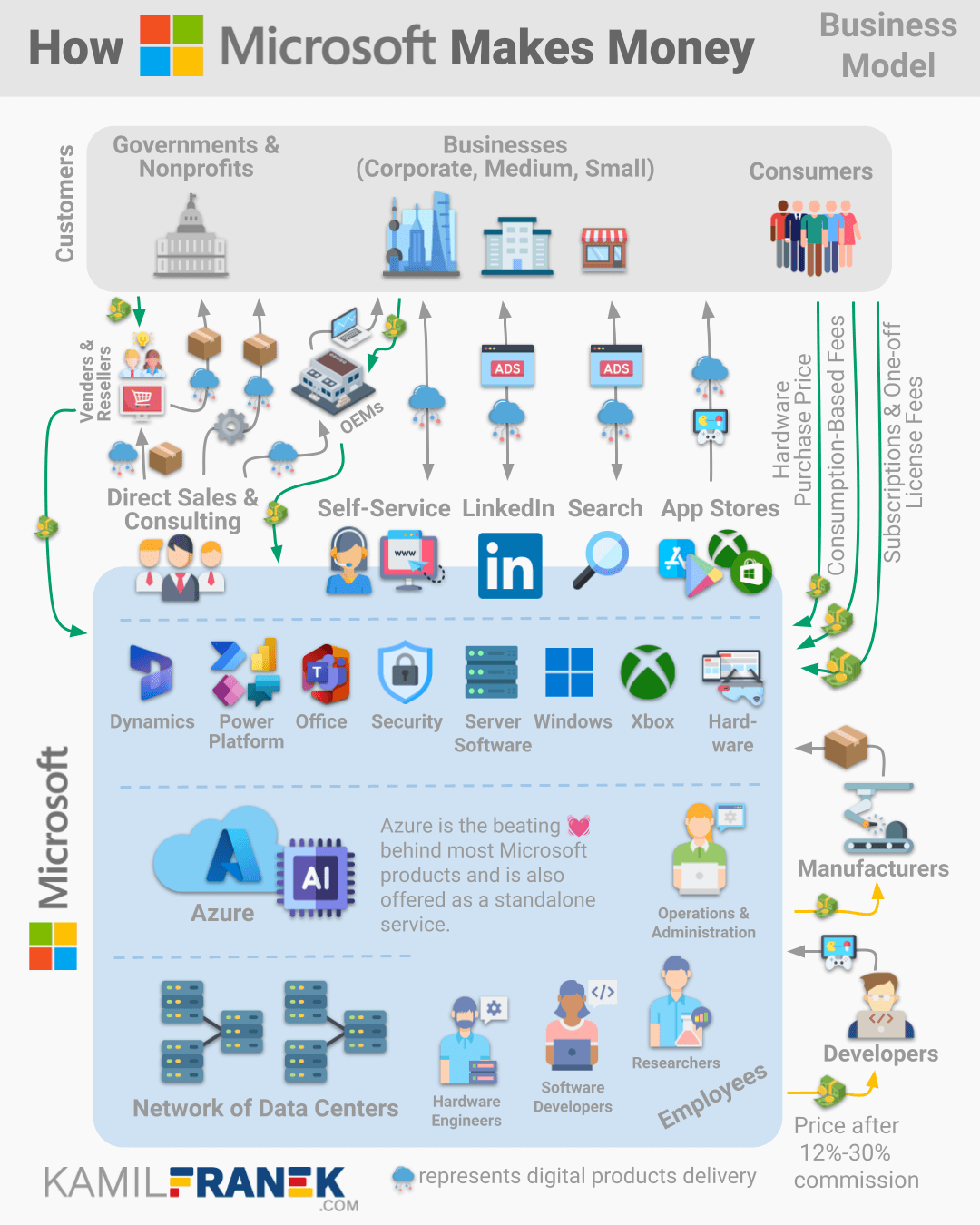
Microsoft is no longer just the “Windows and Office” company that defined the personal computing era of the 1990s. In the current technological epoch, Microsoft has evolved into a diversified powerhouse that provides the digital backbone for the global economy. To understand what Microsoft does today is to understand the convergence of cloud computing, artificial intelligence, enterprise software, and consumer hardware. The company’s mission—to empower every person and every organization on the planet to achieve more—is realized through a complex web of interconnected technologies that span from the smallest mobile app to the world’s largest data centers.
The Core Ecosystem: Windows and Productivity Software
At its heart, Microsoft remains the steward of the world’s most prevalent operating system and productivity suite. However, the nature of these products has shifted from static, installed software to dynamic, cloud-connected services.
Windows as the Foundation of Computing
Windows remains the primary interface through which hundreds of millions of people interact with technology. Today, Windows 11 serves as a bridge between traditional desktop computing and the modern cloud era. Microsoft’s work in this space focuses on “Windows as a Service,” ensuring that security updates, feature enhancements, and kernel improvements are delivered continuously. By maintaining an open ecosystem that supports a vast array of hardware configurations, Microsoft provides the platform upon which developers build everything from specialized industrial software to high-end creative tools.
Microsoft 365 and the Evolution of Office
The transition from Microsoft Office to Microsoft 365 represents one of the most successful pivots in tech history. Microsoft 365 is a comprehensive suite of productivity tools—including Word, Excel, PowerPoint, and Outlook—that are now deeply integrated with cloud storage (OneDrive) and collaboration platforms. The focus has moved away from individual document creation toward real-time co-authoring and seamless cross-device synchronization. By moving these tools to the cloud, Microsoft has ensured that work is no longer tied to a specific desk or device, but is instead a portable, fluid experience.
Collaborative Communication via Microsoft Teams
A critical component of Microsoft’s productivity stack is Teams. It is far more than a video conferencing tool; it serves as a “digital headquarters” for organizations. By integrating chat, meetings, file sharing, and third-party app extensions into a single interface, Microsoft has created a layer that sits on top of the operating system, specifically designed for the hybrid work era.
Empowering the Future through Cloud Computing and Azure
If Windows was the engine of Microsoft’s past, Azure is the engine of its future. Microsoft Azure is a massive, global cloud computing platform that provides businesses with the infrastructure and tools they need to build, deploy, and manage applications through a global network of data centers.
Infrastructure as a Service (IaaS) and Platform as a Service (PaaS)
Microsoft provides the literal “heavy lifting” of the internet. Through IaaS, companies can rent virtualized computing resources, storage, and networking, eliminating the need for expensive on-site servers. Through PaaS, Microsoft offers a development and deployment environment in the cloud, with resources that allow users to deliver everything from simple cloud-based apps to sophisticated, cloud-enabled enterprise applications. This allows startups and global corporations alike to scale their operations instantly based on demand.
Hybrid Cloud Solutions for Global Enterprises
One of the unique ways Microsoft approaches the cloud is through “hybrid” solutions. Recognizing that many organizations cannot move 100% of their data to the public cloud due to regulatory or latency issues, Microsoft developed Azure Stack. This technology allows companies to run Azure services in their own data centers. This bridge between on-premises hardware and the public cloud is a defining characteristic of Microsoft’s tech strategy, making them the preferred partner for large-scale digital transformations in sectors like banking, healthcare, and government.
Data Management and Analytics
Beyond just storage, Azure provides the tools to make sense of information. Microsoft’s data services, including SQL Server, Azure Synapse Analytics, and Power BI, allow organizations to process massive datasets in real-time. This “Data Estate” enables businesses to derive actionable insights, predict market trends, and automate decision-making processes, effectively turning raw data into a strategic asset.
The New Frontier: Artificial Intelligence and Machine Learning
In recent years, Microsoft has positioned itself at the absolute forefront of the Artificial Intelligence (AI) revolution. By integrating AI across every layer of its technology stack, the company is fundamentally changing how humans interact with machines.
Copilot and Generative AI Integration
The most visible manifestation of Microsoft’s AI work is “Microsoft Copilot.” Built on large language models (LLMs) in partnership with OpenAI, Copilot acts as an intelligent assistant integrated into Windows, Microsoft 365, and GitHub. It can draft emails, summarize long meeting transcripts, write code, and create complex data visualizations from simple natural language prompts. This represents a shift from “human-led, machine-supported” work to a collaborative model where AI augments human creativity and productivity.
GitHub and the Future of Software Development
Microsoft owns GitHub, the world’s largest platform for software development. By introducing GitHub Copilot—an AI pair programmer—Microsoft has revolutionized how software is written. The AI suggests code snippets, identifies bugs, and assists in refactoring, significantly accelerating the development lifecycle. This investment in the developer community ensures that Microsoft remains at the center of the world’s software creation process.
Ethical AI and Azure AI Services
Microsoft doesn’t just use AI; it provides the tools for others to build it. Azure AI Services allow developers to integrate vision, speech, language, and decision-making capabilities into their own applications without needing a PhD in data science. Furthermore, Microsoft has been a leading voice in “Responsible AI,” developing frameworks and tools to detect bias, ensure data privacy, and maintain transparency in AI-driven systems.
Hardware and Consumer Electronics
While Microsoft is primarily a software and cloud company, its hardware division plays a crucial role in showcasing the “ideal” implementation of its technology. Microsoft’s hardware strategy is centered on creating premium categories that push the boundaries of what Windows devices can do.
The Surface Line and Integrated Hardware
The Surface family of devices—ranging from the 2-in-1 Surface Pro to the Surface Laptop and Surface Studio—serves as the flagship for the Windows ecosystem. By designing both the hardware and the software, Microsoft can optimize touch interfaces, pen input, and power management in a way that third-party manufacturers can then emulate. These devices are aimed at professionals and creatives who require a tight integration between their physical tools and their digital workspace.
Gaming and the Xbox Ecosystem
Gaming is a massive pillar of Microsoft’s technological output. Through the Xbox consoles and the Windows gaming platform, Microsoft delivers high-performance entertainment. However, the “tech” side of Xbox has shifted toward the cloud via Xbox Cloud Gaming (Project xCloud) and the “Game Pass” subscription model. Microsoft is leveraging its Azure infrastructure to stream high-end games to low-power devices like smartphones and smart TVs, effectively decoupling the gaming experience from expensive local hardware.
Mixed Reality and HoloLens
Microsoft’s foray into the “metaverse” is grounded in practical, industrial applications via the HoloLens. This mixed-reality headset overlays digital information onto the physical world. Unlike consumer-focused VR, HoloLens is used in surgery, complex manufacturing, and remote mechanical repair, allowing experts to guide technicians from across the globe through a heads-up display.
Cybersecurity and Enterprise Protection
As the world’s most targeted software company, Microsoft has been forced to become one of the world’s most advanced security companies. Security is no longer a separate product; it is a fundamental layer in everything Microsoft does.
Microsoft Defender and Zero Trust
Microsoft Security provides a comprehensive suite of tools (Microsoft Defender, Microsoft Sentinel, and Microsoft Entra) that protect identities, devices, and data. The company champions the “Zero Trust” architecture—a security model that assumes every access request is a potential threat and must be verified, regardless of where it originates.

Global Threat Intelligence
Because Microsoft has such a massive footprint—with billions of login signals and trillions of emails passing through its systems—it possesses a unique “bird’s-eye view” of the global threat landscape. Microsoft uses AI to analyze these signals in real-time, identifying new malware strains and state-sponsored hacking attempts before they can cause widespread damage. This threat intelligence is then baked back into Windows and Azure, creating a self-healing ecosystem that protects users automatically.
In summary, Microsoft is an infrastructure provider for the modern age. It builds the platforms (Windows), the tools (Microsoft 365 and GitHub), the engines (Azure), and the intelligence (AI) that power the digital world. By maintaining a presence in both the consumer and enterprise sectors, Microsoft ensures that it remains the indispensable architect of the technology that defines our lives.
aViewFromTheCave is a participant in the Amazon Services LLC Associates Program, an affiliate advertising program designed to provide a means for sites to earn advertising fees by advertising and linking to Amazon.com. Amazon, the Amazon logo, AmazonSupply, and the AmazonSupply logo are trademarks of Amazon.com, Inc. or its affiliates. As an Amazon Associate we earn affiliate commissions from qualifying purchases.