
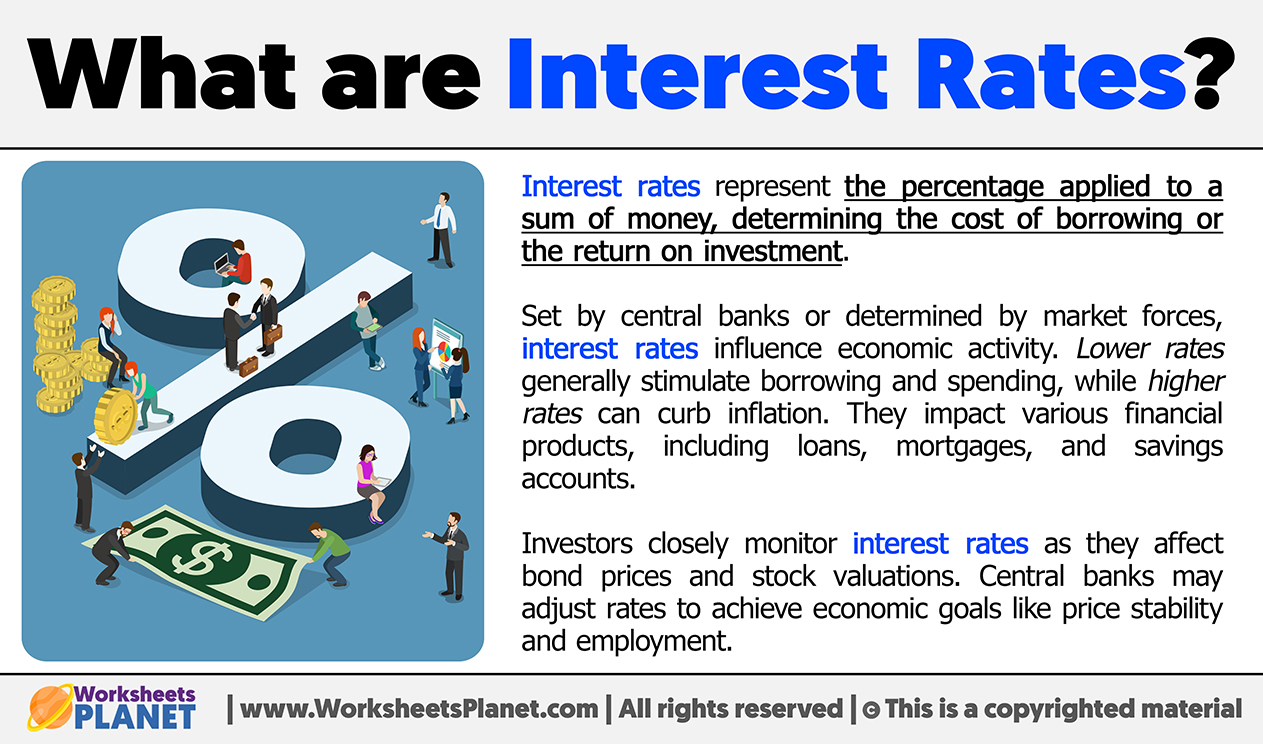
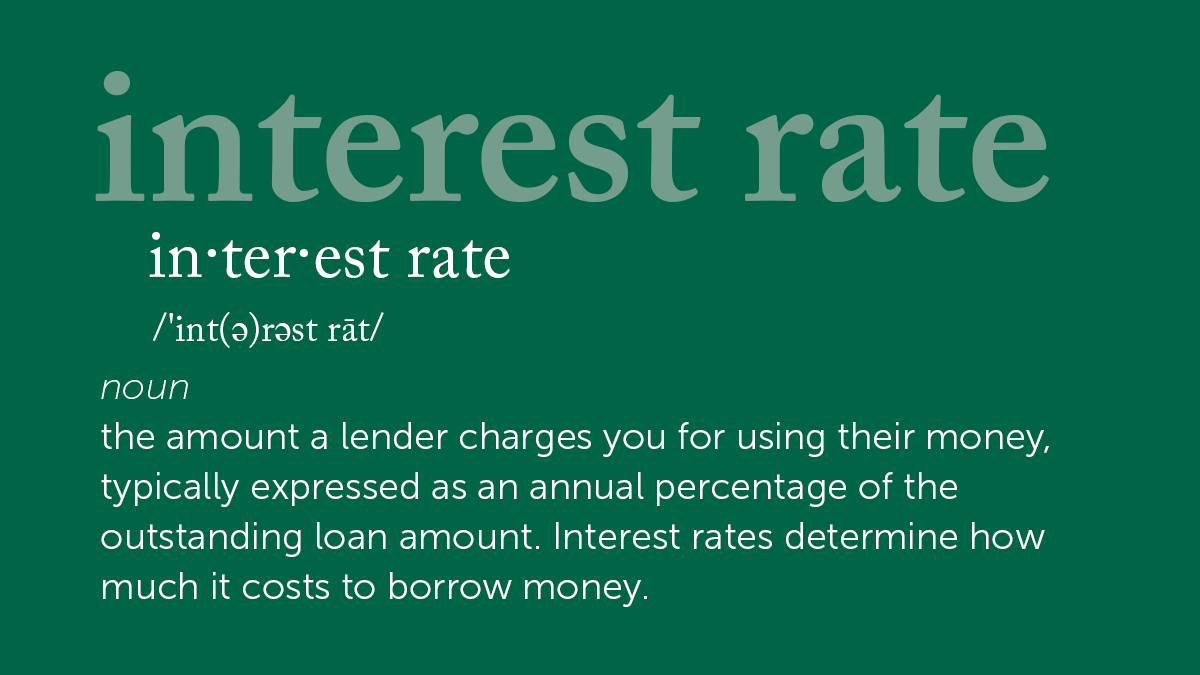
In the world of finance, few phrases carry as much weight as “What’s the interest rate?” Whether you are looking to buy your first home, scale a business, or grow your retirement savings, the interest rate acts as the heartbeat of the economy. It is the cost of borrowing money and the reward for saving it. At its core, the interest rate is the price of time.
Navigating the complexities of interest rates is essential for anyone seeking financial independence. In a shifting economic landscape where central banks adjust rates to combat inflation or stimulate growth, understanding the mechanics behind these percentages can mean the difference between financial struggle and long-term prosperity. This guide explores the fundamental nature of interest rates, their impact on personal debt, their role in the investment markets, and how you can leverage them to build wealth.
The Mechanics of Interest: Why Rates Move and How They Affect You
Interest rates do not exist in a vacuum. They are influenced by a complex web of economic indicators, government policies, and market sentiment. To understand why your local bank offers a specific rate on a savings account or a car loan, one must first look at the broader institutional framework.
The Role of Central Banks and Monetary Policy
At the top of the financial pyramid sit central banks, such as the Federal Reserve in the United States or the European Central Bank. These institutions use interest rates as their primary tool for controlling the money supply. When the economy is sluggish, central banks typically lower interest rates to make borrowing cheaper, encouraging businesses to invest and consumers to spend.
Conversely, when inflation rises too quickly, central banks hike rates. This increases the cost of borrowing, which cools down economic activity and helps stabilize prices. For the average individual, this means that the “prime rate”—the rate banks charge their most creditworthy customers—fluctuates based on these high-level policy decisions.
Nominal vs. Real Interest Rates
When you see an interest rate advertised, you are looking at the “nominal” rate. However, savvy investors focus on the “real” interest rate. The real rate is the nominal rate minus the rate of inflation. For example, if your savings account offers a 4% interest rate but inflation is running at 5%, you are technically losing 1% of your purchasing power every year. Understanding this distinction is vital for maintaining the value of your capital over decades.
Simple vs. Compound Interest: The Power of Time
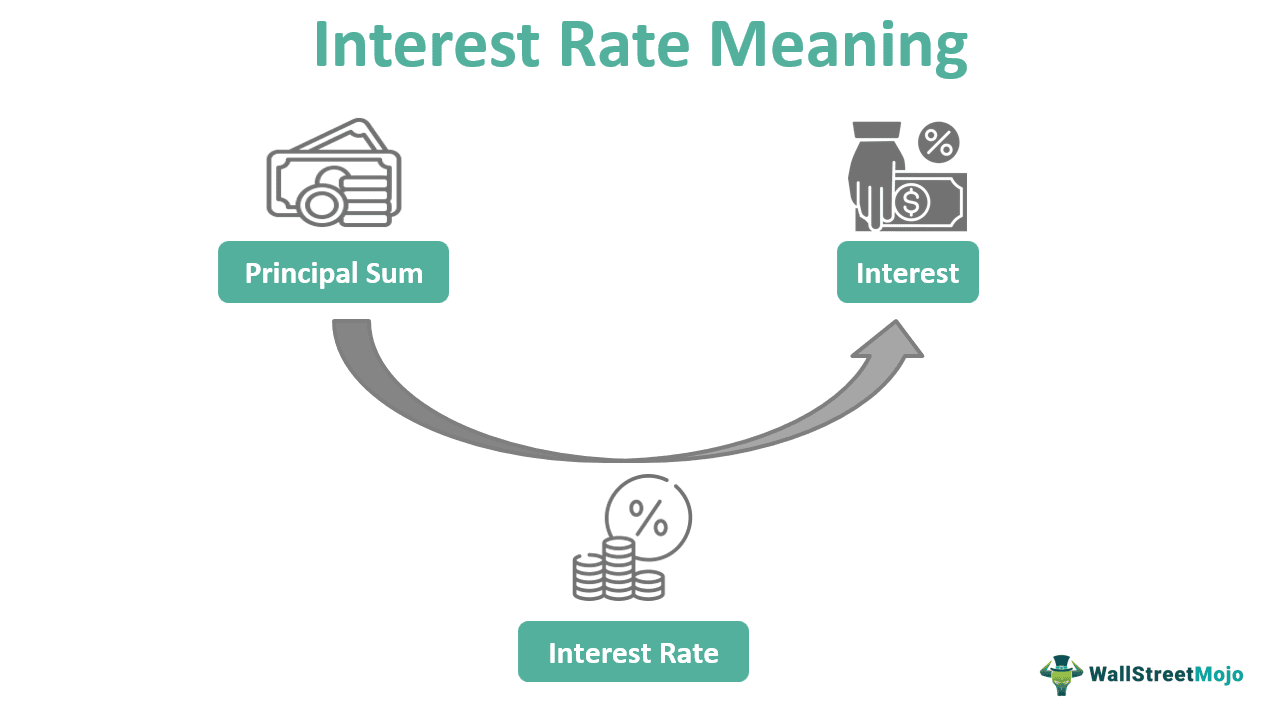
The mathematical application of interest is where wealth is either built or destroyed. Simple interest is calculated only on the principal amount borrowed or invested. Compound interest, however, is calculated on the principal plus the accumulated interest of previous periods. Albert Einstein famously referred to compound interest as the “eighth wonder of the world.” When you are saving, compounding works in your favor, turning small monthly contributions into a significant nest egg. When you are in debt, compounding can lead to a downward spiral if only minimum payments are made.
Interest Rates in Personal Finance: Mortgages, Loans, and Credit
For most people, the most direct encounter with interest rates happens through personal credit products. The rate you are assigned determines the total cost of your lifestyle and your ability to achieve major life milestones.
Fixed-Rate vs. Variable-Rate Financing
When taking out a loan, particularly a mortgage, one of the most critical decisions is choosing between a fixed and a variable (or adjustable) rate. A fixed-rate mortgage locks in the interest rate for the life of the loan, providing stability and protection against rising rates.
Variable-rate loans often start with a lower “teaser” rate but are subject to market fluctuations. While they can save you money if rates stay low or drop, they pose a significant risk if the economy shifts and rates climb, potentially leading to much higher monthly payments that can strain a household budget.
How Credit Scores Dictate Your Personal Rate
While the central bank sets the floor for interest rates, your personal financial health determines how much of a “premium” you pay above that floor. Lenders use credit scores to assess risk. A borrower with a high credit score represents low risk and is rewarded with lower interest rates. A borrower with a low score is seen as high risk, resulting in higher rates to compensate the lender. Over the life of a 30-year mortgage, the difference between a 6% and a 7% interest rate can amount to hundreds of thousands of dollars in interest payments.
Managing High-Interest Debt in a Rising Rate Environment
Credit cards are perhaps the most dangerous form of high-interest debt. Unlike mortgages, which are often at single-digit rates, credit card APRs (Annual Percentage Rates) can soar above 20% or 30%. In an environment where interest rates are rising, the cost of carrying a balance on a credit card increases almost immediately. Effective personal finance management involves prioritizing the “avalanche method”—paying off the highest-interest debt first—to minimize the amount of money lost to interest payments.
The Investor’s Perspective: How Interest Rates Shape Markets
Investors view interest rates as the “discount rate” for all future cash flows. When interest rates change, the value of almost every asset class—from government bonds to speculative tech stocks—is recalculated by the market.
The Inverse Relationship Between Interest Rates and Bonds
The bond market is the most sensitive to interest rate changes. There is a fundamental inverse relationship: when interest rates rise, bond prices fall. This happens because new bonds are issued with higher yields, making existing bonds with lower rates less attractive. Understanding this relationship is crucial for portfolio diversification. Long-term bonds are more sensitive to these shifts than short-term bonds, a concept known as “duration.”
Impact on the Stock Market and Equity Valuations
Interest rates affect the stock market in two primary ways. First, higher rates increase the cost of doing business; companies must pay more to service their debt, which can lower net profits. Second, analysts use interest rates to value future earnings. When rates are high, a dollar earned ten years from now is worth less today than it would be if rates were low. This is why “growth” stocks, which promise high future earnings, often see their valuations drop when the “price of money” increases.
Real Estate Investing and the Cost of Capital
In real estate, interest rates are the ultimate gatekeeper. Most real estate investors utilize “leverage”—using borrowed money to increase the potential return on an investment. When interest rates are low, the “spread” between the rental income and the mortgage payment is wider, leading to higher cash flow. When rates rise, the cost of capital increases, which can lead to a stagnation or decline in property values as buyers find it harder to afford financing.
Maximizing Returns: High-Yield Savings and Income Strategies
While rising interest rates are a challenge for borrowers, they present a golden opportunity for savers and income-focused investors. For the first time in over a decade, traditional “cash” investments are providing meaningful returns.
Navigating High-Yield Savings Accounts (HYSA) and CDs
For the conservative portion of your portfolio, high-yield savings accounts and Certificates of Deposit (CDs) are essential tools. Unlike a standard checking account that might offer a negligible 0.01% interest, HYSAs often offer rates that are 10 to 50 times higher. CDs allow you to “lock in” a high rate for a specific term, which is an excellent strategy if you believe interest rates will fall in the near future.
Building an Income-Generating Portfolio
For those seeking higher returns than a savings account, a rising rate environment allows for the construction of a diversified income portfolio. This might include:
- Treasury Bills: Short-term government debt that is currently offering competitive yields with virtually zero default risk.
- Dividend-Paying Stocks: Companies with strong cash flows that return a portion of their profits to shareholders.
- Corporate Bonds: Lending money to stable corporations in exchange for regular interest payments.
Inflation-Adjusted Returns: Protecting Your Purchasing Power
The ultimate goal of any financial strategy is to ensure that your wealth grows faster than the cost of living. This requires a focus on “real” returns. Even in a high-interest environment, if you are not careful about taxes and inflation, your “profit” might be an illusion. Utilizing tax-advantaged accounts like IRAs or 401(k)s can help shield your interest income from the taxman, ensuring that more of that interest stays in your pocket to compound over time.
In conclusion, “the interest rate” is not just a number on a screen; it is a fundamental force that dictates the flow of capital across the globe. By understanding how these rates are set, how they influence your personal debt, and how they provide opportunities for investment, you can move from being a passive participant in the economy to a strategic architect of your own financial future. Whether rates are high or low, there is always a way to optimize your position—provided you know how to read the signals.
aViewFromTheCave is a participant in the Amazon Services LLC Associates Program, an affiliate advertising program designed to provide a means for sites to earn advertising fees by advertising and linking to Amazon.com. Amazon, the Amazon logo, AmazonSupply, and the AmazonSupply logo are trademarks of Amazon.com, Inc. or its affiliates. As an Amazon Associate we earn affiliate commissions from qualifying purchases.