
At its most fundamental level, a blockchain is a distributed ledger technology (DLT) that allows data to be stored globally on thousands of servers while letting anyone on the network see everyone else’s entries in near real-time. In the context of cryptocurrency, it serves as the underlying technical framework that ensures the integrity, security, and chronological order of transactions without the need for a central authority. To understand blockchain is to understand a shift in computing architecture from centralized silos to decentralized, peer-to-peer ecosystems.
The Core Mechanics of Blockchain Architecture
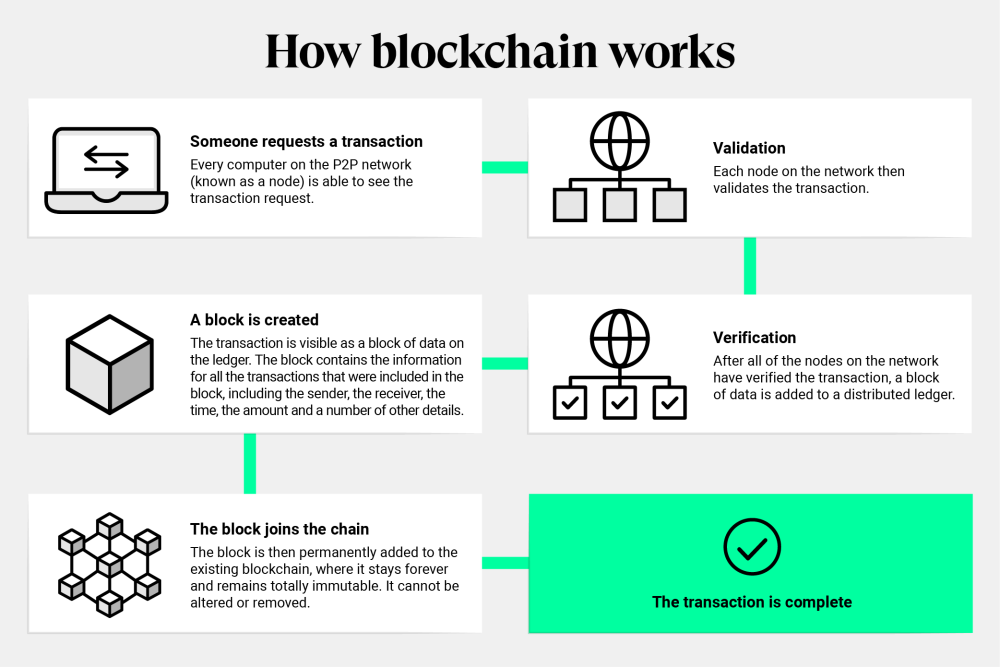
To grasp how a blockchain functions, one must look at the data structure itself. Unlike a traditional database that stores information in tables, a blockchain groups information together in “blocks.” Each block has a specific storage capacity and, when filled, is closed and linked to the previously filled block, forming a chain of data.
The Anatomy of a Block
Every block in a blockchain contains three primary elements: the data (such as transaction records), a “nonce” (a random number used in mining), and a “hash.” The hash is perhaps the most critical technical component. It is a unique cryptographic fingerprint generated by an algorithm (like SHA-256). If even a single character within the block is altered, the hash changes entirely. Because each block also contains the hash of the block preceding it, any attempt to tamper with past data would require recalculating every subsequent block in the chain, a feat that is computationally near-impossible in a sufficiently large network.
Hash Functions and Cryptographic Integrity
Cryptography is the “crypto” in cryptocurrency, but its application in blockchain is purely functional. Hash functions are one-way mathematical equations. They take an input of any size and produce a fixed-size string of characters. This ensures that the data is not only secure but also verifiable. The technical brilliance of the blockchain lies in this “chaining” of hashes, which creates a mathematical web of dependencies. If a malicious actor tries to change a transaction in Block 10, the hash of Block 10 changes. Since Block 11 contains Block 10’s old hash, Block 11 becomes invalid, and the chain breaks.
The Role of Nodes in a Distributed Network
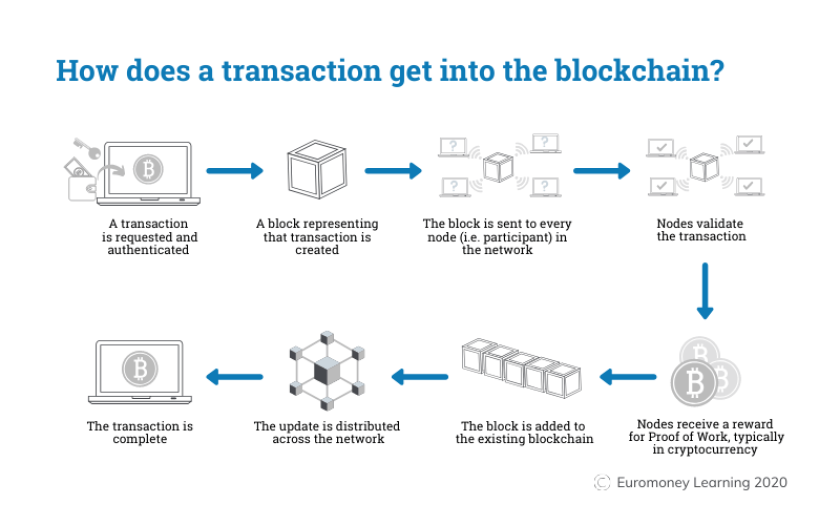
A blockchain does not exist on a single computer. Instead, it is maintained by a network of “nodes”—computers that each host a full copy of the ledger. This distribution is what makes the technology resilient. When a new block is proposed, it is broadcast to all nodes in the network. These nodes must use the blockchain’s specific software protocols to verify the validity of the new block before it is added to the chain. This peer-to-peer verification eliminates the “single point of failure” inherent in traditional centralized tech stacks.
Consensus Mechanisms: How the Network Agrees
Since there is no central server to decide which transactions are valid, the software must rely on a “consensus mechanism.” This is a set of rules that governs how nodes reach an agreement on the state of the ledger. These mechanisms solve the “Double Spend” problem, ensuring that a digital asset cannot be sent to two different recipients simultaneously.
Proof of Work (PoW) and the Mining Process
Proof of Work was the first consensus mechanism, popularized by the Bitcoin network. It requires nodes (miners) to solve complex mathematical puzzles to earn the right to add a new block to the chain. Technically, this involves finding a hash that starts with a specific number of zeros. The process requires immense computational power and hardware (ASICs). While energy-intensive, PoW provides an unparalleled level of security because the “cost” of attacking the network (the 51% attack) exceeds the potential gain, as an attacker would need to control more than half of the entire network’s computing power.
Proof of Stake (PoS) and the Evolution of Efficiency
As blockchain technology evolved, the need for more energy-efficient systems led to the development of Proof of Stake (PoS). In a PoS system, “validators” replace miners. Instead of solving puzzles, validators are chosen to create new blocks based on the number of tokens they “stake” or lock up as collateral. If a validator attempts to verify fraudulent transactions, they lose their stake. This cryptographic economic incentive ensures that the network remains secure while using 99% less electricity than PoW systems. Ethereum’s transition from PoW to PoS (known as “The Merge”) was one of the most significant technical upgrades in the history of software engineering.
Byzantine Fault Tolerance
At the heart of consensus is a computer science concept known as Byzantine Fault Tolerance (BFT). This refers to the ability of a distributed computer network to function correctly even if some of its nodes fail or act maliciously. Blockchain protocols are designed to be BFT-compliant, meaning they can reach a consensus as long as a two-thirds majority of the network remains honest. This technical safeguard is what allows decentralized systems to operate in “trustless” environments where participants do not need to know or trust one another.
Smart Contracts and Programmable Logic

While the earliest blockchains were designed solely to track the movement of digital currency, modern blockchains function as “World Computers.” This is made possible through smart contracts—self-executing pieces of code stored on the blockchain.
Defining Smart Contracts
A smart contract is a program that triggers an action when predefined conditions are met. Technically, it is a “state machine” that lives on the ledger. For example, a smart contract could be programmed to release funds only after a certain digital file is uploaded or a specific date is reached. Because these contracts are hosted on the blockchain, they are immutable and transparent. Once deployed, the code cannot be changed, and the execution is handled by the network nodes rather than a human intermediary.
Decentralized Applications (DApps)
Smart contracts serve as the back-end logic for Decentralized Applications, or DApps. While the user interface (front-end) of a DApp might look like a standard website or mobile app, its core operations are governed by smart contracts interacting with the blockchain. This allows for the creation of software that is resistant to censorship; no single entity can “turn off” a DApp because its logic is distributed across thousands of nodes worldwide.
Layer 1 vs. Layer 2 Scaling Solutions
A major technical challenge in blockchain development is “scalability”—the ability to process a high volume of transactions quickly. “Layer 1” refers to the base blockchain (like Bitcoin or Ethereum). To increase speed without compromising security, developers have built “Layer 2” solutions. These are secondary protocols built on top of the main chain (such as Optimistic Rollups or Zero-Knowledge Rollups). These technologies bundle hundreds of transactions into a single batch and then settle them on the Layer 1 chain, drastically increasing the throughput of the system.
Security Protocols and the Immutability Principle
The primary value proposition of blockchain technology is its security. This security is not the result of a single feature but rather the intersection of cryptography, decentralization, and game theory.
Public vs. Private Key Cryptography
Blockchain security relies heavily on asymmetric encryption. Every user has a pair of keys: a public key (which acts like an email address or account number) and a private key (which acts like a digital signature). When a transaction is initiated, the user signs it with their private key. The network uses the corresponding public key to verify that the signature is authentic without ever seeing the private key itself. This ensures that only the owner of an asset can authorize its movement.
The Immutability Principle
In traditional computing, data is “CRUD” (Create, Read, Update, Delete). In blockchain technology, the “Update” and “Delete” functions are non-existent. Blockchains are “append-only” ledgers. Once data is written into a block and confirmed by the network, it cannot be altered. This immutability is vital for maintaining a “single source of truth.” In technical terms, this is achieved by the recursive nature of hashing; changing an old block would invalidate all subsequent blocks, which the consensus protocol would immediately reject.
Mitigating 51% Attacks and Sybil Resistance
To maintain integrity, blockchains must guard against Sybil attacks, where a single user creates multiple fake identities to gain control of the network. Consensus mechanisms like PoW and PoS act as “Sybil resistance” tools by requiring a physical or financial cost to participate in governance. By making it prohibitively expensive to act maliciously, the technology ensures that the most profitable path for any participant is to follow the rules of the protocol.
The Future of Blockchain: Interoperability and Web3
As the technology matures, the focus is shifting from isolated chains to an interconnected ecosystem. This is the foundation of what many technologists call Web3—the decentralized version of the internet.
Cross-Chain Interoperability
Currently, different blockchains often operate in silos; Bitcoin cannot easily “talk” to Ethereum. Developers are working on “bridges” and “cross-chain messaging protocols” (like Polkadot or Cosmos) that allow data and assets to move seamlessly between different blockchain architectures. This requires sophisticated technical standards that can translate the state of one ledger to another without compromising security.
The Integration of AI and Blockchain
The intersection of Artificial Intelligence and blockchain is a burgeoning field of technical research. While AI can process vast amounts of data to make decisions, blockchain can provide a transparent, immutable record of why those decisions were made. Furthermore, decentralized networks can be used to provide the massive computing power required for training AI models, removing the reliance on centralized cloud providers.
Through these layers of cryptographic security, distributed consensus, and programmable logic, blockchain technology offers a robust alternative to traditional data management. It is a fundamental reinvention of how we store, verify, and transfer digital information, moving the world toward a more transparent and secure digital infrastructure.
aViewFromTheCave is a participant in the Amazon Services LLC Associates Program, an affiliate advertising program designed to provide a means for sites to earn advertising fees by advertising and linking to Amazon.com. Amazon, the Amazon logo, AmazonSupply, and the AmazonSupply logo are trademarks of Amazon.com, Inc. or its affiliates. As an Amazon Associate we earn affiliate commissions from qualifying purchases.