
The phrase “where can i get food near me” is more than just a common search query; it is a complex data request that triggers a sophisticated technological machine. In the early days of the internet, finding a meal required a directory and a map. Today, it involves a seamless orchestration of Global Positioning Systems (GPS), real-time data processing, artificial intelligence, and a vast ecosystem of interconnected software. This evolution represents the pinnacle of hyper-local technology, turning our smartphones into powerful digital concierges that understand our preferences, location, and immediate needs.

The Evolution of Hyper-Local Search Algorithms
When a user types a query into a search engine or voice assistant, the technology behind the scenes performs an incredible feat of data synthesis in milliseconds. The “near me” phenomenon has fundamentally changed how search algorithms are designed, shifting from keyword matching to context-aware intelligence.
GPS and Geofencing: The Backbone of Location Services
At the heart of any “near me” query is the Global Positioning System. Modern smartphones utilize a combination of satellite data, Wi-Fi triangulation, and cellular tower signals to pin-point a user’s location with startling accuracy. Tech companies have layered “geofencing” onto this capability—virtual perimeters that allow apps to recognize when a user enters a specific neighborhood or commercial zone. This allows for proactive suggestions; for example, your phone might notify you of a high-rated taco stand as you walk past, moving the search process from reactive to predictive.
AI-Driven Personalization: How Your Phone Knows What You Crave
Modern search engines like Google and Bing no longer provide the same results to everyone. Using machine learning (ML), these platforms analyze your previous search history, review habits, and even the time of day to curate results. If you frequently search for vegan options on Tuesday nights, the AI prioritizes plant-based bistros in your immediate vicinity. This use of “Neural Matching” allows search engines to understand the intent behind a query rather than just the literal words, ensuring that “late-night bites” leads you to a 24-hour diner rather than a closed grocery store.
The Ecosystem of Modern Food Discovery Apps
The search for food has moved beyond the browser and into a specialized ecosystem of applications. These apps serve as the bridge between hungry consumers and the digital presence of physical restaurants, utilizing complex UI/UX designs to streamline the decision-making process.
Aggregators vs. Direct Platforms: Yelp, Google Maps, and Beyond
The landscape is dominated by heavyweights like Yelp, TripAdvisor, and Google Maps. These platforms function as massive databases that rely on User-Generated Content (UGC). From a tech perspective, the challenge for these apps is data integrity. They must handle millions of photo uploads, sentiment analysis of reviews, and real-time updates of business hours. Google Maps, in particular, has integrated “Live View,” which uses augmented reality (AR) to overlay digital directions and restaurant labels onto the real world through a phone’s camera, making the “near me” search a literal visual experience.
The Rise of Super-Apps: Integrating Discovery and Delivery
In many regions, we are seeing the rise of “Super-Apps” like UberEats, DoorDash, and Grab. These platforms have evolved from simple delivery services into full-scale discovery engines. Their technical stack involves complex logistical algorithms that calculate “Estimated Time of Arrival” (ETA) by factoring in kitchen prep time, courier availability, and traffic patterns. When you search for food near you on these apps, the ranking is determined not just by distance, but by the efficiency of the logistical network. The tech must balance the load to ensure that a “near” restaurant can actually fulfill the order in a timely manner.
Technical Infrastructure of Modern Food Queries
Behind every restaurant listing is a sophisticated web of Application Programming Interfaces (APIs) and cloud databases. For a restaurant to appear “near you,” its digital footprint must be optimized and synchronized across multiple technical layers.
Real-Time Data Syncing and Cloud Integration
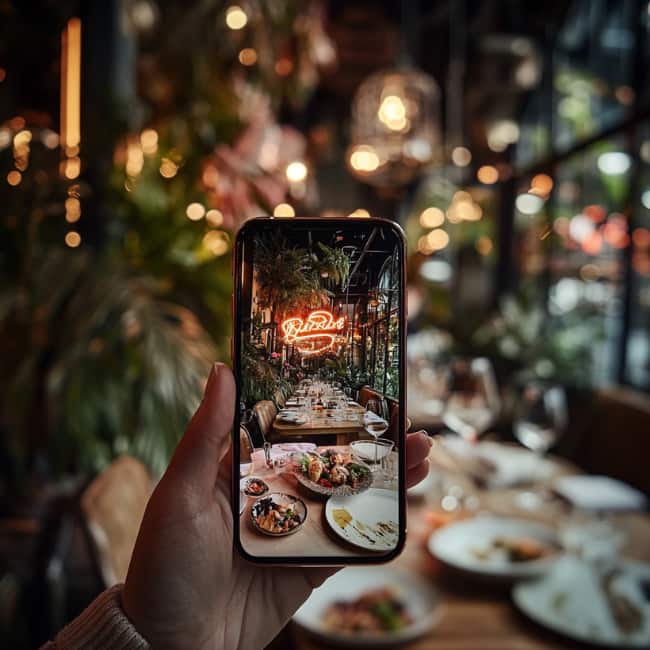
One of the greatest technical hurdles in food discovery is the “stale data” problem. There is nothing more frustrating than arriving at a restaurant only to find it closed or the menu changed. To solve this, developers use real-time syncing via cloud-based Point of Sale (POS) systems. When a restaurant updates its menu or marks an item as “sold out” on their internal system, that data is pushed through an API to Google, Yelp, and delivery apps simultaneously. This ensures that the user’s “near me” search results are accurate to the minute.
The Role of API Integration in Seamless Transactions
An API (Application Programming Interface) is the “handshake” between different software programs. When you search for food and then book a table or order a meal within the same app, you are witnessing an API at work. For instance, a discovery app might use the Google Maps API for the interface, the Stripe API for payment processing, and the OpenTable API for reservation management. This modular tech stack allows for a frictionless user experience where the transition from “searching” to “eating” happens without ever leaving a single interface.
Future Tech: Voice Search, AR, and Predictive Logistics
The future of “where can i get food near me” lies in removing the screen entirely. We are moving toward an era of ambient computing where our environment responds to our needs through voice and visual cues.
“Hey Siri, I’m Hungry”: Optimizing for Voice Search
Natural Language Processing (NLP) has advanced to the point where voice assistants can handle complex, multi-layered food queries. Instead of typing “pizza,” a user might say, “Find a highly-rated pizza place near me that has outdoor seating and is open until 11 PM.” The tech stack behind Siri, Alexa, or Google Assistant must parse this sentence, identify the constraints, and cross-reference multiple databases to provide a single, spoken recommendation. For tech developers, this means a shift toward “Zero-Click Searches,” where the goal is to provide the perfect answer immediately rather than a list of links.
Augmented Reality and Visual Search
Visual search technology, such as Google Lens, is changing the discovery game. Users can now point their camera at a restaurant’s storefront or even a photo of a dish on social media to find out where they can get that exact meal nearby. This involves computer vision and image recognition software that can identify ingredients or brand logos in real-time. Furthermore, AR navigation is making it easier for pedestrians in dense urban environments to find “hidden gem” eateries that might be tucked away in alleys or on upper floors of buildings, providing a digital breadcrumb trail to the doorstep.
Privacy, Security, and the Ethics of Location Data
As we rely more on technology to find our next meal, the collection of location data raises significant questions regarding digital security and user privacy.
Balancing Convenience with Data Protection
To provide an accurate “near me” result, an app must know exactly where you are. This persistent tracking of location data is a goldmine for advertisers but a concern for privacy advocates. Leading tech companies are responding with “Differential Privacy” and on-device processing. This means that instead of sending your precise GPS coordinates to a central server, the phone processes the location locally and only sends a generalized “anonymized” token to the cloud. Ensuring that a quest for a burger doesn’t lead to a permanent log of your movements is a major focus for modern app developers and cybersecurity experts.
The Security of Mobile Payments in Food Apps
The “near me” search often ends in a digital transaction. With the rise of mobile wallets like Apple Pay and Google Pay, the tech industry has implemented “tokenization” to secure these payments. When you pay for your meal through an app, your actual credit card number is never shared with the restaurant or the app provider. Instead, a one-time digital token is generated. This layer of security is essential in maintaining user trust within the food-tech ecosystem, ensuring that the convenience of modern discovery doesn’t come at the cost of financial vulnerability.
Conclusion
The next time you ask your device, “Where can I get food near me?” take a moment to appreciate the staggering amount of technology that goes into the answer. From the satellites orbiting the Earth to the machine learning models predicting your preference for spicy food, the “food near me” query is a testament to how far tech has come. We no longer just search for food; we interact with a living, breathing digital map of the world—one that is constantly updated, highly personalized, and increasingly invisible as it integrates into the fabric of our daily lives. As AI and AR continue to mature, the gap between hunger and satisfaction will only grow shorter, driven by the relentless innovation of the tech sector.
aViewFromTheCave is a participant in the Amazon Services LLC Associates Program, an affiliate advertising program designed to provide a means for sites to earn advertising fees by advertising and linking to Amazon.com. Amazon, the Amazon logo, AmazonSupply, and the AmazonSupply logo are trademarks of Amazon.com, Inc. or its affiliates. As an Amazon Associate we earn affiliate commissions from qualifying purchases.