
When investors ask, “What’s Amazon’s stock price?” they are often looking for more than just a real-time numerical quote. They are seeking an entry point into one of the most successful corporate stories in modern history. Amazon (ticker: AMZN) has evolved from a garage-based bookseller into a multi-trillion-dollar titan, and its stock price reflects a complex interplay of retail dominance, cloud computing leadership, and aggressive reinvestment strategies. To understand the value of Amazon today, one must look beyond the daily fluctuations of the NASDAQ and analyze the financial engines that drive its valuation.
The Fundamentals of Amazon (AMZN) Stock
To evaluate Amazon’s stock price accurately, an investor must first understand how the stock is structured and how its historical performance informs its current market standing. Unlike many legacy companies, Amazon’s valuation has traditionally been untethered from standard metrics like the Price-to-Earnings (P/E) ratio, driven instead by its relentless focus on cash flow and market share.
Historical Performance and the Impact of Stock Splits
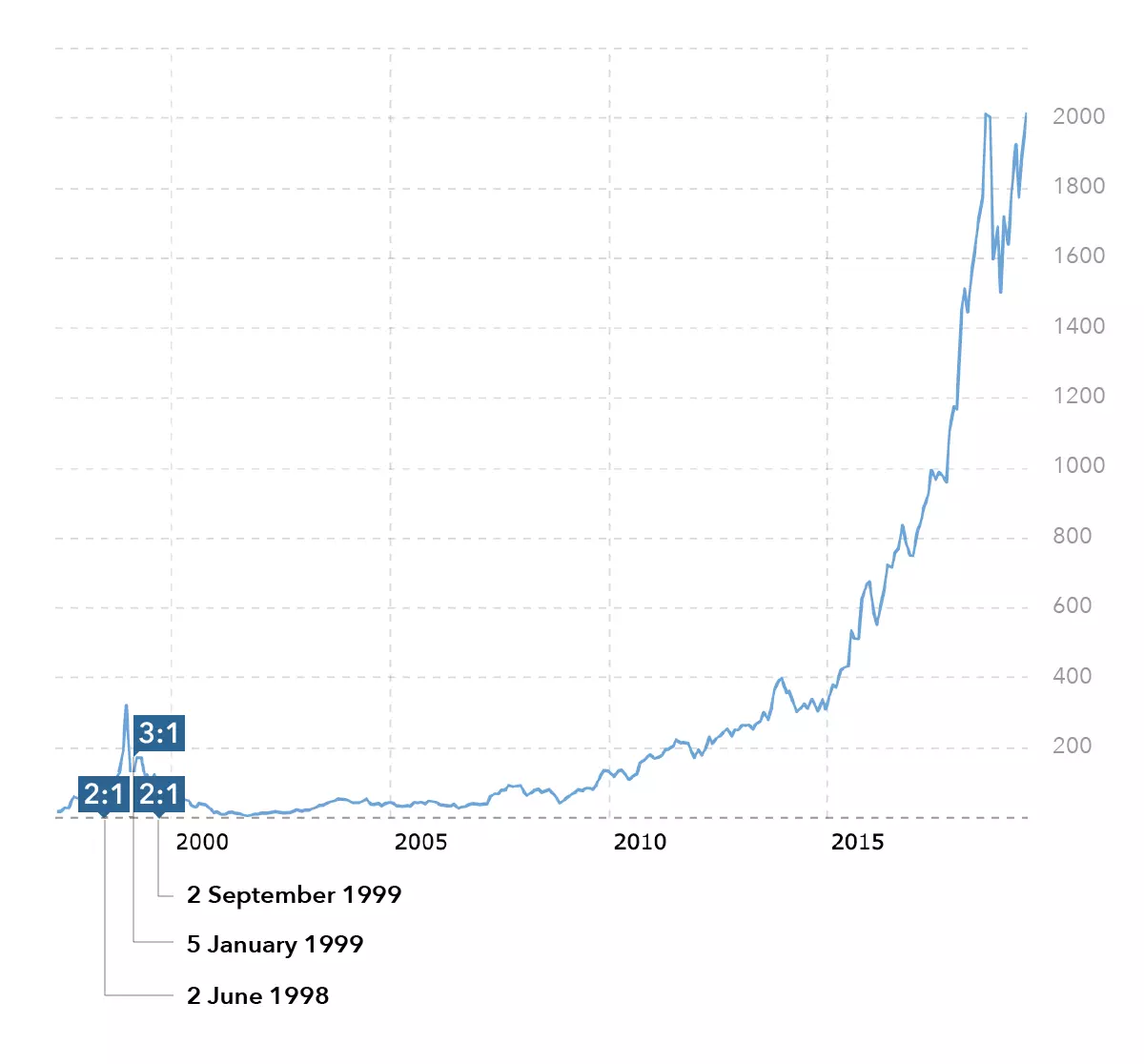
Amazon’s stock price history is a study in exponential growth. Since its Initial Public Offering (IPO) in 1997, the company has seen its value skyrocket, rewarding long-term “buy-and-hold” investors with massive returns. However, a high stock price can sometimes deter retail investors. To address this, Amazon has performed several stock splits, most notably the 20-for-1 split in June 2022.
Before this split, the price per share had climbed above $3,000, making it difficult for small-scale investors to purchase whole shares. The split brought the price down to a more accessible range without changing the company’s overall market capitalization. When checking the current price, it is essential to remember that the lower per-share cost is a result of increased share supply, not a decrease in the company’s intrinsic value.
Key Financial Metrics: P/E Ratio and Free Cash Flow
For decades, Amazon was criticized for having a “sky-high” P/E ratio. This was a deliberate choice by management to reinvest every dollar of profit back into the business—building fulfillment centers, developing AWS, and expanding the Prime ecosystem.
Today, investors look closely at Free Cash Flow (FCF) as a better barometer of Amazon’s health. FCF represents the cash a company generates after accounting for cash outflows to support operations and maintain its capital assets. As Amazon’s massive infrastructure investments begin to moderate, the company’s ability to generate significant FCF has become a primary driver of its stock price appreciation.
Factors Driving Amazon’s Valuation
Amazon is no longer just a “store.” It is a conglomerate of high-margin businesses. When the stock price moves, it is often a reaction to the performance of one of its three core pillars: E-commerce, Cloud Computing, and Advertising.
The Dominance of AWS (Amazon Web Services)
While the retail side of the business generates the most revenue, Amazon Web Services (AWS) generates the lion’s share of the operating profit. AWS is the world’s most comprehensive and broadly adopted cloud platform. Because cloud services carry much higher margins than retail, the growth rate of AWS is the single most important factor for many institutional investors. If AWS shows signs of acceleration, the stock price usually reacts positively, as it signals higher future profitability for the entire corporation.
E-commerce Growth and Prime Membership Retention
The “Amazon Flywheel” is powered by the Prime subscription model. By offering fast shipping, streaming content, and exclusive deals, Amazon secures a loyal customer base that spends significantly more than non-members. The efficiency of the retail division—measured by logistics costs and delivery speeds—directly impacts the bottom line. Recent shifts toward a regionalized fulfillment model have reduced “cost-to-serve,” allowing the retail segment to contribute more meaningfully to the stock’s overall value proposition.
The Rise of High-Margin Advertising
A relatively new but powerful driver of Amazon’s stock price is its digital advertising business. Amazon has become the third-largest digital ad platform in the U.S., trailing only Google and Meta. Because Amazon possesses “closed-loop” data—meaning they know exactly what a customer searches for and subsequently buys—their ad space is incredibly valuable to brands. This high-margin revenue stream provides a significant buffer for the lower-margin retail operations and is a key reason why analysts remain bullish on the stock’s long-term trajectory.

Analyzing Risks and Market Volatility
No investment is without risk, and Amazon’s stock price is susceptible to both macroeconomic trends and company-specific challenges. Understanding these risks is crucial for any investor looking to add AMZN to their portfolio.
Regulatory Pressures and Antitrust Concerns
One of the most persistent “dark clouds” over Amazon’s valuation is the threat of regulatory action. The Federal Trade Commission (FTC) and various international bodies have frequently scrutinized Amazon’s business practices, particularly regarding how it treats third-party sellers and its dominance in the marketplace. Talk of “breaking up Big Tech” often leads to temporary dips in the stock price. While a forced divestiture of AWS is considered unlikely by many experts, the ongoing legal costs and potential changes to business models remain a risk factor.
Competitive Landscape in Retail and Cloud
Amazon faces a two-front war. In the retail sector, traditional giants like Walmart and Target have significantly improved their e-commerce and “buy online, pick up in-store” (BOPIS) capabilities. In the cloud sector, Microsoft Azure and Google Cloud are formidable competitors that are fighting for market share, particularly in the realm of Artificial Intelligence (AI) integration. If Amazon is perceived to be losing its technological edge or its pricing power, the stock price could face downward pressure.
Investment Strategies for Amazon Stock
Deciding to invest in Amazon is only the first step; the second is determining the strategy that aligns with your financial goals. Given its history of volatility and long-term growth, different investors approach AMZN in various ways.
Long-term Buy-and-Hold vs. Short-term Trading
Amazon is widely considered a “core” holding for long-term growth portfolios. Its track record of innovation suggests that it is a company built for the decades, not just the fiscal quarters. Long-term investors often ignore daily price swings, focusing instead on the company’s 5-to-10-year roadmap.
Conversely, short-term traders might look at Amazon’s stock price during “earnings season” or major events like Prime Day. These events often cause significant volatility, providing opportunities for those looking to capitalize on price gaps. However, for the average person focused on wealth building, the “time in the market” usually beats “timing the market” when it comes to a giant like Amazon.
Diversification and Portfolio Allocation
Even a “blue-chip” tech stock like Amazon should not dominate an entire portfolio. Financial advisors often recommend a diversified approach. This can be achieved by holding Amazon through Exchange-Traded Funds (ETFs) like the QQQ (which tracks the NASDAQ-100) or consumer discretionary ETFs. This allows an investor to benefit from Amazon’s growth while mitigating the risk if the specific stock underperforms due to a localized crisis or regulatory setback.
The Future Outlook for AMZN
As we look toward the future, the question “What’s Amazon’s stock price?” will increasingly be answered by the company’s ability to innovate in emerging fields. The next decade of growth is expected to look very different from the last.
AI Integration and Infrastructure Spending
Artificial Intelligence is the new frontier for Amazon. From optimizing logistics through predictive modeling to offering generative AI tools via AWS (such as Amazon Bedrock), the company is positioning itself as a foundational layer of the AI economy. Investors are currently monitoring Amazon’s capital expenditure (CapEx). While high spending on data centers can depress short-term earnings, it is viewed as a necessary investment to secure the next twenty years of dominance.

Profitability Projections for the Next Decade
The consensus among many financial analysts is that Amazon is entering a “harvesting” phase. After years of massive build-outs in fulfillment and cloud infrastructure, the company is now focusing on operational excellence and margin expansion. As the advertising business grows and AWS continues to scale, the potential for Amazon to return value to shareholders—perhaps through future buybacks or even a dividend—remains a topic of high interest in the financial community.
In conclusion, Amazon’s stock price is a reflection of its status as an essential utility of the modern economy. Whether through the packages on our doorsteps or the servers that power the internet, Amazon’s financial footprint is undeniable. For the investor, the current price represents a stake in a company that has mastered the art of long-term thinking, making it a perennial subject of study for anyone interested in the mechanics of the global market.
aViewFromTheCave is a participant in the Amazon Services LLC Associates Program, an affiliate advertising program designed to provide a means for sites to earn advertising fees by advertising and linking to Amazon.com. Amazon, the Amazon logo, AmazonSupply, and the AmazonSupply logo are trademarks of Amazon.com, Inc. or its affiliates. As an Amazon Associate we earn affiliate commissions from qualifying purchases.