
The landscape of home entertainment has undergone a seismic shift over the last decade. The era of the “triple-play” bundle—where cable television, landline telephony, and internet were tethered together by coaxial cables—is rapidly receding. In its place, a sophisticated ecosystem of software, hardware, and high-speed networking has emerged. Cord-cutting is no longer just a trend for the tech-savvy; it is a fundamental transition in how digital media is distributed and consumed.
Transitioning away from cable requires more than just canceling a subscription; it demands an understanding of the underlying technologies that make “Live TV” possible over the internet. This guide explores the technical infrastructure, hardware requirements, and software platforms necessary to build a high-performance live TV setup without a cable box.

1. The Essential Hardware: From Streaming Sticks to Smart Hubs
The first step in watching live TV without cable is selecting the gateway through which the data will flow. While many modern televisions are “smart,” the internal processors in budget displays often struggle with the high-bitrate demands of live streaming. To ensure a lag-free experience, dedicated hardware is often the superior choice.
Dedicated Streaming Media Players
Devices like the Apple TV 4K, Roku Ultra, and Amazon Fire TV Stick 4K Max are the gold standard for cord-cutters. These gadgets act as specialized computers optimized for video decoding. The Apple TV 4K, for instance, utilizes the A15 Bionic chip, providing enough computational overhead to handle high-frame-rate HDR content and seamless app switching. These devices support advanced codecs like HEVC (H.265) and AV1, which allow for high-definition live streams at lower bandwidths, ensuring that your “Live” feed doesn’t buffer during critical moments.
Smart TV Operating Systems
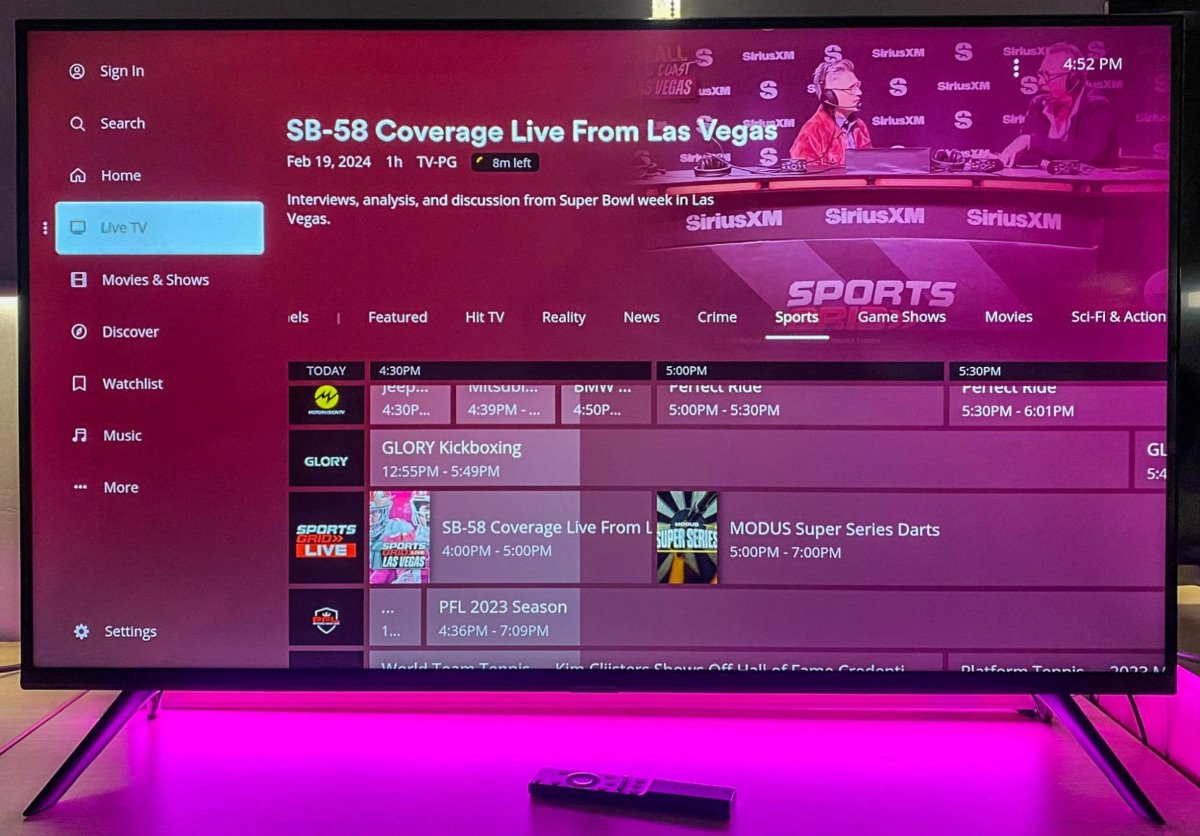
The software environment of your TV—be it Google TV, LG’s webOS, or Samsung’s Tizen—serves as the interface for your live TV apps. The tech trend here is towards consolidation. Google TV, for example, has integrated live TV tabs directly into the home screen, aggregating channels from various apps like Pluto TV and YouTube TV into a single Electronic Programming Guide (EPG). This software integration mimics the cable experience while operating entirely on internet protocols.
Gaming Consoles as Media Centers
The PlayStation 5 and Xbox Series X/S are often overlooked as live TV hubs. However, their immense processing power makes them excellent for streaming. They offer robust support for 4K output and spatial audio formats like Dolby Atmos. For users who already own these consoles, they provide a “zero-cost” hardware entry point into the world of live streaming, though they generally consume more power than a dedicated streaming stick.
2. Over-the-Top (OTT) Services: The Software Behind the Stream
In technical terms, watching live TV without cable is referred to as using a Virtual Multichannel Video Programming Distributor (vMVPD). These are software platforms that deliver linear television over the open internet (Over-the-Top), bypassing traditional closed-circuit cable networks.
The vMVPD Giants: YouTube TV, Hulu, and Fubo
The technology powering platforms like YouTube TV is vastly different from traditional cable. Instead of a dedicated signal sent via copper or fiber to a specific address, these services use adaptive bitrate streaming (ABR). ABR tech monitors your internet connection in real-time; if your bandwidth dips, the software instantly adjusts the video resolution to prevent a total freeze. This is why a stream might look blurry for a few seconds before snapping back into crisp 1080p or 4K.
YouTube TV, in particular, has innovated with “Multiview” technology. This allows the server to stitch four different live feeds into a single stream, which your hardware then decodes as one image. This is a massive technical feat that reduces the processing load on the end-user’s device compared to trying to stream four separate video files simultaneously.
Niche and FAST Platforms
Free Ad-supported Streaming TV (FAST) services like Pluto TV, Tubi, and Xumo have resurrected the “channel surfing” experience. These apps use cloud-based playout technology to simulate a linear broadcast. From a tech perspective, they are essentially a continuous loop of VOD (Video on Demand) content delivered as a live stream. This allows providers to offer hundreds of channels for free, supported by dynamic ad insertion (DAI) technology that targets commercials to the specific viewer in real-time.

3. The Digital Antenna: Harnessing ATSC 3.0 Technology
One of the most effective ways to watch live TV without cable is also the oldest: over-the-air (OTA) broadcasts. However, the technology has evolved far beyond the “rabbit ears” of the 20th century. Modern digital antennas are high-gain devices capable of pulling in uncompressed 1080p and even 4K signals.
The Leap to NextGen TV (ATSC 3.0)
The biggest tech advancement in broadcasting is ATSC 3.0, branded as “NextGen TV.” Unlike the previous ATSC 1.0 standard, which was strictly a one-way broadcast, ATSC 3.0 is built on the same Internet Protocol (IP) backbone as the web. This allows for features like 4K HDR video, localized emergency alerts, and interactive content. Because the signal is broadcast via radio waves and not compressed by a cable provider, the image quality of a live game via an antenna is often superior to the same game on cable or a streaming app.
Network-Attached Tuners
For those who want antenna TV but don’t want to run a cable to every television, devices like the SiliconDust HDHomeRun or Tablo serve as a bridge. These gadgets plug into your antenna and your home router. They take the raw broadcast signal, transcode it into a format compatible with your Wi-Fi network, and “broadcast” it to every device in your house. Through their proprietary apps, you can watch live local news or sports on your iPad, phone, or Smart TV, effectively creating a private streaming service within your home.
4. Network Optimization and Digital Security
Live TV is significantly more demanding on a home network than on-demand content like Netflix. On-demand video can be “buffered” (pre-loaded) minutes in advance. Live TV, however, happens in real-time. This requires a network optimized for low latency and high stability.
Wi-Fi 6 and Ethernet Backhaul
To watch live TV without interruptions, the underlying networking hardware must be robust. Wi-Fi 6 (802.11ax) and the newer Wi-Fi 6E are designed to handle high-density environments. These standards use OFDMA (Orthogonal Frequency-Division Multiple Access) to allow multiple devices to communicate with the router simultaneously without interference. For the most stable experience, “power users” often utilize Ethernet backhaul—connecting their streaming devices directly to the router with Cat6 cables to bypass the inherent instability of wireless signals.
The Role of VPNs in Streaming
Digital security and flexibility are also key components of the modern tech stack. Many cord-cutters utilize Virtual Private Networks (VPNs) to protect their data from ISP throttling. Internet Service Providers sometimes detect high-bandwidth live streams and artificially slow down the connection to manage network load. A VPN encrypts the traffic, making it impossible for the ISP to distinguish between a live 4K sports stream and standard web browsing, thereby maintaining consistent speeds. Additionally, VPNs allow users to maintain access to their home-town news or sports packages even when traveling, by securely routing their traffic through a server in their home region.
5. The Future: AI-Driven Discovery and Cloud DVR
The final frontier of watching live TV without cable lies in how we interact with content. The transition from hardware-based recording to Cloud DVR has changed the technical requirements of the home user.
Cloud DVR and Virtualized Storage
In the cable era, if you wanted to record a show, you needed a physical hard drive in your box. Today, services like Hulu + Live TV and YouTube TV offer “unlimited” DVR. This is made possible by massive server farms. When you “record” a show, you aren’t actually saving a file; the service simply flags that broadcast in the cloud and gives your account permission to access the stream later. This shift to virtualized storage eliminates hardware failure risks and allows you to watch your recordings on any device, anywhere.
AI and Personalization Trends
Artificial Intelligence is now the primary engine for content discovery. Machine learning algorithms analyze viewing habits in real-time to suggest live events you might be interested in. For example, if you frequently watch NBA games, AI-driven interfaces will prioritize live sports on your home screen the moment you turn on the device. Some platforms are even experimenting with AI-generated highlights, allowing viewers to “catch up” on a live game by automatically showing them the key plays they missed before jumping into the live feed.
Conclusion
Watching live TV without cable is a sophisticated technical endeavor that rewards those who understand the synergy between hardware and software. By leveraging high-powered streaming devices, optimized home networks, and the latest in broadcast standards like ATSC 3.0, viewers can achieve a level of visual quality and convenience that traditional cable simply cannot match. The future of television is not in the wire, but in the cloud, the code, and the airwaves.
aViewFromTheCave is a participant in the Amazon Services LLC Associates Program, an affiliate advertising program designed to provide a means for sites to earn advertising fees by advertising and linking to Amazon.com. Amazon, the Amazon logo, AmazonSupply, and the AmazonSupply logo are trademarks of Amazon.com, Inc. or its affiliates. As an Amazon Associate we earn affiliate commissions from qualifying purchases.