
Understanding your yearly income is the cornerstone of effective personal finance. Whether you are applying for a mortgage, planning a rigorous household budget, or setting long-term investment goals, knowing exactly how much money flows into your accounts over a twelve-month period is essential. While the calculation might seem straightforward for a salaried employee, it becomes increasingly complex when you factor in hourly fluctuations, bonuses, side hustles, and the critical distinction between gross and net earnings.
This guide provides a professional deep dive into the methodologies for calculating yearly income across various employment structures, ensuring you have the clarity needed to manage your wealth with precision.
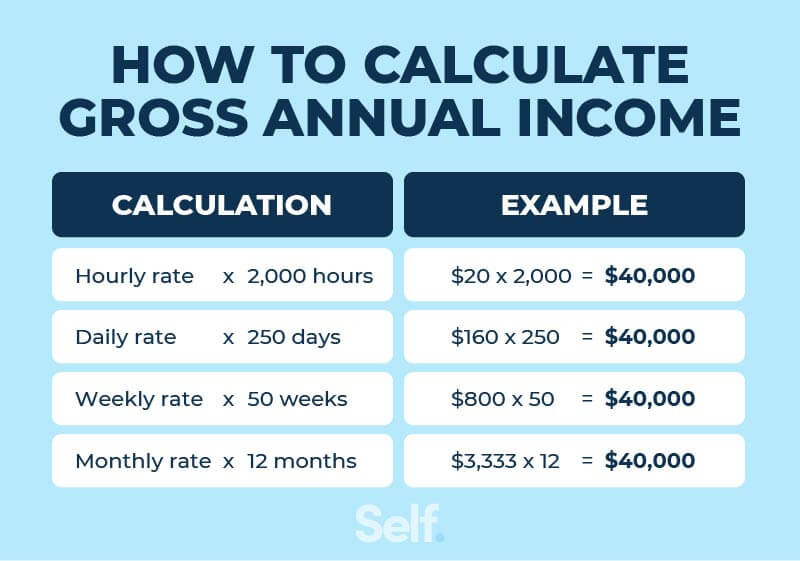
The Foundational Calculations: From Hourly to Annual
For many professionals, income is tied to time. Calculating an annual figure from a base hourly or weekly rate requires an understanding of standard labor practices and the calendar year.
The 2,080-Hour Standard
In the professional world, a full-time position is typically calculated based on a 40-hour workweek. Since there are 52 weeks in a year, the standard “work year” consists of 2,080 hours. To find your yearly income, simply multiply your hourly rate by 2,080. For example, a consultant earning $45 per hour would have a base yearly income of $93,600.
Weekly and Bi-Weekly Variations
If you are paid a set amount every week or every two weeks, the calculation is even simpler. For weekly pay, multiply your gross check by 52. For bi-weekly pay—which is the most common payroll cycle in North America—multiply your gross check by 26. It is important to note that in a bi-weekly system, there are two months out of the year where you will receive three paychecks instead of two. These “extra” checks are often vital for boosting savings or making lump-sum debt payments.
Monthly and Semi-Monthly Nuances
Distinguishing between bi-weekly and semi-monthly pay is crucial for accuracy. Semi-monthly employees are paid twice a month (usually the 1st and 15th), resulting in 24 pay periods per year. If your gross semi-monthly pay is $3,000, your yearly income is $72,000 ($3,000 x 24). If you were to mistakenly multiply that by 26, your projection would be off by $6,000, which could lead to significant errors in your financial planning.
Accounting for Variable Income and Incentives
In the modern economy, few people rely solely on a static base salary. To figure your true yearly income, you must account for the “plus-ups” that occur throughout the fiscal year.
Calculating Bonuses and Commissions
For those in sales or executive leadership, commissions and bonuses can represent a substantial percentage of total compensation. When figuring yearly income for the purpose of future budgeting, it is safest to use a “conservative average” based on the last two to three years of earnings. If you earned a $10,000 bonus last year and a $5,000 bonus the year before, using a $7,500 estimate for your yearly calculation provides a realistic middle ground.
The Rise of the Side Hustle
With the proliferation of the gig economy, many professionals supplement their primary careers with secondary income streams. Whether it is freelance graphic design, consulting, or e-commerce, these earnings must be tallied. Because side hustle income is often inconsistent, the best practice is to track “net profit” (total income minus business expenses) on a monthly basis and extrapolate based on year-to-date performance. If you have earned $1,200 per month on average over the last six months, you can reasonably project an additional $14,400 toward your yearly total.
Factoring in Passive Income
True financial health is often measured by passive income—money earned from investments rather than active labor. This includes dividends from stocks, interest from high-yield savings accounts, and rental income from real estate. To figure this into your yearly income, review your year-end 1099-DIV and 1099-INT forms. If you are reinvesting dividends, you may choose to exclude them from your “spendable” yearly income, but they should still be tracked as part of your total wealth accumulation.

Navigating the Divide: Gross vs. Net Income
One of the most frequent mistakes in personal finance is confusing gross income with net income. While banks look at gross income for loan approvals, your daily life is governed by your net income.
Understanding Gross Annual Income
Gross annual income is the total amount you earn before any deductions are taken out. This is the “sticker price” of your salary. This figure is vital for calculating your debt-to-income (DTI) ratio, a metric used by lenders to determine how much house or car you can afford. Most financial experts recommend keeping your total debt payments below 36% of your gross monthly income.
Calculating Net “Take-Home” Pay
Net income is what actually hits your bank account. To figure your yearly net income, you must subtract:
- Federal, State, and Local Taxes: Depending on your tax bracket, this can range from 10% to over 37%.
- FICA Taxes: Social Security and Medicare contributions.
- Healthcare Premiums: Deductions for medical, dental, and vision insurance.
- Retirement Contributions: Pre-tax contributions to a 401(k) or 403(b).
If your gross income is $100,000, your net income might only be $70,000. For budgeting purposes, your “yearly income” should always be viewed through the lens of net pay to avoid overextending your lifestyle.
The Impact of Self-Employment Tax
If you are an independent contractor or business owner, calculating yearly income requires an extra layer of diligence. You are responsible for both the employer and employee portions of Social Security and Medicare taxes (totaling 15.3%). When figuring your yearly income as a freelancer, always set aside roughly 25-30% of your gross earnings for tax obligations to ensure your “perceived” income matches your “actual” available funds.
Strategic Applications of Your Income Data
Once you have accurately figured your yearly income, the data becomes a powerful tool for wealth building and financial security.
Setting Realistic Savings Goals
A standard rule of thumb is the 50/30/20 rule: 50% of your net income for needs, 30% for wants, and 20% for savings and debt repayment. If you have calculated your yearly net income to be $60,000, you know immediately that your goal should be to divert $12,000 per year (or $1,000 per month) into savings or investments. Without a firm yearly figure, these goals remain vague and difficult to achieve.
Improving Creditworthiness and Lending Power
When you know your exact yearly gross income, you can communicate more effectively with financial institutions. Being able to document “Other Income” (like alimony, child support, or investment dividends) can significantly increase your borrowing power. If a lender sees a higher yearly income, they may offer lower interest rates, saving you tens of thousands of dollars over the life of a mortgage.
Tax Planning and Bracket Management
Knowing your projected yearly income allows you to engage in proactive tax planning. If you realize your yearly income will push you into a higher tax bracket, you might choose to increase your traditional 401(k) contributions to lower your taxable income. Conversely, if your income is lower in a particular year, it might be the perfect time to execute a Roth IRA conversion.

Conclusion: The Power of Financial Clarity
Figuring your yearly income is not a “one-and-done” task; it is a dynamic process that should be revisited at least twice a year or whenever a significant professional change occurs. By mastering the math behind your earnings—from the base hourly rate to the complexities of net take-home pay and variable bonuses—you transition from being a passive recipient of a paycheck to an active manager of your financial destiny.
Precision in calculating your income leads to precision in budgeting, which ultimately leads to the freedom of financial security. Whether you are aiming to retire early, buy your first home, or simply build a robust emergency fund, it all starts with one fundamental question: “What is my yearly income?” Now, you have the tools to answer it with total confidence.
aViewFromTheCave is a participant in the Amazon Services LLC Associates Program, an affiliate advertising program designed to provide a means for sites to earn advertising fees by advertising and linking to Amazon.com. Amazon, the Amazon logo, AmazonSupply, and the AmazonSupply logo are trademarks of Amazon.com, Inc. or its affiliates. As an Amazon Associate we earn affiliate commissions from qualifying purchases.