
Understanding what companies Google owns requires a fundamental shift in perspective: from seeing Google as merely a search engine to viewing it as a subsidiary of its parent company, Alphabet Inc. Since the massive corporate restructuring in 2015, Google has functioned as the core profit center of a much larger, multi-faceted conglomerate. For investors, business analysts, and those interested in corporate finance, the portfolio of companies under the Alphabet umbrella represents one of the most sophisticated examples of capital allocation and strategic acquisition in modern history.
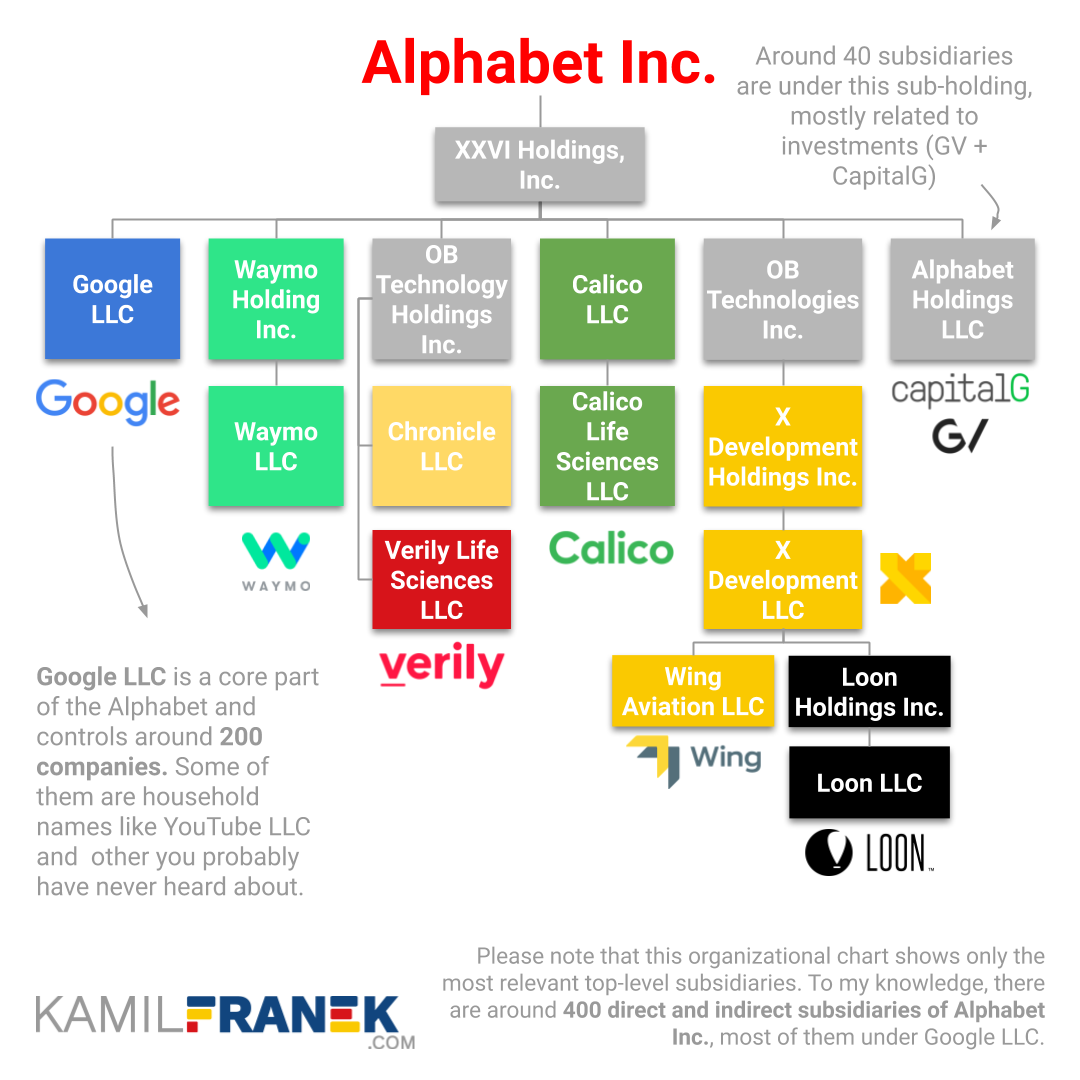
Alphabet’s strategy is not just about owning technology; it is about owning the infrastructure of the digital economy. From the video dominance of YouTube to the hardware integration of Fitbit and the future-leaning bets of Waymo, the companies Google owns are calculated moves designed to diversify revenue streams and ensure long-term fiscal dominance.
The Alphabet Evolution: Understanding the Holding Company Structure
In August 2015, Google co-founder Larry Page announced a radical change: the creation of Alphabet Inc. This was not a mere rebranding; it was a financial and structural overhaul. By creating a holding company, Google’s leadership sought to separate the highly profitable “core” internet products from the speculative, high-cost “moonshots.”
From Search Engine to Conglomerate
Originally, every venture—from life sciences to self-driving cars—was lumped under the Google brand. This created a lack of transparency for investors, as the massive profits from search advertising were being used to fund unproven experimental projects. The transition to Alphabet allowed the “Google” segment (Search, Ads, Maps, YouTube, and Android) to be reported separately from the “Other Bets.” This structural clarity provided the market with a better understanding of the company’s capital efficiency and profit margins.
The Financial Logic of the 2015 Restructuring
The primary driver behind the Alphabet structure was accountability. By giving each subsidiary its own CEO and financial reporting requirements, Alphabet ensured that each business unit was responsible for its own growth and resource management. From a “Money” perspective, this made Alphabet a more attractive stock (GOOG/GOOGL), as it combined the safety of a dominant market leader with the upside potential of a venture capital firm. It allowed the company to take massive financial risks without clouding the valuation of its primary cash cow.
The “Big Three” Acquisitions That Reshaped the Balance Sheet
Google’s growth has been fueled by a “buy vs. build” philosophy. While they build plenty, their most significant leaps in market capitalization have come from acquiring existing platforms and scaling them. Three specific acquisitions stand out as the pillars of Alphabet’s current financial strength.
YouTube: The Multi-Billion Dollar Content Goldmine
When Google purchased YouTube in 2006 for $1.65 billion, many financial analysts were skeptical. At the time, the site had no clear path to profitability and was plagued by copyright issues. Today, that acquisition is considered one of the greatest business moves in history. YouTube now generates tens of billions of dollars in annual ad revenue, rivaling major television networks and streaming giants like Netflix. It has become a crucial component of Alphabet’s “Google Services” segment, providing a moat that is virtually impossible for competitors to cross.
Android: Owning the Mobile Ecosystem Operating Revenue
In 2005, Google quietly acquired Android Inc. for an estimated $50 million. This acquisition allowed Google to provide a free, open-source operating system to manufacturers, ensuring that Google Search and the Play Store would be the default gateway for billions of mobile users. Financially, Android doesn’t make money through licensing fees, but rather through the “Android tax”—a percentage of every transaction in the Play Store and the data-driven advertising revenue generated from mobile users. It is the strategic anchor that keeps Google’s services at the center of the global economy.
DoubleClick and the Advertising Engine
To truly understand where Google’s money comes from, one must look at the 2007 acquisition of DoubleClick for $3.1 billion. This move was the catalyst for Google’s dominance in display advertising. By owning the tech that serves ads across the web, Google ensured it would profit not just from its own search pages, but from nearly every corner of the internet. This acquisition consolidated Google’s position as the middleman of the digital advertising market, a position it still holds today despite increasing regulatory scrutiny.
Strategic Diversification: Investing in Health, Hardware, and AI
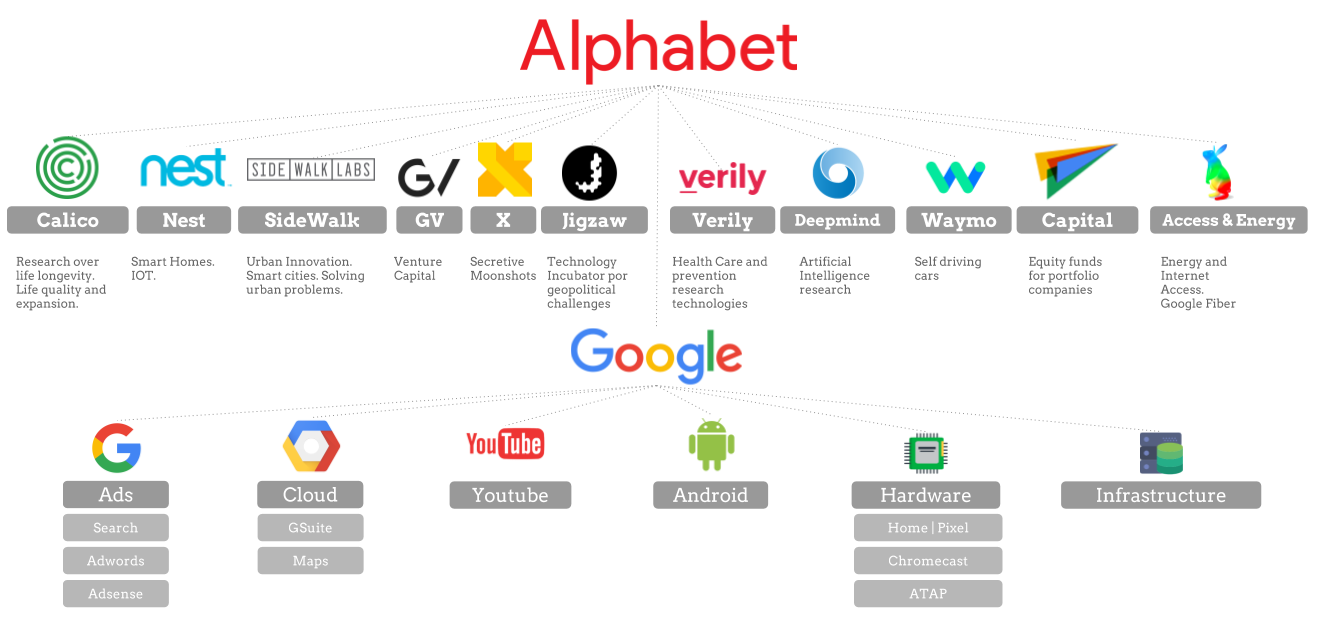
Beyond its core advertising business, Alphabet has used its massive cash reserves to enter new markets. These acquisitions represent a strategy of horizontal integration—finding new ways to interact with users and collect valuable data that can eventually be monetized.
Fitbit and the Wearable Data Market
Completed in 2021 for approximately $2.1 billion, the acquisition of Fitbit was a clear signal of Alphabet’s intent to compete in the health and wellness sector. While Fitbit sells hardware, the real value lies in the data and the integration into the “Google Fit” ecosystem. From a business finance perspective, this was a move to secure a foothold in the burgeoning digital health market, competing directly with Apple and Samsung for a share of the premium wearable segment.
Nest: Securing the Smart Home Economy
Google’s $3.2 billion acquisition of Nest Labs in 2014 was a bet on the “Internet of Things” (IoT). By owning the thermostat, the security camera, and the smoke detector, Google positioned itself as the operating system for the home. Financially, Nest has transitioned from a standalone subsidiary back into the Google hardware division, contributing to the “Google Other” revenue line which includes hardware sales and subscription services like Nest Aware.
DeepMind and the Future of AI Assets
In 2014, Google acquired the London-based AI lab DeepMind for roughly $500 million. At the time, DeepMind had no product and no revenue. However, as an asset, its value has grown exponentially. DeepMind’s breakthroughs in machine learning have been integrated into Google’s search algorithms, data center cooling systems (saving millions in energy costs), and more recently, the development of the Gemini AI models. In the current market, AI capability is the primary driver of tech valuations, making DeepMind one of Alphabet’s most strategically valuable holdings.
Moonshots and “Other Bets”: High-Risk, High-Reward Ventures
The “Other Bets” category in Alphabet’s financial statements is where the company’s most ambitious—and expensive—projects live. These are companies that Google owns that operate almost entirely independently, chasing industries that could one day be worth trillions.
Waymo: The Autonomous Vehicle Valuation
Waymo, formerly the Google self-driving car project, is perhaps the most famous “Other Bet.” While it currently operates at a loss, its private valuation has reached tens of billions of dollars. Waymo represents a play for the future of the transportation-as-a-service (TaaS) market. For Alphabet, the goal is to own the software and sensors that will power the global logistics and ride-sharing fleets of the future, effectively replacing the “driver” with an Alphabet-owned algorithm.
Verily and Calico: The Business of Longevity
Alphabet has also ventured into the life sciences through Verily (focused on healthcare and data) and Calico (focused on combating aging). These companies represent a long-term investment in the “silver economy.” By applying big data to biology, Alphabet is betting that the next great frontier for profit will be in life extension and personalized medicine. While these ventures are currently capital-intensive, they offer the kind of “asymmetric upside” that defines Alphabet’s investment philosophy.
Conclusion: The Future of Alphabet’s Acquisition Strategy
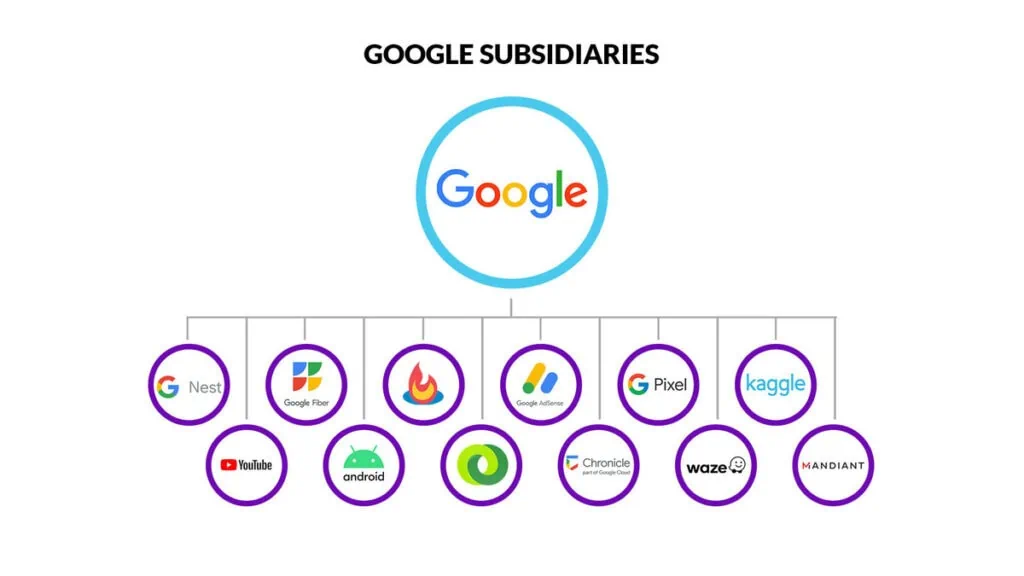
When we ask “what companies does Google own,” we are really looking at a map of the future of the global economy. From its humble beginnings as a search engine, the company has leveraged its initial profits to build a portfolio that touches almost every aspect of modern life. Alphabet Inc. operates as a sophisticated hybrid of an operating company and a venture capital firm.
The financial strength of Alphabet lies in its diversity. While search advertising remains the engine, the company has successfully built or bought “insurance policies” against shifts in technology. If users move from desktop to mobile, Google owns Android. If they move from search to video, Google owns YouTube. If they move toward AI-driven interfaces, Google owns DeepMind.
For the investor or business student, the takeaway is clear: Alphabet’s ownership structure is designed to ensure that no matter how the digital landscape evolves, an Alphabet-owned company will likely be providing the infrastructure. As the company continues to navigate antitrust challenges and the AI revolution, its portfolio of companies will remain its greatest asset, providing the data, talent, and revenue streams necessary to maintain its position at the pinnacle of the corporate world.
aViewFromTheCave is a participant in the Amazon Services LLC Associates Program, an affiliate advertising program designed to provide a means for sites to earn advertising fees by advertising and linking to Amazon.com. Amazon, the Amazon logo, AmazonSupply, and the AmazonSupply logo are trademarks of Amazon.com, Inc. or its affiliates. As an Amazon Associate we earn affiliate commissions from qualifying purchases.