
For millions of Americans, Social Security is the bedrock of retirement planning. Yet, despite its importance, the system remains shrouded in complexity. Many pre-retirees find themselves asking the same fundamental question: “How much Social Security will I actually receive?” The answer is not a simple flat rate; it is a personalized figure calculated based on your lifetime earnings, the age at which you choose to claim, and even your marital status.
Understanding these mechanics is essential for anyone looking to secure their financial future. In the context of personal finance and long-term wealth management, Social Security should be viewed not as a passive windfall, but as a dynamic asset that can be optimized through strategic planning. This guide explores the variables that determine your benefit amount and provides actionable insights on how to maximize your monthly payout.
Understanding the Calculation: How the SSA Determines Your Check
The Social Security Administration (SSA) uses a specific, multi-step formula to determine your benefit. Unlike a private pension that might be based on your final years of salary, Social Security looks at the “long game” of your career.
The 35-Year Average (AIME)
The first step in the calculation is determining your Average Indexed Monthly Earnings (AIME). The SSA looks at your entire work history and selects the 35 years in which you earned the most, adjusted for inflation. If you worked fewer than 35 years, the remaining years are averaged in as zeros, which can significantly pull down your benefit amount. For those in the middle of their careers, this highlights the importance of consistent earnings; even a few part-time years in your 50s can replace lower-earning years from your youth, effectively “boosting” your average.
The Bend Points and Progressive Formula (PIA)
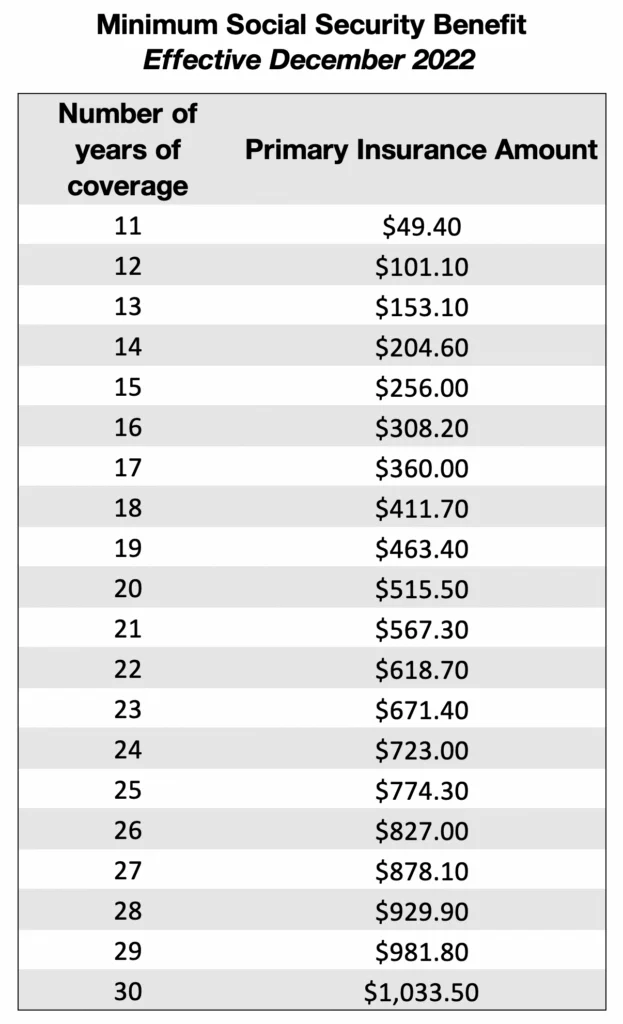
Once your AIME is established, the SSA applies a progressive formula to find your Primary Insurance Amount (PIA)—the benefit you would receive at your Full Retirement Age (FRA). The formula uses “bend points” to ensure that lower-income earners receive a higher percentage of their prior income than high-income earners. For example, you might receive 90% of your first $1,100 of monthly earnings, but only 32% of earnings above that up to a certain point, and 15% thereafter. This progressive structure is designed to provide a social safety net while still rewarding those who contributed more to the system through higher payroll taxes.
The Timing Factor: When to Claim for Maximum Impact
While your earnings history sets the baseline, the most significant decision you will make regarding “how much” you receive is when you choose to start taking payments. You can claim as early as age 62 or as late as age 70, but the financial implications of this choice are profound.
Filing at Age 62: The Early Bird Penalty
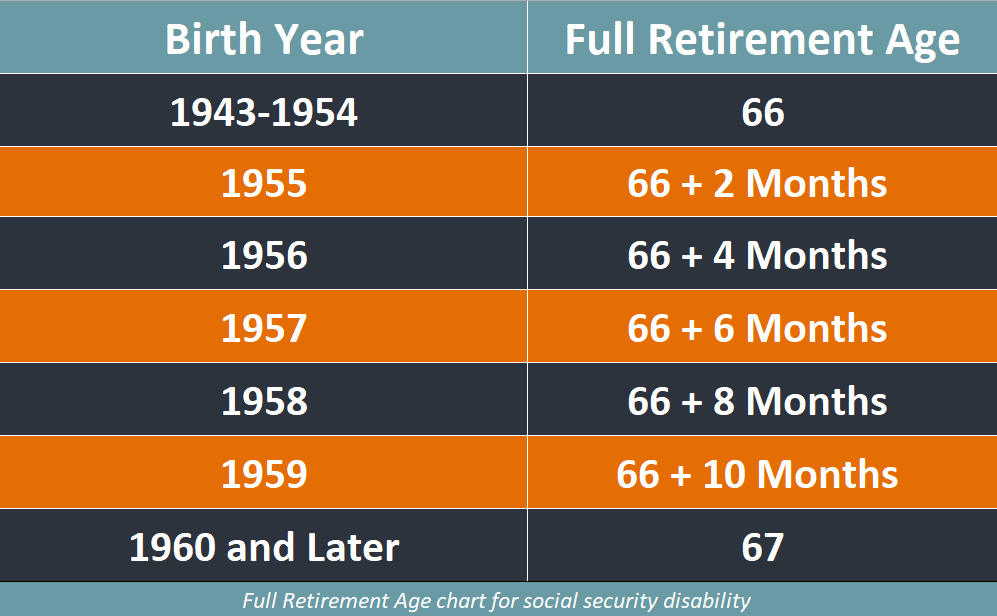
Claiming at the earliest possible age of 62 is a popular choice, but it comes with a permanent cost. If your Full Retirement Age is 67 (the standard for those born in 1960 or later) and you claim at 62, your monthly benefit is reduced by 30%. This reduction is permanent and remains in effect for the rest of your life. While claiming early provides immediate cash flow, it often results in a lower cumulative lifetime benefit unless the individual has a significantly shorter-than-average life expectancy.
Full Retirement Age (FRA): Your Baseline
Your Full Retirement Age is the point at which you are entitled to 100% of your calculated benefit. For decades, the FRA was 65, but it has gradually shifted to 67 to account for increased longevity. Knowing your specific FRA is the starting point for any retirement calculation. At this age, you can work and earn any amount of income without your benefits being withheld, making it a “sweet spot” for many who wish to transition into semi-retirement.
Delaying Until Age 70: The 8% Annual Boost
For those who can afford to wait, delaying benefits beyond your FRA offers one of the most guaranteed high-yield returns in the financial world. For every year you delay claiming past your FRA, up until age 70, your benefit increases by approximately 8%. This means that someone with an FRA of 67 who waits until 70 will receive 124% of their primary benefit amount. In an era of market volatility, this 8% guaranteed annual increase is an unparalleled tool for inflation-protected income.
Factors That Can Reduce Your Monthly Payout
It is a common misconception that once you qualify for Social Security, the check you see on your statement is exactly what you will keep. Several external factors can “leak” away from your net benefit.
The Retirement Earnings Test
If you claim Social Security before reaching your FRA and continue to work, your benefits may be temporarily reduced. In 2024, if you earn more than $22,320, the SSA withholds $1 for every $2 you earn above that limit. While these withheld funds are eventually “added back” to your benefit once you reach FRA, the immediate reduction can be a shock to those trying to supplement their income. This makes the timing of your claim even more critical if you plan to stay in the workforce.
Taxation of Social Security Benefits
High-income retirees often forget that Social Security benefits are taxable. If your “provisional income” (your adjusted gross income plus tax-exempt interest plus half of your Social Security benefits) exceeds $25,000 for individuals or $32,000 for couples, up to 50% of your benefits can be taxed. If you earn even more—over $34,000 for individuals or $44,000 for couples—up to 85% of your benefits may be subject to federal income tax. Proper tax planning, such as managing Roth IRA conversions or timing capital gains, is essential to minimize this “tax torpedo.”
Medicare Premium Deductions
Most retirees have their Medicare Part B premiums deducted directly from their Social Security checks. As healthcare costs rise, these premiums can take an increasing bite out of your monthly income. It is important to factor these costs into your net cash flow projections to ensure you aren’t overestimating your spendable income in retirement.
Strategies to Increase Your Future Social Security Income
If you are concerned that your projected Social Security amount isn’t enough, there are several levers you can pull within the “Money” niche of personal finance to increase that figure.
Boosting Your Career Earnings
Since Social Security is based on your 35 highest-earning years, any increase in your current salary directly impacts your future benefit. Pursuing a promotion, taking on a side hustle that pays into the Social Security system, or simply working a few extra years to replace low-earning years from your 20s can have a “compounding” effect on your retirement check.
Coordinating with a Spouse
Married couples have unique opportunities to maximize their collective benefits. Spousal benefits allow a lower-earning spouse to receive up to 50% of the higher earner’s benefit amount if it is higher than their own. A common strategy is for the lower-earning spouse to claim their own benefit early to provide cash flow, while the higher-earning spouse delays until age 70 to lock in the maximum possible benefit and survivor protection.
The “Wait and See” Strategy for High Earners
For high-net-worth individuals, Social Security might seem like a small portion of their portfolio. However, using Social Security as a “longevity insurance” policy is a sophisticated financial move. By spending down other taxable assets first and allowing Social Security to grow until age 70, you create a larger, inflation-adjusted, government-backed income floor that lasts as long as you do.
The Future of Social Security: Planning Beyond the Monthly Check
No discussion of “how much” Social Security you will get is complete without addressing the solvency of the system. While the headlines often suggest the program is “going bankrupt,” the reality is more nuanced.
Trust Fund Solvency and Potential Changes
The Social Security Trust Funds are currently projected to be depleted by the mid-2030s. However, even if the trust funds are exhausted, payroll taxes are still expected to cover approximately 75% to 80% of scheduled benefits. While legislative changes—such as raising the earnings cap or increasing the retirement age—are likely in the coming decade, Social Security is far from disappearing. Financial planners generally recommend projecting your benefits at 75% of the current estimate if you are decades away from retirement to build a conservative “margin of safety.”
Integrating Social Security into Your Total Portfolio
Ultimately, Social Security should be viewed as one “leg” of a three-legged stool, alongside personal savings (like 401ks or IRAs) and potential pensions or home equity. Knowing exactly “how much” you will get allows you to determine the “gap” that your personal investments must fill. If your Social Security will cover your fixed costs (housing, food, utilities), your investment portfolio can be managed more aggressively for growth. Conversely, if your Social Security benefit is low, your portfolio must be managed more conservatively to ensure it can cover essential expenses.
By treating Social Security as a primary financial asset and understanding the variables of AIME, FRA, and delayed credits, you can move from uncertainty to a position of informed control. The difference between a poorly timed claim and a strategic one can amount to hundreds of thousands of dollars over a lifetime—making this one of the most important “money” decisions you will ever make.
aViewFromTheCave is a participant in the Amazon Services LLC Associates Program, an affiliate advertising program designed to provide a means for sites to earn advertising fees by advertising and linking to Amazon.com. Amazon, the Amazon logo, AmazonSupply, and the AmazonSupply logo are trademarks of Amazon.com, Inc. or its affiliates. As an Amazon Associate we earn affiliate commissions from qualifying purchases.