
In the landscape of personal finance, few metrics are as psychologically rewarding and financially significant as a salary increase. Whether it arrives as a reward for a year of hard work, a promotion, or a cost-of-living adjustment, understanding the precise math behind your raise is essential for long-term financial planning. Knowing how to calculate a raise percentage is more than just a mathematical exercise; it is a tool for benchmarking your professional value, outperforming inflation, and optimizing your investment strategy.
This guide delves into the mechanics of salary increments, the economic factors that influence them, and how you can use this data to fuel your journey toward financial independence.
The Math of Financial Growth: How to Calculate Raise Percentage
At its core, calculating a raise percentage is a simple arithmetic operation, but the implications of that number resonate through your entire financial portfolio. When you understand the percentage, you can better compare your growth against market standards and your own historical earnings.
The Standard Formula
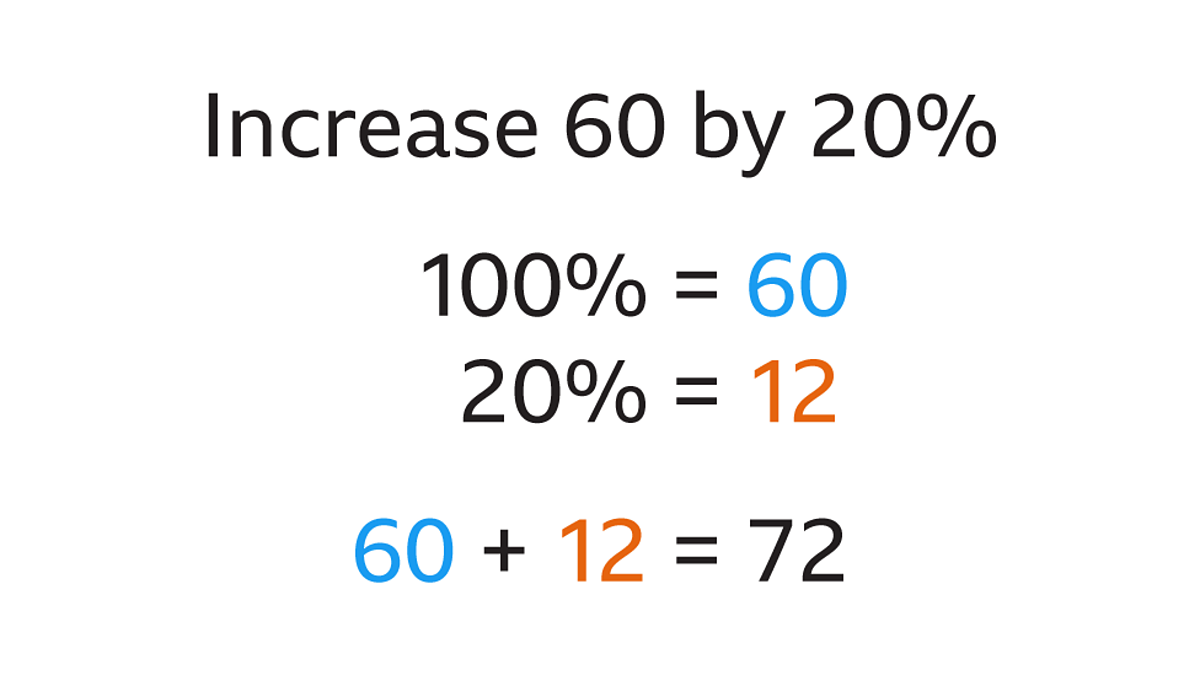
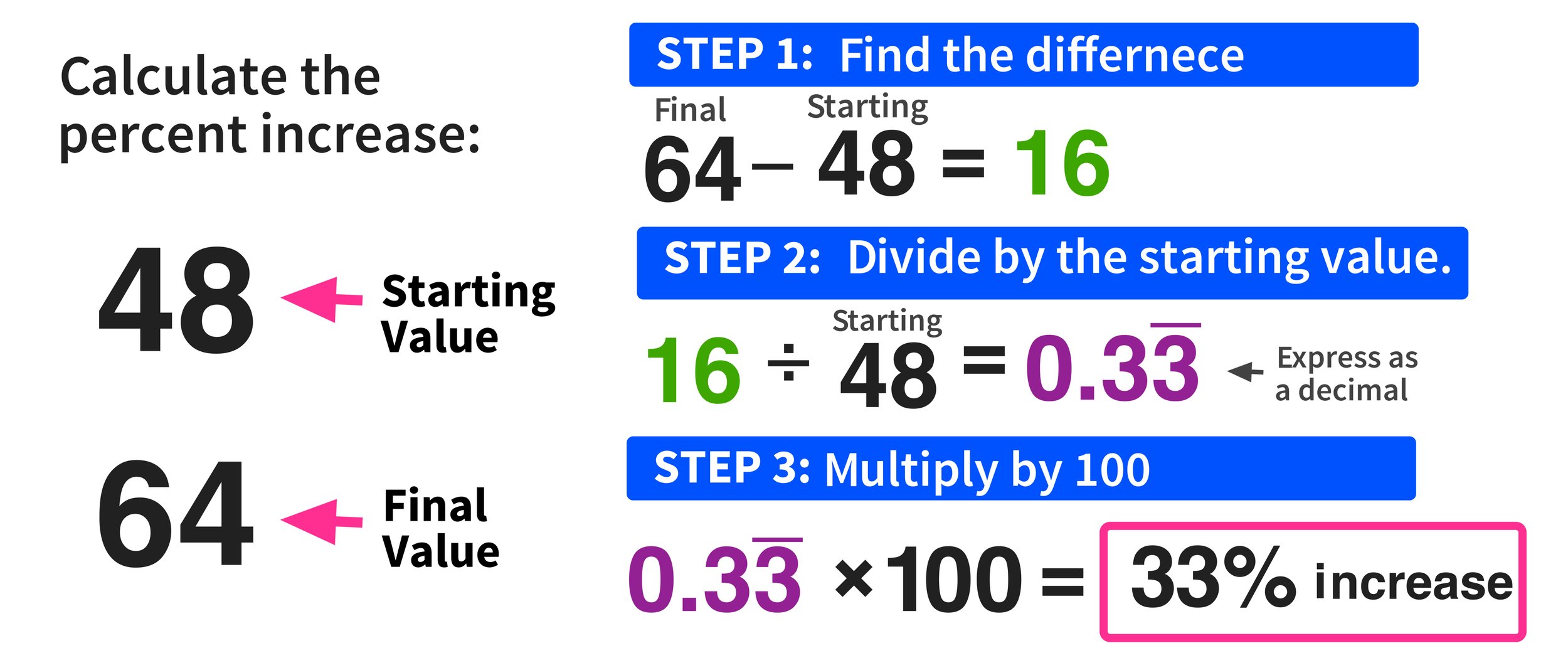
To find your raise percentage, you need two numbers: your old salary (or hourly rate) and your new salary. The formula is as follows:
- Subtract your old salary from your new salary to find the absolute dollar increase.
- Divide that increase by your original (old) salary.
- Multiply the result by 100 to convert it into a percentage.
Formula: ((New Salary - Old Salary) / Old Salary) * 100 = Raise Percentage
Practical Examples in Business Finance
Let’s look at a real-world scenario. Suppose you were earning $75,000 per year and received a promotion that bumped your salary to $84,000.
- $84,000 – $75,000 = $9,000 (The raise amount)
- $9,000 / $75,000 = 0.12
- 0.12 * 100 = 12%
In this case, you received a 12% raise. By identifying this percentage, you can now compare it to the average merit increase in your industry, which typically hovers between 3% and 5%. A 12% jump signifies a significant leap in your “Human Capital” value.
Calculating Hourly vs. Annual Increases
For those in the gig economy or hourly positions, the math remains the same. If your rate moves from $25.00 to $27.50:
- $2.50 / $25.00 = 0.10
- 0.10 * 100 = 10%
Understanding this percentage allows you to adjust your personal budget and savings contributions with precision, ensuring that every extra dollar earned is allocated toward wealth-building.
Beyond the Number: Understanding the Components of a Raise
A raise is rarely just a “gift” from an employer. From a financial perspective, it is a recalibration of your market value. To manage your personal finance effectively, you must understand what that percentage represents and whether it actually increases your purchasing power.
Cost of Living Adjustments (COLA) vs. Merit Increases
It is vital to distinguish between a COLA and a merit-based raise. A COLA is designed to keep your salary in line with the Consumer Price Index (CPI). If inflation is at 4% and you receive a 4% raise, your “real” income hasn’t increased; you are simply maintaining your current standard of living.
A merit increase, however, is a reward for performance. If you receive an 8% raise when inflation is 4%, you have achieved a 4% “real” gain in wealth. In the world of personal finance, focusing on the real gain is what determines your ability to save more and invest faster.

The Impact of Inflation on Your Real Raise
In a high-inflation environment, the nominal percentage of your raise can be deceptive. Financial tools and calculators often overlook “real wages.” To be financially savvy, you should always subtract the current annual inflation rate from your raise percentage.
If your raise percentage is lower than the inflation rate, you are effectively experiencing a pay cut in terms of purchasing power. This realization is often the catalyst for many professionals to seek higher-paying opportunities or negotiate more aggressively.
Factoring in Total Compensation
Sometimes, a raise isn’t reflected purely in your base salary. A comprehensive look at your financial tools should include employer 401(k) matching, bonuses, and stock options (RSUs). If your salary stays the same but your employer increases their 401(k) match from 3% to 6%, that is effectively a 3% raise directed straight into your retirement assets. When calculating your growth, always look at the “Total Compensation” percentage to see the full picture of your financial trajectory.
Strategic Negotiation: Turning Math into Money
Once you know how to calculate your raise percentage and understand its relation to the economy, you can use this data as leverage. Negotiation is a cornerstone of business finance, and approaching it with hard data increases your chances of success.
Market Research and Benchmarking
Before entering a salary negotiation, use financial tools and databases to find the median salary for your role. If you discover the market rate has increased by 15% over two years, but your raises have only totaled 6%, you have a data-backed argument for a market adjustment. Knowing your percentage helps you speak the language of the finance department, making your request for more money objective rather than emotional.
Quantifying Your Value Proposition
To secure a higher raise percentage, you must prove a Return on Investment (ROI) for your employer. In personal finance, we look for assets that appreciate; your employer looks for employees who generate value. If you can show that your work contributed to a 20% increase in department revenue, asking for a 10% raise becomes a logical business decision for the company.
The Timing of the Ask
Strategic finance is all about timing. Negotiating a raise is most effective during budget planning cycles or immediately following the completion of a high-value project. By calculating the potential raise percentage you desire ahead of time, you can present a clear, rounded figure that fits within the company’s fiscal projections while meeting your personal financial goals.
Long-term Financial Planning and the Power of Compounding Income
The ultimate goal of calculating and securing a raise is to accelerate your path to wealth. A raise is not just “extra money” for consumption; it is fuel for your investment engine.
Avoiding Lifestyle Creep
One of the greatest dangers in personal finance is “lifestyle creep”—the tendency to increase spending as income increases. If you receive a 10% raise and immediately increase your discretionary spending by 10%, your net worth growth remains stagnant.
The most effective wealth-builders treat a raise as “invisible money.” If you calculate a 5% raise, you might choose to automate a 5% increase in your brokerage account contributions before the money even hits your checking account. This keeps your standard of living stable while exponentially increasing your future wealth.
The Power of Compounding Increases
Small raise percentages, when compounded over a 30-year career, lead to massive wealth disparities. A person who negotiates a 5% annual raise versus someone who accepts a 3% annual raise will end up with significantly more lifetime earnings.
Furthermore, because many retirement contributions are percentage-based (e.g., contributing 10% of your salary to a 401(k)), every raise you calculate and receive automatically increases your retirement contributions. This “automated scaling” is one of the most powerful mechanisms in business finance for building a multi-million dollar nest egg.
Using Salary Hikes to Accelerate Financial Independence
For those following the FIRE (Financial Independence, Retire Early) movement, calculating raise percentages is a frequent ritual. Every increase in the “income” column of your spreadsheet shortens your “time to retirement” clock. By maintaining a high savings rate even as your salary percentage climbs, you create a widening gap between your income and expenses. This gap is where true financial freedom is built.
Conclusion
Calculating your raise percentage is the first step in taking professional and financial agency. It allows you to move beyond the excitement of a larger paycheck and into the analytical mindset required for sophisticated money management. By understanding the math, accounting for the hidden tax of inflation, and strategically reinvesting the surplus, you transform a simple salary bump into a powerful catalyst for long-term prosperity.
In the world of personal finance, you cannot manage what you do not measure. By mastering the calculation of your raise, you are measuring your progress, valuing your time, and securing your financial future.
aViewFromTheCave is a participant in the Amazon Services LLC Associates Program, an affiliate advertising program designed to provide a means for sites to earn advertising fees by advertising and linking to Amazon.com. Amazon, the Amazon logo, AmazonSupply, and the AmazonSupply logo are trademarks of Amazon.com, Inc. or its affiliates. As an Amazon Associate we earn affiliate commissions from qualifying purchases.