
In the world of finance, percentages are the universal language. Whether you are calculating the interest on a high-yield savings account, determining the capital gains tax on a stock sale, or analyzing the profit margins of a growing business, the ability to accurately derive a percentage of a number is a foundational skill. While the basic math may seem elementary, its application within the context of personal and business finance is where true wealth is built and managed.
Understanding how to manipulate these figures allows investors and entrepreneurs to move beyond guesswork and into the realm of data-driven decision-making. This guide will explore the mechanics of percentage calculations and apply them to the most critical sectors of your financial life.

The Core Mechanics: Why Understanding Percentages is Your Most Valuable Financial Asset
At its simplest level, a percentage represents a fraction of 100. However, in a financial context, a percentage is a tool used to measure growth, cost, risk, and efficiency. Before diving into complex investment strategies, one must master the basic movement of these numbers.
The Fundamental Formula
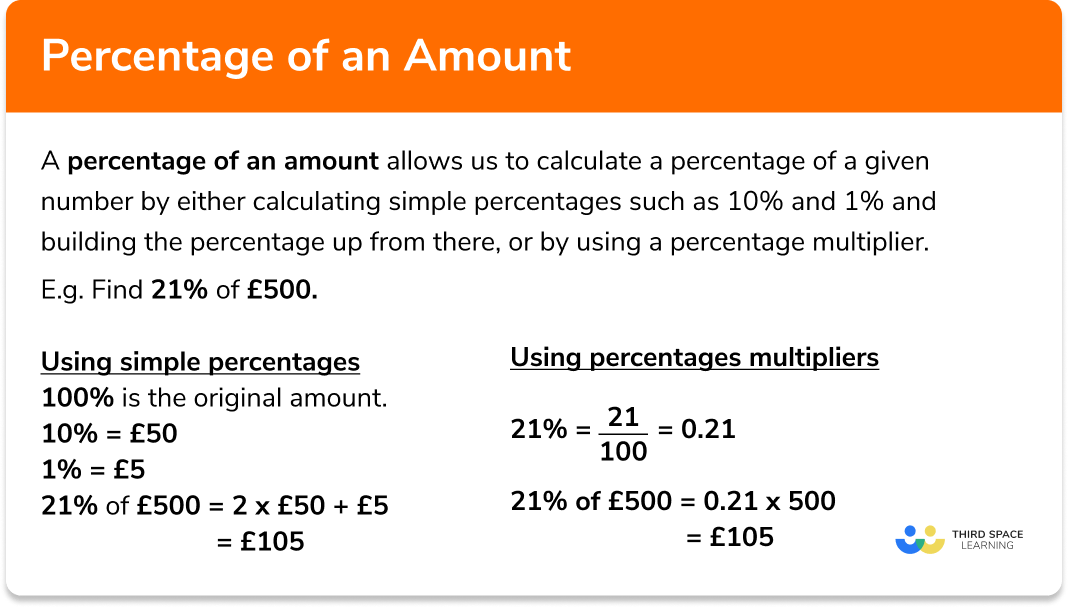
To find the percentage of a specific number, the formula is straightforward:
(Percentage / 100) × Total Number = Result
For example, if you want to find 15% of a $5,000 investment, you would divide 15 by 100 (0.15) and multiply it by 5,000, resulting in $750. In finance, this “Result” often represents your earnings, your taxes, or your interest payments. Mastering this quick conversion from a percentage to a decimal is the first step toward financial literacy.
Translating Percentages into Real-World Dollars
While the formula is simple, the psychological impact of percentages can be misleading. A 10% gain on a $1,000 portfolio is $100, while a 10% gain on a $1,000,000 portfolio is $100,000. Understanding the “base number” is just as important as the percentage itself. Professional money managers always look at the absolute dollar impact alongside the percentage change to ensure that the scale of a financial move aligns with their broader goals.
Percentages in Personal Wealth Management: Interest, Savings, and Debt
Personal finance is largely a game of percentages. From the interest you pay on a credit card to the yield you earn on a certificate of deposit (CD), these figures dictate how quickly your net worth grows or shrinks.
Decoding APY and APR
One of the most common applications of percentages is in Annual Percentage Yield (APY) and Annual Percentage Rate (APR).
- APR represents the annual rate of interest charged on borrowers or paid to investors.
- APY takes into account the effect of compounding interest—the process where interest earns interest.
When you are looking at a savings account, you want a high APY. When you are looking at a mortgage or an auto loan, you are focused on the APR. Being able to calculate the difference between these two can save you thousands of dollars over the life of a loan.
The Power of Compounding
The “Rule of 72” is a popular percentage-based shortcut used by financial advisors to estimate how long it will take for an investment to double. By dividing 72 by your annual percentage rate of return, you get the number of years required for your money to grow 100%. For instance, an investment with a 6% annual return will double in approximately 12 years (72 / 6 = 12). This simple use of percentages helps individuals visualize long-term wealth accumulation.
The 50/30/20 Rule: Percentage-Based Budgeting
Percentages are also the gold standard for budgeting. The 50/30/20 rule suggests allocating 50% of your after-tax income to needs, 30% to wants, and 20% to savings and debt repayment. By viewing your income through the lens of percentages rather than fixed dollar amounts, your budget becomes scalable. As your income increases, your savings automatically increase in tandem, preventing “lifestyle creep.”
Navigating the Markets: Percentages in Investment Strategy
In the stock market and real estate, percentages are used to measure performance and risk. Professional investors rarely talk about “making five dollars”; they talk about “a five percent return.”
Calculating Return on Investment (ROI)
The most critical metric for any investor is the Return on Investment (ROI). This is calculated by taking the net profit of an investment, dividing it by the original cost, and multiplying by 100.
ROI = [(Current Value – Original Cost) / Original Cost] × 100
If you purchased a stock for $150 and sold it for $200, your percentage gain is 33.3%. This allows you to compare the performance of different asset classes—such as comparing a real estate flip to a high-dividend stock—on an even playing field.
Understanding Dividend Yields
For income-focused investors, the dividend yield is a crucial percentage. It is calculated by dividing the annual dividend payment by the current share price. A 4% dividend yield on a stable utility stock might be more attractive than a 1% yield on a volatile tech stock, even if the tech stock has higher growth potential. Understanding how this percentage fluctuates with the stock price is key to timing your entries and exits in the market.
Portfolio Allocation and Risk Management
Modern Portfolio Theory relies heavily on percentage-based allocation. An investor might decide to hold 60% equities and 40% bonds. As the market shifts, these percentages will change. “Rebalancing” a portfolio involves selling assets that have grown to represent a higher percentage than intended and buying assets that have shrunk. This disciplined approach ensures that you are “buying low and selling high” based on mathematical targets rather than emotional impulses.
Business Finance and Profitability Metrics
For business owners and entrepreneurs, knowing how to get a percentage of a number is the difference between a thriving enterprise and bankruptcy. Percentages reveal the health of a company’s operations.
Gross Profit Margin vs. Net Profit Margin
Business success is measured by margins.
- Gross Profit Margin is calculated by subtracting the Cost of Goods Sold (COGS) from Total Revenue, then dividing that number by Revenue. It tells you how efficiently you are producing your product.
- Net Profit Margin is the “bottom line”—the percentage of revenue left over after all expenses, including taxes and interest, have been paid.
A company can have millions in revenue, but if its net profit margin is only 2%, it is in a precarious position. Conversely, a boutique consulting firm with lower revenue but a 40% net margin may be a much more lucrative business.
The Critical Difference Between Markup and Margin
A common mistake in business finance is confusing “markup” with “margin.”
- Markup is the percentage added to the cost to set a selling price.
- Margin is the percentage of the selling price that is profit.
If an item costs $80 and you want a 25% markup, you sell it for $100. However, that $20 profit represents only a 20% margin on the $100 sale. Miscalculating this percentage can lead to underpricing services and eroding the capital needed to scale the business.
The Impact of Taxes and Inflation on Your Percentage Gains
To truly understand your financial position, you must look at “real” numbers, which account for the percentages taken away by the government and the economy.
Effective Tax Rates
In many regions, income tax is progressive, meaning different portions of your income are taxed at different percentages (tax brackets). Your “effective tax rate” is the actual percentage of your total income that goes to the government. Calculating this allows you to determine how much of a raise or a bonus actually ends up in your pocket, which is vital for career planning and contract negotiations.
Adjusting for Inflation: The Real Rate of Return
Inflation is a percentage that represents the devaluing of currency over time. If your investment portfolio returns 7% in a year where inflation is 3%, your “real” rate of return is only 4%. When planning for retirement, it is essential to calculate future needs based on inflation-adjusted percentages. Failing to do so can result in a “nominal” fortune that lacks the purchasing power required to sustain your lifestyle.

Mastering the Math for Long-Term Prosperity
The question “how do you get a percentage of a number” may start in a primary school classroom, but it ends in the boardroom and the brokerage account. In the world of money, percentages provide the context necessary to evaluate opportunities and risks.
By consistently applying these formulas to your savings, your investments, and your business operations, you transition from a passive observer of your finances to an active manager of your wealth. Whether you are calculating the percentage of a discount at a store or the percentage of equity in a multi-million dollar merger, the math remains the same—and its mastery remains the most reliable path to financial freedom.
aViewFromTheCave is a participant in the Amazon Services LLC Associates Program, an affiliate advertising program designed to provide a means for sites to earn advertising fees by advertising and linking to Amazon.com. Amazon, the Amazon logo, AmazonSupply, and the AmazonSupply logo are trademarks of Amazon.com, Inc. or its affiliates. As an Amazon Associate we earn affiliate commissions from qualifying purchases.