
In the world of finance, percentages are the universal language. Whether you are analyzing stock market fluctuations, calculating the interest on a mortgage, determining a business’s profit margin, or simply trying to figure out a discount at a retail store, the ability to accurately calculate percentages is a fundamental pillar of financial literacy. While modern smartphones and financial software have simplified the process, understanding the underlying mechanics of how to calculate a percentage on a calculator remains an essential skill for any professional or savvy investor.
This guide delves into the technical and practical aspects of percentage calculations within the realm of personal and business finance, ensuring you can navigate complex financial data with precision and confidence.
The Fundamental Mechanics of Percentage Calculations
To use a calculator effectively for financial purposes, one must first understand that a “percent” literally translates to “per hundred.” When we speak of 5%, we are describing 5 out of every 100 units. On a calculator, this relationship is expressed through decimals or the dedicated percentage (%) key.
Finding the Percentage of a Specific Total
The most common financial calculation involves finding a specific portion of a total sum. For example, if you need to set aside 15% of a $5,000 commission check for taxes, the formula is:
Total Amount × (Percentage / 100)
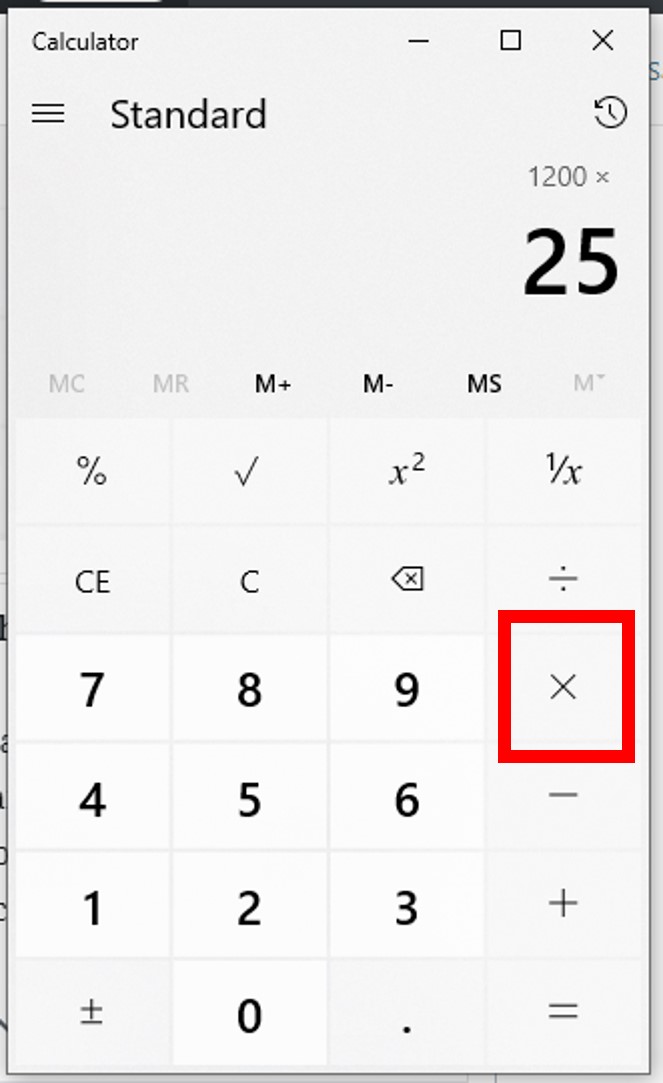
On a standard calculator, you would enter 5000, press the multiplication sign (×), enter 15, and then press the percentage key (%). The calculator automatically treats the “15%” as “0.15,” yielding the result of $750. If your calculator lacks a percentage key, you simply manually convert the percentage to a decimal by moving the decimal point two places to the left: 5000 × 0.15 = 750.
Calculating Percentage Change: Growth and Loss
In investing, knowing the raw dollar change is often less important than knowing the percentage change. If a stock rises from $50 to $75, its percentage increase tells you more about the investment’s performance than the $25 gain itself. The formula for percentage change is:
((New Value - Old Value) / Old Value) × 100
Using a calculator:
- Subtract the original price from the new price (
75 - 50 = 25). - Divide that result by the original price (
25 / 50 = 0.5). - Multiply by 100 (or use the % key) to get 50%.
Working Backward: Finding the Original Amount
Financial professionals often need to “gross up” a figure. If you received a net payment of $1,200 after a 20% flat tax was withheld, how much was the original gross amount? To find this, you divide the net amount by the remainder of the percentage.
1200 / (1 - 0.20) = 1200 / 0.80 = 1500.
Understanding this reverse calculation is vital for budgeting and ensuring that net income goals are met after accounting for mandatory outflows.
Practical Applications in Consumer and Personal Finance
Mastering the calculator for everyday financial decisions can lead to significant long-term savings. In consumer finance, percentages are often used to entice or obscure, making it vital to verify the math independently.
Mastering Sales Discounts and Markdowns
Retailers often use “percent off” marketing. If an item is $250 with a 35% discount, the quickest way to find the final price on a calculator is not to find the discount and subtract it, but to multiply by the remaining value. If 35% is taken off, 65% of the price remains.
250 × 0.65 = 162.50.
This “complementary percentage” method is faster and reduces the number of steps, minimizing the potential for entry errors on your device.
Estimating Sales Tax and Gratuity
Tax and tipping are additive percentages. To calculate a total including a 15% tip on a $80 restaurant bill, you multiply by 1.15. The “1” represents the original 100% of the bill, and the “.15” represents the additional tip.
80 × 1.15 = 92.
This method is particularly useful when using a calculator app on a smartphone during business lunches or travel, allowing for instant verification of the total amount to be charged to a corporate card.

The Impact of Interest Rates on Debt
When managing credit cards or loans, the Annual Percentage Rate (APR) is the most critical number. If you carry a $2,000 balance on a card with a 24% APR, the monthly interest is roughly 2% (24% divided by 12 months). On a calculator, you can estimate your monthly interest charge by entering 2000 × 0.02, which equals $40. Seeing this percentage-driven cost in real-time is a powerful motivator for debt or credit management.
Investment Analytics and Wealth Building
For investors, percentages are the primary metric for evaluating risk and reward. Raw numbers can be deceiving; a $1,000 gain is impressive on a $5,000 investment but negligible on a $1,000,000 portfolio.
Calculating Return on Investment (ROI)
ROI is the ultimate “Money” metric. It measures the efficiency of an investment. The formula is:
(Net Profit / Cost of Investment) × 100
If you invested $10,000 in a mutual fund and sold it for $12,500, your profit is $2,500. Using your calculator, 2500 / 10000 = 0.25. Convert to a percentage, and you have a 25% ROI. High-level investors use this percentage to compare the performance of vastly different asset classes, such as real estate versus equities.
Portfolio Allocation and Diversification
A balanced portfolio is usually defined by percentage targets (e.g., 60% stocks, 40% bonds). If your total portfolio is worth $150,000, you can use your calculator to determine if you are “overweight” in a specific sector.
150,000 × 0.60 = 90,000.
If your current stock holdings are worth $100,000, the percentage calculation (100,000 / 150,000 = 66.6%) tells you that you need to rebalance to return to your 60% target.
Understanding Inflation’s Erosion of Purchasing Power
Inflation is expressed as a percentage, and its effect is compound. If the inflation rate is 4%, your money loses 4% of its purchasing power annually. To see what $100,000 will be worth in terms of today’s “real” value after one year of 4% inflation, you would calculate:
100,000 / 1.04 = 96,153.84.
This calculation highlights the “hurdle rate”—the minimum percentage return an investor must earn just to break even against the rising cost of living.
Business Financial Ratios for Entrepreneurs
For those running a business or side hustle, percentage calculations are the heartbeat of the operation. They distinguish between a business that is merely “busy” and one that is actually “profitable.”
Gross and Net Profit Margins
A common mistake for new entrepreneurs is focusing on revenue rather than margin. If a product sells for $100 and costs $70 to produce, the gross profit is $30. The gross profit margin is:
(Profit / Revenue) × 100
30 / 100 = 30%.
Calculated on a handheld device or spreadsheet, keeping a constant eye on this percentage ensures that as costs (like shipping or raw materials) rise, your business model remains viable. If your margin drops from 30% to 20%, your calculator will warn you that you need to either cut costs or raise prices.
Calculating Markup for Sustainable Pricing
Markup is often confused with margin, but they are calculated differently. Markup is the percentage added to the cost to reach the selling price.
(Selling Price - Cost) / Cost
Using the same example: (100 - 70) / 70 = 0.428. This is a 42.8% markup. Entrepreneurs must use their calculators to ensure their markup is high enough to cover not just the cost of goods, but also overhead and desired net profit.
Common Pitfalls and Calculator Errors to Avoid
While calculators are precise, the “human interface” is where most financial errors occur. Understanding the logic prevents “garbage in, garbage out” scenarios.
The Danger of Cumulative Percentages
A common financial trap is the belief that percentages are additive in a simple linear fashion. For example, if a stock drops by 50% and then rises by 50%, many assume they are back to “even.” However, the calculator proves otherwise:
$100 - 50% = $50$50 + 50% = $75
The calculator reveals a 25% total loss. This insight is crucial for risk management and understanding why avoiding large “drawdowns” is more important than chasing high returns.
Order of Operations in Complex Financial Formulas
When using a calculator for complex formulas like Compound Annual Growth Rate (CAGR) or loan amortizations, the order of operations (PEMDAS/BODMAS) is vital. Always calculate the figures inside the parentheses first. If you are calculating a 5% interest increase on a total that already includes a 10% tax, you must calculate each stage sequentially or use parentheses to ensure the calculator doesn’t apply the 5% only to the tax portion.

Conclusion: The Power of the Percentage
Calculating a percentage on a calculator is more than just a sequence of button presses; it is a vital exercise in financial clarity. By mastering these techniques, you move away from “guesstimating” your financial health and toward a data-driven approach to wealth management. Whether you are tracking the ROI of a new investment, managing a business margin, or simply optimizing your monthly budget, the percentage remains your most reliable tool for navigating the complexities of the monetary world. Stay precise, calculate often, and let the math guide your financial journey.
aViewFromTheCave is a participant in the Amazon Services LLC Associates Program, an affiliate advertising program designed to provide a means for sites to earn advertising fees by advertising and linking to Amazon.com. Amazon, the Amazon logo, AmazonSupply, and the AmazonSupply logo are trademarks of Amazon.com, Inc. or its affiliates. As an Amazon Associate we earn affiliate commissions from qualifying purchases.