
The stock market is often viewed as a complex labyrinth of numbers, flashing green and red tickers, and high-stakes shouting on trading floors. However, at its core, the stock market is one of the most powerful engines for wealth creation ever devised. It is a sophisticated marketplace where ownership in the world’s most influential companies is bought and sold, providing a bridge between businesses needing capital and individuals seeking to grow their personal net worth.
To truly understand “what is about the stock market,” one must look beyond the daily price fluctuations and see it as a reflection of the global economy. It is a system built on trust, evaluation, and the collective belief in future growth. Whether you are a novice looking to make your first investment or a seasoned professional refining a portfolio, understanding the mechanics, strategies, and psychological drivers of the market is essential for financial success.
The Mechanics of the Market: How the Ecosystem Functions
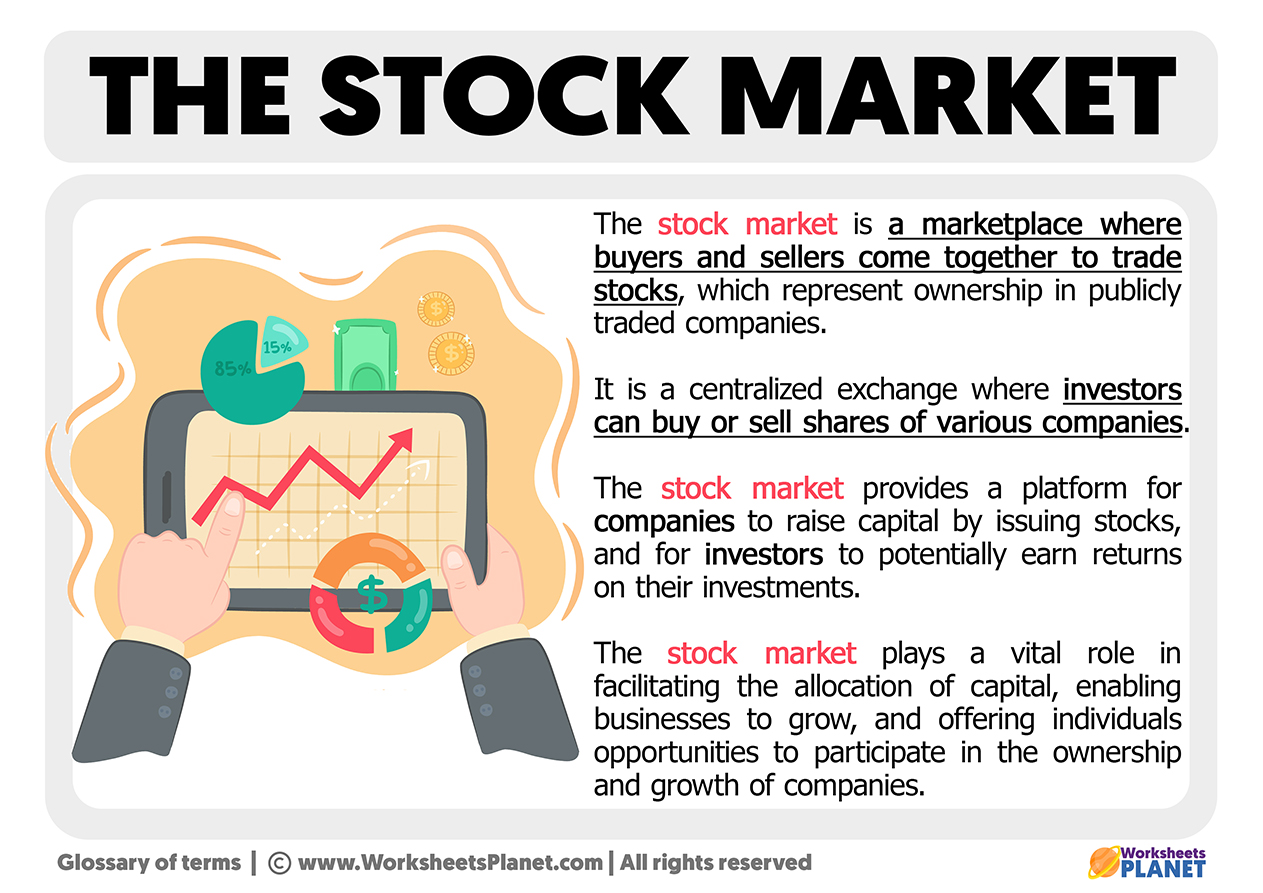
At its simplest, the stock market is a network of exchanges where investors buy and sell shares of publicly held companies. These exchanges—such as the New York Stock Exchange (NYSE) or the NASDAQ—act as organized marketplaces that ensure the fair and orderly trading of securities.
The Role of Public Exchanges and Liquidity
Public exchanges serve as the infrastructure for the financial world. They provide “liquidity,” which is the ability to convert an asset into cash quickly without significantly affecting its price. Without these exchanges, selling your shares in a company would require you to find a private buyer yourself—a tedious and difficult process. By centralizing buyers and sellers, the stock market ensures that there is almost always someone on the other side of a trade.
Primary vs. Secondary Markets
It is important to distinguish between how a company first enters the market and how it is traded thereafter. In the Primary Market, a company issues new shares to the public for the first time through an Initial Public Offering (IPO). This is where the company receives capital directly from investors to fund expansion or pay off debt.
Once those shares are in the hands of the public, they trade on the Secondary Market. This is what most people refer to when they talk about “the stock market.” In this arena, investors trade among themselves; the company that issued the stock does not receive money from these daily transactions, though it cares deeply about its share price as a measure of corporate health.
Price Discovery and the Auction Process
How is the price of a stock determined? It is a continuous process of price discovery. Every stock has a “bid” (the highest price a buyer is willing to pay) and an “ask” (the lowest price a seller is willing to accept). When these two meet, a trade occurs. This process is influenced by everything from a company’s quarterly earnings reports to geopolitical events and changes in consumer behavior.
Investment Vehicles: Navigating Different Asset Classes
Not every investment in the stock market looks the same. Depending on your financial goals—whether you seek aggressive growth, steady income, or capital preservation—you must choose the right “vehicle” for your capital.
Common Stocks vs. Preferred Stocks
When you buy “common stock,” you are purchasing a fractional piece of ownership in a company. You typically gain voting rights and the potential for capital appreciation. If the company thrives, your shares become more valuable.
Preferred stocks, on the other hand, function somewhat like a hybrid between a stock and a bond. They usually do not offer voting rights, but they have a higher claim on assets and earnings. For example, preferred shareholders receive dividends before common shareholders do. This is often a preferred route for investors seeking consistent income rather than explosive growth.
The Rise of Exchange-Traded Funds (ETFs) and Mutual Funds
For many individual investors, picking single stocks is too risky or time-consuming. This is where “baskets” of stocks come into play.
- Mutual Funds: These are pools of money managed by professional fund managers who select a variety of stocks or bonds to meet a specific objective.
- ETFs: Similar to mutual funds, ETFs hold a collection of assets. However, they trade on an exchange just like individual stocks. They have become immensely popular due to their low fees (expense ratios) and the ability to provide instant diversification across entire sectors, such as technology, healthcare, or the S&P 500.
Dividend-Paying Stocks for Passive Income
One of the most rewarding aspects of the stock market is the dividend. A dividend is a portion of a company’s profit paid out to shareholders. Established, profitable companies—often referred to as “Blue Chips”—frequently pay regular dividends. For the long-term investor, reinvesting these dividends can lead to a powerful compounding effect, significantly increasing the total value of an investment over decades.

Strategies for Success: From Value Investing to Growth
Entering the market without a strategy is akin to gambling. To build sustainable wealth, investors typically align themselves with one of several proven philosophies.
Long-Term Value Investing
Made famous by Benjamin Graham and Warren Buffett, value investing involves finding companies that are trading for less than their “intrinsic value.” Value investors look for “sales” in the market—strong companies that have been temporarily beaten down by bad news or market pessimism. The goal is to buy these stocks at a discount and hold them until the market eventually recognizes their true worth.
Growth Investing and Innovation
Growth investors are less concerned with the current price and more concerned with the future potential. They look for companies in expanding industries—such as Artificial Intelligence, Renewable Energy, or Biotech—that are expected to grow at a rate significantly above the average for the market. While these stocks often carry higher valuations and more volatility, the payoff can be substantial if the company becomes a dominant market leader.
Diversification and Risk Management
The only “free lunch” in finance is diversification. By spreading your money across different companies, industries, and even geographical regions, you reduce the impact of any single failure on your overall portfolio. If a tech company in your portfolio crashes, but your healthcare and consumer goods stocks remain stable, your total wealth is protected. Proper risk management also involves “asset allocation”—balancing your portfolio between stocks, bonds, and cash based on your age and tolerance for risk.
Market Dynamics: Economic Indicators and Investor Psychology
The stock market does not exist in a vacuum. It is heavily influenced by the broader economy and the collective emotions of the millions of people who participate in it.
Bull Markets vs. Bear Markets
Market cycles are generally described using animal metaphors. A Bull Market is characterized by rising prices, investor confidence, and economic expansion. Conversely, a Bear Market occurs when prices fall by 20% or more from recent highs, often accompanied by widespread pessimism and recessionary fears. Understanding that both cycles are natural and temporary is key to maintaining a long-term perspective.
The Influence of Interest Rates and Inflation
The Federal Reserve and other central banks play a massive role in stock valuations. When interest rates are low, borrowing is cheap, companies can expand easily, and stocks become more attractive than bonds. When interest rates rise to combat inflation, borrowing becomes expensive, and the future earnings of companies are “discounted” more heavily, often leading to a cooling of the stock market.
Overcoming Fear and Greed
Perhaps the greatest challenge in the stock market is not math, but psychology. The market is driven by two primary emotions: fear and greed. Greed leads investors to “chase” stocks at all-time highs (FOMO), while fear leads them to sell at the bottom during a panic. Successful investors develop the discipline to remain rational when others are emotional, often following the adage: “Be fearful when others are greedy, and greedy when others are fearful.”
Getting Started: Building Your Financial Future
Modern technology has democratized the stock market, making it accessible to anyone with a smartphone and a few dollars. However, the path to success requires a structured approach.
Selecting a Brokerage and Analyzing Financials
The first step is opening a brokerage account. Today, many platforms offer zero-commission trading and fractional shares, allowing you to buy $10 worth of a high-priced stock like Amazon or Google. Once you have an account, the real work begins: learning to read a balance sheet, an income statement, and a cash flow statement. Understanding how much debt a company has and how much profit it actually keeps is the foundation of fundamental analysis.
The Power of “Time in the Market”
A common mistake beginners make is trying to “time the market”—waiting for the perfect moment to buy or sell. Data consistently shows that “time in the market” is far more important than “timing the market.” Through a strategy called Dollar Cost Averaging (DCA), where you invest a fixed amount of money at regular intervals regardless of the price, you can smooth out volatility and build a massive position over time.

Conclusion: The Path to Financial Independence
The stock market is more than just a place to trade; it is a vehicle for personal freedom. By participating in the growth of the global economy, you allow your money to work for you, rather than you working for your money. While there are risks involved, the historical trajectory of the market has always been upward over long periods. With education, patience, and a disciplined strategy, the stock market remains the most accessible path to achieving long-term financial independence.
aViewFromTheCave is a participant in the Amazon Services LLC Associates Program, an affiliate advertising program designed to provide a means for sites to earn advertising fees by advertising and linking to Amazon.com. Amazon, the Amazon logo, AmazonSupply, and the AmazonSupply logo are trademarks of Amazon.com, Inc. or its affiliates. As an Amazon Associate we earn affiliate commissions from qualifying purchases.