
The concept of the stock market often conjures images of chaotic trading floors or complex digital tickers flashing across screens. However, at its core, investing in stocks is one of the most effective and accessible ways for individuals to build long-term wealth. It is a process of deploying capital to become a partial owner of a corporation, allowing you to participate in that company’s growth and profitability over time.
Understanding how the stock market functions is the first step toward financial independence. By shifting from a consumer to an owner, you allow your money to work for you, leveraging the productivity of global businesses to outpace inflation and grow your net worth. This guide breaks down the mechanics of the stock market, the strategies for success, and the fundamental principles every investor must know.
The Fundamentals of the Stock Market
Before placing your first trade, it is essential to understand what is actually happening when a transaction occurs. The stock market is not a monolith; it is a network of exchanges where buyers and sellers meet to trade shares of publicly held companies.
What is a Stock?
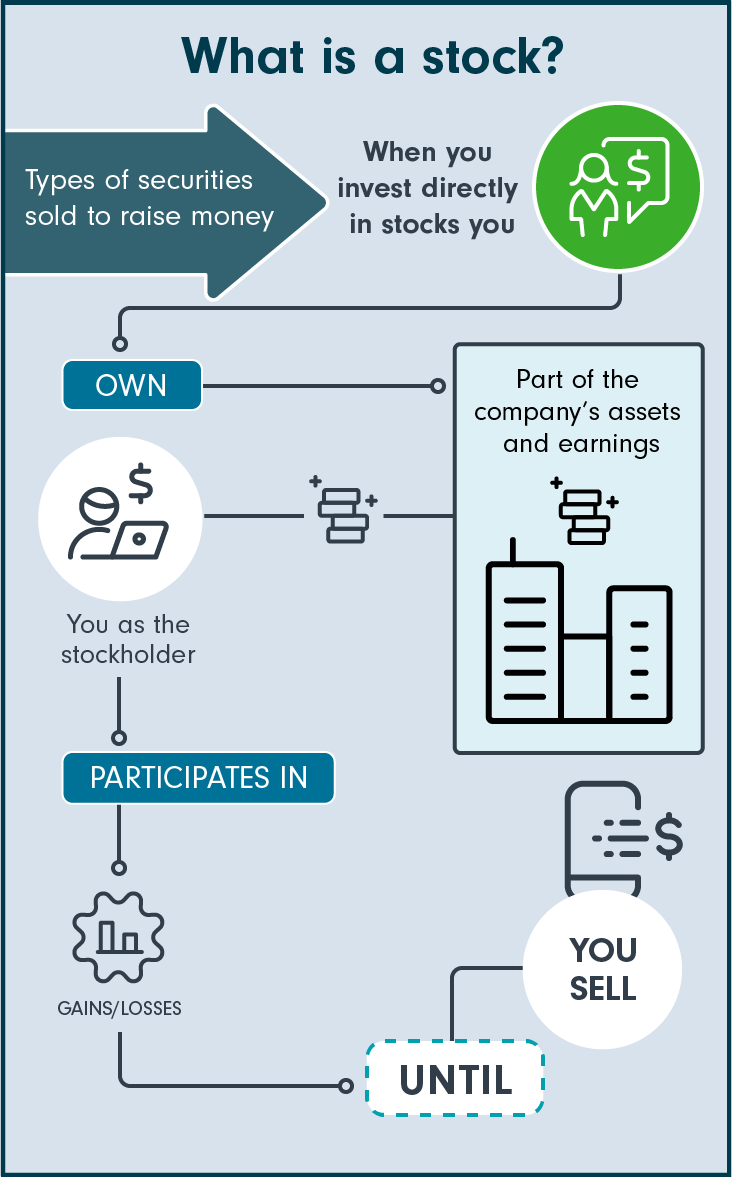
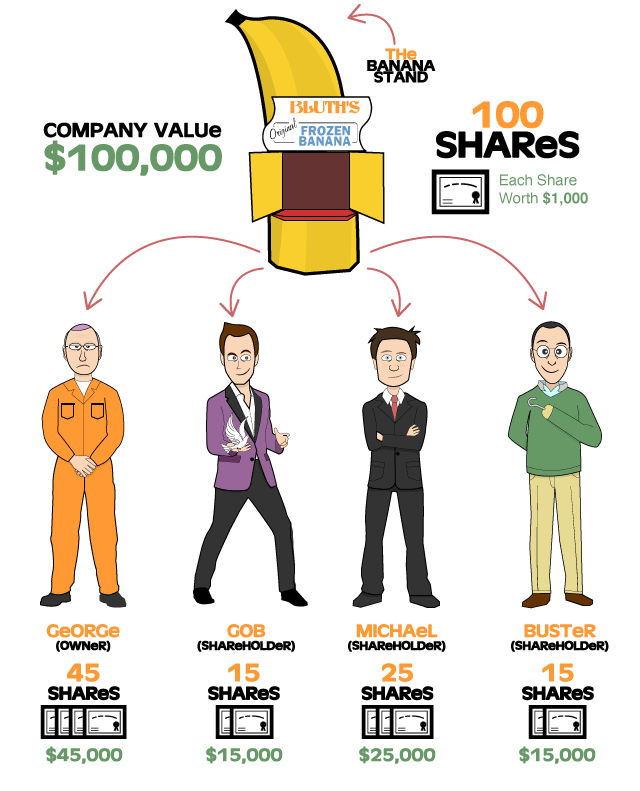
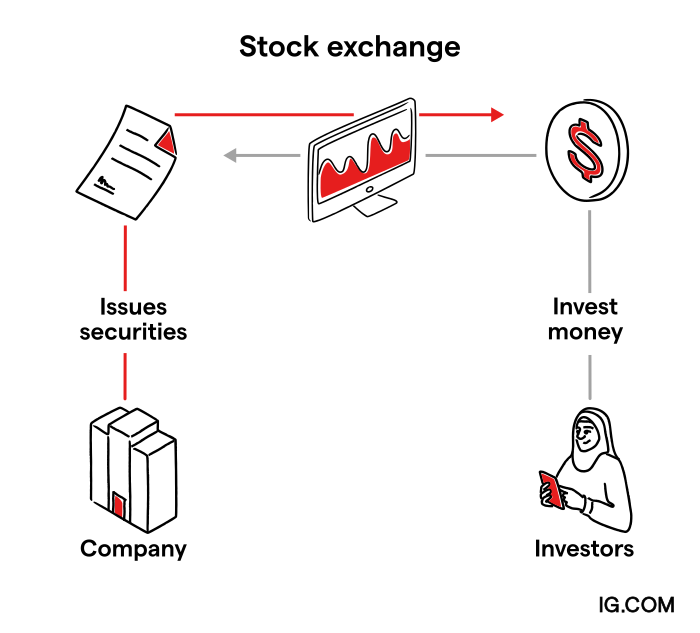
A stock, also known as equity, represents a fractional ownership interest in a corporation. When a company decides to “go public,” it issues shares to raise capital for expansion, research, or debt repayment. As a shareholder, you own a piece of the company’s assets and a claim on a portion of its future earnings. If the company thrives, the value of your shares typically increases. If the company struggles, the value may decrease.
The Role of Stock Exchanges
Stock exchanges, such as the New York Stock Exchange (NYSE) or the Nasdaq, act as the secondary market where existing shares are traded. Think of an exchange as a highly regulated marketplace. In the past, this happened on physical floors with human brokers; today, the vast majority of trading is executed via high-speed electronic networks. These exchanges ensure transparency, liquidity, and fair pricing by matching buyers with sellers instantaneously.
How Supply and Demand Drive Prices
Stock prices are not arbitrary; they are determined by the laws of supply and demand. If more people want to buy a stock (demand) than sell it (supply), the price rises. Conversely, if bad news breaks and investors rush to sell, the price falls. Factors influencing this demand include company earnings reports, economic data (like interest rates), and broader market sentiment. Over the short term, stock prices can be volatile due to human emotion, but over the long term, they tend to track the actual profitability and growth of the underlying business.
How Investors Make Money from Stocks
The primary goal of investing is to achieve a positive return on investment (ROI). In the world of equities, wealth is generally created through two primary channels: capital appreciation and dividends.
Capital Appreciation (Growth)
Capital appreciation is the increase in the market price of a stock from the time you buy it to the time you sell it. This is the classic “buy low, sell high” model. For example, if you purchase 10 shares of a company at $100 per share (a $1,000 investment) and the price rises to $150, your investment is now worth $1,500. The $500 increase is your capital gain. These gains remain “unrealized” until you actually sell the shares, at which point they become “realized” and may be subject to capital gains tax.
Dividend Payments (Income)
Many established companies distribute a portion of their profits back to shareholders in the form of dividends. This provides investors with a steady stream of passive income. Dividends are usually paid quarterly and are expressed as a “dividend yield” (the annual dividend payment divided by the stock price). For conservative investors or those nearing retirement, dividend-paying stocks offer a way to generate cash flow without needing to sell their shares.
The Power of Compounding
The most potent force in the stock market is compounding. Compounding occurs when you reinvest your capital gains and dividends back into the market to purchase more shares. Over years and decades, you begin to earn returns not just on your original investment, but on the accumulated returns from previous years. This “snowball effect” is why starting early is often more important than the amount of money you start with. A small investment made in one’s twenties can grow significantly larger than a massive investment made in one’s fifties, simply because it had more time to compound.
Common Investment Vehicles and Strategies
While some investors enjoy hand-picking individual companies, others prefer a more hands-off approach. The modern financial landscape offers various “vehicles” to help you navigate the market based on your goals and risk tolerance.
Individual Stocks vs. Exchange-Traded Funds (ETFs)
Investing in individual stocks allows for high potential returns but carries higher risk. If that specific company fails, your investment could vanish. To mitigate this, many investors use Exchange-Traded Funds (ETFs) or Mutual Funds. An ETF is a basket of hundreds or even thousands of different stocks bundled into a single security. By buying one share of an S&P 500 ETF, for instance, you are instantly diversified across the 500 largest companies in the U.S. This reduces “single-stock risk” and is often the most efficient path for long-term wealth building.
Growth Investing vs. Value Investing
These are the two primary philosophies in the stock market. Growth investors look for companies that are expected to grow at an above-average rate compared to the market. These companies (often in tech or biotech) usually reinvest all their profits into expansion and rarely pay dividends. Value investors, on the other hand, look for “bargains.” They seek out established companies whose stock prices appear lower than their actual intrinsic value, often benefiting from dividends and eventual price corrections.
Dollar-Cost Averaging (DCA)
One of the most effective strategies for the average investor is Dollar-Cost Averaging. Instead of trying to “time the market” (buying when you think prices are at their lowest), you invest a fixed amount of money at regular intervals (e.g., $200 every month). When prices are high, your $200 buys fewer shares; when prices are low, your $200 buys more. Over time, this lowers your average cost per share and removes the emotional stress of market fluctuations.
Assessing Risk and Diversification
Investing is inherently risky; there is no guarantee that the money you put in will grow. However, risk is the “price of admission” for the higher returns the stock market offers compared to a savings account. Successful investors don’t avoid risk—they manage it.
Understanding Market Volatility
Volatility refers to the frequency and severity of price swings in the market. It is important to distinguish between volatility and permanent loss. The stock market historically experiences a “correction” (a 10% drop) roughly once a year and a “bear market” (a 20% drop) every few years. These are normal parts of the market cycle. A loss only becomes permanent if an investor panics and sells during a downturn. Maintaining a long-term perspective is the best defense against volatility.
The Importance of Asset Allocation
Asset allocation is the practice of spreading your investments across different categories, such as domestic stocks, international stocks, bonds, and cash. Because different assets react differently to economic conditions, a well-allocated portfolio is less likely to suffer catastrophic losses. For example, when the stock market is volatile, bonds often remain stable or even increase in value, providing a cushion for your overall portfolio.
Managing Your Portfolio Over Time
As you move through different stages of life, your risk tolerance will change. A 25-year-old can afford to have 100% of their portfolio in aggressive growth stocks because they have decades to recover from market dips. A 60-year-old, however, likely needs a more conservative approach focused on capital preservation and income. Periodic “rebalancing”—selling assets that have grown too large and buying more of those that have shrunk—ensures that your portfolio stays aligned with your specific financial goals.
Getting Started: A Step-by-Step Path for New Investors
The barrier to entry for the stock market has never been lower. Thanks to digital financial tools and the elimination of trading commissions at most major firms, anyone can begin their investment journey with just a few dollars.
Choosing a Brokerage Account
To buy stocks, you need a brokerage account. You can choose between “Robo-advisors,” which use algorithms to manage a diversified portfolio for you for a small fee, or traditional “Discount Brokers,” which give you a platform to pick your own investments. When choosing, consider the account types available. A taxable brokerage account offers the most flexibility, while tax-advantaged accounts like a 401(k) or an Individual Retirement Account (IRA) offer significant tax breaks for long-term retirement savings.
Setting a Budget and Investment Goals
You should never invest money that you might need for an emergency in the next three to five years. Before investing, ensure you have an emergency fund and have paid off high-interest debt (like credit cards). Once your foundation is solid, determine your goal. Are you saving for a house in ten years, or retirement in thirty? Your timeline—often called your “time horizon”—is the most important factor in deciding how aggressively you should invest.
Monitoring and Rebalancing
While the best investing is often “boring” and requires little daily action, you should check your portfolio at least once or twice a year. Ensure your original strategy is still sound and that your asset allocation hasn’t drifted too far due to market movements. The goal is to remain disciplined, avoid emotional decision-making based on news headlines, and stay focused on the long-term trajectory of the global economy. By consistently adding to your investments and letting compounding work its magic, you transform the stock market from a mystery into a powerful engine for financial freedom.
aViewFromTheCave is a participant in the Amazon Services LLC Associates Program, an affiliate advertising program designed to provide a means for sites to earn advertising fees by advertising and linking to Amazon.com. Amazon, the Amazon logo, AmazonSupply, and the AmazonSupply logo are trademarks of Amazon.com, Inc. or its affiliates. As an Amazon Associate we earn affiliate commissions from qualifying purchases.