
In the realm of finance, numbers are the primary language of progress. Whether you are managing a household budget, overseeing a corporate department, or building an investment portfolio, the ability to quantify your position is the difference between strategic growth and mere guesswork. When we ask, “How do you calculate?” in a financial context, we are looking for more than just arithmetic; we are seeking a baseline for decision-making.
Understanding how to calculate key financial indicators allows individuals and business owners to strip away emotion and focus on data. This guide explores the essential calculations required to navigate the complexities of personal finance, investment performance, and business sustainability.

1. Mastering Personal Wealth: Net Worth and Cash Flow
The foundation of any financial journey begins with two fundamental pillars: what you own versus what you owe, and what you earn versus what you spend. These calculations provide a snapshot of your current financial health and the velocity at which you are moving toward your goals.
The Net Worth Formula: Assets minus Liabilities
Your net worth is the most comprehensive measure of your financial standing. To calculate it, you must list the current market value of everything you own (assets) and subtract everything you owe (liabilities).
Assets include cash, bank accounts, retirement funds, brokerage accounts, real estate, and valuable personal property. Liabilities include mortgages, student loans, credit card balances, and car loans.
Calculation:
Total Assets – Total Liabilities = Net Worth
A positive net worth indicates that you have a cushion, while a negative net worth suggests that your debts outweigh your holdings—a common scenario for recent graduates that requires a focused repayment strategy.
Tracking Monthly Cash Flow: Income vs. Expenses
While net worth is a snapshot, cash flow is a movie. It tracks the movement of money over a specific period. Calculating cash flow is essential for ensuring that you are living within your means and have a surplus for investing.
Calculation:
Total Monthly Income – Total Monthly Expenses = Net Cash Flow
If the result is positive, you have a “surplus” that can be directed toward wealth-building. If it is negative, you are experiencing “capital erosion,” which must be corrected by either increasing income or slashing discretionary spending.
The Savings Rate: The Most Important Percentage
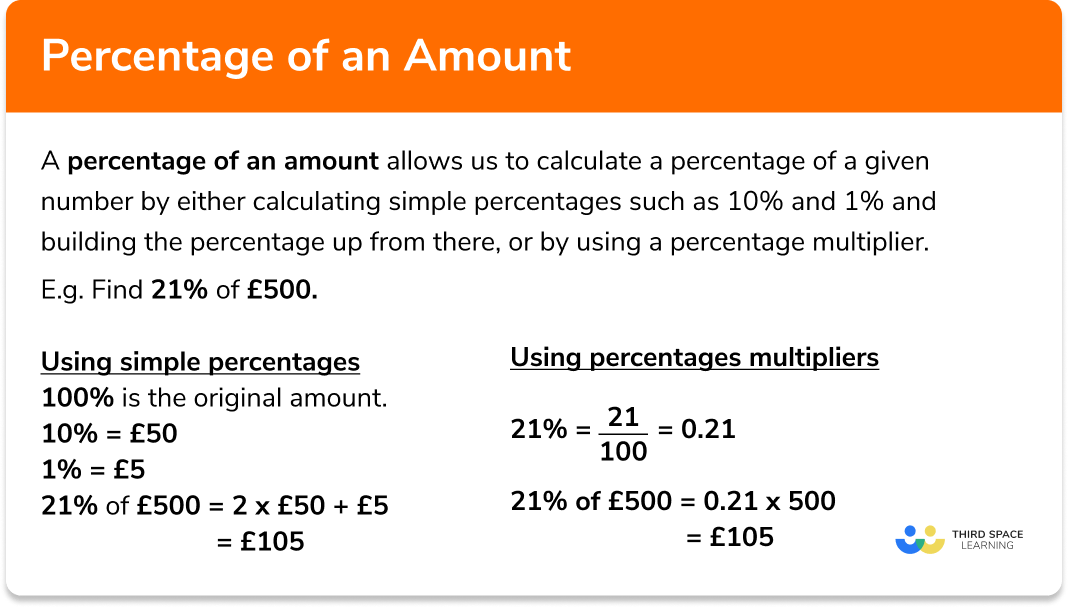
Many people focus on the total dollar amount saved, but the savings rate—calculated as a percentage of your disposable income—is a more accurate predictor of financial independence.
Calculation:
(Monthly Savings / Monthly Disposable Income) x 100 = Savings Rate (%)
A savings rate of 15% to 20% is generally considered the gold standard for traditional retirement, whereas those seeking “FIRE” (Financial Independence, Retire Early) often aim for 50% or higher.
2. Investment Performance: Measuring the Growth of Capital
Once you have established a surplus through positive cash flow, the next step is putting that capital to work. However, investing without calculation is simply gambling. You must be able to measure how effectively your money is performing relative to the risk you are taking.
Calculating Return on Investment (ROI)
ROI is the universal metric for evaluating the efficiency of an investment. It tells you how much profit or loss you’ve made relative to the amount of money you put in.
Calculation:
[(Current Value of Investment – Initial Cost of Investment) / Initial Cost of Investment] x 100 = ROI (%)
For example, if you buy a stock for $1,000 and sell it for $1,200, your ROI is 20%. While simple, this calculation allows you to compare the performance of vastly different assets, such as real estate versus a mutual fund.
The Power of Compound Interest: The Rule of 72
Understanding how your money grows over time is vital for long-term planning. While the compound interest formula can be complex, the “Rule of 72” is a quick mental calculation used to estimate how long it will take for an investment to double at a fixed annual rate of return.
Calculation:
72 / Annual Rate of Return = Years to Double
If you expect an 8% annual return from the stock market, your money will double approximately every 9 years (72 divided by 8). This calculation highlights the importance of starting early; the more “doubling periods” you have, the more exponential your wealth becomes.
Risk-Adjusted Returns and the Sharpe Ratio
A high return is less impressive if it required taking extreme risks. Professional investors use metrics like the Sharpe Ratio to calculate whether the return of an investment is worth the volatility. While the full formula involves standard deviation, the conceptual calculation is:
Return of Investment – Risk-Free Rate (like a Treasury bond) / Volatility of the Investment
If the calculation yields a low number, you are likely taking too much risk for the rewards you are receiving, suggesting a need for a more diversified or stable portfolio.
3. Business Vitality: Calculating Profitability and Efficiency
For entrepreneurs and business leaders, “how you calculate” determines the life or death of a venture. Revenue is often a “vanity metric”; the true health of a business lies in its margins and its ability to acquire customers sustainably.
Gross Profit Margin vs. Net Profit Margin
Understanding the difference between these two margins is critical for operational success. Gross profit margin measures the efficiency of your production or service delivery, while net profit margin measures the overall health of the business after all expenses.

Gross Profit Margin Calculation:
[(Total Revenue – Cost of Goods Sold) / Total Revenue] x 100 = Gross Margin (%)
Net Profit Margin Calculation:
[(Total Revenue – Total Expenses) / Total Revenue] x 100 = Net Margin (%)
A high gross margin but a low net margin indicates that while your product is profitable, your “overhead” (rent, salaries, marketing) is too high.
Customer Acquisition Cost (CAC) and Lifetime Value (LTV)
In the modern digital economy, these two metrics are the pulse of a business’s scalability. CAC tells you how much you spend to get one new customer, while LTV tells you how much profit that customer will generate over their entire relationship with your brand.
CAC Calculation:
Total Marketing & Sales Spend / Number of New Customers Acquired
LTV Calculation:
Average Value of a Purchase x Number of Repeat Purchases x Average Customer Lifespan
The “Golden Ratio” for a sustainable business is often cited as 3:1. If your LTV is three times higher than your CAC, you have a scalable model. If the ratio is 1:1, you are effectively trading dollars and likely losing money after operational costs.
The Break-Even Point
Before a business can profit, it must break even. Calculating this point tells a business owner exactly how many units they must sell to cover their fixed and variable costs.
Calculation:
Fixed Costs / (Sales Price per Unit – Variable Cost per Unit) = Break-Even Units
This calculation is essential for setting sales targets and determining if a business idea is even feasible in the current market.
4. Debt Management and Credit Health
Not all debt is created equal, and how you calculate your debt obligations determines your access to future capital and your overall financial stress levels.
Debt-to-Income Ratio (DTI)
Lenders use the DTI ratio to determine your “borrowing capacity.” It measures how much of your monthly gross income goes toward paying debts.
Calculation:
(Total Monthly Debt Payments / Gross Monthly Income) x 100 = DTI (%)
Most mortgage lenders prefer a DTI below 36%. If your DTI is higher, it signals to the financial world that you are “over-leveraged,” which can result in higher interest rates or loan denials.
Credit Utilization Rate
Your credit score is heavily influenced by how much of your available credit you are actually using. This is your credit utilization rate.
Calculation:
(Total Credit Card Balances / Total Credit Limits) x 100 = Utilization Rate (%)
To maintain a high credit score, experts recommend keeping this calculation below 30%. For those aiming for an “excellent” score (800+), keeping utilization below 10% is often the strategy.
The Cost of Debt: Effective Interest Rate
When you have multiple loans with different terms, calculating the “weighted average interest rate” helps you decide which debt to pay off first (the “Avalanche Method”). By calculating the annual cost of each debt, you can see exactly how much your borrowed capital is draining your net worth.
5. Planning for the Future: Retirement and Independence
The ultimate goal of financial calculation is often to reach a point where work becomes optional. This requires calculating the “finish line” based on projected expenses and inflation.
The “4% Rule” for Sustainable Withdrawals
The 4% Rule is a guideline used to determine how much a retiree can withdraw from their portfolio each year without running out of money over a 30-year period.
Calculation:
Annual Retirement Expenses / 0.04 = Required Portfolio Size
Alternatively, you can multiply your desired annual income by 25. If you need $100,000 a year to live, you need a portfolio of $2.5 million.
Calculating Your “FIRE” Number
For those in the Financial Independence, Retire Early movement, the “FIRE Number” is the target net worth required to sustain their lifestyle indefinitely. This calculation often involves a more conservative withdrawal rate (such as 3% or 3.5%) to account for a longer retirement horizon.
Adjusting for Inflation: Real Value vs. Nominal Value
A common mistake in long-term planning is failing to calculate the impact of inflation. If you need $5,000 a month today, you will likely need significantly more in 20 years due to the decreasing purchasing power of the dollar.
Calculation of Real Return:
Nominal Return – Inflation Rate = Real Return
By calculating the “Real Return,” you ensure that your future self isn’t caught off guard by the rising cost of living, allowing you to adjust your current savings rate accordingly.
In conclusion, the question of “how do you calculate” is the starting point for all financial mastery. From the micro-level of monthly cash flow to the macro-level of retirement “FIRE” numbers, these formulas provide the clarity needed to navigate a complex economic landscape. By consistently applying these calculations, you transform finance from a source of anxiety into a structured path toward security and growth.
aViewFromTheCave is a participant in the Amazon Services LLC Associates Program, an affiliate advertising program designed to provide a means for sites to earn advertising fees by advertising and linking to Amazon.com. Amazon, the Amazon logo, AmazonSupply, and the AmazonSupply logo are trademarks of Amazon.com, Inc. or its affiliates. As an Amazon Associate we earn affiliate commissions from qualifying purchases.