
Tesla, Inc. (TSLA) remains one of the most scrutinized and debated tickers on Wall Street. As a bellwether for both the electric vehicle (EV) sector and the broader “Magnificent Seven” high-growth stocks, its daily performance is often viewed as a pulse check for investor appetite for risk and innovation. Understanding how Tesla stock is doing today requires more than just looking at a green or red percentage on a screen; it necessitates a deep dive into valuation metrics, macroeconomic headwinds, and the shifting landscape of the global automotive market.
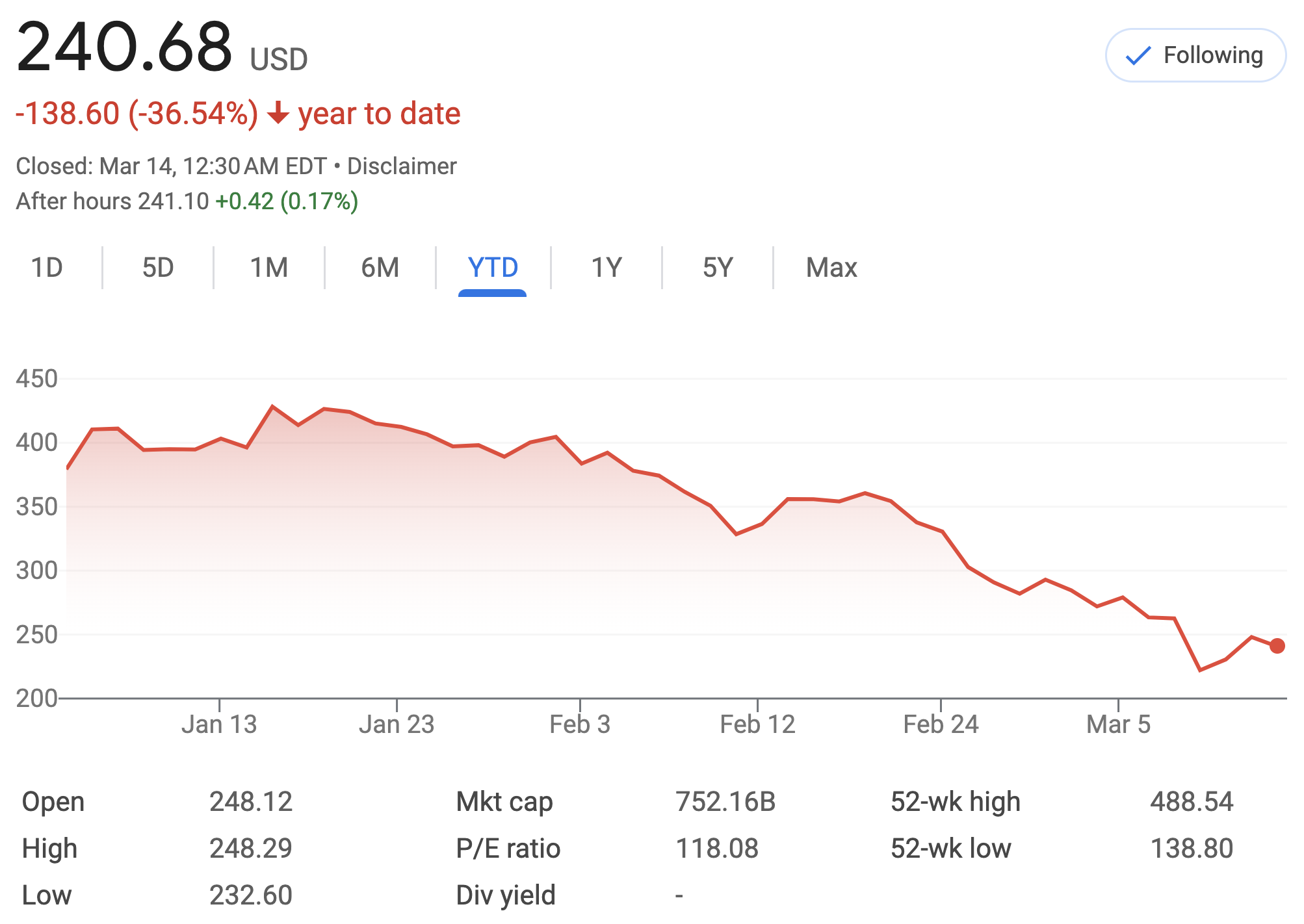
For the modern investor, Tesla represents a unique intersection of manufacturing at scale and speculative tech valuation. Because the company’s market capitalization often exceeds that of several of its largest competitors combined, its daily price action is frequently decoupled from traditional automotive fundamentals. Today’s performance is a reflection of the market’s ongoing attempt to price in future AI capabilities against the immediate reality of fluctuating vehicle margins.
Current Market Performance and Key Financial Indicators
When assessing Tesla’s stock performance today, investors must first look at the immediate technical indicators and the volume of trade. Tesla is consistently one of the most liquid stocks in the world, often leading the Nasdaq in daily trading volume. This liquidity means that price movements are rapid and can be influenced heavily by both institutional rebalancing and retail sentiment.
Intraday Volatility and Moving Averages
Tesla is known for its “high beta,” meaning it tends to move more aggressively than the broader market. If the S&P 500 is up 1%, it is not uncommon to see Tesla up 3%—or down 3% if the news cycle is unfavorable. Investors today are particularly focused on key technical levels, such as the 50-day and 200-day moving averages. When the stock trades above these lines, it signals bullish momentum; falling below them often triggers automated sell programs, increasing downward pressure. Today’s movement is often a tug-of-war between these technical floors and the prevailing news sentiment.
Valuation Metrics: P/E Ratio and Market Cap
From a “Money” perspective, the most critical discussion surrounding Tesla today is its Price-to-Earnings (P/E) ratio. Unlike traditional car manufacturers like Ford or Toyota, which often trade at P/E ratios in the single digits or low teens, Tesla commands a premium that suggests it is valued as a software or robotics company. Today’s stock price reflects the market’s current willingness to pay for future earnings. If the stock is stagnant or declining, it often suggests that investors are questioning whether Tesla can maintain the hyper-growth required to justify such a high valuation.
Drivers of Tesla’s Valuation in the Current Fiscal Period
Tesla’s stock performance today is rarely an isolated event. It is the result of specific financial drivers that have been building over the fiscal quarter. For investors trying to navigate the “Money” aspect of Tesla, three main pillars drive the current valuation: delivery numbers, profit margins, and the “Elon Musk Premium.”
Delivery Targets and Inventory Levels
The primary metric that moves Tesla stock on a fundamental basis is the quarterly delivery report. The market has high expectations for annual growth, and any hint that demand is softening causes immediate jitters. Today, investors are closely watching inventory levels and transit times. If Tesla is seen as overproducing relative to demand, the stock faces pressure. Conversely, record-breaking delivery news can send the stock into a parabolic rally, as it proves the company’s ability to scale operations in a competitive global market.
The Margin Compression Narrative
Perhaps the most significant financial headwind for Tesla recently has been the strategy of price cutting. To maintain its dominant market share, Tesla has frequently reduced the MSRP of its popular Model 3 and Model Y vehicles. While this keeps delivery numbers high, it eats into the company’s gross margins. Investors today are hyper-focused on the operating margin: can Tesla remain the most profitable mass-market EV maker while lowering prices? When margins shrink, the “Money” story changes from a growth play to a value play, which often leads to a repricing of the stock.

Macroeconomic Factors: Interest Rates and Consumer Spending
Tesla does not exist in a vacuum. As a high-ticket consumer discretionary item, Tesla vehicles are highly sensitive to interest rates. When the Federal Reserve maintains high rates, the cost of an auto loan increases, effectively making Teslas more expensive for the average consumer even if the sticker price stays the same. Today’s stock performance is often a direct reaction to Consumer Price Index (CPI) data or Fed announcements. If the market senses that rates will stay “higher for longer,” Tesla stock often faces a sell-off as investors fear a slowdown in consumer spending.
Long-Term Growth Catalysts vs. Immediate Headwinds
To understand Tesla’s stock today, one must differentiate between the short-term noise and the long-term investment thesis. The stock’s performance is a constant negotiation between those who see it as a “car company” and those who see it as an “AI and Energy titan.”
Expansion into Energy Storage and Software
While vehicles are the primary revenue driver, Tesla’s Energy Generation and Storage business is growing at a significant percentage. The deployment of Megapacks and Powerwalls represents a recurring revenue stream that is less sensitive to the cyclical nature of the auto market. Additionally, Full Self-Driving (FSD) software subscriptions represent a high-margin revenue source that could, in theory, transform Tesla’s financial profile into that of a software-as-a-service (SaaS) company. Today’s investors often look for “beats” in these secondary categories to offset any weakness in the automotive sector.
The Competitive Landscape and Market Share
The “EV Gold Rush” of 2020-2021 has transitioned into a period of intense competition. In China, companies like BYD are challenging Tesla’s dominance with lower-cost alternatives. In the West, legacy automakers are finally bringing viable electric models to market. Tesla’s stock performance today is influenced by how well the company maintains its “moat.” If Tesla is seen losing market share in key regions, institutional investors may rotate their capital into other sectors, leading to a stagnation in the stock price regardless of the company’s internal progress.
Strategic Outlook: Is Tesla a Buy, Hold, or Sell for Today’s Investor?
The ultimate question for anyone asking “how is Tesla stock doing today” is how to position their portfolio. In the world of personal finance and investing, Tesla is a polarizing asset that requires a clear strategy.
Portfolio Diversification and Risk Management
Due to its volatility, Tesla should rarely be the sole pillar of a retail investor’s portfolio. Financial advisors often suggest that for an aggressive growth portfolio, Tesla serves as a high-reward, high-risk component. If the stock is down today, it may represent a “buying the dip” opportunity for those with a ten-year horizon. However, for those nearing retirement or seeking capital preservation, the intraday swings of Tesla can be hazardous. Managing the “Money” aspect of Tesla requires setting strict stop-loss orders or using dollar-cost averaging (DCA) to mitigate the impact of daily price fluctuations.
Sentiment Analysis: Retail vs. Institutional
Tesla has a unique “retail fan base” that often supports the stock even when fundamentals look shaky. This “meme-adjacent” quality can lead to short squeezes or rapid rallies based on social media trends or Elon Musk’s tweets. However, the long-term trajectory of the stock is determined by institutional “smart money”—the hedge funds and pension funds that hold millions of shares. Today, the balance of power between retail enthusiasm and institutional skepticism is what determines the closing price.

Conclusion: Navigating the Tesla Financial Narrative
In conclusion, “how Tesla stock is doing today” is a question with a multifaceted answer. On a surface level, it is a tally of wins and losses in the daily market session. On a deeper financial level, it is a reflection of the global economy, the cost of capital, and the shifting paradigms of the energy and transportation sectors.
For the investor, the key is to look past the immediate percentage change and analyze the “why.” Is the stock moving because of a fundamental shift in earnings power, or is it merely reacting to broader market volatility? By focusing on the “Money” niche—margins, P/E ratios, macro trends, and competitive positioning—investors can make informed decisions that transcend the daily noise of the stock ticker. Tesla remains a high-conviction bet on the future, but as today’s market action shows, the road to that future is paved with significant financial complexity.
aViewFromTheCave is a participant in the Amazon Services LLC Associates Program, an affiliate advertising program designed to provide a means for sites to earn advertising fees by advertising and linking to Amazon.com. Amazon, the Amazon logo, AmazonSupply, and the AmazonSupply logo are trademarks of Amazon.com, Inc. or its affiliates. As an Amazon Associate we earn affiliate commissions from qualifying purchases.