
The stock market remains one of the most potent vehicles for long-term wealth creation in human history. For decades, it has allowed individuals to participate in the growth of the world’s most innovative and profitable companies. However, for the uninitiated, the phrase “how to do stocks” can feel like a labyrinth of jargon, fluctuating numbers, and perceived risk. Stripping away the complexity reveals a structured discipline rooted in patience, analysis, and strategic capital allocation.
To successfully navigate the equity markets, one must move beyond the “get rich quick” mentality and adopt the mindset of a business owner. This guide provides a comprehensive roadmap for entering the world of investing, from setting up your first account to mastering the art of fundamental analysis and portfolio management.

1. Foundational Principles of Stock Market Investing
Before deploying a single dollar, it is essential to understand the underlying mechanics of what you are actually doing. Investing in stocks is not gambling; it is the acquisition of partial ownership in a productive enterprise.
Understanding Equity and Ownership
When you buy a share of a stock, you are purchasing equity. This represents a legal claim on a portion of that company’s assets and earnings. If the company grows its profits or expands its market share, the value of your “slice” of the pie increases. Conversely, if the company falters, your capital is at risk. This relationship between the investor and the corporation is the bedrock of the capitalist system, incentivizing companies to innovate and investors to provide the necessary capital for that innovation.
The Power of Compound Interest
The greatest ally of the stock market investor is time. Albert Einstein famously referred to compound interest as the eighth wonder of the world. In the context of stocks, compounding occurs when your investments generate returns, and those returns are reinvested to generate their own returns. Over decades, this creates an exponential growth curve. Starting early—even with small amounts—is often more beneficial than starting late with much larger sums, due to the sheer math of compounding.
Risk vs. Reward: Defining Your Risk Tolerance
All investing involves risk, but not all risk is created equal. Risk tolerance is a measure of how much market volatility an investor can withstand without panicking. It is dictated by two factors: your psychological temperament and your financial time horizon. A 25-year-old saving for retirement has a high risk capacity because they have decades to recover from market downturns. A 60-year-old, however, must prioritize capital preservation. Understanding where you fall on this spectrum is the first step in building a sustainable investment strategy.
2. Building Your Investment Infrastructure
To participate in the market, you need the right tools and a structured environment. Modern technology has democratized access to the stock market, but choosing the right entry point is crucial for minimizing costs and maximizing efficiency.
Choosing the Right Brokerage Platform
A brokerage is your gateway to the stock exchange. In the current landscape, most major brokerages have eliminated trading commissions, making it easier than ever to start. When selecting a platform, consider factors such as the user interface, the quality of research tools provided, and the availability of customer support. Established firms provide stability and comprehensive educational resources, while newer “fintech” apps often focus on a streamlined, mobile-first experience.
Types of Investment Accounts
Where you hold your stocks is often as important as which stocks you buy. In the United States and many other regions, there are tax-advantaged accounts designed for specific goals.
- Retirement Accounts (e.g., 401(k), IRA): These offer tax deductions on contributions or tax-free growth, but they often come with restrictions on when you can withdraw the money.
- Taxable Brokerage Accounts: These offer the most flexibility, allowing you to withdraw funds at any time, but you will owe capital gains taxes on your profits.
- Education Savings (e.g., 529 plans): Specifically designed to grow wealth for future tuition costs.
Funding Your Account and Setting a Budget
One of the most common mistakes is investing money that is needed for short-term expenses. Financial advisors generally recommend establishing an emergency fund (3–6 months of living expenses) before putting money into the stock market. Once your “safety net” is in place, you should determine a consistent amount to invest—a practice known as dollar-cost averaging. By investing a fixed amount every month, regardless of whether the market is up or down, you naturally buy more shares when prices are low and fewer when prices are high.
3. Selecting Your Investment Strategy
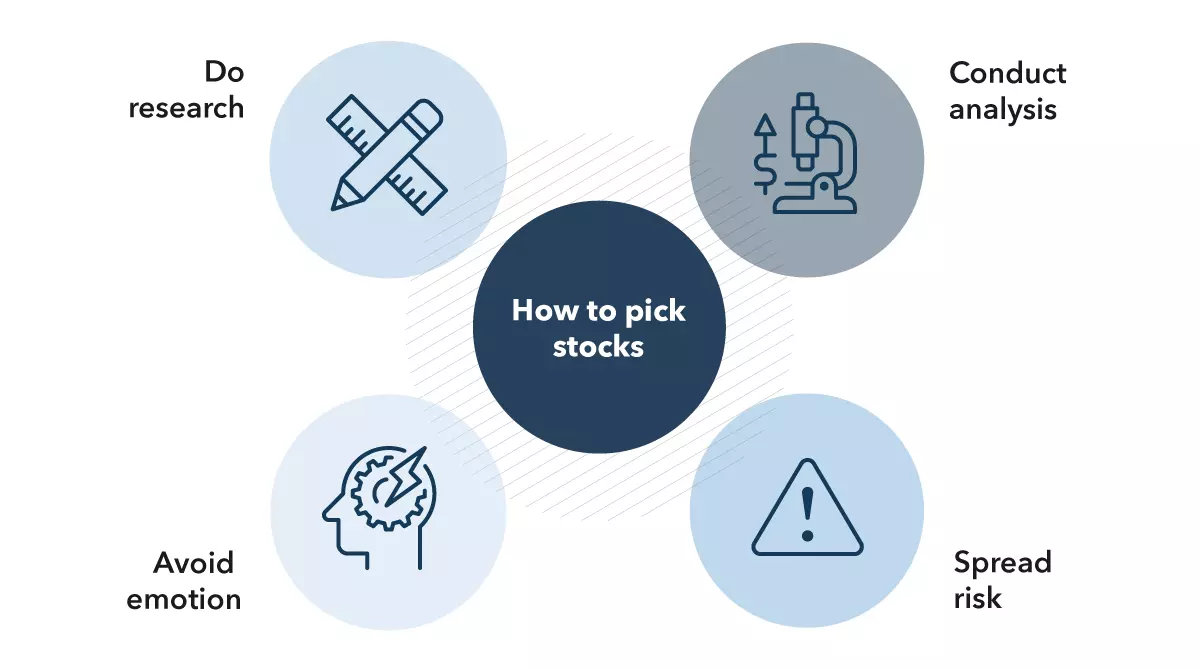
There is no “one size fits all” approach to the market. Your strategy should align with your goals, your interest level, and the amount of time you can dedicate to research.
Passive Investing through Index Funds and ETFs
For the vast majority of people, passive investing is the most effective route to wealth. Instead of trying to pick individual winning stocks, you buy a “basket” of stocks that represents the entire market, such as the S&P 500. Exchange-Traded Funds (ETFs) and Index Funds allow you to own tiny fractions of hundreds of companies simultaneously. This approach ensures you get the market’s average return, which historically has outpaced most professional money managers over the long term.
Value vs. Growth Investing
If you choose to pick individual stocks, you will likely gravitate toward one of two philosophies. Value investors look for “bargains”—companies that are trading for less than their intrinsic value, often due to temporary bad news or market neglect. Growth investors focus on companies that are expanding rapidly, even if their current stock price seems expensive. Growth stocks often reinvest all their profits into further expansion, while value stocks are more likely to pay dividends.
Dividend Growth Investing for Passive Income
Dividend investing is a strategy focused on cash flow. Some established companies distribute a portion of their earnings back to shareholders in the form of dividends. By focusing on “Dividend Aristocrats”—companies that have increased their payouts for at least 25 consecutive years—investors can build a growing stream of passive income that can eventually cover living expenses, providing a path to financial independence.
4. Fundamental Analysis: How to Evaluate a Company
If you decide to move beyond index funds, you must learn how to look “under the hood” of a business. Fundamental analysis is the process of measuring a stock’s value by examining related economic and financial factors.
Reading Financial Statements
A company’s health is recorded in three primary documents: the Balance Sheet, the Income Statement, and the Cash Flow Statement.
- The Balance Sheet shows what the company owns (assets) versus what it owes (liabilities).
- The Income Statement reveals revenue and net profit over a specific period.
- The Cash Flow Statement is perhaps the most critical, as it shows how much actual cash is moving through the business, regardless of accounting maneuvers.
Key Financial Ratios
To compare companies within the same industry, investors use standardized ratios.
- Price-to-Earnings (P/E) Ratio: Compares the stock price to the company’s earnings per share. It tells you how much the market is willing to pay for every dollar of profit.
- Debt-to-Equity: Measures how much the company is relying on borrowed money to fund its operations. High debt can be a red flag during economic downturns.
- Return on Equity (ROE): Measures how effectively management is using investors’ money to generate profit.
Qualitative Factors: Moats and Management
Numbers only tell half the story. A truly great investment often possesses a “moat”—a competitive advantage that protects it from rivals. This could be a powerful brand (like Apple), a network effect (like Meta), or high switching costs (like Microsoft). Additionally, evaluating the track record and integrity of the management team is vital. You are, in essence, hiring the CEO to manage your capital; you want to ensure they are capable and aligned with shareholder interests.
5. Portfolio Management and Long-Term Success
Buying a stock is only the beginning. The real challenge lies in managing your portfolio through the inevitable cycles of the economy.
The Importance of Diversification
The only “free lunch” in investing is diversification. By spreading your investments across different sectors (tech, healthcare, energy), different asset classes, and different geographies, you reduce the impact of any single company’s failure. If one stock in a portfolio of thirty goes to zero, it is a setback; if your only stock goes to zero, it is a catastrophe.
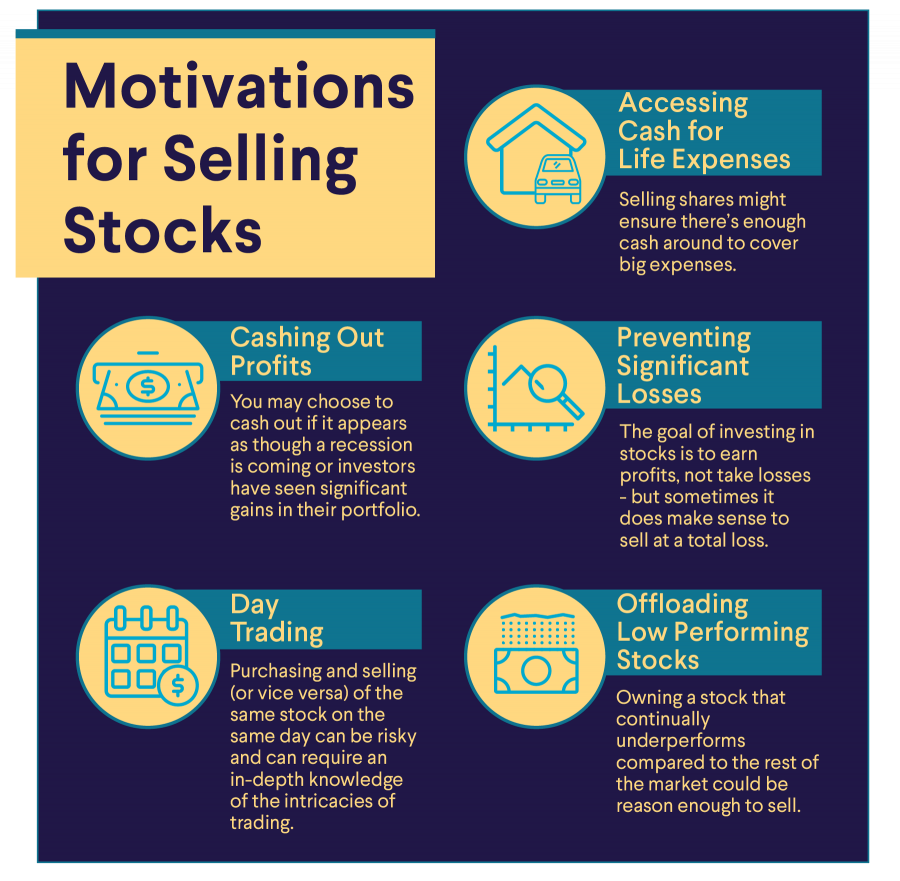
When to Sell: Disciplined Rebalancing
Many investors struggle with knowing when to exit a position. Professional investing requires a sell discipline. You should consider selling if:
- The investment thesis has changed: The reason you bought the stock is no longer true (e.g., a loss of competitive advantage).
- The valuation has become irrational: The price has risen so far beyond the company’s actual value that future returns are unlikely.
- Portfolio Rebalancing: One stock has grown so large that it dominates your portfolio, creating excessive risk.
Managing Emotions in Volatile Markets
The stock market is a weighing machine in the long run but a voting machine in the short run. It is driven by the dual emotions of fear and greed. To “do stocks” successfully, one must develop a “behavioral edge.” This means remaining calm when the market crashes and remaining skeptical when the market is in a bubble. The most successful investors are those who can control their emotions and stick to their pre-determined plan regardless of the headlines.
In conclusion, investing in stocks is a journey of continuous learning. It requires a blend of mathematical rigor and psychological fortitude. By focusing on high-quality assets, maintaining a long-term perspective, and strictly adhering to a disciplined strategy, any individual can harness the power of the financial markets to secure their financial future. The key is not to “beat the market” in a single day, but to remain in the market for a lifetime.
aViewFromTheCave is a participant in the Amazon Services LLC Associates Program, an affiliate advertising program designed to provide a means for sites to earn advertising fees by advertising and linking to Amazon.com. Amazon, the Amazon logo, AmazonSupply, and the AmazonSupply logo are trademarks of Amazon.com, Inc. or its affiliates. As an Amazon Associate we earn affiliate commissions from qualifying purchases.