
In the modern landscape of subscription-based economies, Amazon Prime has evolved from a simple logistics experiment into a multifaceted financial tool. While many consumers view the service primarily through the lens of convenience, a deeper analysis reveals that it functions as a strategic asset for personal and business finance management. With an annual membership cost that has steadily increased over the last decade, the question is no longer just about the speed of delivery, but about the measurable Return on Investment (ROI) the service provides to the savvy user.

To understand the advantages of Amazon Prime in the context of “Money,” one must look past the cardboard boxes and examine the membership as a hedge against inflation, a tool for capital preservation, and a mechanism for streamlining household or small-business cash flow.
1. The Subscription Economics: Conducting a Cost-Benefit Analysis
The first step in any financial decision is the assessment of fixed costs versus variable benefits. As of 2024, the annual price of Amazon Prime sits at $139. To a disciplined budgeter, this represents a “sunk cost” that must be recouped through the utilization of various service tiers.
The Math of Free Shipping and Opportunity Cost
In traditional personal finance, “opportunity cost” refers to the value of the next best alternative foregone. Before Prime, a consumer might spend 30 to 60 minutes driving to a retail outlet, burning fuel and “spending” their time—a non-renewable resource—to acquire a specific item. By leveraging Prime’s logistics network, the consumer essentially “buys back” their time. If an individual values their professional time at $50 per hour, even three avoided shopping trips per month result in a “time-profit” that far exceeds the annual membership fee.
Hedging Against Micro-Transactions
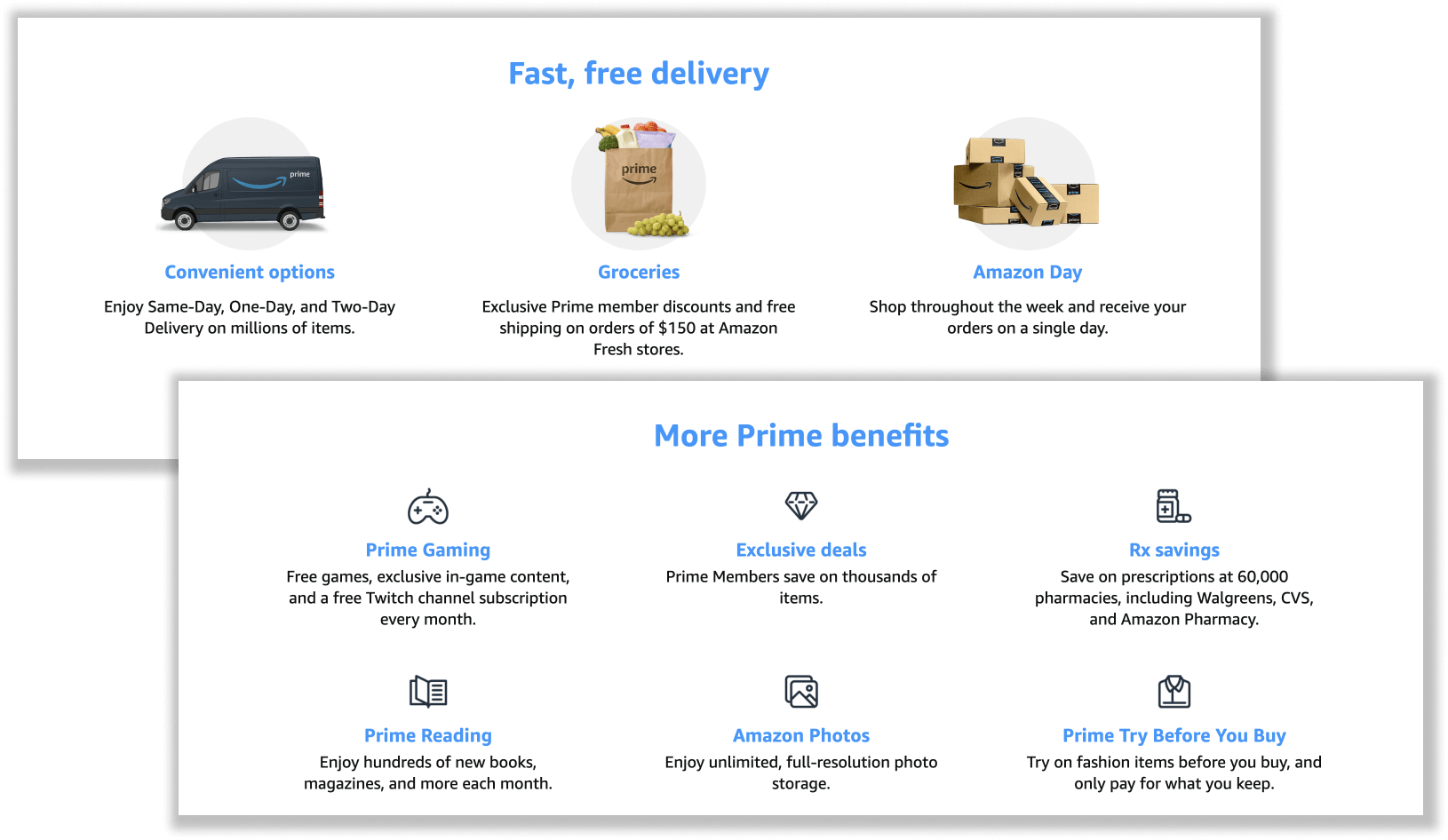
Shipping fees are the “death by a thousand cuts” of online commerce. Often ranging from $5 to $12 per shipment for non-members, these fees can quickly erode a monthly budget. By centralizing purchasing through Prime, users eliminate the psychological and financial friction of shipping costs, allowing for “just-in-time” inventory management for the home. This prevents the need to “bulk buy” unnecessary items just to reach a free-shipping threshold, which is a common trap that leads to overspending and waste.
The Household Inflation Hedge
Amazon’s “Subscribe & Save” feature, which integrates deeply with Prime benefits, allows users to lock in discounted rates (often up to 15%) on recurring household essentials. In an inflationary environment, where the price of consumer packaged goods (CPG) can fluctuate monthly, this predictable pricing model serves as a minor but effective hedge, ensuring that essential outflows remain consistent and manageable.
2. Prime as a Financial Tool: Rewards, Credit, and Cashback
Beyond logistics, Amazon has integrated significant financial services into the Prime ecosystem. For those focused on credit optimization and cash-flow management, the Prime-exclusive financial products offer some of the highest yields in the retail sector.
The Amazon Prime Rewards Visa: A 5% Dividend
Perhaps the most significant financial advantage for Prime members is access to the Amazon Prime Rewards Visa Signature Card. In the world of personal finance, a 5% “cashback” rate is exceptional. Effectively, this card acts as a 5% discount on every purchase made within the Amazon ecosystem, including Whole Foods Market. For a household that spends $10,000 a year on Amazon (covering groceries, electronics, and household goods), the card returns $500 in liquid rewards—meaning the membership not only pays for itself but generates a $361 net profit.
Managing Liquidity with Financing Options
For larger capital expenditures—such as home office equipment or high-end appliances—Prime members often gain access to “Equal Monthly Payments” or 0% APR financing periods through their Prime-linked accounts. In a high-interest-rate environment, the ability to leverage 0% financing instead of dipping into a high-yield savings account (currently yielding 4-5%) allows the consumer to keep their capital working for them. This is a sophisticated use of “other people’s money” (OPM) to manage personal cash flow.
Whole Foods and the Grocery Arbitrage
The acquisition of Whole Foods Market by Amazon transformed Prime into a grocery savings card. With exclusive “Blue Label” discounts for Prime members and an additional 10% off sale items, the membership tackles one of the largest line items in any family budget: food. By strategically shopping sale cycles at Whole Foods, members can reduce their grocery bill to levels competitive with mid-tier supermarkets while maintaining a higher quality of caloric intake—a long-term investment in “human capital” through health.
3. Consolidating the Digital Budget: Entertainment as a Value-Add
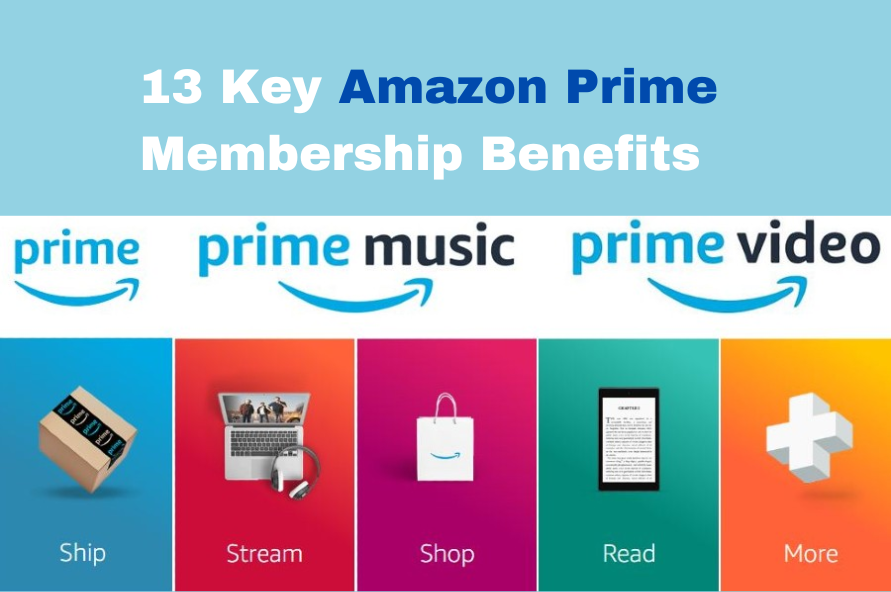
In the “Money” niche, we often talk about “subscription fatigue.” The average household pays for multiple streaming services, music platforms, and cloud storage providers. Amazon Prime serves as a consolidation tool that can significantly reduce a household’s total “Digital Burn Rate.”
The Replacement Value of Prime Video and Music
If a consumer were to pay for standalone services—Netflix ($15.49/mo), Spotify ($10.99/mo), and a basic cloud storage plan—they would be looking at an annual expenditure exceeding $300. Amazon Prime Video, Amazon Music Prime, and Prime Reading provide functional substitutes for these services. While a cinephile might still want Netflix, the average user can eliminate 1–2 other subscriptions by fully utilizing the Prime media library, leading to an immediate improvement in monthly net cash flow.
Prime Gaming and Digital Credits
An overlooked financial perk is “Prime Gaming,” which offers free monthly titles and in-game content. For families with children or gaming enthusiasts, this replaces the need for several small monthly digital purchases. Furthermore, Amazon frequently offers “No-Rush Shipping” credits. By opting for a slower delivery on non-essential items, members earn $1.00 to $3.00 in digital credits per order. For frequent shoppers, these credits can aggregate to cover the cost of several movie rentals or Kindle books per year, further subsidizing the entertainment budget.
Prime Reading and the Knowledge Economy
Investing in one’s own knowledge is the highest-return investment available. Prime Reading offers a rotating selection of thousands of e-books, magazines, and comics at no additional cost. For the professional looking to stay ahead of industry trends or the student looking for reference material, this serves as a digital library that eliminates the need for individual book purchases or separate “Kindle Unlimited” subscriptions.
4. Business Finance: Prime for the Entrepreneur and Side-Hustler
The advantages of Amazon Prime extend into the realm of professional finance, particularly for small business owners and those engaged in the “Side Hustle” economy.
Amazon Business and Procurement Efficiency
Many Prime members don’t realize they can link their membership to an Amazon Business account. This provides access to “Business-Only” pricing on over five million products and allows for multi-user accounts. For a side-hustle—such as an e-commerce reseller or a freelance consultant—the ability to procure supplies with free two-day shipping ensures that capital isn’t tied up in inventory or “waiting” for essential tools to arrive.
Tax Documentation and Expense Tracking
From a business finance perspective, Amazon’s robust reporting tools for Prime members simplify the tax-filing process. The ability to filter purchases by “tax year” and export spreadsheets of business expenses ensures that every deductible dollar is accounted for. In the eyes of a CPA, the organized data provided by a dedicated Prime Business profile is a value-add that reduces professional accounting fees.
Prime Day as a Strategic Capital Expenditure Window
Prime Day (and the subsequent “Big Smile” sales) shouldn’t be viewed as a consumer holiday, but as a strategic window for capital expenditure (CapEx). Wise business owners delay the purchase of upgraded laptops, monitors, or office furniture until these windows, often securing 30-50% discounts. When these purchases are made using the 5% cashback Prime card, the total savings can represent a significant percentage of a small business’s annual profit margin.
Conclusion: The Ultimate Financial Verdict
Is Amazon Prime an “advantage”? From a strictly financial perspective, the answer depends on the user’s ability to transition from a passive consumer to an active “Prime Optimizer.”
The $139 annual fee is a liability only if the service is used sporadically for convenience. However, when treated as a comprehensive financial tool—leveraging the 5% cashback, consolidating digital subscriptions, utilizing grocery discounts, and optimizing business procurement—Amazon Prime becomes a high-yield investment. For many, it represents an annual savings potential in the range of $500 to $2,000, depending on household spend. In the world of money management, any tool that offers a 5x to 10x return on its cost is not just an advantage; it is a necessity.
aViewFromTheCave is a participant in the Amazon Services LLC Associates Program, an affiliate advertising program designed to provide a means for sites to earn advertising fees by advertising and linking to Amazon.com. Amazon, the Amazon logo, AmazonSupply, and the AmazonSupply logo are trademarks of Amazon.com, Inc. or its affiliates. As an Amazon Associate we earn affiliate commissions from qualifying purchases.