
Managing your personal finances often requires making strategic decisions about where you keep your capital. Whether you are moving to a digital-first neobank, seeking higher interest rates at a credit union, or simply consolidating your financial footprint, knowing how to properly close a Wells Fargo bank account is essential.
Closing a bank account at a major institution is more than just withdrawing your balance; it is a multi-step process that requires diligence to ensure you don’t incur unnecessary fees or accidentally damage your financial standing. This guide provides a detailed, professional roadmap for navigating the closure process within the context of sound money management.
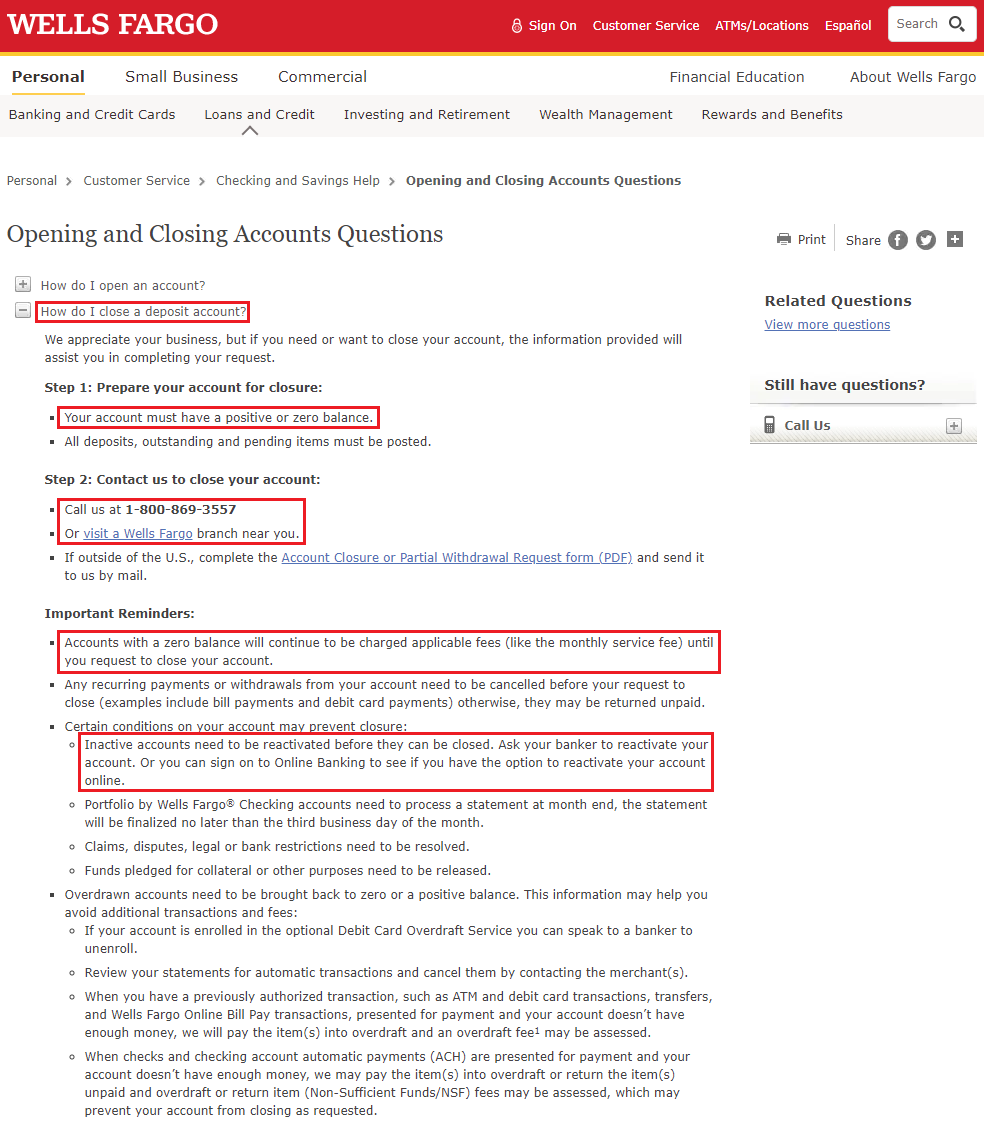
Preparing Your Account for Closure
Before you contact the bank to terminate your relationship, you must perform several “financial housekeeping” tasks. Closing an account prematurely can lead to missed payments, overdraft fees, and administrative headaches.
Managing Automatic Payments and Direct Deposits
The most common mistake consumers make is forgetting about automated “invisible” transactions. Begin by reviewing your bank statements from the last 12 months. Identify every recurring bill—utility payments, streaming subscriptions, insurance premiums, and gym memberships—linked to your Wells Fargo debit card or account number.
Transition these payments to your new bank account at least one full billing cycle before you close the Wells Fargo account. Simultaneously, notify your employer’s payroll department to redirect your direct deposit. It is a best practice to wait until at least one paycheck has successfully landed in your new account before proceeding with the closure.
Transferring Your Remaining Balance
While you might be tempted to withdraw every cent immediately, it is wiser to leave a small “buffer” of $50 to $100 in the account until the very last day. This protects you against any stray transactions you may have overlooked.
When you are ready to move the bulk of your funds, use an Electronic Funds Transfer (EFT) to your new institution. This creates a clear digital paper trail of the transfer. Avoid simply “zeroing out” the account and walking away; a $0.00 balance does not mean the account is closed. In fact, if the account remains open with a zero balance, you may still be hit with monthly maintenance fees, which could push the account into a negative balance and trigger overdraft penalties.
Dealing with Pending Transactions and Fees
Check your “pending” queue meticulously. If you have written paper checks that haven’t been cashed or have pending debit transactions, the bank will not allow you to close the account until these are cleared. Additionally, ensure that you have met the requirements to waive the monthly service fee for the current month. If you fall below the minimum balance requirement during the closing process, Wells Fargo may assess a fee, which you will be required to pay before they finalize the shutdown.
Step-by-Step Methods to Close Your Wells Fargo Account
Wells Fargo offers several channels for closing an account, depending on your preference for digital convenience or in-person verification. Each method has specific requirements to ensure the security of your financial data.
Closing Your Account Online or via Mobile App
For many modern consumers, the digital route is the most efficient. You can log into your Wells Fargo Online banking portal or use the mobile app to initiate the process. However, be aware that not all account types—particularly those with complex structures or joint ownership—are eligible for online closure.
Navigate to the “Contact Us” section or use the secure message center. Send a formal request stating that you wish to close your account. Be sure to include the specific account number. If your balance is already at zero, the process may be handled entirely through the secure messaging system. If there is a remaining balance, the bank will typically ask where you would like the funds sent.
Closing Your Account by Phone
If you prefer speaking with a representative, you can call Wells Fargo’s general customer service line at 1-800-869-3557. This is often the fastest way to get immediate confirmation.
When you call, have your account number, Social Security number, and your “Phone Bank” access code (if you have one) ready for verification. Explicitly state that you want to close the account and ask the representative to confirm that there are no pending fees. During this call, the representative may attempt “retention tactics”—offering to waive fees for a few months to keep you as a customer. If your decision is final, politely decline and insist on the closure.
Visiting a Branch in Person
For those who value a physical paper trail and face-to-face interaction, visiting a Wells Fargo branch is the most secure method. This is particularly recommended for joint accounts, as both account holders can sign the necessary paperwork simultaneously.
Bring a valid government-issued ID and your debit card. A personal banker will guide you through the closure documents. The primary advantage of this method is that you can receive a printed “Account Closure Confirmation” on the spot. You can also request that your remaining balance be handed to you as a cashier’s check or cash, though a cashier’s check is generally safer for large sums.

Essential Post-Closure Checklist
Once you have received verbal or digital confirmation that the account is closed, your responsibility as a proactive money manager is not yet finished. You must take steps to finalize the “death” of the account to prevent fraud or “zombie” reactivations.
Obtaining Written Confirmation
Never rely solely on a verbal “it’s done” from a representative. Request a formal letter of closure. This document is your shield if the bank later claims you owe fees or if the account shows up as “open” on a credit report. Most banks will mail this to your address on file within 7 to 10 business days. Save this document in your permanent financial records for at least seven years.
Disposing of Physical Debit Cards and Checks
Once an account is closed, your old checks and debit cards are liabilities. Do not simply throw them in the trash. Use a cross-cut shredder to destroy your debit cards, making sure to cut through the EMV chip and the magnetic stripe. For unused checks, it is best to shred them or burn them. This prevents “dumpster divers” from obtaining your old account and routing numbers, which could be used to attempt fraudulent ACH transfers.
Updating Your Financial Records
Update your personal accounting software (such as Quicken, Mint, or YNAB) to reflect that the account is closed. This prevents your net worth calculations from being skewed by “phantom” balances. Additionally, if you use a password manager or a browser’s auto-fill feature for banking, remove the Wells Fargo credentials to avoid accidental login attempts that might trigger security alerts or accidental account “reactivation” inquiries.
Common Pitfalls and How to Avoid Them
The transition between banks can be fraught with minor errors that have significant financial consequences. Understanding these pitfalls will help you maintain a clean financial history.
The “Zombie Account” Phenomenon
A “zombie account” occurs when an account you thought was closed is reopened by the bank. This usually happens because an automated payment (like a subscription) hits the account after you closed it. Some banks are programmed to automatically reopen a closed account to honor an incoming debit, which then puts the account in a negative balance and triggers daily overdraft fees.
To prevent this, ensure that every single “Authorized Pre-Approve Payment” is canceled at the source (the merchant) rather than just at the bank level. If a merchant attempts to charge a closed account and the bank honors it, you could face a cascade of fees before you even realize the account is “back from the dead.”
Overdrafts and Last-Minute Fees
Timing is everything. If you transfer your money out on a Friday, but a forgotten check clears on a Monday, you might hit an overdraft. Furthermore, some accounts have “early closure fees” if the account was opened very recently (usually within 90 to 180 days). Review your original account agreement to see if you are subject to these penalties. Being aware of the bank’s fee schedule ensures that your exit is as low-cost as possible.
Choosing Your Next Financial Institution
Closing a Wells Fargo account is often a sign of growth in your personal finance journey. It presents an opportunity to realign your banking with your current financial goals.
Assessing Your New Banking Needs
Before you move your capital, evaluate why you left your previous bank. Were the fees too high? Was the interest rate on savings negligible? If you are looking for wealth accumulation, you might prioritize a High-Yield Savings Account (HYSA) with an online bank like Ally or Marcus by Goldman Sachs, which often offer rates 10 to 20 times higher than traditional big-box banks.
If you prefer personalized service and local community reinvestment, a Credit Union might be the better choice. Credit unions are member-owned and often offer lower loan rates and fewer “nickel-and-diming” fees compared to national corporate entities.

Comparing Modern Banking Alternatives
The “Money” landscape has changed significantly over the last decade. Many consumers now opt for “Fintech” solutions that offer specialized tools for budgeting, automated investing, and early direct deposit access.
When choosing your next institution, look for:
- No Monthly Maintenance Fees: Most modern accounts should be free if you have a regular direct deposit.
- ATM Fee Reimbursement: This is a vital feature if you choose an online-only bank.
- Robust Mobile App Security: Ensure the new bank offers two-factor authentication (2FA) and instant transaction alerts.
By following this comprehensive approach, you ensure that closing your Wells Fargo account is a clean break that supports your long-term financial health. Proper planning, execution, and follow-up are the hallmarks of a savvy consumer who takes control of their money.
aViewFromTheCave is a participant in the Amazon Services LLC Associates Program, an affiliate advertising program designed to provide a means for sites to earn advertising fees by advertising and linking to Amazon.com. Amazon, the Amazon logo, AmazonSupply, and the AmazonSupply logo are trademarks of Amazon.com, Inc. or its affiliates. As an Amazon Associate we earn affiliate commissions from qualifying purchases.