
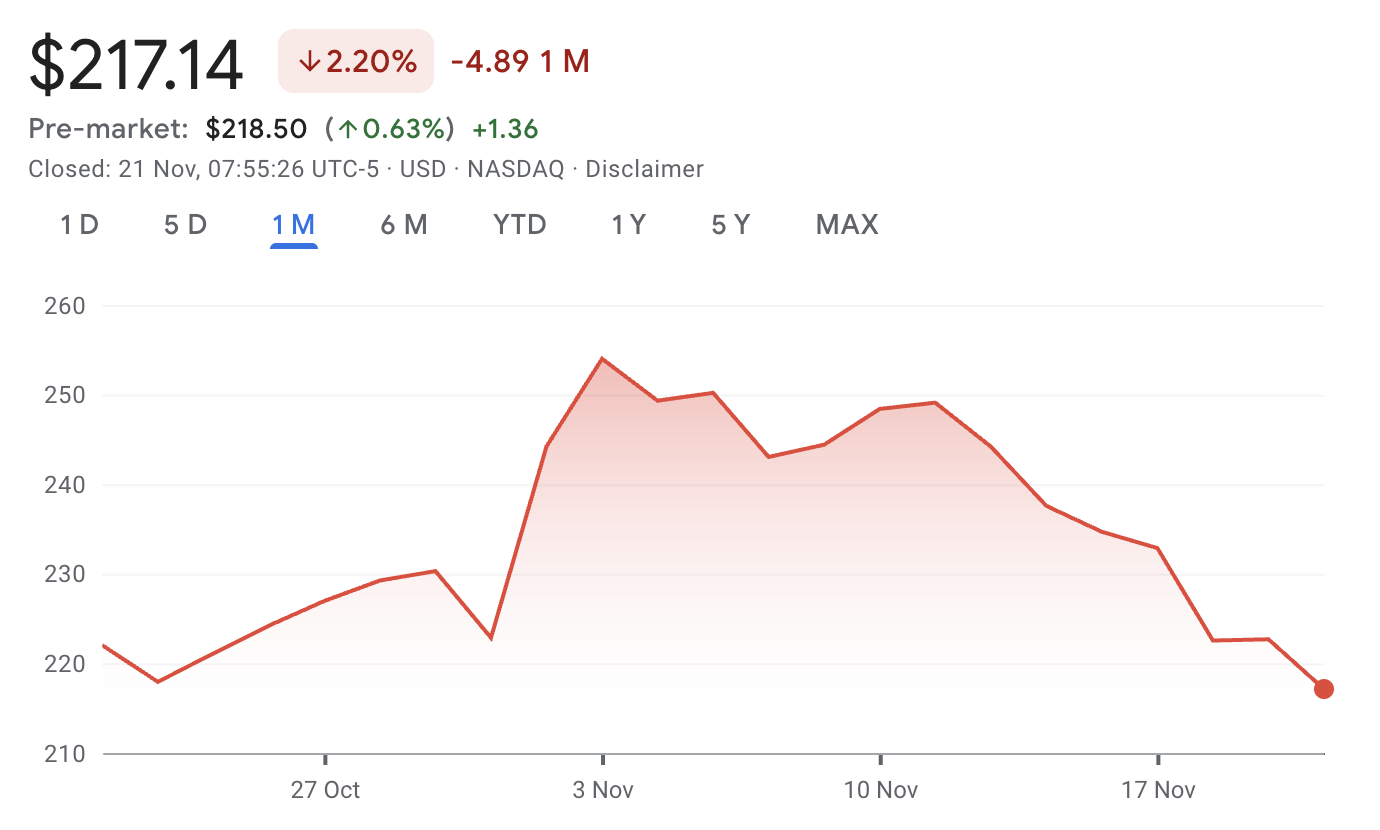
For investors in the “Magnificent Seven,” Amazon (AMZN) has long been considered a cornerstone of a growth-oriented portfolio. However, even a trillion-dollar titan is not immune to the ebbs and flows of the equity markets. When Amazon’s stock price ticks downward, it often sends ripples through the broader NASDAQ and S&P 500. Understanding why Amazon is down on any given day requires a deep dive into the intersection of macroeconomic trends, quarterly earnings performance, and shifting investor sentiment.
In the world of finance, a stock’s decline is rarely the result of a single isolated event. Instead, it is usually a confluence of internal operational hurdles and external economic pressures. For the disciplined investor, identifying these drivers is essential to distinguishing between a temporary “noise” event and a fundamental shift in the company’s valuation.

Macroeconomic Pressures and the Broader Market Context
The most common reason for a dip in Amazon’s share price has nothing to do with the company’s internal management and everything to do with the environment in which it operates. As a high-growth tech and retail hybrid, Amazon is particularly sensitive to the cost of capital and consumer health.
The Impact of Interest Rates and the Federal Reserve
Amazon is a “long-duration” asset. In financial terms, this means a significant portion of its intrinsic value is based on cash flows expected far into the future. When the Federal Reserve raises interest rates—or even signals that rates will remain “higher for longer”—the discount rate applied to those future cash flows increases. This mathematically lowers the present value of the stock. When Treasury yields spike, institutional investors often rotate out of growth stocks like Amazon and into “risk-free” assets, leading to a localized sell-off.
Inflation and the Squeeze on Discretionary Spending
While Amazon dominates the e-commerce space, its retail division is highly dependent on the disposable income of the average consumer. When inflation persists, particularly in essential categories like energy and groceries, consumers tend to pull back on discretionary spending. If data suggests a cooling economy or a dip in consumer confidence, investors quickly price in a potential slowdown for Amazon’s North American and International retail segments, leading to downward pressure on the stock.
Quarterly Earnings and Revenue Guidance
Wall Street is a forward-looking machine. Often, Amazon may report record-breaking revenue, yet its stock will still fall. This paradox usually occurs because of “guidance”—the company’s own forecast for the coming months—or a miss in a key high-margin sector.
The Deceleration of AWS Growth
Amazon Web Services (AWS) is the company’s primary profit engine. While the retail side often operates on razor-thin margins, AWS provides the high-margin cash flow that funds Amazon’s innovations. Investors watch the growth percentage of AWS with a microscope. If AWS growth slows by even a percentage point more than anticipated, or if competitors like Microsoft Azure and Google Cloud appear to be gaining market share, the stock is likely to take a hit. A slowdown in cloud spending suggests that enterprises are tightening their belts, which directly impacts Amazon’s bottom line.
Operating Margins and Fulfillment Costs
Amazon’s logistics network is a marvel of modern engineering, but it is also incredibly expensive to maintain. Increases in fuel prices, labor strikes, or rising minimum wages can significantly compress operating margins. If an earnings report reveals that the cost of shipping and fulfillment is outpacing revenue growth, the market reacts negatively. Investors prioritize “profitable growth,” and any sign that Amazon is spending too much to earn a dollar will cause a revaluation of its share price.
Regulatory Scrutiny and Antitrust Concerns
As one of the most powerful corporations in history, Amazon is constantly in the crosshairs of regulators. “Headline risk” is a very real factor that can drive a stock down in a single trading session, even if no official ruling has been made.
The Federal Trade Commission (FTC) and Competition
In recent years, the FTC has taken a more aggressive stance against Big Tech. Lawsuits alleging that Amazon uses its “monopoly power” to inflate prices or disadvantage third-party sellers create a cloud of uncertainty. Investors dislike uncertainty more than almost anything else. The threat of a forced “breakup” of the company—separating AWS from the retail business—or heavy fines can lead institutional holders to trim their positions to mitigate risk.
Global Digital Market Regulations
It isn’t just the United States that poses a risk. The European Union’s Digital Markets Act (DMA) and other international regulatory frameworks aim to limit how Amazon uses data and prioritizes its own private-label products. Each new regulation potentially limits Amazon’s ability to monetize its platform efficiently. When news breaks regarding a new probe in Brussels or a fine in the UK, the stock often reacts as the market adjusts for increased legal expenses and potential loss of revenue.
Institutional Investor Sentiment and Technical Indicators
The stock market is driven by human (and algorithmic) psychology. Sometimes, Amazon’s stock is down simply because of the mechanics of the market rather than any fundamental change in the business.
Profit Taking and Portfolio Rebalancing
After a significant rally, it is common for large hedge funds and mutual funds to “take profits.” If Amazon has outperformed the market over the last quarter, fund managers may sell a portion of their holdings to lock in gains and rebalance their portfolios. This creates a surge in sell orders that can drive the price down temporarily. Additionally, because Amazon has a large weighting in many ETFs and indices, if there is a general sell-off in the tech sector, Amazon is sold off automatically by passive investment vehicles.
Support Levels and Technical Sell Signals
Traders often look at “technical” indicators such as moving averages (e.g., the 50-day or 200-day moving average). If Amazon’s stock price breaks below a key support level, it can trigger automated sell programs. This creates a cascading effect where the price drops further as more “stop-loss” orders are hit. In these scenarios, the stock is down not because of a business failure, but because of the mathematical patterns of trading volume.
The Long-Term Outlook vs. Short-Term Volatility
For the long-term investor, a “down day” for Amazon must be viewed through a wide-angle lens. While the factors mentioned above—interest rates, AWS growth, and regulatory hurdles—are significant, they often represent short-term volatility in a long-term growth story.
Amazon’s expansion into advertising, healthcare, and artificial intelligence provides new avenues for revenue that may not be fully reflected in a single day’s price movement. The company’s advertising business, in particular, has become a high-margin juggernaut that rivals the growth of AWS. Furthermore, Amazon’s integration of Generative AI into its cloud services and logistics could lead to unprecedented efficiencies in the years to come.
When asking “Why is Amazon stock down today?”, the answer is usually found in the delicate balance between current economic data and future expectations. For those focused on personal finance and wealth building, these dips are often seen not as a reason for panic, but as a potential entry point for a company that remains a dominant force in the global economy. Understanding the why behind the numbers allows investors to stay rational in an often irrational market, ensuring that their financial decisions are based on data rather than emotion.
aViewFromTheCave is a participant in the Amazon Services LLC Associates Program, an affiliate advertising program designed to provide a means for sites to earn advertising fees by advertising and linking to Amazon.com. Amazon, the Amazon logo, AmazonSupply, and the AmazonSupply logo are trademarks of Amazon.com, Inc. or its affiliates. As an Amazon Associate we earn affiliate commissions from qualifying purchases.