
In the rapidly shifting landscape of global finance, the concept of time is relative. In the world of traditional banking, a fifteen-year-old institution would be considered a mere startup. However, in the realm of digital assets, fifteen years represents an entire geological epoch. When investors ask, “How old is Bitcoin?” they are rarely asking for a simple chronological date. Instead, they are inquiring about the asset’s maturity, its proven resilience, and its established track record as a legitimate component of a modern investment portfolio.
As of early 2024, Bitcoin has surpassed its 15th anniversary. To understand the significance of this age, one must look past the calendar and examine how those years have transformed Bitcoin from an experimental cryptographic project into a trillion-dollar asset class that rivals gold and traditional equities.
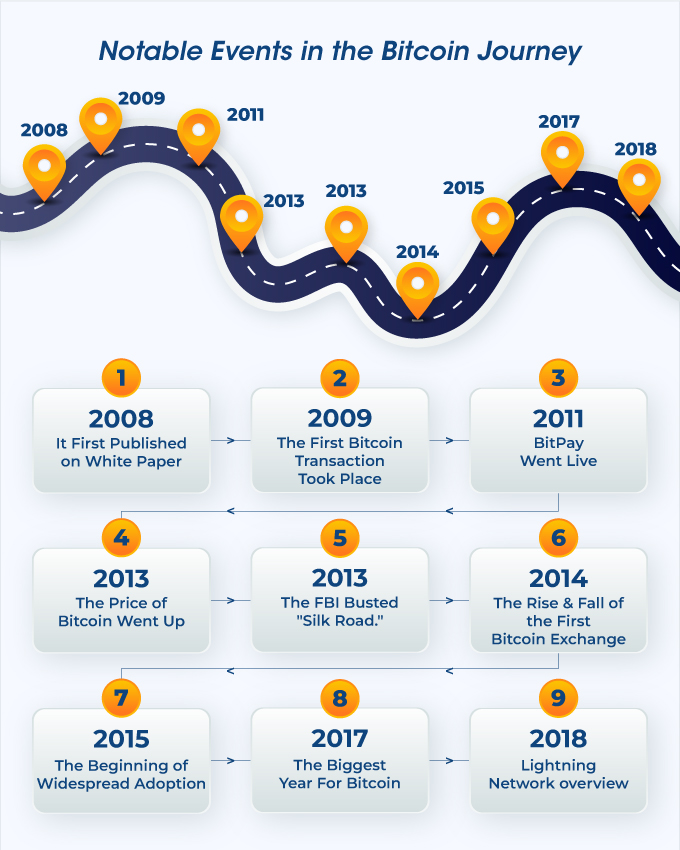
The Genesis of a New Asset Class: From Zero to One
The financial “birth” of Bitcoin is actually marked by two distinct dates: the publication of its conceptual framework and the mining of its first block. Understanding the gap between these moments is crucial for any investor looking to grasp the asset’s foundational value.
The 2008 Whitepaper and the 2009 Genesis Block
Bitcoin’s intellectual journey began on October 31, 2008, when an individual or group using the pseudonym Satoshi Nakamoto released the whitepaper titled “Bitcoin: A Peer-to-Peer Electronic Cash System.” This document was born out of the ashes of the Great Financial Crisis, a time when trust in centralized banking hit an all-time low.
However, the network did not go live until January 3, 2009, with the mining of the “Genesis Block.” Embedded in the code of that first block was a headline from The Times: “Chancellor on brink of second bailout for banks.” This was not just a timestamp; it was a financial manifesto. From this moment, the clock began ticking on the first decentralized, scarce digital currency the world had ever seen.
The Early “Worthless” Years and the First Market Prices
For the first year of its life, Bitcoin had no market price. It was traded among hobbyists and cryptographers for essentially nothing. The first recorded “real-world” transaction occurred in May 2010, when Laszlo Hanyecz famously paid 10,000 BTC for two pizzas—at the time, a transaction worth roughly $41.
By the time Bitcoin reached its second and third years, it began to find its way onto the first primitive exchanges. This era was defined by extreme obscurity. For the modern investor, this period represents the “Proof of Concept” phase. Bitcoin’s age during these years was a measure of its survival against technical bugs and total lack of liquidity. Every year it didn’t collapse added a layer of “Lindy Effect” to its reputation—the idea that the longer a non-perishable thing survives, the longer it is likely to survive into the future.
Measuring Maturity: Bitcoin’s Performance Over a Decade
As Bitcoin entered its second decade, the conversation shifted from “Will it survive?” to “How does it perform compared to traditional assets?” Its age became a metric of performance consistency across multiple economic cycles.
Historical Returns and the Four-Year Cycle
Bitcoin’s financial history is defined by its “halving” events, which occur approximately every four years. These events reduce the rate at which new Bitcoin is created, effectively tightening the supply. Because of this programmed scarcity, Bitcoin’s price history has moved in fairly predictable, albeit volatile, four-year cycles.
Looking back over the last ten years, Bitcoin has consistently been one of the best-performing assets in the world. While traditional stocks might aim for 7–10% annual returns, Bitcoin’s CAGR (Compound Annual Growth Rate) has historically dwarfed those figures, despite the significant “drawdowns” or bear markets. The age of the asset allows analysts to see that these cycles are not random chaos but are instead driven by the fundamental economic principles of supply and demand.
Volatility as a Function of Age
One of the primary critiques of Bitcoin is its volatility. However, when we look at the asset’s age, we see a clear trend: as Bitcoin gets older, its volatility tends to dampen. In its early years (2011–2015), 10% or 20% daily price swings were common.

Today, while still more volatile than the S&P 500 or Gold, Bitcoin’s price movements have become more measured. This is a sign of market maturation. As the market capitalization grows and more “deep-pocketed” institutional liquidity enters the space, it takes significantly more capital to move the price. For a personal finance strategist, the “age” of Bitcoin provides the necessary data to calculate risk-adjusted returns (such as the Sharpe Ratio), making it easier to fit into a diversified portfolio.
Bitcoin as Digital Gold: The Shift from Speculation to Store of Value
As Bitcoin moved into its “teens,” its identity in the financial world underwent a radical transformation. It transitioned from a speculative “get-rich-quick” vehicle for tech enthusiasts into a strategic “Store of Value” for global institutions.
Institutional Adoption and the ETF Era
Perhaps the most significant milestone in Bitcoin’s fifteen-year history was the approval of Spot Bitcoin Exchange-Traded Funds (ETFs) in the United States in early 2024. This event marked the definitive “coming of age” for the asset.
Before the ETFs, investing in Bitcoin required a high degree of technical knowledge regarding digital wallets and private keys. The entry of major financial institutions like BlackRock and Fidelity effectively “institutionalized” Bitcoin. It is no longer an outlier asset; it is now a standard option available to 401(k) holders and institutional pension funds. This level of adoption would have been impossible without the decade-plus of “uptime” and security that Bitcoin demonstrated. Its age provided the “regulatory comfort” necessary for the world’s largest asset managers to step in.
Scarcity and the Halving Mechanism
The “Money” aspect of Bitcoin is fundamentally tied to its hard cap of 21 million coins. Unlike fiat currencies, which can be printed at the discretion of central banks, Bitcoin’s “monetary policy” is written in code and immutable.
Every four years, the “Halving” serves as a reminder of Bitcoin’s aging process. It is the asset’s way of “growing up” and becoming scarcer. For investors, the age of Bitcoin is synonymous with the progression of this issuance schedule. We are currently in an era where over 93% of all Bitcoin has already been mined. This makes the remaining 7% highly sought after, reinforcing the “Digital Gold” narrative that has become the cornerstone of its value proposition in a world of high inflation.
The Future of Bitcoin in a Diversified Portfolio
Now that Bitcoin is over 15 years old, it is no longer enough to just “buy some and hope.” Modern financial planning requires a more nuanced approach to how this maturing asset fits into a long-term wealth strategy.
Risk Management and Long-Term Horizon
In personal finance, the “age” of an investment is often tied to the investor’s time horizon. Because Bitcoin is a maturing asset, the recommended holding period has shifted. In the early days, Bitcoin was a short-term gamble. Today, most financial advisors who include Bitcoin in their strategies suggest a minimum five-to-ten-year horizon.
This long-term view allows investors to ride out the four-year cycles and benefit from the asset’s overall upward trajectory. The historical data shows that anyone who has held Bitcoin for at least four years has, historically, seen a positive return. This “time-in-the-market” vs. “timing-the-market” philosophy is a hallmark of disciplined investing, and Bitcoin’s age finally provides enough data to support this approach.
The Role of Bitcoin in Modern Wealth Preservation
As we look toward the next decade of Bitcoin’s existence, its role as a hedge against monetary debasement becomes more prominent. With global debt at record highs and the purchasing power of traditional currencies declining, Bitcoin offers a “neutral” financial territory.
It is an asset that belongs to no single country and is controlled by no single government. For the individual looking to preserve wealth across generations, Bitcoin’s age is its greatest selling point. It has survived hacks, exchange collapses, regulatory bans, and economic downturns. Each year that passes adds to its “antifragility.”
In conclusion, when we ask “How old is Bitcoin?”, we are looking at the clock of a new financial era. At 15+ years old, Bitcoin has moved past its experimental phase and has established itself as a permanent fixture in the global financial system. For the modern investor, it represents a unique intersection of technology and sound money—a “hard” asset for a digital age that has proven its worth through the ultimate test: the test of time.
aViewFromTheCave is a participant in the Amazon Services LLC Associates Program, an affiliate advertising program designed to provide a means for sites to earn advertising fees by advertising and linking to Amazon.com. Amazon, the Amazon logo, AmazonSupply, and the AmazonSupply logo are trademarks of Amazon.com, Inc. or its affiliates. As an Amazon Associate we earn affiliate commissions from qualifying purchases.