
The global financial landscape is undergoing a paradigm shift. For decades, the movement of money across borders has been governed by antiquated systems that are slow, expensive, and riddled with intermediaries. In the wake of the 2008 financial crisis, the emergence of blockchain technology offered a promise of a decentralized future. While Bitcoin was designed as “digital gold” or a peer-to-peer cash system, XRP was engineered with a different financial objective: to serve as a high-speed bridge asset for the world’s banking institutions.
For investors and financial enthusiasts, understanding XRP requires looking beyond the hype of the broader cryptocurrency market. It involves analyzing its utility as a liquidity tool, its regulatory journey, and its potential to replace the aging infrastructure of international settlements. This guide explores the multifaceted nature of XRP through the lens of personal and institutional finance.

The Financial Fundamentals of XRP and Ripple
To understand XRP as an investment, one must first distinguish between the digital asset and the company most closely associated with its development: Ripple. This distinction is the bedrock of any sound financial analysis of the token.
The Distinction Between Ripple and XRP
In the world of finance, confusion between a service provider and a commodity can lead to poor decision-making. Ripple is a private technology company that builds software solutions for the global financial sector. XRP, on the other hand, is a decentralized digital asset that exists on the XRP Ledger (XRPL). While Ripple uses XRP in its liquidity products, the asset is independent of the company. If Ripple were to cease operations tomorrow, the XRP Ledger would continue to function. For an investor, this means XRP’s value is tied both to Ripple’s commercial success and the broader adoption of the ledger by other financial players.
Understanding the XRP Ledger (XRPL)
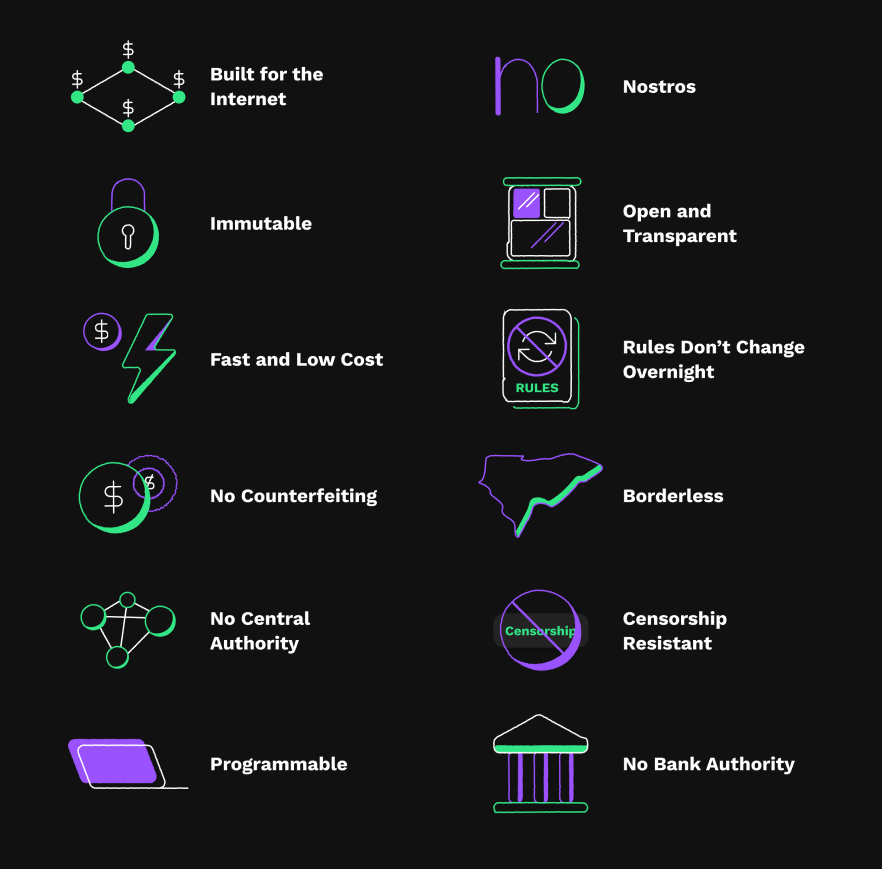
From a financial perspective, the XRPL is a distributed ledger that records transactions without the need for a central intermediary like a clearinghouse. Unlike Bitcoin, which uses “Proof of Work” (mining), the XRPL uses a consensus mechanism. This makes transactions significantly cheaper and faster—settling in 3 to 5 seconds. In the realm of business finance, speed equates to reduced “settlement risk,” which is the danger that one party will fail to deliver on its obligation during the lag time of a transaction.
Supply, Scarcity, and Escrow
The economics of XRP are fundamentally different from inflationary currencies. There is a fixed supply of 100 billion XRP. A significant portion of this supply is held in an escrow system by Ripple, with a set amount released monthly to fund operations and incentivize ecosystem growth. Any unused portions are returned to escrow. For investors, this predictable release schedule provides a level of transparency that is often missing in both traditional fiat printing and other speculative altcoins.
The Role of XRP in Global Finance
The primary value proposition of XRP lies in its utility for the financial services industry. It aims to solve the “pre-funding” problem that plagues international banking.
Revolutionizing Cross-Border Payments
Currently, the global banking system relies on the SWIFT network. While reliable, SWIFT is essentially a messaging system, not a settlement system. For a bank in New York to send money to a bank in Manila, they must often have “nostro/vostro” accounts pre-funded with local currency in the destination country. This traps trillions of dollars in stagnant accounts globally. XRP acts as a “bridge currency,” allowing banks to convert their local currency into XRP, move it across the world in seconds, and convert it back into the destination currency, freeing up massive amounts of capital.
Liquidity and On-Demand Liquidity (ODL)
Ripple’s flagship financial product, now often referred to as Ripple Payments or On-Demand Liquidity (ODL), uses XRP to provide instant liquidity. This is particularly valuable for small and medium-sized enterprises (SMEs) and payment providers in emerging markets who cannot afford to keep large amounts of capital parked in foreign bank accounts. By using XRP, these entities can access liquidity “on-demand,” significantly lowering the cost of doing business internationally.
Institutional Adoption vs. Retail Speculation
While many individual investors buy XRP in hopes of price appreciation, the long-term floor for its value is arguably driven by institutional utility. As more financial institutions integrate the XRPL for internal treasury management or client remittances, the organic demand for the token increases. For a personal finance strategist, the goal is to determine if this institutional “utility demand” will eventually outweigh the “speculative demand” of the retail market.
Investing in XRP: Risks, Rewards, and Market Positioning
No financial asset is without risk, and XRP has faced some of the most unique challenges in the history of digital finance. Understanding these hurdles is essential for anyone considering adding it to their portfolio.
The Regulatory Landscape and the SEC Case
The most significant factor affecting XRP’s price and adoption over the last several years was the lawsuit filed by the U.S. Securities and Exchange Commission (SEC) against Ripple. The SEC alleged that XRP was an unregistered security. In a landmark 2023 ruling, a U.S. judge declared that XRP, in itself, is not necessarily a security, especially when sold on public exchanges to retail investors. This provided a massive boost in regulatory clarity, making it one of the few digital assets in the U.S. with a defined legal status. For investors, this reduces the “legal risk” that had previously suppressed the asset’s price.
Historical Performance and Volatility
Like all cryptocurrencies, XRP is subject to high volatility. It saw astronomical gains in the 2017-2018 bull market, followed by a prolonged period of consolidation during the legal battle. When analyzing XRP from an investment standpoint, one must look at its “market cap” rather than its “unit price.” Because there are billions of tokens, XRP will likely never reach the per-unit price of Bitcoin, but its total market valuation can still compete with the largest financial institutions in the world.
Strategic Portfolio Allocation
Financial advisors often suggest that if an individual is to hold cryptocurrency, it should be a diversified mix. XRP occupies a specific niche: the “Institutional Utility” niche. While Bitcoin is a “Store of Value” and Ethereum is a “Smart Contract Platform,” XRP is a “Settlement Asset.” Including XRP in a portfolio is essentially a bet on the modernization of the global banking system and the move toward an “Internet of Value” where money moves as fast as information.
Comparing XRP to Other Financial Instruments
To truly grasp XRP’s place in a financial strategy, one must compare it to both its digital predecessors and the traditional systems it seeks to improve.
XRP vs. Bitcoin as a Financial Asset
Bitcoin is often criticized for its slow transaction speeds and high fees during times of network congestion, making it a poor choice for daily commerce or rapid settlement. However, its scarcity makes it a strong “digital gold.” XRP is the opposite; it is designed for high-velocity movement. From a money management perspective, you hold Bitcoin to preserve wealth over decades; you use or invest in XRP because you believe in the efficiency of the underlying payment rails.
XRP vs. Traditional SWIFT and CBDCs
Traditional bank transfers can take 3 to 5 business days and lose 3% to 7% of their value in fees and currency exchange spreads. XRP reduces these costs by over 40% and settlement time by 99%. Furthermore, as Central Banks explore Central Bank Digital Currencies (CBDCs), the XRP Ledger has positioned itself as a neutral platform that can interoperate between different national digital currencies. This positions XRP not as an enemy of the central banks, but as a potential ally in the future of “Money 2.0.”
The Future Outlook for XRP Holders
The future of XRP is inextricably linked to the digitizing of global finance. As we move toward a world of tokenized assets, the need for a fast, low-cost settlement layer becomes paramount.
Technological Roadmaps and Financial Utility
The XRP Ledger is not static. New developments, such as the introduction of sidechains and the potential for smart contracts via the Hooks amendment, are expanding XRP’s utility into Decentralized Finance (DeFi). For an investor, this means XRP could eventually earn yield, be used as collateral, or power automated market makers (AMMs), adding layers of financial value beyond simple payments.
Long-term Market Viability
The ultimate test for XRP will be the “network effect.” The more banks, payment providers, and corporations that use the ledger, the more valuable the network becomes. In finance, liquidity begets liquidity. If XRP becomes the standard for cross-border settlement, the demand for the token to facilitate those trillions of dollars in daily volume could create a unique economic environment for holders.
In conclusion, XRP represents a sophisticated intersection of blockchain technology and traditional finance. It is an asset built for a specific purpose: to lubricate the gears of global trade. For the modern investor, it offers a way to gain exposure to the digital transformation of the banking sector, provided they understand the regulatory nuances and the long-term vision of a world where value moves instantly. Whether it becomes the global bridge currency remains to be seen, but its current positioning makes it one of the most significant assets in the evolution of money.
aViewFromTheCave is a participant in the Amazon Services LLC Associates Program, an affiliate advertising program designed to provide a means for sites to earn advertising fees by advertising and linking to Amazon.com. Amazon, the Amazon logo, AmazonSupply, and the AmazonSupply logo are trademarks of Amazon.com, Inc. or its affiliates. As an Amazon Associate we earn affiliate commissions from qualifying purchases.