
In the modern digital landscape, the “meme” is often perceived as a fleeting piece of internet ephemera—a captioned image of a cat, a viral dance on a short-form video platform, or a repurposed movie screencap. However, from a technological and sociological perspective, memes represent the fundamental units of cultural information. To answer the question “What is the first meme?” one must navigate the intersection of evolutionary biology, early computer science, and the burgeoning infrastructure of the global internet.
The history of the meme is not merely a timeline of jokes; it is a chronicle of how humans use technology to compress, transmit, and replicate complex ideas across vast networks. By examining the origins of memetics, we can better understand the algorithmic world we inhabit today.

Defining the Meme in a Pre-Digital and Early Digital Context
Before the meme became a staple of social media feeds, it was a theoretical framework used to describe the spread of ideas. The transition from a biological concept to a digital phenomenon is a testament to the power of information technology.
The Dawkins Hypothesis: Information as a Virus
The term “meme” was first coined by evolutionary biologist Richard Dawkins in his 1976 book, The Selfish Gene. Dawkins sought a word to describe the “unit of cultural transmission.” He derived “meme” from the Greek mimeme (something imitated), shortening it to rhyme with “gene.”
In this original tech-adjacent context, a meme was viewed as a replicator. Much like a biological gene or a computer virus, a meme’s success is measured by its longevity, fecundity, and copying fidelity. In the pre-internet era, these memes were melodies, catchphrases, or fashion trends. The “technology” of transmission was face-to-face interaction or mass media (radio and television), which lacked the rapid feedback loops of the digital age.
From Print to Pixels: The Transition of Cultural Units
The first proto-memes began to surface in the mid-20th century, often circulating through “analogue networks.” A famous example is “Kilroy Was Here,” a graffiti doodle that spread globally among American servicemen during World War II. While not digital, it functioned exactly like a modern internet meme: it was a template that was easily replicated, modified, and shared across a wide geographic area.
As the first computer networks—like ARPANET—emerged in the late 1960s and 70s, the medium for these cultural units shifted. Information no longer needed a physical vessel (like a wall or a piece of paper); it could exist as binary code, capable of being replicated perfectly across a network without the degradation inherent in analogue copying.
Identifying the “First” Internet Meme: The Usenet and BBS Era
When we narrow the scope to the internet meme, we look for the first instance of a self-replicating digital idea. This brings us to the early days of networked communication, where text-based interfaces forced users to innovate new ways to convey nuance.
The Emoticon: Scott Fahlman’s 🙂 and the Birth of Visual Syntax
On September 19, 1982, Dr. Scott Fahlman, a computer scientist at Carnegie Mellon University, proposed a specific sequence of characters to distinguish jokes from serious posts on the university’s electronic bulletin board (BBS). He suggested using :-) for “joking” and :-( for “not joking.”
While we now categorize these as “emoticons,” they meet the technical criteria for the first digital meme. They were a solution to a technical limitation—the lack of tone in text-based communication—and they replicated at an exponential rate. Within months, these symbols migrated across the ARPANET and Usenet, evolving into various iterations. This was the first time a digital “template” was used to modify the meaning of communication across a global network.
“Godwin’s Law” and Early Textual Memetics
In 1990, Mike Godwin formulated “Godwin’s Law of Nazi Analogies.” It stated: “As an online discussion grows longer, the probability of a comparison involving Nazis or Hitler approaches one.”
This was a meta-meme—a meme about the way people communicate in digital spaces. It spread across Usenet newsgroups not as an image, but as a recognized rule of engagement. It demonstrated that in the early tech ecosystem, memes were often conceptual frameworks or “laws” that governed how users interacted with the hardware and software of the time.
The Rise of Multi-Media Memetics: GIFs and Viral Scripts
As bandwidth increased in the 1990s, the “meme” evolved from simple text strings into visual and auditory media. This era marked the birth of the “viral” phenomenon as we recognize it today, powered by early web browsers and email clients.
The Dancing Baby (Oogachacka): The First 3D Rendered Viral Hit
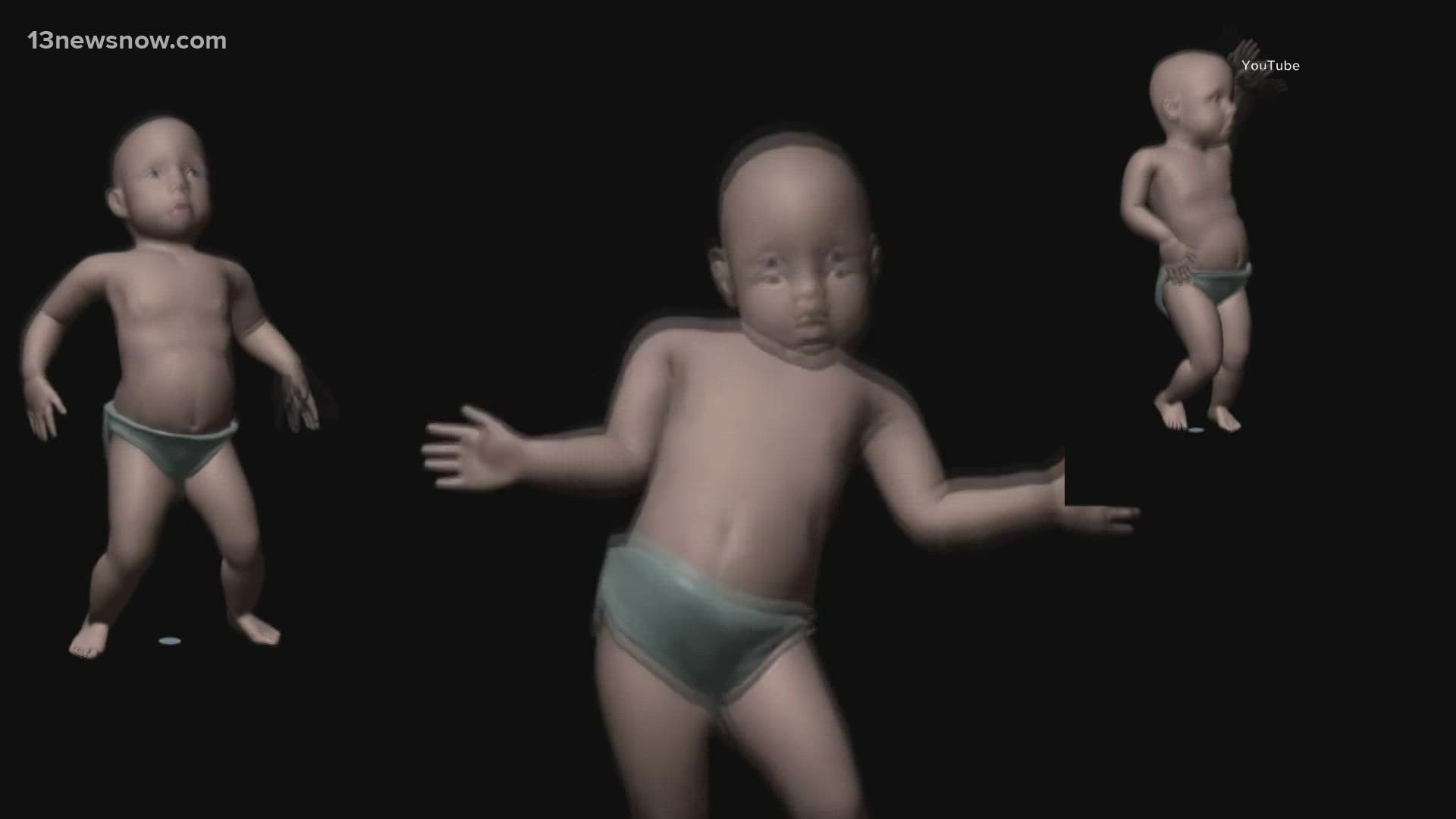
In 1996, a 3D-rendered animation of a baby dancing to a looped intro of “Hooked on a Feeling” became a global sensation. Technically known as “Baby Cha-Cha,” it was originally created by developers at Kinetix (a subsidiary of Autodesk) as a source file to demonstrate the capabilities of 3ds Max software.
The Dancing Baby was a milestone in tech history. It was one of the first times a high-fidelity CGI file was compressed enough to be shared via email and the early World Wide Web. It broke out of the tech-enthusiast circle and entered the mainstream, appearing on the television show Ally McBeal. It proved that digital artifacts could become cultural touchstones through decentralized sharing.
“All Your Base Are Belong To Us”: The Localization Glitch
In the early 2000s, a poorly translated cutscene from the 1989 Japanese video game Zero Wing became a defining moment for internet culture. The phrase “All your base are belong to us” was a classic example of “Engrish,” and its spread was fueled by a Flash animation hosted on the site Newgrounds.
This meme represented a convergence of technologies: video game emulation, Flash animation, and the Rise of the “Portal” website. It was no longer just about a single image; it was about the remix. Users began photoshopping the text onto various real-world locations, marking the transition into the “Image Macro” era where software like Photoshop allowed users to easily manipulate digital assets to create new iterations of a meme.
The Technology Behind Viral Transmission
To understand why memes spread, we must look at the underlying infrastructure. The “first meme” was limited by the hardware of its time; modern memes are dictated by the architecture of the cloud and the speed of the processor.
Bandwidth and Compression: Enabling Shared Imagery
In the days of dial-up modems (14.4k or 56k), the memes of the day had to be small. This is why the GIF (Graphics Interchange Format) became the dominant language of the internet. Developed by CompuServe in 1987, the GIF used LZW compression, which allowed for small file sizes and looping animations without the overhead of a full video file.
As broadband (DSL and Cable) replaced dial-up, the technical constraints vanished. This allowed for the “YouTube era” (starting in 2005), where memes became high-definition videos. The evolution of the meme is, in many ways, a history of data compression technology.
Algorithmic Amplification: How Tech Platforms Curate Viral Culture
The modern meme is no longer shared solely by human choice; it is propelled by machine learning. In the 1980s and 90s, a meme moved through “pull” technology—users had to actively go to a BBS or download a file. Today, social media platforms use “push” technology.
Algorithms on platforms like TikTok or X (formerly Twitter) analyze engagement metrics (dwell time, shares, likes) to decide which memes to amplify. This has changed the nature of the meme from a “shared cultural unit” to a “data point for engagement.” The first memes were accidental; modern memes are often “engineered” to trigger specific algorithmic responses.
The Future of Memetics: AI-Generated Content and the New Meta
As we move further into the decade, the concept of the “original meme” is becoming even more blurred by the advent of Artificial Intelligence. We are entering a phase where the creator of the meme may not even be human.
Large Language Models and the Death of the Original Author
With the rise of Generative AI (like Midjourney or ChatGPT), the cost of creating a meme has dropped to near zero. A user can prompt an AI to create a thousand variations of a meme in seconds. This hyper-production leads to a “saturated memescape,” where memes have a shorter shelf-life than ever before.
In this tech-driven future, the “first meme” of a new trend might be generated by an LLM (Large Language Model) based on trending keywords, rather than a human joke. This represents the ultimate realization of Dawkins’ theory: the meme has become a self-replicating digital organism that no longer requires a biological host for its creation—only a server.
Conclusion: The Meme as a Technological Legacy
From Scott Fahlman’s three-character smiley to the AI-generated deepfakes of today, the meme has served as the heartbeat of the internet. The “first meme” was not a single event, but a series of technological breakthroughs that allowed humans to encode their humor and culture into a digital format. As our tools become more sophisticated, the meme will continue to evolve, remaining the most efficient way to package information for the hyper-connected age. Understanding this history is essential for anyone looking to navigate the complex, algorithmically-driven world of modern technology.
aViewFromTheCave is a participant in the Amazon Services LLC Associates Program, an affiliate advertising program designed to provide a means for sites to earn advertising fees by advertising and linking to Amazon.com. Amazon, the Amazon logo, AmazonSupply, and the AmazonSupply logo are trademarks of Amazon.com, Inc. or its affiliates. As an Amazon Associate we earn affiliate commissions from qualifying purchases.