
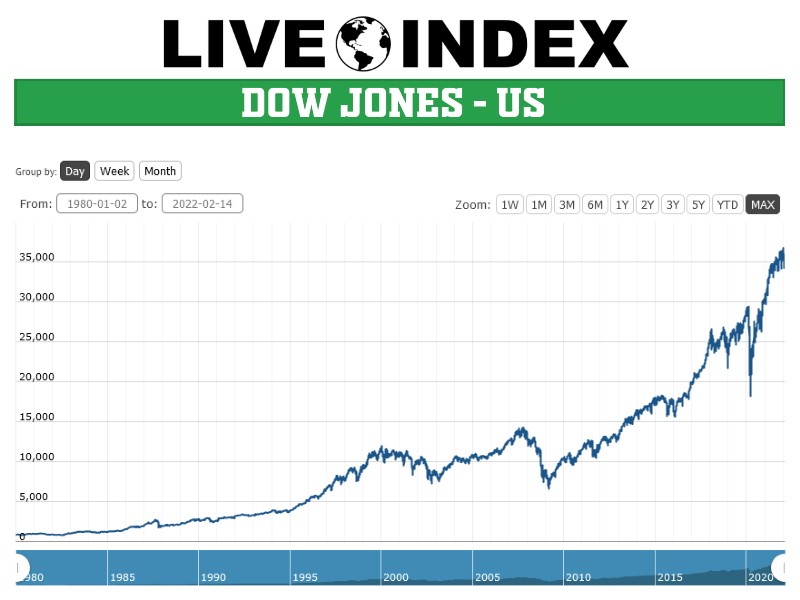
For over a century, the Dow Jones Industrial Average (DJIA) has served as the definitive pulse of the American economy. When news anchors ask, “How is the market doing today?” they are almost always referring to this venerable index. Despite the emergence of more complex indices like the S&P 500 or the tech-heavy Nasdaq, the Dow remains the most cited financial metric in the world. For the modern investor, understanding the Dow Jones index today is not just about tracking a single number; it is about interpreting the underlying health of the corporate giants that drive global commerce.

In this guide, we will explore the mechanics of the Dow, why its daily fluctuations matter to your personal finance, the factors that influence its movement, and how you can use this information to build a more resilient investment portfolio.
The Fundamentals: What the Dow Jones Industrial Average Represents
To understand what the Dow Jones index represents today, one must look back to 1896 when Charles Dow and Edward Jones first calculated the average of 12 industrial stocks. Today, the index has evolved into a curated list of 30 “blue-chip” companies—reputable, financially sound, and leaders in their respective industries.
The Composition of the “Thirty”
The Dow is not a cross-section of the entire stock market; rather, it is a selection of 30 massive, publicly owned companies based in the United States. These companies are chosen by a committee at S&P Dow Jones Indices. The goal is to select companies that represent the broad health of the U.S. economy. This includes stalwarts in healthcare (UnitedHealth Group), technology (Microsoft, Apple), finance (Goldman Sachs, JPMorgan Chase), and consumer goods (Walmart, Coca-Cola). Because these companies are so deeply integrated into global supply chains, their performance is often a leading indicator of global economic trends.
The Price-Weighted Methodology
Unlike the S&P 500, which is market-capitalization weighted (meaning larger companies have more influence), the Dow is price-weighted. This means that companies with a higher stock price have a greater impact on the index’s daily movement than those with lower stock prices. For example, a $1 move in a stock priced at $500 has the same effect on the index as a $1 move in a stock priced at $50. This methodology is often criticized by academics for being archaic, but it remains a remarkably consistent barometer of market sentiment among institutional investors.
The Role of the Dow Divisor
One might wonder how the sum of 30 stock prices results in an index value in the tens of thousands. This is managed through the “Dow Divisor.” Since stock splits and spin-offs occur frequently, the divisor is adjusted to ensure that these corporate actions do not artificially change the value of the index. The divisor ensures continuity, allowing investors to compare the market today with the market 50 years ago with statistical accuracy.
Why the Dow Matters to Your Personal Wealth
While professional traders watch the Dow for short-term gains, the average individual should view the index as a gauge for long-term financial planning. The movements of the Dow Jones today have a direct ripple effect on retirement accounts, consumer confidence, and interest rates.
Impact on Retirement and 401(k) Plans
Most diversified retirement portfolios are heavily exposed to the large-cap stocks found within the Dow. When the Dow trends upward over several years, it creates a “wealth effect.” Investors see their account balances rise, which leads to increased consumer spending and further economic growth. Conversely, a sustained downturn in the Dow can signal a period where investors may need to rebalance their assets to protect their capital from excessive volatility.
A Barometer for Economic Sentiment
The Dow is more than a financial tool; it is a psychological one. High levels of volatility in the Dow often lead to a “risk-off” environment where investors flee to safer assets like gold or government bonds. Understanding the “vibe” of the Dow helps personal investors decide when it might be time to enter the market or when it might be prudent to hold cash. If the Dow is hitting record highs, it typically suggests that corporate earnings are strong and the business climate is favorable.
The Correlation Between the Dow and Interest Rates
There is a sensitive relationship between the Dow and the Federal Reserve’s monetary policy. When the Dow drops significantly, it can put pressure on the Fed to lower interest rates to stimulate the economy. On the other hand, a “runaway” Dow can sometimes signal an overheating economy, leading to rate hikes to curb inflation. For anyone with a mortgage, car loan, or savings account, the health of the Dow is a leading indicator of what might happen to their interest rates in the coming months.
Modern Drivers of Volatility in the Dow
In the modern era, the Dow Jones does not move in a vacuum. It is influenced by a complex web of global factors that can cause intraday swings of hundreds of points.
Inflation and Central Bank Policy
Today, the single biggest driver of the Dow’s performance is the trajectory of inflation. When the Consumer Price Index (CPI) comes in higher than expected, the Dow often reacts negatively. This is because high inflation erodes corporate profit margins and forces the Federal Reserve to maintain high interest rates. Investors today must watch the “Fed Dot Plot” and chairman speeches just as closely as they watch corporate earnings.
Corporate Earnings Cycles
Every quarter, the 30 companies in the Dow release their earnings reports. Because the Dow is a concentrated index, a poor earnings report from a high-priced component like UnitedHealth or Microsoft can drag the entire index down, even if the other 29 stocks are performing well. Professional investors look beyond the “bottom line” numbers, focusing instead on “forward guidance”—what the company expects to happen in the next six to twelve months.
Geopolitical Stability and Trade
As most Dow components are multinational corporations, they are highly sensitive to geopolitical tensions. Trade wars, energy crises in Europe, or instability in the Middle East can disrupt supply chains and increase costs. For instance, an increase in oil prices may benefit energy components like Chevron but could hurt manufacturing and transport-heavy components like Boeing or 3M.
Strategic Investing: How to Trade or Hold the Dow
For those looking to turn their knowledge of the Dow into actionable financial strategy, there are several avenues to consider. You do not need to buy all 30 individual stocks to participate in the Dow’s growth.
Index Funds and ETFs
The most common way to invest in the Dow is through an Exchange-Traded Fund (ETF) that tracks the index, such as the SPDR Dow Jones Industrial Average ETF Trust (Ticker: DIA). Known colloquially as “Diamonds,” this fund allows investors to gain exposure to all 30 blue-chip stocks with a single purchase. It offers high liquidity and low expense ratios, making it an ideal core holding for a “Money” focused portfolio.
Dividend Growth Strategies
Many of the companies within the Dow Jones are “Dividend Aristocrats”—companies that have not only paid but increased their dividends for 25 consecutive years or more. For investors focused on passive income, the Dow represents a collection of the safest yield-producing assets in the equity market. Reinvesting these dividends can significantly accelerate wealth accumulation through the power of compounding.
Defensive Posturing During Market Downturns
Because the Dow consists of established, profitable companies, it tends to be less volatile than the Nasdaq during market corrections. In a “bear market,” investors often rotate their money out of speculative tech stocks and into the “safe haven” stocks of the Dow. Understanding this rotation is key to protecting your net worth during periods of economic uncertainty.

Conclusion: The Dow as a Living Economic Map
What the Dow Jones index is today is vastly different from what it was a century ago, yet its core purpose remains the same: to provide a snapshot of American corporate strength. For the modern investor, the Dow is a living map of the economic landscape. By understanding its composition, its sensitivity to interest rates, and its role in a diversified portfolio, you can move beyond simply “checking the numbers” and start making informed, strategic financial decisions.
Whether you are a seasoned investor or just starting your journey toward financial independence, keeping a close eye on the 30 stocks of the Dow is one of the most effective ways to understand the direction of the global economy. In the world of money, knowledge is the ultimate hedge against volatility.
aViewFromTheCave is a participant in the Amazon Services LLC Associates Program, an affiliate advertising program designed to provide a means for sites to earn advertising fees by advertising and linking to Amazon.com. Amazon, the Amazon logo, AmazonSupply, and the AmazonSupply logo are trademarks of Amazon.com, Inc. or its affiliates. As an Amazon Associate we earn affiliate commissions from qualifying purchases.