
The S&P 500 is often cited as the single most important barometer for the health of the United States economy. For decades, it has served as the gold standard for equity performance, representing the 500 largest publicly traded companies in the U.S. across every major sector. For the individual investor, the S&P 500 offers a unique proposition: the ability to own a slice of corporate America’s most dominant players—from Apple and Microsoft to Amazon and Berkshire Hathaway—through a single, low-cost investment.
Investing in this index is not merely a trend; it is a proven strategy championed by financial titans like Warren Buffett, who famously recommended that most investors should simply put their money into a low-cost S&P 500 index fund. This guide will walk you through the essential steps, strategies, and nuances of investing in the S&P 500 to help you secure your financial future.
Understanding the S&P 500 and Why It’s a Gold Standard
Before committing your capital, it is crucial to understand what you are actually buying. The S&P 500 (Standard & Poor’s 500) is a market-capitalization-weighted index. This means that larger companies have a more significant impact on the index’s performance than smaller ones. By investing in it, you are essentially betting on the continued growth and innovation of the American economy.
What is the S&P 500?
The S&P 500 is managed by S&P Dow Jones Indices. To be included, a company must meet specific criteria, including a minimum market capitalization, high liquidity, and at least four consecutive quarters of positive earnings. Because the index is self-cleansing—underperforming companies are removed and rising stars are added—it inherently filters for quality over the long term. It covers approximately 80% of the total value of the U.S. stock market, providing broad exposure to technology, healthcare, financials, and consumer staples.
Historical Performance and Reliability
Historically, the S&P 500 has delivered an average annual return of approximately 10% before inflation. While the market experiences volatility—including bear markets and recessions—the index has consistently recovered and reached new highs over multi-decade periods. For a “Money” focused investor, the appeal lies in this reliability. Unlike picking individual stocks, where a single company’s failure can ruin a portfolio, the S&P 500 offers “built-in” diversification. If one company in the 500 fails, its impact is diluted by the success of the other 499.
The Power of Passive Investing
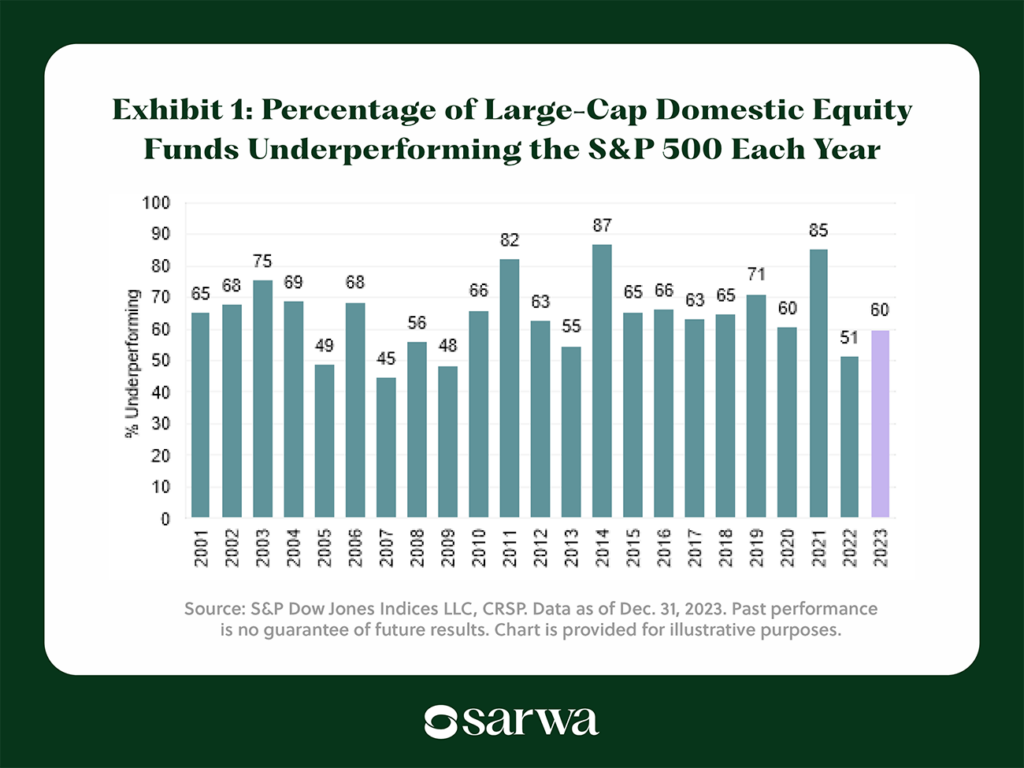
Investing in the S&P 500 is the cornerstone of “passive investing.” Instead of trying to “beat the market” by guessing which individual stocks will skyrocket, you choose to “be the market.” Research consistently shows that over long periods, the majority of professional fund managers fail to outperform the S&P 500. By choosing an index-tracking strategy, you avoid the high fees associated with active management and benefit from the collective growth of the world’s most successful corporations.
Choosing Your Investment Vehicle: Index Funds vs. ETFs
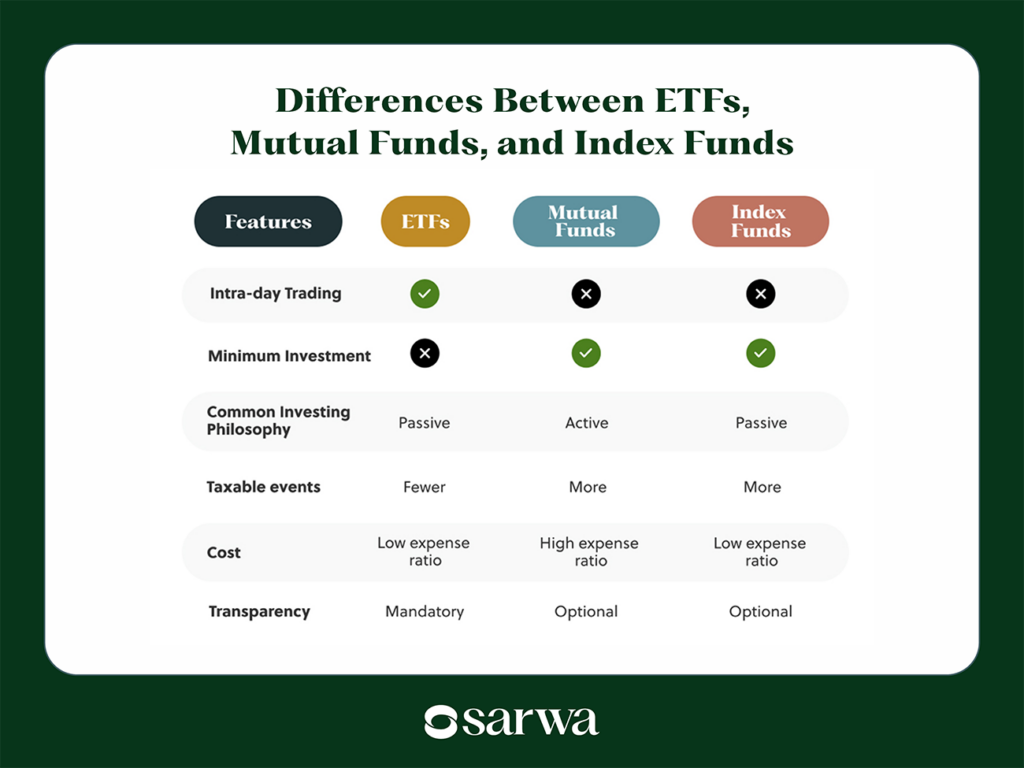
You cannot buy the S&P 500 index directly, as it is just a mathematical list. Instead, you must invest in a financial product that tracks the index. The two primary vehicles for doing this are Index Mutual Funds and Exchange-Traded Funds (ETFs). While they achieve the same goal, their internal mechanics differ.
The Mechanics of Index Mutual Funds
Index mutual funds are designed to track the S&P 500 by holding the same stocks in the same proportions as the index. One of the primary advantages of mutual funds is the ability to automate your investments. Many brokerages allow you to set up a “recurring buy,” where a specific dollar amount is taken from your bank account and invested regardless of the share price. However, mutual funds only trade once per day after the market closes, and some may require a minimum initial investment (e.g., $3,000).
The Versatility of Exchange-Traded Funds (ETFs)
ETFs have become the preferred choice for many modern investors. Unlike mutual funds, ETFs trade on an exchange throughout the day, just like individual stocks. This provides greater flexibility and liquidity. Major S&P 500 ETFs include the SPDR S&P 500 ETF Trust (SPY), the iShares Core S&P 500 ETF (IVV), and the Vanguard S&P 500 ETF (VOO). ETFs often have no minimum investment requirement beyond the price of a single share (or even less if your broker offers fractional shares), and they are generally more tax-efficient than mutual funds.
Key Metrics to Consider: Expense Ratios and Tracking Error
When choosing between different S&P 500 funds, the most important number is the “Expense Ratio.” This is the annual fee the fund provider charges to manage the investment. Because the S&P 500 is easy to track, these fees should be extremely low—often less than 0.05%. For example, a fee of 0.03% means you pay only $3 per year for every $10,000 invested. Additionally, look for a low “tracking error,” which measures how closely the fund’s performance mimics the actual index. In the world of index investing, lower costs directly translate to higher long-term returns.
Step-by-Step Guide to Executing Your Investment
Once you understand the “why” and the “what,” it is time to focus on the “how.” The process of investing in the S&P 500 has been significantly streamlined by digital brokerage platforms, making it accessible to anyone with an internet connection.
Selecting a Brokerage Platform
To buy an S&P 500 fund, you need a brokerage account. Modern investors generally choose between three types:
- Legacy Powerhouses: Companies like Fidelity, Charles Schwab, and Vanguard offer robust research tools and a wide range of no-fee index funds.
- User-Friendly Apps: Platforms like Robinhood or Webull offer streamlined interfaces and fractional shares, which are excellent for beginners.
- Robo-Advisors: Services like Betterment or Wealthfront automatically invest your money into S&P 500 ETFs based on your risk tolerance.
When selecting a broker, ensure they offer $0 commissions on stock and ETF trades and have a strong reputation for security.
Opening and Funding Your Account
Opening an account usually takes less than ten minutes. You will need to provide your Social Security number, employment information, and link a bank account. You must also decide on the account type. If you are investing for retirement, a Roth IRA or Traditional IRA offers significant tax advantages. If you want the flexibility to withdraw money at any time, a standard taxable brokerage account is the way to go. Once the account is open, initiate a transfer of funds to start your journey.
Executing the Trade
Once your funds are available, search for the “ticker symbol” of the S&P 500 fund you’ve chosen (e.g., VOO or SPY). You will enter a “Buy” order. You can choose a “Market Order,” which buys the shares immediately at the current price, or a “Limit Order,” which only buys if the price hits a specific target. For long-term S&P 500 investors, the exact entry price is less important than the “time in the market,” so a market order is often the simplest path.
Strategic Approaches to S&P 500 Investing
Buying the index is just the beginning. To maximize your wealth-building potential, you need a disciplined strategy that accounts for market fluctuations and the power of compounding.
Dollar-Cost Averaging (DCA)
One of the biggest mistakes investors make is trying to “time the market”—waiting for a crash to buy or selling when they fear a downturn. A superior strategy is Dollar-Cost Averaging. This involves investing a fixed amount of money at regular intervals (e.g., $500 every month), regardless of whether the market is up or down. When prices are high, your $500 buys fewer shares; when prices are low, your $500 buys more. Over time, this lowers your average cost per share and removes the emotional stress of market volatility.
Reinvesting Dividends (DRIP)
The companies within the S&P 500 often pay dividends—a portion of their profits distributed to shareholders. While you can take this as cash, the most effective way to grow your wealth is through a Dividend Reinvestment Plan (DRIP). By automatically using your dividends to buy more shares of the index fund, you increase your total holdings. Over decades, the “compounding effect” of reinvested dividends can account for nearly half of the total returns of the S&P 500.
Managing Risk Through Portfolio Diversification
While the S&P 500 is diversified across 500 companies, it is still 100% focused on U.S. large-cap stocks. To build a truly resilient financial foundation, consider how the S&P 500 fits into your broader portfolio. Some investors choose to pair it with an International Index Fund to capture global growth, or a Bond Fund to reduce volatility. However, for a young investor with a long time horizon, a heavy concentration in the S&P 500 is often considered a prudent and high-growth core strategy.
Conclusion: The Path to Financial Freedom
Investing in the S&P 500 is perhaps the most democratic way to build wealth. It does not require an advanced degree in finance or hours of daily research. It requires only three things: a brokerage account, a low-cost index fund, and—most importantly—patience.
By capturing the collective innovation of the 500 most powerful companies in the United States, you are positioning your capital to grow alongside the global economy. Whether you are starting with $50 or $50,000, the principles remain the same: minimize your fees, stay consistent with your contributions, and let the power of compounding do the heavy lifting. In the world of money and personal finance, simplicity often outperforms complexity, and there is no simpler or more effective tool than the S&P 500 index.
aViewFromTheCave is a participant in the Amazon Services LLC Associates Program, an affiliate advertising program designed to provide a means for sites to earn advertising fees by advertising and linking to Amazon.com. Amazon, the Amazon logo, AmazonSupply, and the AmazonSupply logo are trademarks of Amazon.com, Inc. or its affiliates. As an Amazon Associate we earn affiliate commissions from qualifying purchases.