
When audiences first witnessed Elsa’s icy transformation in Disney’s Frozen, the spectacle was more than just a triumph of storytelling; it was a watershed moment for computer-generated imagery (CGI) and digital physics. To answer the question “what is frozen about the movie,” one must look beyond the plot and into the sophisticated technological framework that allowed the creators to simulate the complex behavior of snow, ice, and light.
From a tech perspective, Frozen represents a masterclass in software engineering, procedural modeling, and physical simulation. The film pushed the boundaries of what was possible in animation, requiring Disney Research to collaborate with mathematicians and physicists to invent entirely new ways of rendering winter.
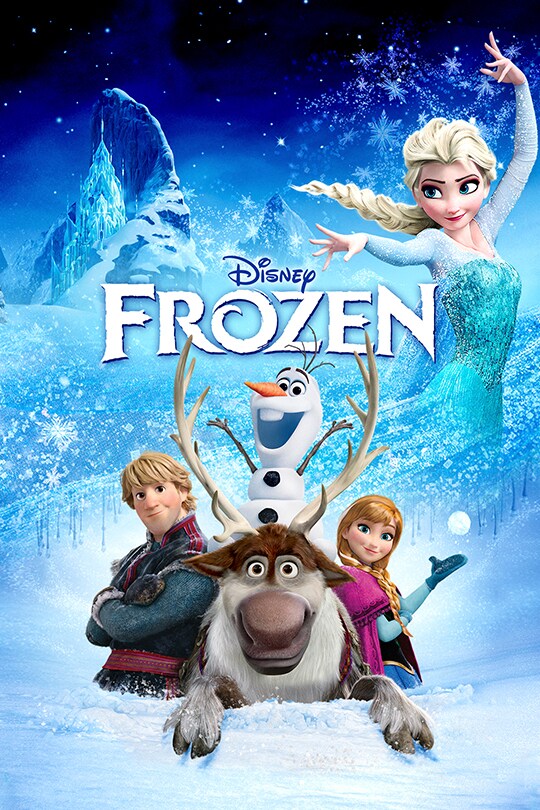
The Physics of Snow: Engineering the Matterhorn Simulation
The most literal answer to what is “frozen” in the movie lies in the groundbreaking simulation tools developed specifically to handle the white stuff. Snow is notoriously difficult to animate because it behaves as both a solid and a fluid. It can be light and powdery, or it can be packed into a dense, breakable block.
Bridging Animation and Physical Science
Before Frozen, most snow in cinema was either a simple particle effect (like falling confetti) or a static texture. To achieve the realism required for Elsa’s powers, Disney’s software engineers had to move beyond visual approximations and into the realm of physical science. They needed a system that understood the internal stresses of a snowpack—how it compresses under a footstep or collapses into an avalanche.
The team collaborated with researchers at UCLA to develop a new solver that could handle these specific variables. This wasn’t just about making the movie look good; it was about creating a virtual environment that followed the laws of thermodynamics and Newtonian physics, albeit in a stylized universe.
The Breakthrough of Material Point Method (MPM)
The technological star of Frozen is a simulation tool called “Matterhorn.” This software utilized the Material Point Method (MPM), a powerful numerical technique used to simulate the behavior of continuous materials. Matterhorn allowed animators to treat snow as a collection of particles and a background grid simultaneously.
When a character walked through a snowdrift, the software calculated how the particles should clump together or break apart based on their moisture content and density. This “frozen” tech enabled the iconic scenes where snow clings to clothes or piles up realistically, providing a tactile sense of coldness that had never been achieved in a feature film before.
Visual Complexity: Rendering the World of Arendelle
Beyond the physical behavior of snow, the movie required a massive leap in how light interacts with translucent and reflective surfaces. Ice is essentially a complex prism, and rendering the way light refracts through Elsa’s palace was a computational nightmare that required a complete overhaul of Disney’s rendering pipeline.
Hyper-Realistic Environments through Global Illumination
In the world of tech and CGI, “Global Illumination” refers to the way light bounces off surfaces and illuminates other objects. In a world made of ice, every surface is a potential light source. To make Arendelle feel “frozen,” the tech team had to calculate millions of light paths as they bounced inside ice crystals.
This required the use of path-tracing algorithms that could simulate the “subsurface scattering” of light. This is the same technology used to make human skin look realistic, but applied at a massive scale to the environment. The result was a world that felt luminous and cold, capturing the specific optical properties of frozen water that previous software would have simply rendered as flat plastic.
The Architecture of the Ice Palace: Procedural Modeling
One of the most technically demanding sequences in the film is the “Let It Go” sequence, where Elsa constructs her palace. To animate this, Disney didn’t just have artists draw the stairs and walls; they used procedural modeling.

The tech team wrote scripts that allowed the ice structures to “grow” based on fractal patterns found in nature. By using these algorithms, the computer could generate thousands of unique ice shards and crystalline structures in seconds, ensuring that the palace looked both organic and mathematically perfect. This blend of artistry and automated coding is a hallmark of modern high-tech animation.
Character Tech: From Hair Simulations to Facial Rigging
The technological “frozen” elements aren’t limited to the scenery. The characters themselves were built using some of the most advanced digital tools available in the 2010s, particularly regarding how their physical features reacted to the harsh environment.
Taming 420,000 Strands: The Tonic Hair Tool
One of the most cited tech facts about Frozen is the complexity of Elsa’s hair. While a typical human has roughly 100,000 hairs, Elsa was rendered with 420,000 individual digital strands. For context, Rapunzel in Disney’s Tangled had only 27,000.
To manage this, Disney developed a proprietary hair simulation tool called “Tonic.” This software was designed to handle the collisions and movements of nearly half a million strands of hair without the computer crashing. Tonic allowed the hair to move naturally even when Elsa was surrounded by swirling snow and high-velocity wind. The software treated the hair as volumes rather than individual lines, which was a significant shift in how hair grooming was handled in the tech pipeline.
Emotional Precision via Advanced Muscle Systems
To make the characters’ reactions to the cold and their own emotions believable, the tech team utilized a sophisticated facial rigging system. This involved a complex underlying “muscle” system that mimicked human anatomy. When Elsa winces or Olaf smiles, the software calculates how the digital skin should stretch and fold. This high-fidelity rigging is what allows the “frozen” expressions of fear and joy to resonate with the audience, bridging the “uncanny valley” that often plagues CGI characters.
The Software Ecosystem: Disney’s Proprietary Tools and Pipelines
To bring all these disparate technologies together—the snow simulations, the hair grooming, and the light rendering—Disney had to evolve its entire production pipeline. The “frozen” nature of the film served as the catalyst for several software suites that are now industry standards.
Hyperion: The Secret Sauce of Disney’s Lighting
While Frozen pushed the limits of existing tools, it also served as a testing ground for Disney’s proprietary renderer, “Hyperion.” Path-tracing (the tech that calculates light) is incredibly memory-intensive. Hyperion was designed to handle massive amounts of geometric complexity by “sorting” light rays.
Instead of calculating every light bounce in the order it occurs, Hyperion groups rays that are moving in similar directions. This architectural shift in how the software processes data allowed Disney to render the incredibly complex “frozen” fractals of Elsa’s palace without the render times becoming astronomical. It was a breakthrough in computational efficiency that has since been used in every Disney animated feature.
Future-Proofing the Franchise through Technological Evolution
The tech developed for the first Frozen movie didn’t remain static. For the sequel, the team had to tackle “frozen” elements in a different state: liquid water. The development of the “Nokk” (the water horse) required a new iteration of their physics solvers to handle the interaction of a character made of water moving through an ocean.
The lineage of these tools—from Matterhorn to Tonic to Hyperion—shows a continuous trajectory of technological growth. What started as a challenge to simulate snow turned into a robust ecosystem of AI-assisted tools and physical simulators that have redefined the animation industry.

Conclusion: The Digital Legacy of the Frost
When we ask what is “frozen” about the movie, the answer is a sophisticated layer of digital technology that turned the impossible into the visual. The film was a perfect storm of computer science and artistic vision. It proved that with enough processing power and mathematical ingenuity, software could recreate the most subtle behaviors of the natural world.
The legacy of Frozen is not just its box office success or its hit songs; it is the “Matterhorn” solver, the 420,000 strands of “Tonic” hair, and the “Hyperion” light paths. These technologies have become the backbone of modern digital storytelling, ensuring that the cold, hard science of CGI will continue to create warm, emotional experiences for years to come. In the end, the most “frozen” part of the movie is the cutting-edge code that remains preserved within the history of technological innovation.
aViewFromTheCave is a participant in the Amazon Services LLC Associates Program, an affiliate advertising program designed to provide a means for sites to earn advertising fees by advertising and linking to Amazon.com. Amazon, the Amazon logo, AmazonSupply, and the AmazonSupply logo are trademarks of Amazon.com, Inc. or its affiliates. As an Amazon Associate we earn affiliate commissions from qualifying purchases.