
In the rapidly evolving landscape of Natural Language Processing (NLP) and Artificial Intelligence (AI), the quest to make machines “understand” human language has shifted from simple keyword matching to deep semantic comprehension. At the heart of this evolution lies a concept borrowed from formal logic and linguistics: entailment.
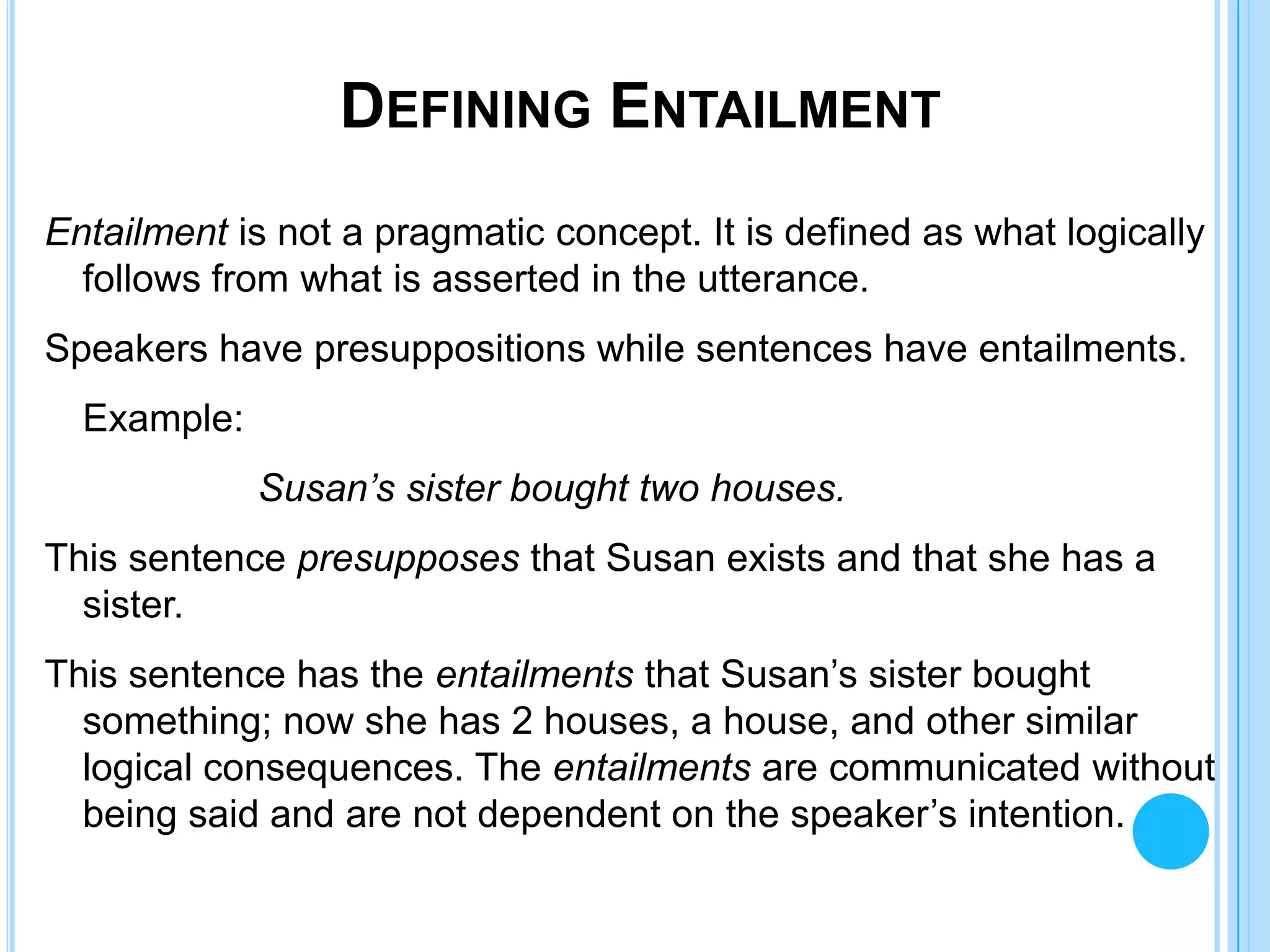
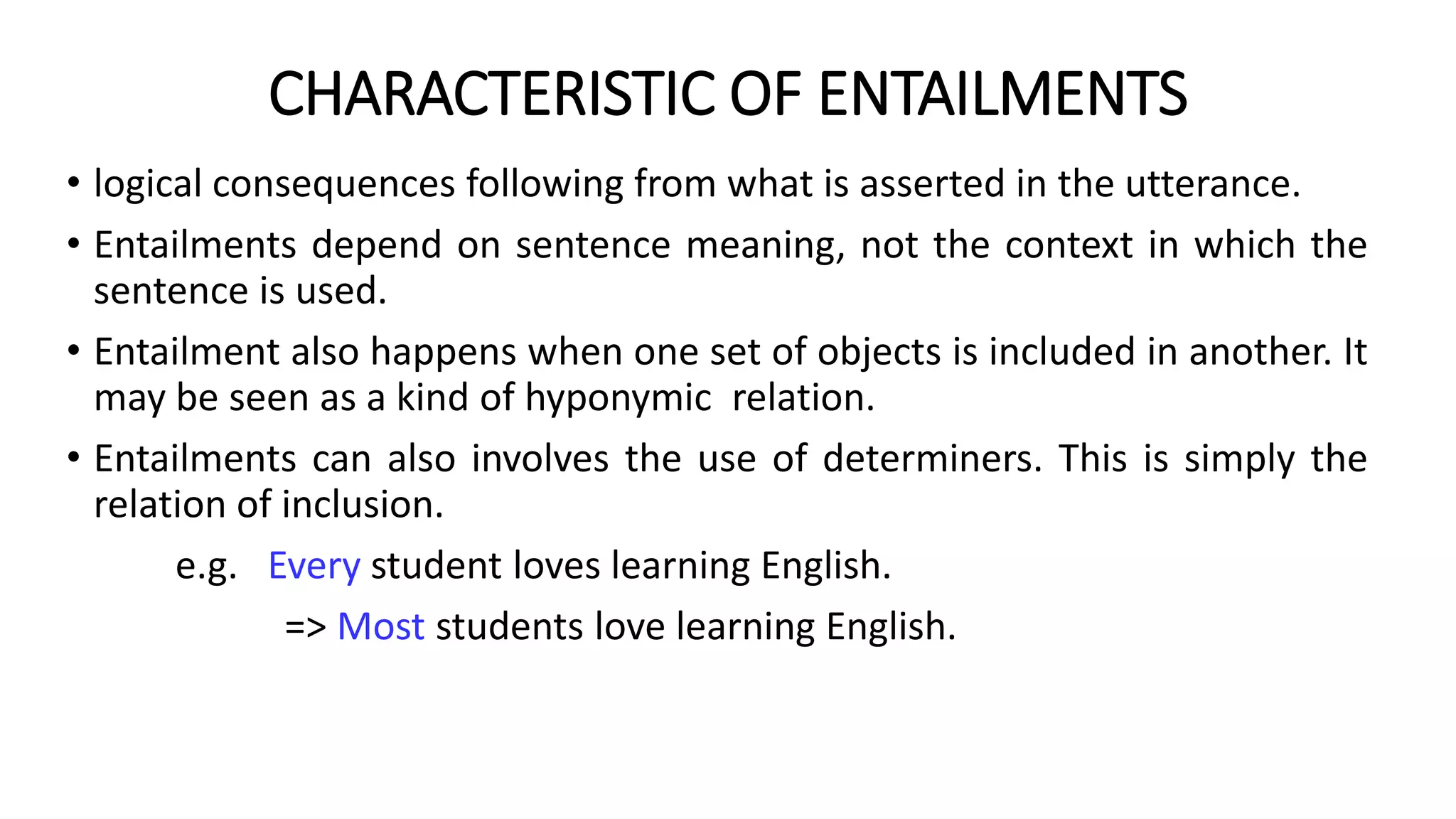
In a technical context, specifically within the realm of Natural Language Understanding (NLU), entailment refers to the directional relationship between two pieces of text—a premise and a hypothesis. We say that text A (the premise) entails text B (the hypothesis) if, under the assumption that A is true, a human would naturally conclude that B must also be true.
As we integrate Large Language Models (LLMs) like GPT-4, Claude, and Llama into our daily software ecosystems, understanding entailment is no longer just for academics. it is the cornerstone of building reliable AI tools, improving digital security through fact-checking, and creating software that can reason through complex instructions.
1. The Mechanics of Textual Entailment in NLP
To appreciate how modern software processes information, we must first break down the mechanics of what is formally known as “Recognizing Textual Entailment” (RTE). In the tech industry, this is often categorized under Natural Language Inference (NLI).
The Premise-Hypothesis Relationship
The core of entailment testing involves two distinct strings of data. The “Premise” acts as the source of truth or the primary input. The “Hypothesis” is the statement being tested against that truth. Unlike a simple search query, entailment requires the system to understand the meaning behind the words.
For example:
- Premise: “The software engineer is debugging a Python script on her MacBook.”
- Hypothesis: “A person is using a computer.”
In this scenario, a tech-literate AI identifies an entailment. The specific (debugging Python) implies the general (using a computer).
The Three States of Inference
In software development and AI training, entailment is usually classified into a three-way logic system. Developing apps that can distinguish between these states is what separates a basic chatbot from a sophisticated AI assistant:
- Entailment: The premise guarantees the truth of the hypothesis.
- Contradiction: The premise guarantees that the hypothesis is false (e.g., “The server is offline” vs. “The website is running perfectly”).
- Neutral: The premise does not provide enough information to confirm or deny the hypothesis (e.g., “The server is offline” vs. “The technician is at lunch”).
Semantic Overlap vs. Logical Necessity
One of the greatest challenges in digital security and AI logic is teaching machines that high “semantic overlap” (using the same words) does not equal entailment. A legacy search engine might see the same keywords and assume a match. A modern NLU system, however, recognizes that “The user deleted the file” and “The file deleted the user” share 100% of their words but have a contradictory entailment relationship.
2. Entailment in Large Language Models (LLMs) and Generative AI
The current boom in AI tools is largely due to the improved ability of neural networks to handle entailment. When you ask a tool like ChatGPT to summarize a document, the underlying technology is essentially performing a series of entailment checks to ensure the summary is a logical consequence of the original text.
Training on NLI Datasets
To reach current performance levels, tech giants like Google and OpenAI train their models on massive datasets like the Stanford Natural Language Inference (SNLI) Corpus or the Multi-Genre NLI (MNLI). These datasets consist of hundreds of thousands of sentence pairs labeled by humans. By processing these, the AI learns the nuances of “if-then” logic, quantification (all, some, none), and lexical relationships (synonyms and hyponyms).
Zero-Shot Reasoning and Emergent Properties
In older software tutorials, programmers had to hard-code rules for logic. Today’s AI exhibits “zero-shot” reasoning—the ability to determine entailment in subjects they weren’t specifically programmed for. This is an emergent property of scaling parameters in models. When an AI tool can determine that “The API rate limit has been exceeded” entails “Requests will be throttled,” it is demonstrating a sophisticated grasp of technical entailment without needing a specific “if/then” script for that exact scenario.
Hallucination Mitigation
The biggest “bug” in current AI trends is the “hallucination”—where the model provides plausible-sounding but false information. Technical teams are now using entailment-based “Self-Check” loops to mitigate this. By forcing the model to verify if its output is logically entailed by its training data or a provided source document, developers can significantly increase the reliability of AI-driven reviews and summaries.
3. Practical Applications in Software and Digital Ecosystems
The concept of entailment isn’t just a theoretical exercise; it is currently being integrated into the apps and gadgets we use daily. From automated customer support to advanced digital security, entailment is the engine of accuracy.
Automated Fact-Checking and Content Moderation
In an era of digital misinformation, tech platforms use entailment models to flag “fake news.” If a news article (premise) is compared against a verified database of facts, and the facts do not entail the claims made in the article, the system can flag the content as misleading. This is a critical component of modern digital security and platform integrity.
Intelligent Search and Documentation Tools
Legacy documentation tools rely on “lexical search” (searching for the word “billing”). Modern “semantic search” uses entailment to understand the user’s intent. If a developer searches for “How do I stop my app from crashing on startup?”, a system using entailment logic understands that a guide titled “Debugging Initialization Errors” entails the solution they are looking for, even if the words “app,” “crashing,” or “startup” aren’t in the title.
Legal-Tech and Contract Analysis
The “Review” industry has been transformed by AI tools that analyze legal documents. By applying entailment logic, software can scan a 100-page contract (premise) and instantly answer hypotheses like “Is the contractor allowed to share trade secrets?” If the contract’s clauses entail a “No,” the software can highlight the relevant section, saving hundreds of hours of manual labor.
4. The Future of NLU: Moving Beyond Statistical Probability
While the tech world has made leaps in understanding entailment, we are currently in a transition period from “probabilistic” understanding to “symbolic” reasoning.
The Problem of Contextual Ambiguity
Current AI tools still struggle with entailment when sarcasm, cultural idioms, or deeply nested logic are involved. For example, the sentence “That’s just what I needed!” could entail “I am happy” or “I am frustrated,” depending on whether the premise involves winning a prize or dropping a laptop. Improving the “context window” and situational awareness of AI is the next frontier in technology reviews and software development.
Hybrid AI: Logic Meets Neural Networks
The future of software architecture is likely to be a “Neuro-symbolic” approach. This combines the fluid language capabilities of LLMs with the rigid, unbreakable logic of symbolic programming. In this future, entailment will be handled by a dedicated logic layer that ensures AI tools never deviate from factual consistency or logical laws, providing a level of digital security we have yet to achieve.
Empowering the End-User
As gadgets and apps become more “agentic”—meaning they perform tasks on our behalf—their ability to understand entailment becomes a safety feature. If you tell an AI agent to “Clean up my cloud storage,” you want a system that understands that this does not entail “Delete all my unbacked-up family photos.” The software must recognize the constraints and logical boundaries of your instructions.
Conclusion: Why Entailment is the Key to True Intelligence
“What is entailment?” is a question that sits at the intersection of human thought and machine execution. In the tech world, it represents the shift from tools that merely process data to tools that comprehend it.
As we continue to integrate AI into every facet of our digital lives—from the apps on our phones to the security systems protecting our data—the ability of these systems to recognize logical consequence is what will define their utility. By mastering entailment, we aren’t just building better software; we are teaching machines to respect the nuances of human logic, leading to more reliable, secure, and insightful technology for everyone.
aViewFromTheCave is a participant in the Amazon Services LLC Associates Program, an affiliate advertising program designed to provide a means for sites to earn advertising fees by advertising and linking to Amazon.com. Amazon, the Amazon logo, AmazonSupply, and the AmazonSupply logo are trademarks of Amazon.com, Inc. or its affiliates. As an Amazon Associate we earn affiliate commissions from qualifying purchases.