
In the world of personal finance, investing, and business management, information is the most valuable currency. However, not all information is created equal. The most successful investors and entrepreneurs—those who consistently outperform the market or scale their businesses with precision—share a common habit: they prioritize primary sources over secondary interpretations.
When you ask, “What is an example of a primary source?” in a financial context, you are essentially asking for the raw, unfiltered evidence that dictates the movement of capital. Relying on primary sources allows you to bypass the noise of financial media, marketing hype, and biased analysis, giving you a direct line to the facts. This article explores the various types of primary sources in the financial niche and how you can leverage them to build a more robust wealth strategy.

Defining Primary Sources in the Financial Ecosystem
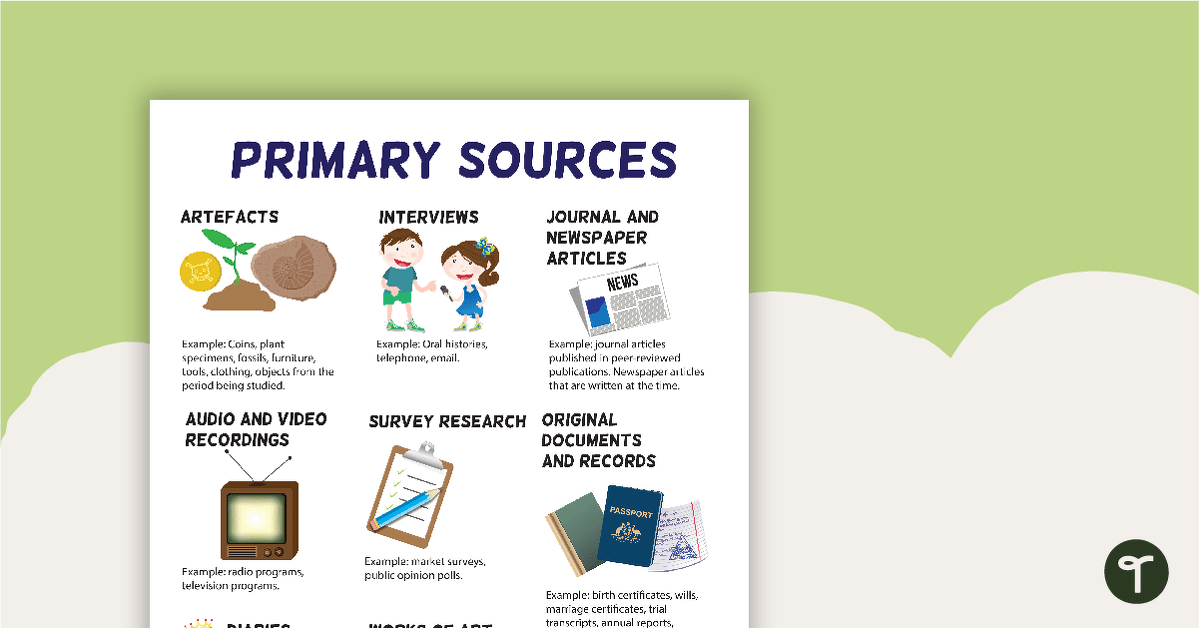
To understand what a primary source is in the context of money, one must first distinguish between the data itself and the commentary surrounding that data. A primary source is an original document, a first-hand account, or a raw dataset created at the time an event occurs. It has not been filtered, interpreted, or evaluated by a third party.
The Difference Between Raw Data and Financial Commentary
Imagine a publicly traded company releases its quarterly earnings. The 10-Q report filed with the Securities and Exchange Commission (SEC) is the primary source. It contains the actual balance sheets, income statements, and management’s discussion.
Conversely, an article on a financial news website titled “Why You Should Buy This Stock After Its Earnings Beat” is a secondary source. The journalist has interpreted the primary data, added their own bias, and perhaps omitted certain risks to create a compelling narrative. While secondary sources are useful for gaining context quickly, they are inherently prone to “information decay”—the loss of accuracy that occurs when information is passed from person to person.
Why Primary Sources are the Bedrock of “Smart Money”
Institutional investors and hedge fund managers rarely base their decisions on news headlines. They employ analysts to pore over primary sources. By looking at the raw numbers, you can identify trends before they become mainstream. If you can read a company’s cash flow statement and see that they are generating massive amounts of liquidity while their stock price remains stagnant, you have found an opportunity that the secondary market commentary might have missed.
Examples of Primary Sources for Personal Finance and Investing
For the individual investor, the ability to identify and access primary sources is a superpower. Here are the most critical examples of primary sources that should guide your financial decisions.
SEC Filings and Corporate Annual Reports (10-K/10-Q)
In the United States, public companies are legally required to file specific documents with the SEC. The 10-K is an annual report that provides a comprehensive overview of a company’s financial condition. The 10-Q is its quarterly counterpart.
These documents are the gold standard of primary sources. They include:
- Audited Financial Statements: The actual profit and loss figures.
- Risk Factors: A section where the company must legally disclose everything that could go wrong (a section often ignored by optimistic news reports).
- Legal Proceedings: Details on any ongoing lawsuits that could impact the bottom line.
Central Bank Statements and Economic Policy Releases
If you want to understand where interest rates, inflation, and the broader economy are heading, you must go to the source: the central banks. In the U.S., the Federal Reserve releases meeting minutes and the “Beige Book.”
These documents are primary sources because they represent the direct thoughts and intentions of policymakers. When the Fed Chair speaks, the transcript of that speech is a primary source. Reading the transcript yourself—rather than reading a summary of the speech—allows you to catch nuances in tone and specific phrasing that the media might gloss over.
Real-Time Blockchain Ledgers and Transaction Histories
In the modern era of digital finance and cryptocurrency, the blockchain serves as an immutable primary source. Every transaction on the Bitcoin or Ethereum network is recorded on a public ledger.

If you use a tool like Etherscan to track “whale” movements (large holders of a currency), you are looking at primary data. You aren’t relying on a “crypto influencer” to tell you that a sell-off is happening; you are seeing the tokens move from a private wallet to an exchange in real-time. This level of transparency is unprecedented in financial history and represents the ultimate primary source for digital asset investors.
How to Leverage Primary Sources for Business Finance
For entrepreneurs and business owners, primary sources aren’t just about the stock market; they are about internal health and competitive intelligence.
Analyzing Internal Audits and Balance Sheets
In business finance, your most important primary source is your own general ledger. Many business owners rely on a “summary” provided by their bookkeeper at the end of the month. However, to truly understand the unit economics of your business, you must look at the raw transaction data.
Primary sources in your business include:
- Original Invoices and Receipts: These show exactly what was paid and when, revealing hidden costs.
- Bank Statements: The ground truth of your cash position, independent of what your accounting software says.
- Inventory Logs: Raw data on stock levels that can indicate inefficiencies in your supply chain.
Proprietary Market Research vs. Industry Summaries
When a business is looking to expand, it often buys “Industry Reports.” While helpful, these are secondary sources. A primary source in this context would be Direct Customer Surveys or Focus Group Transcripts. If you interview 100 customers and record their raw answers regarding why they bought your product, you have a primary source of data that your competitors do not have. This proprietary information allows you to build a strategy based on reality rather than industry generalizations.
The Risks of Relying Solely on Secondary Sources
The danger of secondary sources in the money niche is that they often have an agenda. Whether it’s a broker trying to earn a commission or a news site trying to generate clicks, the interpretation of financial data is rarely neutral.
Avoiding the “Echo Chamber” of Financial News
Financial news often suffers from “recency bias.” If the market is up, everyone is a genius and the news reflects that. If it’s down, the commentary turns apocalyptic. By sticking to primary sources—like the actual dividend yield history or the debt-to-equity ratio of a company—you insulate yourself from the emotional swings of the market. You become an investor who acts on logic rather than a speculator who acts on sentiment.
Identifying Bias in Third-Party Analysis
Even the most respected financial analysts are human. They have “Buy” or “Sell” ratings that may be influenced by their firm’s relationship with the company they are covering. When you read an analyst’s report, you are reading their opinion of the primary source. By training yourself to look at the primary source first, you can spot when an analyst is being overly optimistic or ignoring a glaring red flag in the financial footnotes.
Integrating Primary Data into Your Wealth Strategy
Knowing what a primary source is is only the first step. The second step is building a workflow that incorporates this data into your daily financial life.
Tools for Accessing Unfiltered Financial Information
Fortunately, technology has made primary sources more accessible than ever.
- EDGAR (SEC Database): This is a free tool provided by the government where you can search for any public company’s filings.
- FRED (Federal Reserve Economic Data): A database of over 800,000 economic data points (inflation, employment, GDP) that allows you to create your own charts from raw data.
- On-Chain Explorers: Tools like Glassnode or Dune Analytics provide interfaces to view raw blockchain data.
Building a Research-First Investment Workflow
To master your money, adopt a “Primary-First” rule. Before you buy a stock, a piece of real estate, or a cryptocurrency, commit to reading at least one primary source document.
- For a Stock: Read the “Letter to Shareholders” in the most recent 10-K.
- For Real Estate: Check the local county records for the property’s actual tax history and lien status.
- For an Online Side Hustle: Look at the raw traffic logs of a website (like Google Analytics) rather than just the seller’s screenshots of earnings.
By grounding your financial decisions in primary sources, you transition from being a passive consumer of information to an active architect of your own wealth. In a world of “fake news” and “fin-fluencers,” the person who goes to the source is the person who wins.
aViewFromTheCave is a participant in the Amazon Services LLC Associates Program, an affiliate advertising program designed to provide a means for sites to earn advertising fees by advertising and linking to Amazon.com. Amazon, the Amazon logo, AmazonSupply, and the AmazonSupply logo are trademarks of Amazon.com, Inc. or its affiliates. As an Amazon Associate we earn affiliate commissions from qualifying purchases.