
In the complex ecosystem of the hospitality sector, success is measured by more than just high occupancy rates or guest satisfaction scores. For hotel owners, investors, and financial analysts, the “bottom line” is driven by a series of sophisticated Key Performance Indicators (KPIs) that dictate the financial health of the asset. Among these, the Average Daily Rate (ADR) stands as perhaps the most critical metric.
Understanding ADR is not merely an academic exercise for hoteliers; it is a fundamental pillar of business finance. It influences everything from daily cash flow to the long-term valuation of a multi-million dollar real estate asset. This guide explores the intricacies of ADR, how it integrates into broader financial strategies, and why it is the pulse of revenue management in the modern hospitality industry.
Understanding ADR: The Financial Foundation of Hospitality Profitability
Average Daily Rate, or ADR, is a statistical unit used to measure the average income earned for an occupied room on a given day. In the context of business finance, it serves as a barometer for a hotel’s pricing power and market positioning. Unlike total revenue, which can be skewed by the sheer size of a property, ADR provides a normalized view of how much a customer is willing to pay for the core product: the room.
The ADR Formula and Financial Calculation
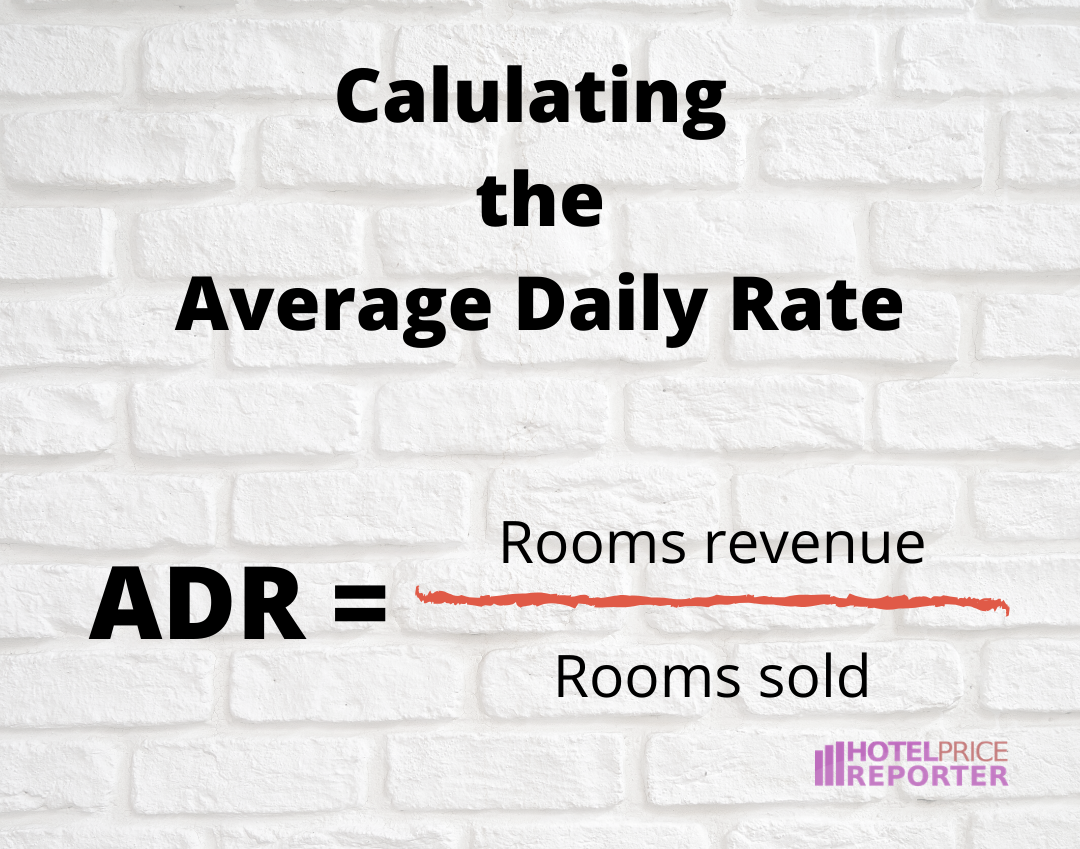
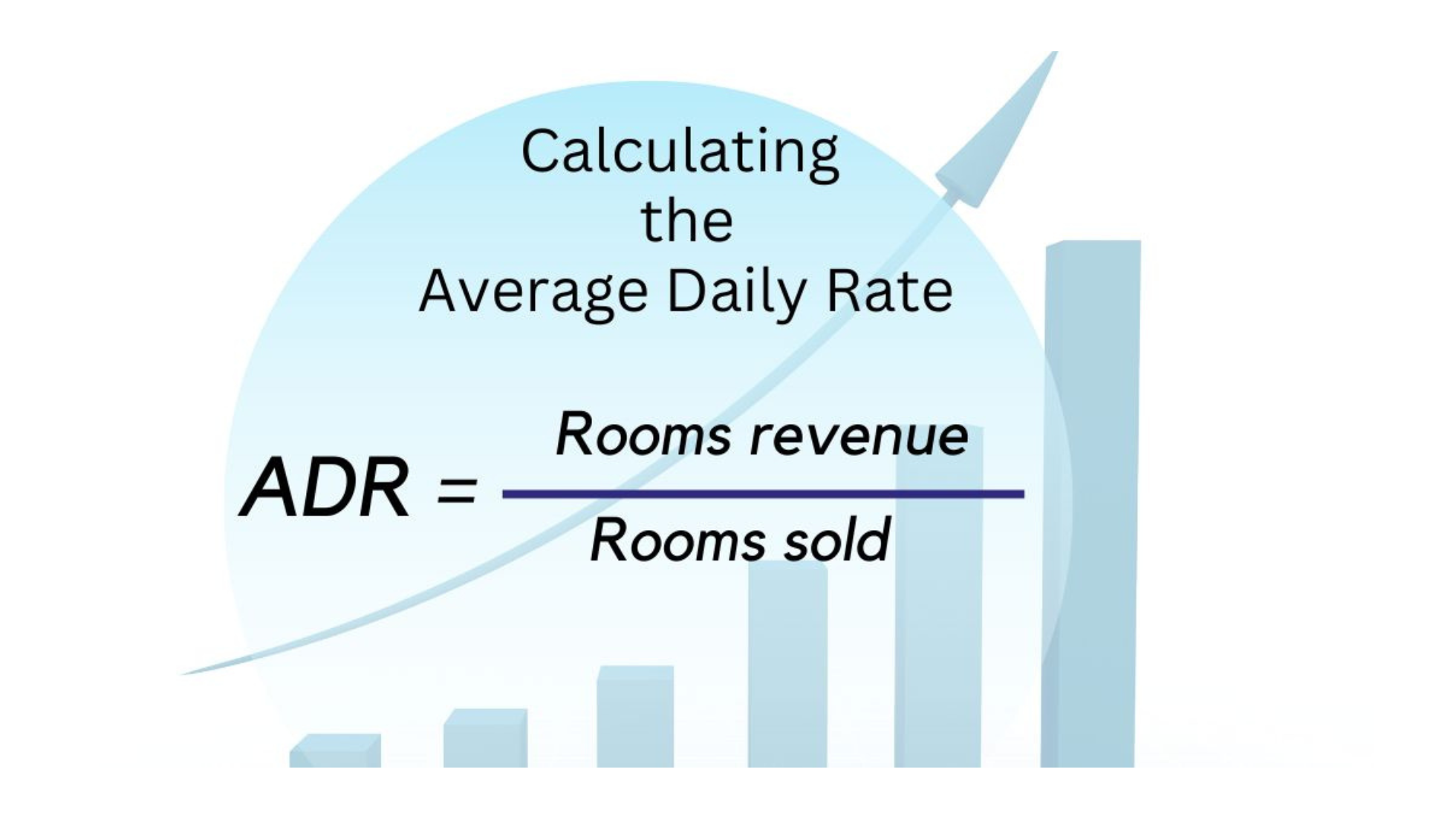
The calculation of ADR is straightforward yet requires precision in financial reporting. The formula is:
ADR = Total Room Revenue / Number of Rooms Sold
It is important to note that for accurate financial auditing, “Total Room Revenue” should only include the price of the room itself, excluding taxes, service charges, and non-room income like food and beverage or spa services. Furthermore, “Rooms Sold” should exclude complimentary rooms or rooms occupied by staff, as these do not contribute to the income stream and would artificially deflate the ADR, leading to skewed financial forecasting.
Why ADR Matters to Investors and Stakeholders
From a private equity or REIT (Real Estate Investment Trust) perspective, ADR is a primary indicator of “quality of revenue.” A high ADR suggests that a property has strong brand equity and a loyal customer base that perceives high value, allowing the business to maintain premium pricing. For stakeholders, consistent growth in ADR often signals that the management team is successfully capturing market demand without engaging in a “race to the bottom” on pricing, which preserves profit margins.
Strategic Drivers of ADR in Modern Business Finance
To optimize ADR, a hotel must look beyond simple price tags. Increasing this metric requires a sophisticated understanding of market dynamics, consumer behavior, and financial elasticity. Revenue managers function as financial engineers, tweaking various levers to maximize the yield of every available unit.
Market Segmentation and Pricing Elasticity
Not all guests are created equal in the eyes of a balance sheet. Business finance in hospitality relies heavily on market segmentation—dividing guests into categories such as “Transient” (individual travelers), “Group” (conferences or weddings), and “Contract” (airline crews or long-term corporate stays).
Each segment has a different price elasticity. For example, corporate travelers are often less price-sensitive than leisure travelers but require more flexibility. By strategically limiting the number of lower-priced “Group” rooms during high-demand periods, a hotel can force a higher percentage of “Transient” bookings at a premium rate, thereby driving up the overall ADR and improving the net profit margin.
Distribution Channel Management and Net ADR
A critical, yet often overlooked, aspect of business finance is the “Net ADR.” While a guest might pay $200 for a room, if that room was booked through a third-party Online Travel Agency (OTA) that charges a 20% commission, the hotel only nets $160.
A sophisticated financial strategy focuses on increasing “Direct Bookings” through the hotel’s own website. By shifting the channel mix away from high-commission third parties, a hotel increases its Net ADR. This doesn’t just look better on a spreadsheet; it provides more actual cash flow to cover operating expenses and debt service.
The Interplay Between ADR, RevPAR, and Occupancy
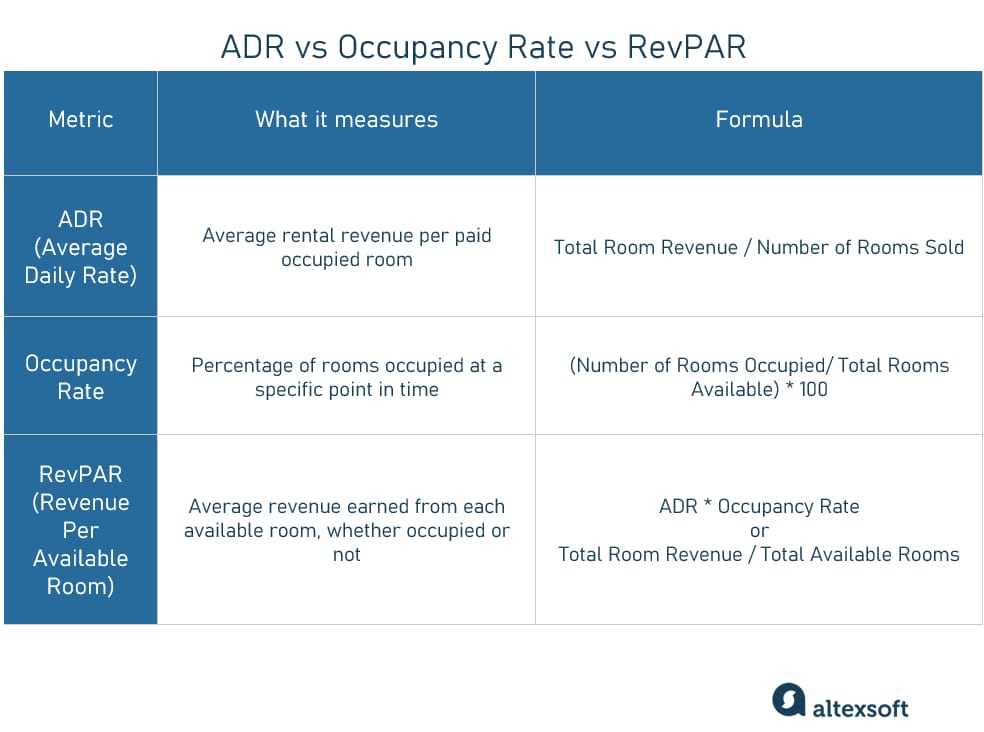
While ADR is a powerhouse metric, it does not exist in a vacuum. In business finance, looking at ADR without considering occupancy can lead to disastrous financial decisions. This is where Revenue Per Available Room (RevPAR) enters the equation.
ADR vs. Occupancy: The Revenue Management Seesaw
There is a natural tension between ADR and occupancy. If a hotel raises its rates too high, occupancy will likely drop. Conversely, dropping rates might fill the hotel but result in a lower ADR. The goal of financial management is to find the “sweet spot” where the combination of rate and occupancy yields the highest possible revenue.
Consider two scenarios:
- Hotel A: 100% occupancy at a $100 ADR = $10,000 Revenue.
- Hotel B: 80% occupancy at a $150 ADR = $12,000 Revenue.
Even though Hotel B has empty rooms, it is financially superior. It generates more revenue with lower variable costs (less laundry, fewer cleaning supplies, less wear and tear), leading to a much higher bottom-line profit.
The Role of RevPAR in Financial Reporting
RevPAR (Occupancy x ADR) is the gold standard for measuring a hotel’s ability to generate revenue from its total inventory. In financial reports, analysts use RevPAR to compare a hotel’s performance against its “CompSet” (Competitive Set). If a hotel has a high ADR but a low RevPAR compared to its neighbors, it suggests the pricing is too aggressive, causing the business to lose market share to competitors.
Advanced Tactics for Boosting ADR and Net Operating Income
To achieve sustainable growth in ADR, management must move beyond passive pricing. They must employ active financial strategies that add value to the transaction and encourage higher spending.
Upselling and Cross-selling Strategies
Upselling is a high-margin method to boost ADR. By offering a guest a “Premium View” or a “Junior Suite” for an additional $50 at the point of check-in, the hotel increases its ADR with zero additional customer acquisition cost. From a financial perspective, these “incremental” dollars are almost pure profit. Revenue managers often incentivize front-desk staff with commissions to drive these upsells, turning the lobby into a profit center.
Dynamic Pricing and Financial Forecasting
The days of “static pricing” (setting one rate for the whole year) are over. Modern hospitality finance utilizes dynamic pricing—changing rates in real-time based on supply and demand. By using historical data and predictive analytics, hotels can forecast “compression nights” (dates when the city is likely to sell out due to a major event). On these dates, the hotel can aggressively raise ADR, knowing that the market will bear the higher cost. This surgical approach to pricing ensures that the property captures the maximum possible “consumer surplus.”
The Long-term Impact of ADR on Asset Valuation
In the world of commercial real estate and business finance, a hotel is more than just a building; it is a cash-flow-producing asset. The ADR has a direct correlation with the eventual resale value of the property.
Cap Rates and Exit Strategies
Professional investors value hotels based on their Net Operating Income (NOI). Because ADR increases typically have lower associated costs than occupancy increases, an improvement in ADR is the fastest way to grow NOI.
When it comes time to sell the property, a higher NOI leads to a higher valuation based on the “Capitalization Rate” (Cap Rate). For instance, if an investor uses an 8% Cap Rate, every $100,000 increase in annual NOI (driven by a higher ADR) adds $1.25 million to the property’s market value. This makes ADR a primary focus for asset managers looking to maximize their exit strategy.
Benchmarking Against Competitive Sets (CompSets)
Financial health is relative. Investors use tools like STR (Smith Travel Research) reports to see an “ADR Index.” An index of 100 means the hotel is getting its fair share of the market price. An index of 110 means the hotel is achieving a 10% premium over its competitors. For a lender or an investor, a consistent ADR Index above 100 indicates a “moat”—a competitive advantage that makes the business a safer and more lucrative financial investment.
Conclusion: ADR as a Strategic Financial Compass
Average Daily Rate is far more than a simple metric of what a room costs. It is a reflection of a hotel’s market standing, its operational efficiency, and its ultimate investment potential. In the realm of business finance, mastering ADR allows hoteliers to move beyond mere survival and toward true wealth creation.
By balancing ADR with occupancy, optimizing distribution channels, and leveraging dynamic pricing, a hospitality business can ensure that it is not just filling beds, but is doing so in a way that maximizes profit margins and long-term asset value. For any professional in the hotel industry, the ADR is the North Star of financial strategy—guiding the way toward a more profitable and sustainable future.
aViewFromTheCave is a participant in the Amazon Services LLC Associates Program, an affiliate advertising program designed to provide a means for sites to earn advertising fees by advertising and linking to Amazon.com. Amazon, the Amazon logo, AmazonSupply, and the AmazonSupply logo are trademarks of Amazon.com, Inc. or its affiliates. As an Amazon Associate we earn affiliate commissions from qualifying purchases.