
In the landscape of modern engineering and digital fabrication, the term “miter cut” has evolved far beyond its humble origins in traditional carpentry. While historically defined as a simple angled cut made across the face of a material to form a joint, the miter cut today represents a fundamental intersection of geometry, material science, and high-tech manufacturing. Whether we are discussing the sleek aluminum chassis of a flagship smartphone, the structural integrity of aerospace components, or the complex geometries generated by Building Information Modeling (BIM) software, the miter cut is the silent hero of precision joinery.
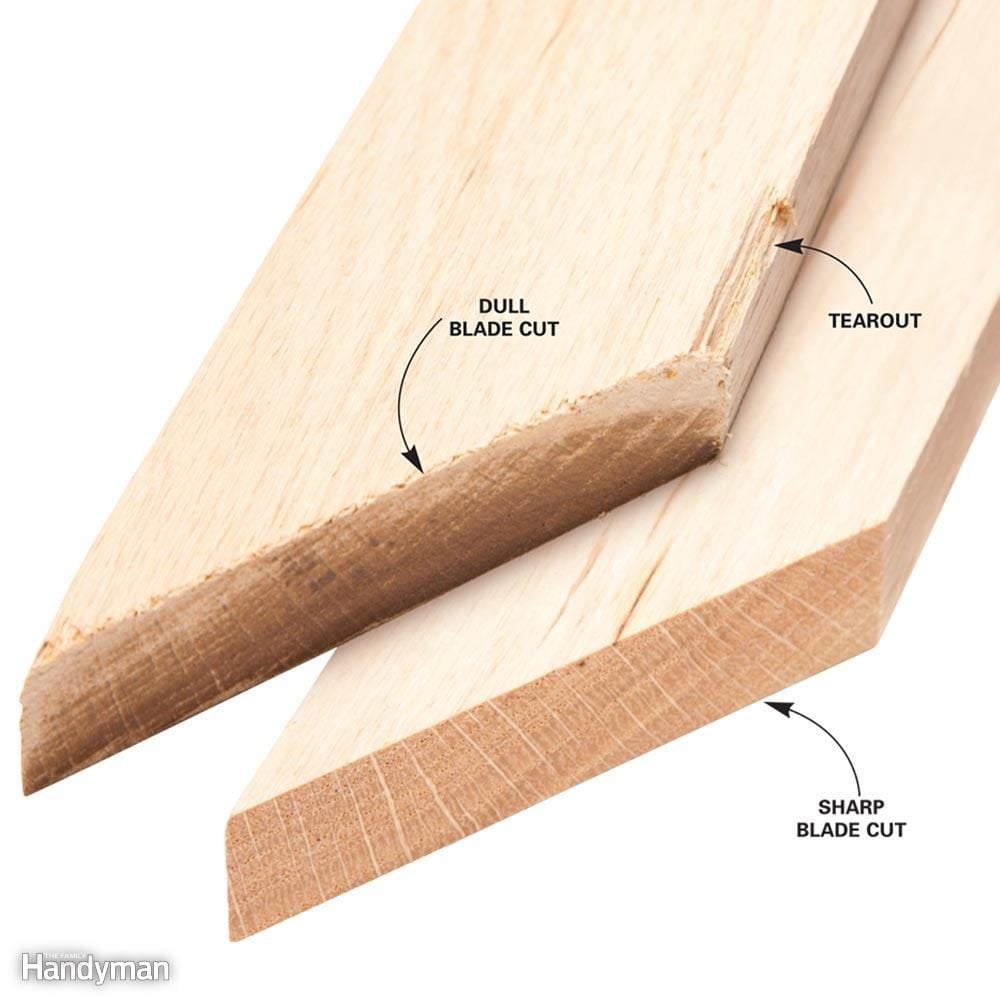
Understanding the miter cut in a contemporary tech context requires moving past the hand saw. It involves exploring how computer-aided design (CAD), robotic automation, and laser-guided machinery have transformed a basic 45-degree angle into a masterpiece of digital accuracy.
The Evolution of Geometry: Defining the Miter Cut for the Modern Engineer
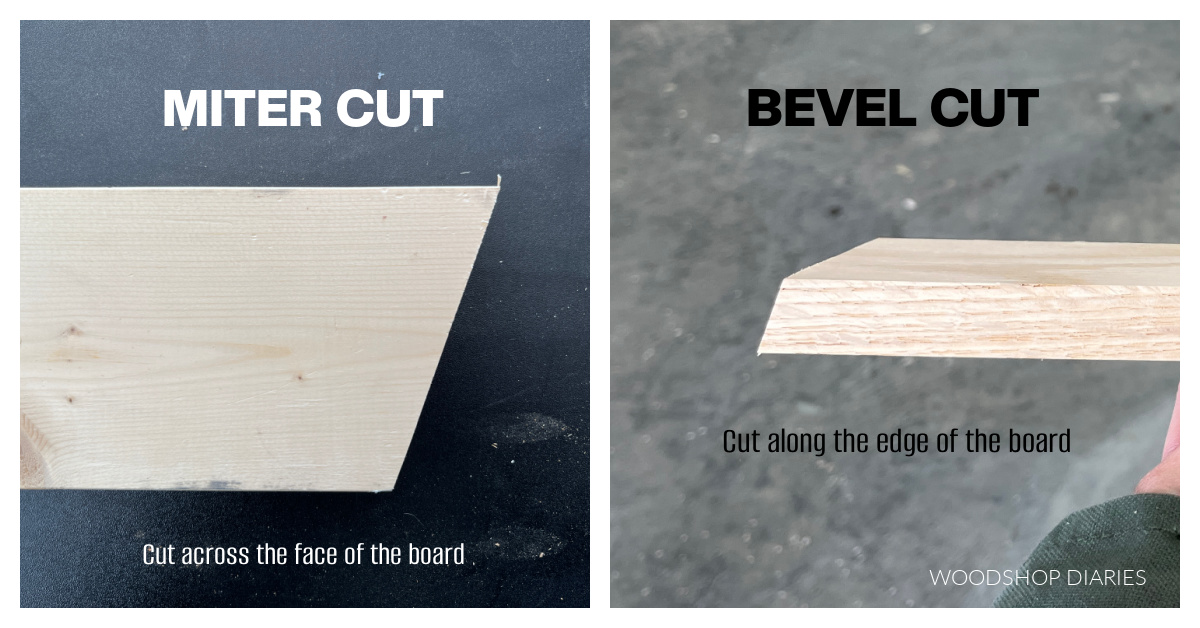
At its core, a miter cut is a cut made at an angle other than 90 degrees to the length of a piece of material. When two such cuts are joined, they form a “miter joint.” In the tech and manufacturing sectors, this is not merely an aesthetic choice; it is a calculated engineering decision designed to maximize surface area for bonding and to hide the “end grain” or internal composition of a material.
From Manual Saws to Digital Logic
The transition from manual toolsets to digital logic has redefined the tolerance levels of a miter cut. In the past, a “good” miter was one that looked seamless to the naked eye. In the current tech ecosystem—specifically within CNC (Computer Numerical Control) machining—a miter cut is defined by microns. Software algorithms now calculate the “kerf” (the width of the cut made by the tool) to ensure that when two pieces of high-grade alloy or composite material meet, the structural integrity is identical to a solid piece. This digital precision allows for the creation of complex polygonal shapes that were previously impossible to achieve with manual measurement.
The Mathematics of the Joint
In digital design, a miter cut is an exercise in trigonometry. When a designer works in a 3D environment like Rhino or AutoCAD, the miter is often automated. However, the underlying tech must account for material thickness and the “miter fold.” This is particularly relevant in the production of hardware enclosures for gadgets. If the angle is off by even a fraction of a degree, the internal components—such as PCBs (Printed Circuit Boards) or lithium-ion batteries—may not fit or could be subjected to unnecessary pressure. The math behind the cut is now embedded in the firmware of the machines performing the task.
The Tech Stack Behind Perfect Angles
The leap from a basic workshop to a high-tech fabrication lab involves a sophisticated “tech stack.” This includes the software that plans the cut, the hardware that executes it, and the sensors that verify its accuracy.
CAD Software and Generative Design
The life of a miter cut begins in the digital realm. Modern CAD software does more than just draw lines; it simulates stress tests. Generative design tools can suggest specific miter angles to optimize the strength-to-weight ratio of a frame. For instance, in the development of high-end drone frames, software might dictate a non-standard miter angle to better distribute the kinetic energy of the rotors. The integration of BIM (Building Information Modeling) also allows architects to visualize how thousands of mitered joints in a glass-and-steel skyscraper will react to thermal expansion, all before a single piece of material is cut.
Laser-Guided Precision and Smart Saws
On the hardware side, the traditional miter saw has been replaced by CO2 lasers, fiber lasers, and waterjet cutters. These tools are often integrated into a “Smart Factory” environment (Industry 4.0). A laser-cutting system uses optical sensors to detect the grain or texture of a material and adjusts its speed and intensity in real-time. This level of tech ensures that the miter cut is perfectly clean, requiring zero post-processing or sanding. This is essential in the production of consumer electronics, where the “seamless” look of a laptop or tablet depends entirely on the microscopic perfection of these angled joins.

Robotics and Automation in Manufacturing
Robotic arms equipped with multi-axis cutting heads have revolutionized the miter cut in large-scale manufacturing. Unlike a stationary saw, a 6-axis robot can perform a compound miter cut (an angle cut in two planes simultaneously) while moving the material in 3D space. This is a staple in automotive manufacturing and aerospace, where curved surfaces must be joined at precise angles to maintain aerodynamic efficiency. These robots are programmed using “digital twins,” allowing engineers to simulate the entire cutting process in a virtual environment to prevent collisions or material waste.
Miter Cutting in the Digital Security and Hardware Context
While it may seem counterintuitive, the precision of a miter cut plays a significant role in digital security and hardware integrity. The physical housing of a server or a secure hardware module is the first line of defense against “side-channel attacks” or physical tampering.
The Role of CNC Machining in Secure Hardware
High-security hardware often utilizes “tamper-evident” enclosures. These enclosures are frequently constructed using precision mitered joints that are bonded with specialized polymers. If a miter cut is executed with high-tech CNC precision, the gap between the joined materials is smaller than a human hair. This makes it nearly impossible for a bad actor to insert probes or sensors into the device without leaving visible evidence of damage. The tech behind the miter cut, therefore, becomes a component of the device’s overall security architecture.
Material Integrity and Thermal Management
In high-performance computing, the way a chassis is joined affects how heat is dissipated. Mitered joints in aluminum heat sinks or liquid-cooling manifolds must be perfect to ensure efficient thermal transfer. If the miter cut is uneven, it creates air pockets that act as insulators, potentially leading to hardware failure. Modern thermal imaging tech is used during the quality control phase to inspect these joints, ensuring that the “miter” is not just a visual corner but a functional thermal bridge.
The Future of Joinery: AI and Predictive Cutting
As we look toward the future of technology, the miter cut is being further refined by Artificial Intelligence (AI) and Augmented Reality (AR). We are moving away from “measure twice, cut once” toward a paradigm of “simulate a thousand times, cut perfectly once.”
Machine Learning in Material Conservation
One of the most significant challenges in manufacturing is material waste. AI algorithms are now being used to “nest” mitered parts on a sheet of raw material (such as carbon fiber or titanium) to minimize scrap. The AI calculates the most efficient way to orient dozens of mitered components, often finding patterns that a human designer would miss. This “predictive nesting” reduces the environmental footprint of tech manufacturing and lowers the cost of high-end hardware.
Augmented Reality (AR) in On-Site Execution
For complex tech installations—such as data center infrastructure or large-scale LED arrays—technicians are now using AR headsets to execute miter cuts in the field. The AR overlay projects a digital “cut line” directly onto the physical material, synced with the 3D model in the cloud. This ensures that even if a technician is using a portable power tool, the resulting miter cut has the precision of a factory-calibrated machine. This bridge between the digital model and the physical world is the frontier of modern construction tech.
Conclusion
The miter cut is far more than a 45-degree angle; it is a testament to the precision that modern technology demands. From the software that calculates its dimensions to the robotic lasers that execute the path, the miter cut is a fundamental building block of our digital world. As we continue to push the boundaries of what is possible in hardware design, aerospace, and secure infrastructure, our reliance on the “perfect joint” will only grow. In an era where a fraction of a millimeter can be the difference between a breakthrough and a failure, the technology of the miter cut remains a critical focal point for engineers and innovators alike.
aViewFromTheCave is a participant in the Amazon Services LLC Associates Program, an affiliate advertising program designed to provide a means for sites to earn advertising fees by advertising and linking to Amazon.com. Amazon, the Amazon logo, AmazonSupply, and the AmazonSupply logo are trademarks of Amazon.com, Inc. or its affiliates. As an Amazon Associate we earn affiliate commissions from qualifying purchases.