
In the current economic climate, the traditional trajectory of high school to a four-year university is being re-evaluated through the lens of return on investment (ROI). As student loan debt reaches record highs, families and students are seeking alternative pathways that offer a more direct route to financial stability and wealth accumulation. This is where Career and Technical Education (CTE) programs in high school emerge as a premier financial strategy. Far from the “vocational school” stereotypes of the past, modern CTE is a sophisticated engine for personal finance management, providing students with high-value skills that translate directly into market-leading income.

By integrating rigorous academic study with hands-on, industry-specific training, CTE programs act as a diversified investment portfolio for a student’s future. They are no longer just about learning a trade; they are about mastering the business of a career. Whether a student intends to enter the workforce immediately or pursue higher education, the financial advantages of participating in a CTE program during high school are profound and multi-faceted.
The ROI of Career and Technical Education (CTE)
When evaluating any educational path, the primary financial metric to consider is the Return on Investment. CTE programs excel in this area by lowering the “cost of entry” into the professional world while simultaneously increasing the “starting value” of the graduate. In a world where many college graduates struggle to find entry-level work that pays a living wage, CTE graduates often enter the market with certifications that command premium salaries.
Reducing the Cost of Post-Secondary Education
One of the most significant financial burdens facing young adults today is the cost of college tuition. CTE programs offer a strategic hedge against this debt. Many high school CTE pathways are designed with “dual enrollment” or “articulated credit” agreements with local community colleges and technical universities. This allows students to earn college credits for free while still in high school.
From a personal finance perspective, this is equivalent to receiving a scholarship or a direct grant. By knocking out a semester or even a full year of specialized training before graduation, students save thousands of dollars in tuition, housing, and textbooks. Furthermore, by obtaining industry-recognized certifications (such as AWS Cloud Practitioner, CompTIA A+, or specialized medical billing licenses) while still in high school, students can work high-paying part-time jobs to cash-flow their future education, entirely avoiding the need for high-interest student loans.
Accelerating Entry into High-Income Careers
Time is money, especially when it comes to compound interest and career progression. CTE programs allow students to “fast-track” their earnings. While their peers may spend four to six years in general studies, a CTE student in a high-demand field—such as cybersecurity, advanced manufacturing, or healthcare—can be career-ready by age 18 or 19.
This early entry into the workforce provides a massive financial head start. If a CTE graduate begins earning a specialized wage of $50,000 to $60,000 at age 19, while a traditional student doesn’t enter the workforce until 23 (often starting with $30,000+ in debt), the CTE graduate has a four-year “earnings window” and a debt-free balance sheet. When you calculate the potential for investing those early earnings into a Roth IRA or a 401(k), the long-term wealth gap between the CTE graduate and the traditional student can be hundreds of thousands of dollars by retirement.
CTE as a Catalyst for Personal Finance Mastery
While the primary focus of CTE is skill acquisition, the inherent nature of these programs teaches students the fundamental principles of business and personal finance. To succeed in a technical field, one must understand the value of labor, the cost of materials, and the dynamics of a specialized market.
Financial Literacy Integrated into Vocational Training
Modern CTE programs often integrate financial literacy modules directly into their curriculum. For instance, a student in a construction management or automotive technology program isn’t just learning how to build or repair; they are learning how to estimate costs, manage a budget, and understand profit margins. They learn about the “business finance” side of their industry—overhead, insurance, taxes, and labor rates.
This practical application of math and finance is often more effective than a standard economics class. When a student understands how a 10% increase in material costs affects the bottom line of a project, they are developing a sophisticated financial mindset. They begin to view their skills as an asset and their time as a commodity, which is the cornerstone of successful personal wealth management.
Bridging the Gap Between Skill Acquisition and Wealth Building
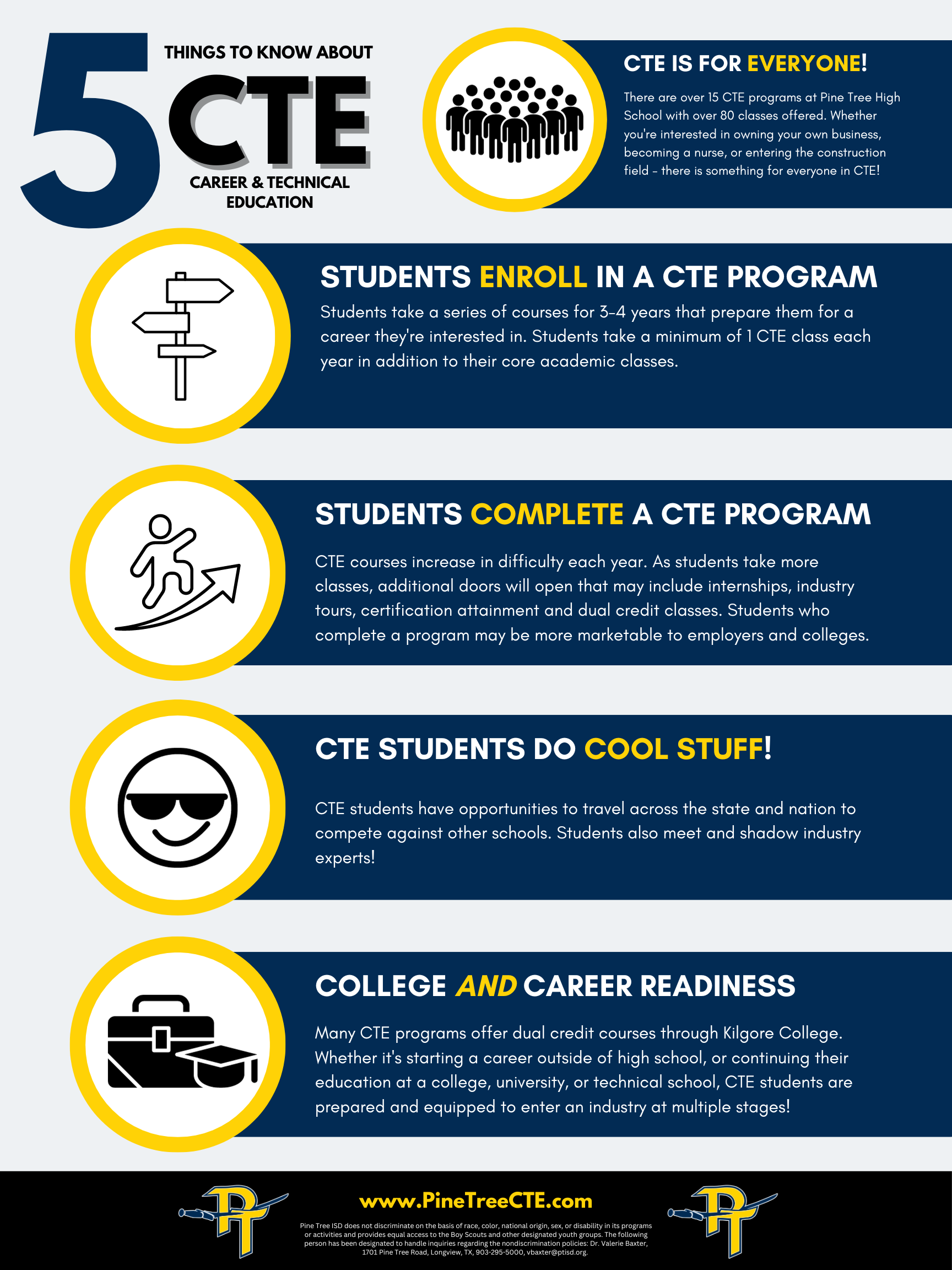
The “skills gap” in the current economy is essentially a supply-and-demand imbalance that favors the skilled worker. CTE programs position students on the favorable side of this economic equation. By focusing on “high-skill, high-wage, and high-demand” sectors, CTE ensures that students are not just getting a job, but are entering a lucrative market.
In the realm of personal finance, your “human capital”—your ability to earn—is your greatest asset. CTE maximizes the value of this asset early in life. Students are taught to view their career through the lens of a business owner. This mindset encourages them to continuously “reinvest” in their skills through further certifications and training, ensuring their market value remains high regardless of economic fluctuations.
Navigating the Modern Business Landscape through CTE Pathways
The modern economy is no longer dominated by monolithic corporations with lifelong employment. We are in the era of the “gig economy,” specialized consulting, and rapid entrepreneurship. CTE programs are perfectly aligned with this shift, providing the foundational tools for business ownership and diversified income streams.
Entrepreneurship and the Side Hustle Economy
One of the most powerful financial benefits of a CTE education is the ability to generate “online income” or “side hustle” revenue. A student who learns graphic design, video editing, or web development through a CTE program has the immediate ability to freelance on platforms like Upwork or Fiverr.
This ability to generate independent income is a critical component of modern financial security. CTE graduates don’t just have to rely on a single employer; they have “portable skills” that allow them to pivot into entrepreneurship. Many CTE programs even include “Entrepreneurship” as a core component, teaching students how to register a business, market their services, and manage business taxes. For a young adult, the ability to generate an extra $1,000 to $2,000 a month through a skilled side hustle is a game-changer for their personal balance sheet.
Industry-Specific Financial Tools and Certifications
In many technical fields, the “barrier to entry” is not a degree, but a specific certification or mastery of a financial tool. For example, CTE programs in accounting or business finance may certify students in QuickBooks or other enterprise resource planning (ERP) software.
In the eyes of an employer, these certifications are “financial tools” that demonstrate a student can contribute to the company’s profitability from day one. By lowering the training costs for the employer, the CTE graduate can negotiate a higher starting salary. This understanding of “value-based negotiation” is a sophisticated financial skill that many traditional students do not learn until much later in their careers.
The Economic Impact of High School CTE on the National Workforce
Beyond the individual student, CTE programs are a vital component of macro-level business finance. They represent a strategic investment by the state and federal government to ensure the long-term health of the economy by producing a workforce that is both capable and financially solvent.
Closing the Skills Gap and Boosting Corporate Productivity
From a corporate finance perspective, the “skills gap” is a massive hidden cost. Companies spend billions of dollars annually on remedial training for new hires who lack technical proficiency. High school CTE programs mitigate this cost by providing a “pre-trained” workforce.
When businesses partner with local high schools to influence CTE curricula, they are essentially engaged in a long-term supply chain strategy for talent. This collaboration leads to higher corporate productivity and lower turnover, which in turn fuels economic growth. For the student, being part of this “high-demand” pipeline means job security and consistent wage growth, which are the foundations of any long-term investing strategy.
Long-term Wealth Accumulation for CTE Graduates
The ultimate goal of any financial strategy is long-term stability and wealth. Data suggests that CTE graduates often have higher rates of employment and comparable, if not higher, lifetime earnings in certain fields than those with general academic degrees. By avoiding the “debt trap” of early adulthood and entering the workforce with high-value skills, CTE graduates can begin the process of wealth accumulation much earlier.
Whether it is through buying their first home sooner, investing in the stock market, or starting their own business, the financial “head start” provided by a high school CTE program is undeniable. In the modern world, “What is a CTE program?” is no longer just a question about education; it is a question about which financial path offers the best security, the lowest debt, and the highest potential for wealth. For many, the answer is clear: CTE is the most strategic investment a high school student can make.
aViewFromTheCave is a participant in the Amazon Services LLC Associates Program, an affiliate advertising program designed to provide a means for sites to earn advertising fees by advertising and linking to Amazon.com. Amazon, the Amazon logo, AmazonSupply, and the AmazonSupply logo are trademarks of Amazon.com, Inc. or its affiliates. As an Amazon Associate we earn affiliate commissions from qualifying purchases.