
In the contemporary landscape of global commerce, the traditional rules of brand building have been fundamentally rewritten. The predictable, linear growth models of the late 20th century have given way to a chaotic, interconnected, and rapidly evolving marketplace. To describe this environment, strategic thinkers have adopted a term originally coined by the U.S. Army War College: VUCA.
While the acronym originated in a military context to describe the multilateral world following the Cold War, it has become an essential framework for brand strategists, CMOs, and entrepreneurs. For a brand to survive today, it must not only understand what VUCA stands for but also how to pivot its identity and communication strategies to thrive within these conditions.

Defining VUCA in the Context of Brand Strategy
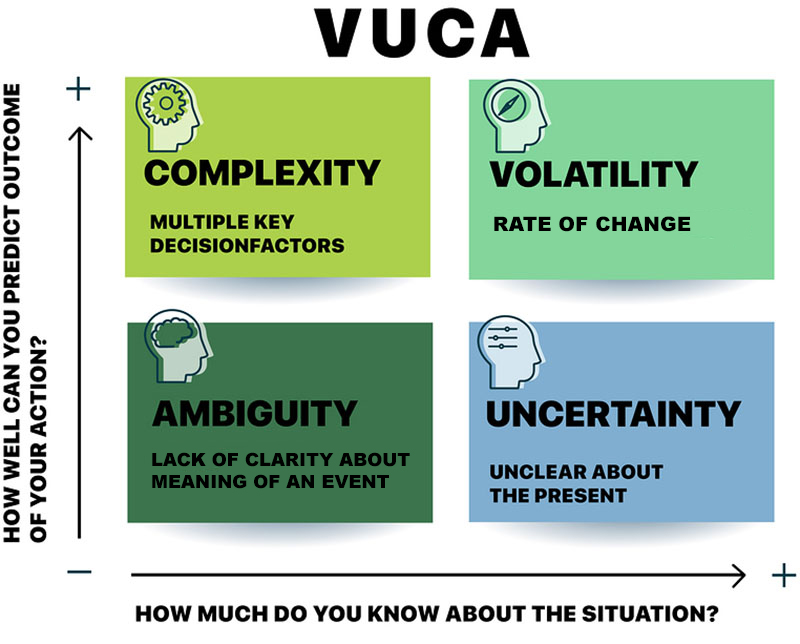
VUCA stands for Volatility, Uncertainty, Complexity, and Ambiguity. In the context of branding, these four pillars represent the external forces that can either erode a brand’s equity or provide the friction necessary for monumental growth.
Volatility: The Speed of Market Fluctuations
In branding, volatility refers to the rate, magnitude, and speed of change. A brand that is relevant today can become obsolete tomorrow due to a viral social media trend, a sudden shift in consumer ethics, or a technological breakthrough. Volatility means that brand loyalty is no longer a static asset; it is a dynamic variable that must be re-earned daily.
Uncertainty: The Difficulty of Prediction
Uncertainty involves the lack of predictability. Historically, brands could rely on historical data to forecast the next five years. Today, past performance is rarely a guarantee of future success. Uncertainty in branding manifests as a lack of clarity regarding how a target demographic will react to a new campaign or how a global event will disrupt supply chains and, by extension, the brand promise.
Complexity: The Interconnectedness of the Brand Ecosystem
A modern brand does not exist in a vacuum. It is part of a massive, interconnected ecosystem involving social media platforms, global logistics, diverse workforce demographics, and socio-political movements. Complexity arises when a brand must manage its identity across dozens of touchpoints simultaneously, ensuring that a message in London resonates with an audience in Tokyo while remaining “on-brand.”
Ambiguity: The Lack of Clarity in Cause and Effect
Ambiguity is the “haziness” of reality. It occurs when the relationship between an action and an outcome is unclear. If a brand experiences a sudden drop in engagement, is it due to a change in the platform’s algorithm, a competitor’s aggressive pricing, or a subtle shift in cultural values? In an ambiguous environment, there are no simple “right” answers, only interpretations and strategic bets.
Building a Resilient Brand Identity Amidst Volatility
To counter volatility, brand leaders must move away from rigid, multi-year “brand books” and toward a more fluid, organic identity. The goal is to build a brand that is anchored by a core purpose but flexible in its execution.
The Power of Brand Purpose as a North Star
When the market is volatile, the only thing that remains constant is why a brand exists. A strong brand purpose serves as a navigational compass. Whether it is Patagonia’s commitment to environmentalism or Nike’s focus on human potential, these brands can weather market swings because their identity is not tied to a single product, but to a set of values. During volatile periods, consumers gravitate toward brands that provide a sense of stability through their convictions.
Transitioning from Consistency to Coherence
Traditional branding preached “consistency”—the idea that the logo and tone must be identical everywhere. In a VUCA world, “coherence” is more valuable. Coherence allows a brand to adapt its voice to different platforms and situations while maintaining a recognizable “soul.” This flexibility allows a brand to react to volatile social trends without looking like it is having an identity crisis.
Agile Brand Governance
The era of the eighteen-month marketing plan is over. Resilient brands now utilize agile methodologies, breaking down projects into shorter “sprints.” This allows the marketing team to test ideas, gather data, and pivot their brand messaging in real-time. By shortening the feedback loop, brands can mitigate the risks associated with sudden market shifts.

Strategic Communication: Overcoming Uncertainty and Ambiguity
Uncertainty and ambiguity are the greatest enemies of brand communication. When the path forward is unclear, brands often fall into the trap of “paralysis by analysis” or, conversely, making reactionary mistakes that damage their reputation.
Leveraging Radical Transparency
In an uncertain world, trust is the ultimate currency. Brands can counter uncertainty by practicing radical transparency. When a company is open about its sourcing, its challenges, and even its failures, it builds a “trust reservoir.” This reservoir acts as a buffer; if an ambiguous crisis occurs, the public is more likely to give a transparent brand the benefit of the doubt.
Data-Driven Storytelling
To reduce ambiguity, brands must lean into sophisticated data analytics. However, data should not just be used for targeting; it should be used to understand the nuance of consumer sentiment. By employing social listening tools and AI-driven sentiment analysis, brand managers can gain clarity on how their brand is perceived in the “gray areas” of the internet, allowing them to adjust their narrative before a misunderstanding turns into a PR disaster.
Scenario Planning for Brand Reputation
Rather than planning for one “likely” future, brand strategists should engage in scenario planning. This involves mapping out “What If” scenarios: What if our primary platform disappears? What if our spokesperson is “canceled”? What if our industry faces new regulations? By visualizing these ambiguous futures, a brand can develop “playbooks” that allow for rapid, confident action when uncertainty becomes reality.
Managing Complexity in Multi-Channel Brand Ecosystems
The complexity of the modern digital landscape means that a brand is no longer what the company says it is; it is what consumers tell each other it is. Managing this complexity requires a shift from “command and control” to “community and orchestration.”
Decentralizing the Brand Experience
In a complex environment, a central marketing office cannot possibly control every interaction. Smart brands empower their employees, influencers, and community members to become brand ambassadors. By providing these stakeholders with the tools and the “vibe” of the brand—rather than a strict script—companies can maintain a presence across complex networks that a central team could never reach alone.
Integrating the Physical and Digital (Phygital) Brand
Complexity often arises from the friction between a brand’s online persona and its offline reality. A seamless brand experience requires the integration of “Phygital” touchpoints. Whether it is an AR experience in a retail store or a personalized digital follow-up to an in-person event, reducing the complexity for the consumer is the key to maintaining brand equity.
The Role of Technology in Simplification
To manage complexity, brands must invest in a robust “MarTech” (Marketing Technology) stack. Automation, CRM systems, and content management platforms should serve one goal: simplifying the brand’s interaction with the customer. When the internal complexity of a brand is managed by technology, the external face of the brand remains clean, simple, and engaging.
Future-Proofing: Moving from VUCA to VUCA Prime
The final step in mastering the VUCA environment is not just to survive it, but to flip the script. Leadership expert Bob Johansen proposed a “VUCA Prime” model as a set of leadership skills to counter the challenges of VUCA. For brand strategy, this means transforming the acronym into a positive roadmap:
- Vision counters Volatility: A clear brand vision allows a company to ignore short-term noise and focus on long-term brand equity.
- Understanding counters Uncertainty: Deep consumer empathy and market research transform uncertainty into actionable insights.
- Clarity counters Complexity: Simple, powerful brand messaging cuts through the clutter of a complex marketplace.
- Agility counters Ambiguity: A culture of experimentation allows a brand to move quickly and take advantage of ambiguous opportunities before competitors do.
Conclusion: The New Brand Imperative
The concept of VUCA is no longer just a military or academic theory; it is the daily reality of brand management. The brands that define the next decade will not be the ones that try to avoid volatility or ignore complexity. Instead, they will be the brands that embrace these forces as catalysts for innovation.
By building a brand rooted in purpose, powered by data, and executed with agility, companies can turn a VUCA world into a competitive advantage. In an age where everything is changing, the most successful brand strategy is one that learns how to dance in the rain rather than waiting for the storm to pass. To answer “what does VUCA stand for” is to understand the very nature of modern business; to master it is to ensure your brand’s legacy for years to come.
aViewFromTheCave is a participant in the Amazon Services LLC Associates Program, an affiliate advertising program designed to provide a means for sites to earn advertising fees by advertising and linking to Amazon.com. Amazon, the Amazon logo, AmazonSupply, and the AmazonSupply logo are trademarks of Amazon.com, Inc. or its affiliates. As an Amazon Associate we earn affiliate commissions from qualifying purchases.