
In the modern financial landscape, few assets command as much attention, debate, and retail investor fervor as Tesla, Inc. (TSLA). For the contemporary investor, asking “What is Tesla stock today?” is rarely a simple inquiry about a numerical ticker value. Instead, it is a question about the current state of the electric vehicle (EV) market, the health of growth-oriented portfolios, and the shifting sentiment of global capital markets. Tesla has evolved from a niche automotive disruptor into a cornerstone of the S&P 500, making its daily performance a bellwether for the broader technology and clean energy sectors.
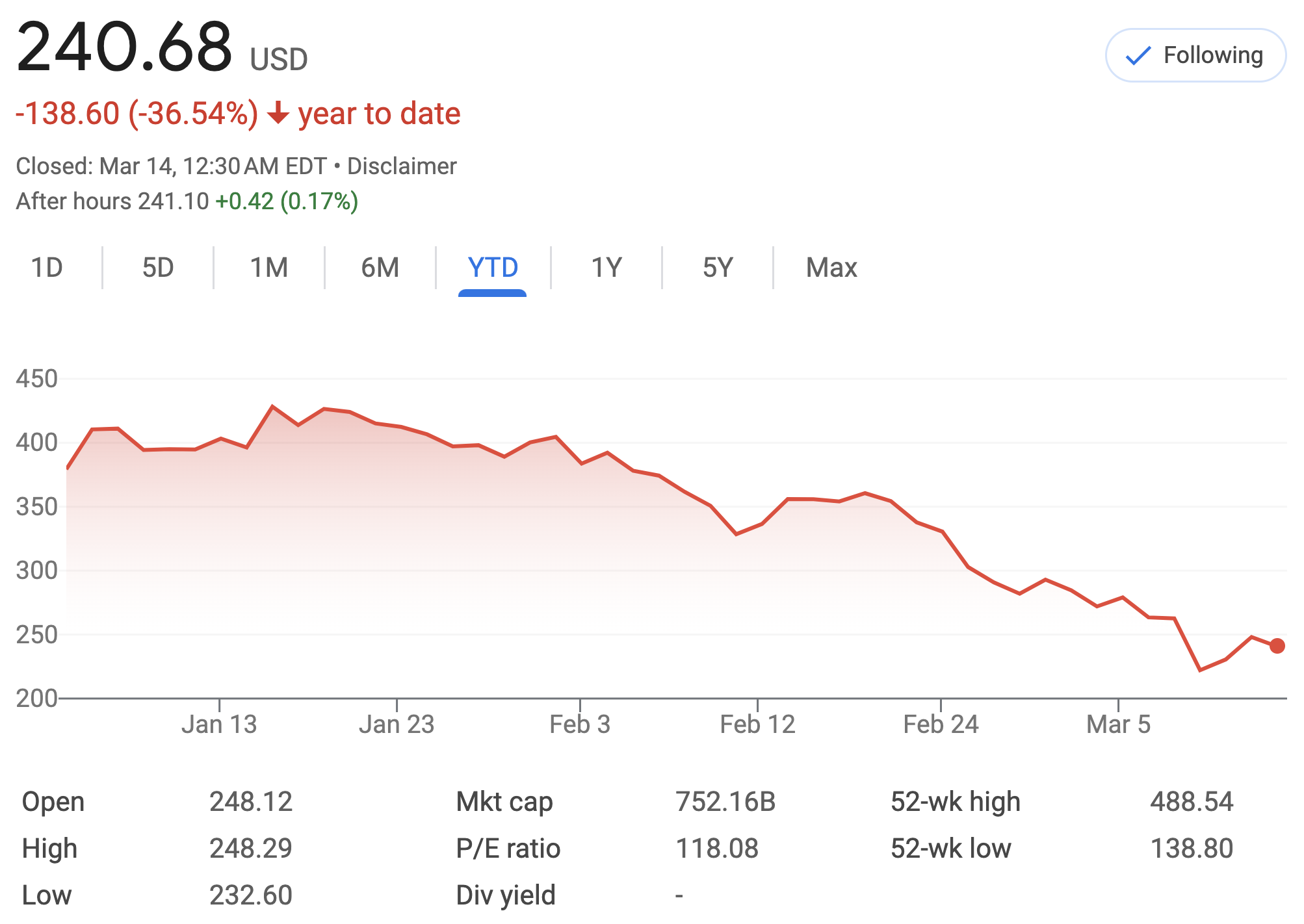
Understanding Tesla’s valuation requires a deep dive into the mechanics of growth investing, the impact of macroeconomic shifts, and the strategic foresight required to hold a high-volatility asset. Whether you are a day trader looking for liquidity or a long-term investor focused on the “Magnificent Seven,” the story of Tesla stock today is one of financial ambition meeting market reality.
Understanding Tesla’s Market Valuation and Current Performance
Tesla’s stock price is a reflection of many moving parts, ranging from quarterly delivery reports to the speculative value of its artificial intelligence (AI) initiatives. Unlike traditional legacy automakers, Tesla is often valued by the market as a high-growth technology firm, which explains its historically high Price-to-Earnings (P/E) ratio compared to competitors like Ford or General Motors.
Key Metrics to Watch: P/E Ratio and Operating Margins
To understand Tesla stock today, one must look past the price per share and examine the underlying financial health. The P/E ratio remains one of the most scrutinized metrics. Investors use this to determine if the stock is overvalued or undervalued relative to its earnings. When Tesla’s margins contract—as they have during periods of aggressive price cutting to maintain market share—the stock often faces downward pressure. Conversely, when the company demonstrates efficiency in its “Giga-factories,” the market tends to reward the stock with a premium valuation.
Delivery Numbers vs. Production Capacity
For Tesla, the primary driver of short-term price movement is the quarterly delivery report. This figure tells the market exactly how many vehicles reached customers’ hands versus how many were produced. A discrepancy here can signal a cooling of demand or a bottleneck in the supply chain. Investors monitor these numbers to assess the company’s ability to scale, which is the bedrock of its long-term financial thesis.
The Macroeconomic Factors Influencing Tesla Stock
No stock exists in a vacuum, and Tesla is particularly sensitive to the broader economic environment. As a capital-intensive business that relies on consumer financing, the company’s stock performance is inextricably linked to the decisions made by central banks and the health of the global economy.
Interest Rates and the Cost of Capital
Interest rates are arguably the most significant external factor affecting Tesla stock today. High interest rates increase the cost of monthly car payments for consumers, effectively making EVs more expensive even if the sticker price remains the same. From an investment perspective, higher rates also lead to a higher “discount rate” for future earnings. Since much of Tesla’s value is predicated on cash flows that will occur years in the future, a rise in interest rates can lead to a compression in its stock valuation.
Global Competition and the EV Market Shift
The landscape of the EV market has shifted from a monopoly to a crowded arena. The rise of Chinese competitors like BYD, alongside the electrification efforts of European giants like Volkswagen, has forced Tesla to reconsider its pricing strategy. For investors, this means monitoring “market share erosion.” If Tesla is forced to lower prices to stay competitive, its net income may suffer, leading to a re-evaluation of the stock’s growth trajectory.

Investment Strategies for Tesla Shareholders
Given its high beta—a measure of a stock’s volatility in relation to the market—Tesla requires a disciplined investment approach. It is not a “set it and forget it” stock for the faint of heart; it requires a strategy that accounts for both its massive upside potential and its frequent double-digit percentage drawdowns.
Dollar-Cost Averaging in a Volatile Market
For the retail investor, trying to time the “bottom” of Tesla stock is often a losing game. A more prudent financial strategy is Dollar-Cost Averaging (DCA). By investing a fixed amount of money into Tesla at regular intervals, investors can mitigate the risk of buying at a temporary peak. Over time, this lowers the average cost per share, allowing the investor to benefit from the company’s long-term growth while smoothing out the emotional impact of daily price swings.
Risk Management and Portfolio Diversification
While Tesla has minted many “Teslanaires,” concentration risk is a significant concern. Professional financial advisors often suggest that even if one is bullish on the future of sustainable energy, Tesla should be part of a diversified portfolio. This might include balancing TSLA holdings with lower-volatility index funds or dividend-paying stocks. Understanding where Tesla fits into your broader financial plan—whether as a speculative growth engine or a core holding—is essential for long-term wealth preservation.
The Long-term Outlook: Innovation and New Revenue Streams
When analysts look at Tesla stock today, they are not just looking at the Model 3 or Model Y. They are looking at the potential for software-like margins derived from non-automotive sectors. This “sum-of-the-parts” valuation is what keeps the stock at a premium compared to its peers.
The Full Self-Driving (FSD) and Robotaxi Potential
The financial “holy grail” for Tesla is the successful deployment of Full Self-Driving technology. If Tesla can transition from a hardware manufacturer to a software provider, its revenue model changes entirely. Subscriptions for FSD and the potential for a “Robotaxi” fleet represent high-margin recurring revenue that could fundamentally re-rate the stock. For an investor, the question is not just “how many cars were sold today,” but “how close is the software to being a licensed asset?”
Energy Storage and Solar Solutions
Tesla Energy is often a neglected part of the financial narrative, yet it represents a significant growth pillar. The deployment of Megapacks (large-scale battery storage) and Powerwalls is becoming an increasingly large slice of Tesla’s revenue pie. As the world shifts toward renewable energy, the demand for grid-scale storage is projected to skyrocket. Investors who view Tesla as an “energy company” rather than just a “car company” often find a different justification for the stock’s price-to-earnings multiples.

Conclusion: Navigating the Tesla Investment Journey
So, what is Tesla stock today? Financially speaking, it is a complex, high-stakes asset that sits at the intersection of manufacturing excellence, software innovation, and macroeconomic volatility. It is a stock that rewards the patient and the informed, but punishes those who react emotionally to the headlines of the day.
For the modern investor, Tesla represents the challenges and opportunities of the 21st-century market. Its price is influenced by everything from Federal Reserve interest rate hikes to the pace of AI development. To invest in Tesla is to take a stake in a specific vision of the future—one where transport is autonomous and energy is sustainable. However, from a strictly financial standpoint, it requires a keen eye on margins, a robust strategy for managing volatility, and a deep understanding of the competitive landscape. As the market continues to evolve, Tesla will likely remain one of the most significant and scrutinized components of the global financial ecosystem.
aViewFromTheCave is a participant in the Amazon Services LLC Associates Program, an affiliate advertising program designed to provide a means for sites to earn advertising fees by advertising and linking to Amazon.com. Amazon, the Amazon logo, AmazonSupply, and the AmazonSupply logo are trademarks of Amazon.com, Inc. or its affiliates. As an Amazon Associate we earn affiliate commissions from qualifying purchases.