
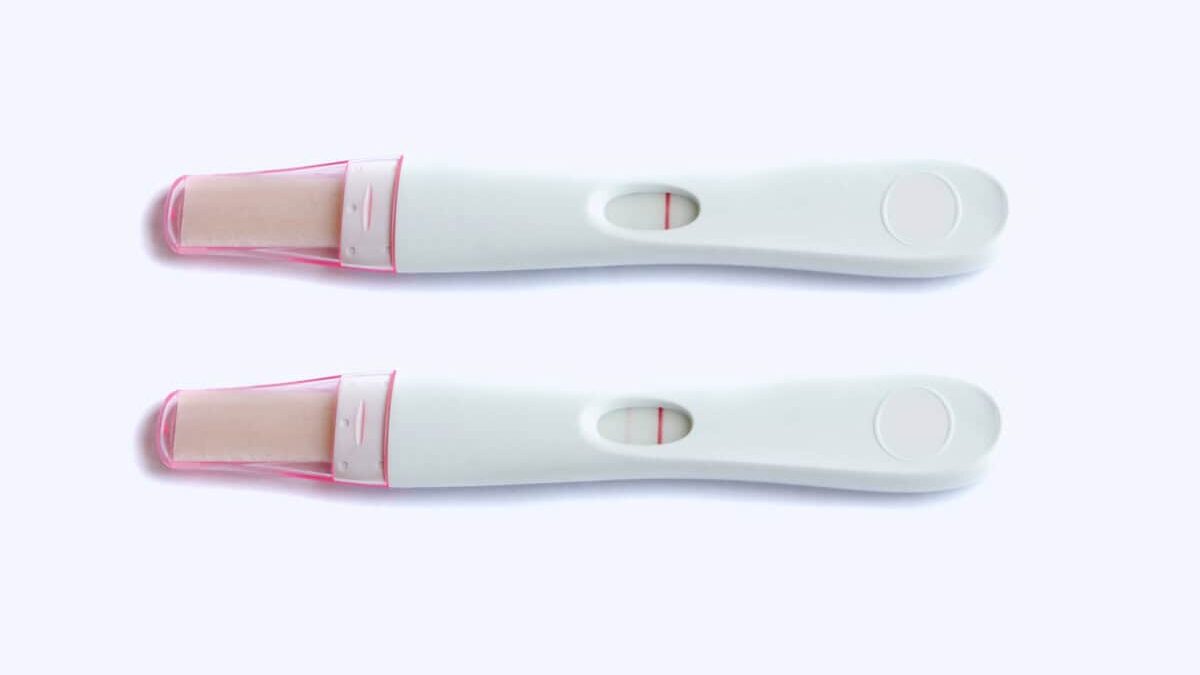
In the realm of consumer health technology, few interfaces are as high-stakes or as frequently misunderstood as the humble lateral flow assay—better known as the at-home pregnancy test. For decades, the visual interpretation of these tests remained a purely analog endeavor, often leading to the phenomenon of the “faint line.” To the untrained eye, a faint line represents ambiguity; to the technologist, it represents a signal-to-noise ratio challenge. As we move deeper into the era of HealthTech and FemTech, understanding what a faint pregnancy test looks like requires more than just a keen eye—it requires an understanding of the optical physics, biochemical engineering, and digital interpretation tools that are redefining home diagnostics.
The Bio-Tech Mechanics: How Analog Lines Translate to Data
To understand the visual output of a pregnancy test, one must first understand the underlying chromatographic technology. At its core, a pregnancy test is a sophisticated piece of biochemical hardware designed to detect the presence of Human Chorionic Gonadotropin (hCG) in a liquid sample.
Lateral Flow Immunoassay (LFI) Technology
The “test strip” is actually a complex series of materials: a sample pad, a conjugate pad, a nitrocellulose membrane, and an absorbent pad. When a sample is applied, it moves through these layers via capillary action. The technology relies on “sandwich” immunoassay principles. If hCG is present, it binds to mobile, gold-labeled antibodies. As this complex travels to the “Test” line, it is captured by stationary antibodies, creating a concentrated “sandwich” of gold particles that becomes visible to the human eye.
The Threshold of Detection: Sensitivity in Milli-International Units
The “faintness” of a line is a direct reflection of the analytical sensitivity of the tech. Most standard tests are calibrated to a sensitivity of 25 mIU/mL, while “early detection” models may trigger at 10 mIU/mL. A faint line occurs when the concentration of hCG is just hovering above the detection threshold. In technical terms, the signal (the binding of the gold particles) is only marginally stronger than the background interference of the membrane. This is the biological equivalent of a low-bandwidth connection where the data is present but the resolution is pixelated.
Beyond the Human Eye: AI and Optical Recognition Apps
As smartphones have become ubiquitous, the burden of interpreting a faint line has shifted from human visual acuity to advanced computer vision algorithms. This transition represents one of the most significant leaps in consumer diagnostic tech.
Computer Vision in Modern Diagnostics
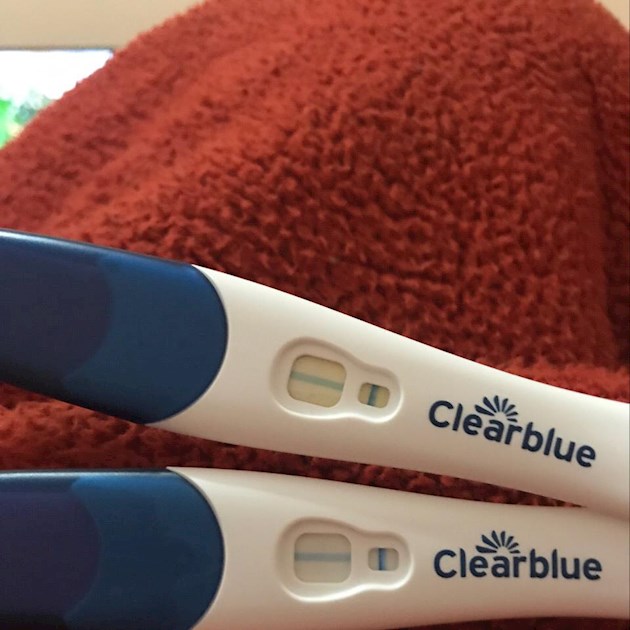
Several HealthTech startups have developed applications that utilize the smartphone’s high-resolution camera to “read” analog tests. These apps use sophisticated image processing to adjust for lighting conditions, shadows, and angle of incidence—variables that often lead to “evaporation line” misinterpretations by human users. By applying high-contrast filters and edge-detection algorithms, these digital tools can identify a faint line that may be virtually invisible to the naked eye.
Reducing Ambiguity with Algorithmic Image Analysis
The technology behind these apps involves training neural networks on thousands of images of pregnancy tests. This machine learning approach allows the software to distinguish between a “true positive” (where the dye has bound to the hCG antibodies) and a “grey line” (an evaporation line or an indentation on the membrane). For the user, the tech converts the “what does a faint line look like?” anxiety into a binary “Pregnant” or “Not Pregnant” digital notification, effectively acting as a bridge between analog chemistry and digital certainty.
Digital Pregnancy Tests: The UI/UX of Early Detection

The consumer electronics industry has successfully integrated into the pregnancy test market via “Digital” tests. While many users believe these tests are fundamentally different from the analog strips, the internal technology reveals a fascinating marriage of chemistry and optical sensors.
Photometric Sensors vs. Human Visual Acuity
Inside a digital pregnancy test lies a standard lateral flow strip, but instead of a human looking at it, the device uses an internal microprocessor and a series of LEDs and photodetectors. The device measures the amount of light reflected off the test strip. When a line—even a faint one—forms, the sensor detects a change in light transmission. If the drop in light intensity meets a pre-programmed mathematical threshold, the microprocessor triggers the digital display.
The “Pregnant” vs. “Not Pregnant” Binary Output
From a User Experience (UX) perspective, digital tests are designed to eliminate the “faint line” dilemma entirely. By converting a gradient of color into a definitive text-based result, the technology removes the subjective interpretation of the user. However, this tech comes with a trade-off: digital tests often have a higher detection threshold than the most sensitive analog tests because the optical sensors require a specific “signal strength” to confirm a result, meaning a very faint line on an analog test might still register as “Not Pregnant” on a digital reader.
The Convergence of HealthTech and Consumer Privacy
When we move beyond the visual interpretation of a faint line, the technology surrounding pregnancy testing enters the realm of data management and digital security. In the modern landscape, a test result is rarely just a physical object; it is a data point in a larger ecosystem.
Encrypted Data Storage for At-Home Diagnostics
Modern “smart” pregnancy tests can sync via Bluetooth to fertility-tracking applications. This creates a digital record of the test result, including the timestamp and the intensity of the line (often used to track the progression of hCG levels). Because this is highly sensitive biometric data, the tech industry has had to implement rigorous encryption standards. The transition from a “faint line” on a strip to an encrypted entry in a cloud-based health database highlights the shift toward integrated personal health records.
The Interconnectivity of Fertility Tracking Ecosystems
The technology does not exist in a vacuum. A faint line interpreted by an AI-powered app can automatically trigger changes in a user’s health ecosystem—adjusting predicted ovulation dates in a cycle tracker, updating prenatal vitamin subscriptions, or even flagging potential concerns for a telehealth provider. This interconnectivity represents the “Internet of Medical Things” (IoMT), where a chemical reaction on a piece of nitrocellulose becomes a catalyst for a sophisticated digital workflow.
Future Trends: Smart Tests and Wearable Integration
The trajectory of pregnancy detection technology is moving toward even higher sensitivity and more seamless integration with wearable tech, potentially making the “faint line” a relic of the past.
Reusable Digital Readers
Sustainability is a growing trend in the Tech sector, leading to the development of reusable digital readers. These devices use replaceable analog cartridges, combining the cost-effectiveness of strips with the high-tech interpretation of digital sensors. This hardware evolution reduces electronic waste while maintaining the high-fidelity UI that modern consumers expect.
Integrating Diagnostic Results into Telemedicine Platforms
The ultimate goal of the current diagnostic tech wave is the “connected home clinic.” Future iterations of pregnancy testing tech will likely include real-time data sharing with healthcare providers. Instead of a patient calling a clinic to describe a “faint line,” the high-resolution scan from an AI app or the data packet from a Bluetooth-enabled test will be uploaded directly to an Electronic Health Record (EHR). This allows for professional medical oversight of early pregnancy markers without the need for an in-person blood draw in the initial days of gestation.
In conclusion, a “faint line” on a pregnancy test is more than a biological milestone; it is a complex data point at the intersection of biochemistry, optical physics, and digital interpretation. As technology continues to refine our ability to detect and analyze low-concentration biomarkers, the ambiguity of the faint line is being replaced by the precision of computer vision and the convenience of integrated health platforms. For the modern consumer, understanding the tech behind the test is the key to moving from uncertainty to informed action.
aViewFromTheCave is a participant in the Amazon Services LLC Associates Program, an affiliate advertising program designed to provide a means for sites to earn advertising fees by advertising and linking to Amazon.com. Amazon, the Amazon logo, AmazonSupply, and the AmazonSupply logo are trademarks of Amazon.com, Inc. or its affiliates. As an Amazon Associate we earn affiliate commissions from qualifying purchases.