
In the fast-paced world of digital communication, language evolves at a rate that often outpaces traditional lexicons. For anyone who navigated the early corridors of the internet in the late 1990s and early 2000s, certain acronyms served as the foundational building blocks of social interaction. Among the most prominent was “ASL.” While the term might seem like a relic of a bygone era of dial-up modems and pixelated chat rooms, its legacy continues to influence how we build software, how AI interprets human intent, and how digital communities self-regulate. To understand what “ASL” means today is to understand the trajectory of human-computer interaction and the persistent need for identity verification in an anonymous digital space.

Decoding the Origins: From IRC to Modern Social Ecosystems
The acronym “ASL” stands for “Age, Sex, Location.” Its origin is deeply rooted in the early infrastructure of the internet, specifically within Internet Relay Chat (IRC) and early instant messaging platforms like ICQ and AOL Instant Messenger (AIM). During this era, the internet was almost entirely text-based and dominated by a sense of radical anonymity.
The AOL Era and the Birth of “Age, Sex, Location”
In the mid-1990s, when a user entered a chat room, they were often nothing more than a screen name—a string of characters that provided zero context about the person behind the keyboard. “ASL” became the standard handshake. It was the functional equivalent of a digital “hello,” a quick way to establish the demographic parameters of a conversation. From a technological standpoint, this was the earliest form of user-generated metadata. Before sophisticated profile pages existed, users had to manually provide their data to one another to facilitate social filtering.
The Role of Anonymity in Early Online Communities
The tech landscape of the 20th century prioritized anonymity as a feature, not a bug. However, humans are inherently social creatures who seek commonalities. The “ASL” prompt was a social protocol developed to solve a technical limitation: the lack of persistent digital identities. Without avatars or verified bios, the “Age, Sex, Location” query was the only tool users had to navigate the vast, unmapped territories of the early web. This manual data exchange paved the way for the structured data fields we see in modern social media registration forms today.
ASL in the Age of Mobile Apps and Social Media
As technology transitioned from desktop-centric environments to mobile-first platforms, the way we communicate demographics shifted. Yet, the concept of “ASL” did not disappear; it simply transformed. In the modern era, the acronym has undergone a linguistic evolution while the underlying technology has automated the process of demographic identification.
From Text-Based Chat to Visual-First Platforms
In contemporary apps like Snapchat, Instagram, and Discord, the manual “ASL” query is less common because the technology does the work for us. Modern user interfaces (UI) are designed to display a user’s “Location” via geo-tagging, their “Age” through birthday verification, and their “Sex” or gender through profile settings. We have moved from a manual “push” of information to a background “pull” of data. The technology has integrated the components of ASL into the very fabric of the user profile, making the literal acronym redundant in many professional and social circles.
The Re-emergence of ASL on TikTok and Snapchat
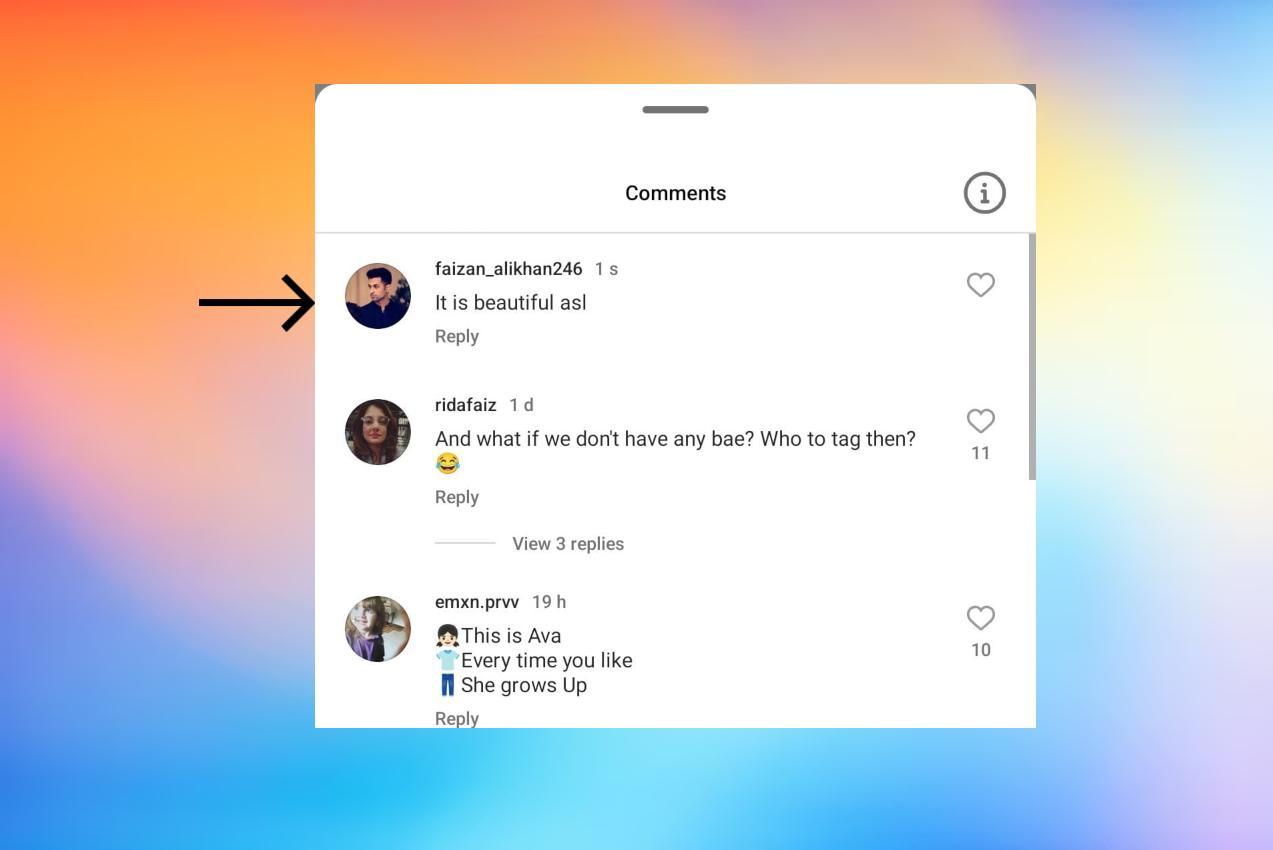
Interestingly, tech-savvy younger generations (Gen Z and Gen Alpha) have repurposed “asl” on platforms like TikTok. In this specific digital niche, “asl” often serves as a phonetic shorthand for “as hell” (e.g., “I’m hungry asl”). This shift is a fascinating case study in how linguistic shortcuts adapt to the character limits and rapid-fire nature of mobile keyboards. From a software development perspective, this presents a challenge for sentiment analysis tools and moderation bots that must distinguish between a user asking for demographic data (which might violate safety policies) and a user using a common intensifier.
Technological Implications: How Algorithms and AI Process Slang
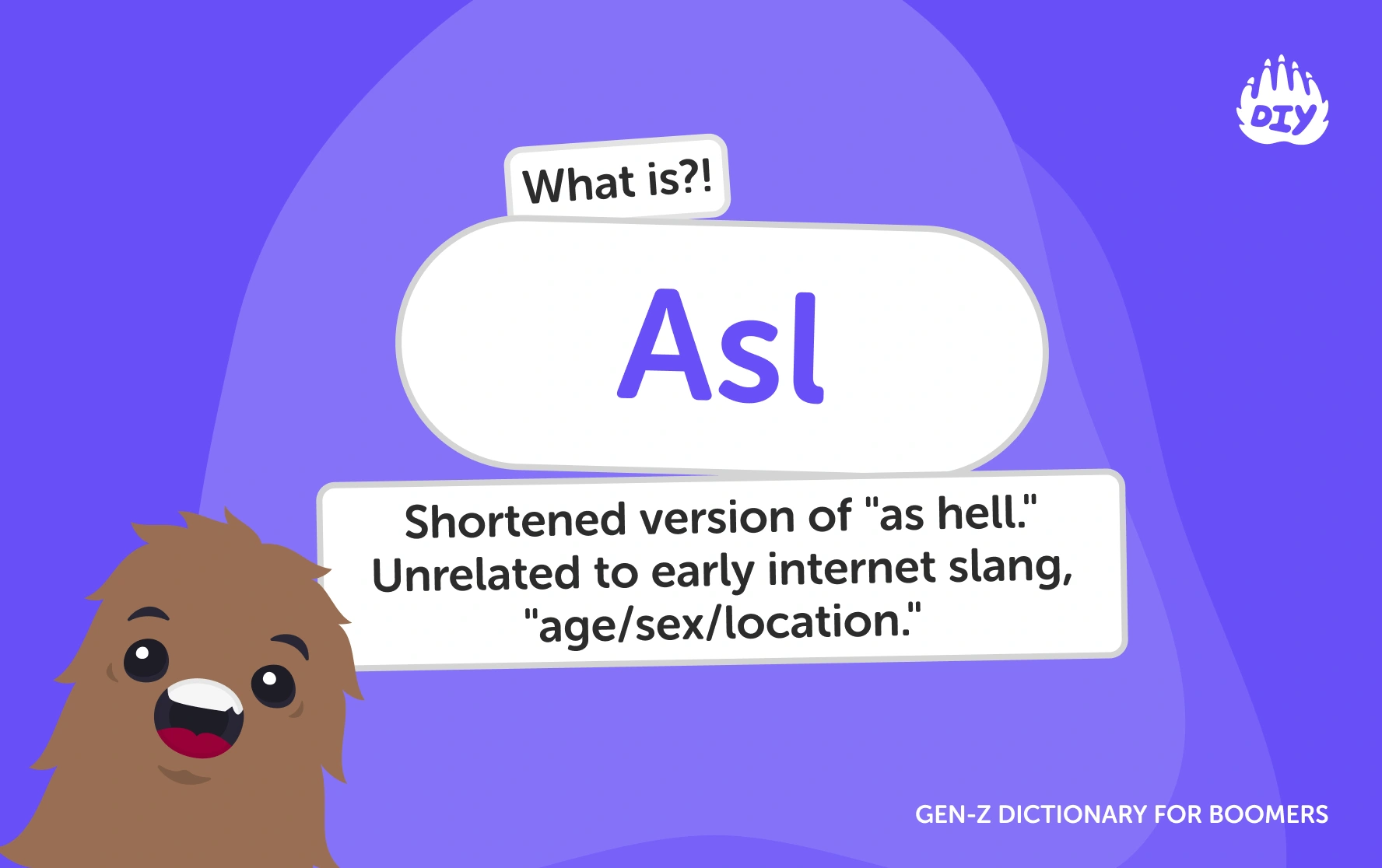
The evolution of “ASL” from a demographic query to a versatile slang term highlights a significant challenge in the field of Artificial Intelligence: Natural Language Processing (NLP). For developers building the next generation of communication tools, understanding these nuances is critical for creating inclusive and safe environments.
Natural Language Processing (NLP) and the Challenge of Context
Modern AI models, such as Large Language Models (LLMs), must be trained on massive datasets to understand that “ASL” can mean “American Sign Language,” “Age, Sex, Location,” or “As Hell,” depending entirely on the context. If a user on a tech support forum mentions “ASL,” the AI must recognize the technical or demographic context. If the same term appears in a TikTok comment section, the algorithmic interpretation must shift. This requires “context windows” and sophisticated neural networks that can weigh the probability of a term’s meaning based on surrounding keywords and platform-specific metadata.
Safety Filters and Demographic Data in App Development
From a digital security and safety standpoint, the “ASL” of the past is a red flag for modern safety algorithms. Many social platforms utilize automated systems to detect when a user is asking for “Age, Sex, or Location,” as this can be a precursor to predatory behavior or “doxing.” Software engineers design these “safety nets” to flag such queries in real-time. The irony is that while the term was once a standard social greeting, in the modern tech stack, it is often categorized as a potential risk factor that triggers automated moderation.
The Cultural Shift: Why Digital Acronyms Persist in Software Design
The persistence of shorthand like ASL, even as it changes meaning, is a testament to the “economy of characters” that governs digital interaction. Tech platforms are constantly balancing the need for rich information with the user’s desire for speed and efficiency.
User Experience (UX) and the Economy of Characters
The history of tech is a history of constraints. Early SMS messages were limited to 160 characters; Twitter was famously limited to 140. These constraints forced the creation of acronyms. Even though modern high-speed 5G networks and powerful smartphones can handle long-form text effortlessly, the habit of shorthand remains. UX designers must account for this by ensuring that apps support quick-reply features and “slang-aware” autocorrect. The tech must adapt to the user’s desire for brevity, even if that brevity results in ambiguous terms like “ASL.”
Digital Literacy as a Barrier to Entry
The evolution of digital slang also creates a “tech-literacy gap.” For older users or those new to specific digital ecosystems, the various meanings of “ASL” can be confusing. This impacts how developers design onboarding experiences. If a technical platform uses legacy shorthand that a new generation doesn’t recognize—or vice versa—it creates friction in the user experience. Ensuring that software remains accessible means keeping a pulse on how these terms evolve within the digital zeitgeist.
Beyond Information: The Future of Identity Verification in Tech
As we look toward the future of the internet—often referred to as Web3 or the Metaverse—the foundational elements of “ASL” are being reimagined through the lens of privacy and decentralized identity.
Moving from “ASL” to Verified Biometrics
We are moving away from a world where we ask for “Age, Sex, and Location” and toward a world where we verify it through technology. Biometric sensors, face-ID, and encrypted digital wallets are replacing the manual text entry of the 90s. In this new tech paradigm, your “ASL” is confirmed by a secure enclave in your smartphone’s hardware rather than a typed response in a chat window. This represents a massive leap in digital security, reducing the likelihood of “catfishing” and identity fraud that plagued the early days of “ASL” usage.
Privacy Concerns and the Protection of User Metadata
The automation of “ASL” components (Age, Sex, Location) brings up significant concerns regarding data privacy. In the past, you chose to share your “ASL.” Today, your “Location” is often tracked via GPS, and your “Age” and “Sex” are harvested from your browsing habits and account registrations. As tech evolves, the focus is shifting toward “Zero-Knowledge Proofs,” where a user can prove they meet certain criteria (like being over 18 or living in a specific region) without actually revealing their specific data. The spirit of the “ASL” query remains, but the technology is moving toward a model where privacy is protected by default, rather than being at the mercy of a manual chat response.
In conclusion, “ASL” is more than just a three-letter acronym; it is a linguistic fossil that maps the history of the internet. From its origins as a necessary tool for navigating anonymous chat rooms to its modern iteration as an intensifier on social media and a data point for AI, “ASL” reflects our ongoing negotiation with digital identity. As technology continues to advance, the way we identify ourselves and others will continue to change, but the core human need for context—the very thing “ASL” was designed to provide—will remain a central pillar of the tech landscape.
aViewFromTheCave is a participant in the Amazon Services LLC Associates Program, an affiliate advertising program designed to provide a means for sites to earn advertising fees by advertising and linking to Amazon.com. Amazon, the Amazon logo, AmazonSupply, and the AmazonSupply logo are trademarks of Amazon.com, Inc. or its affiliates. As an Amazon Associate we earn affiliate commissions from qualifying purchases.