
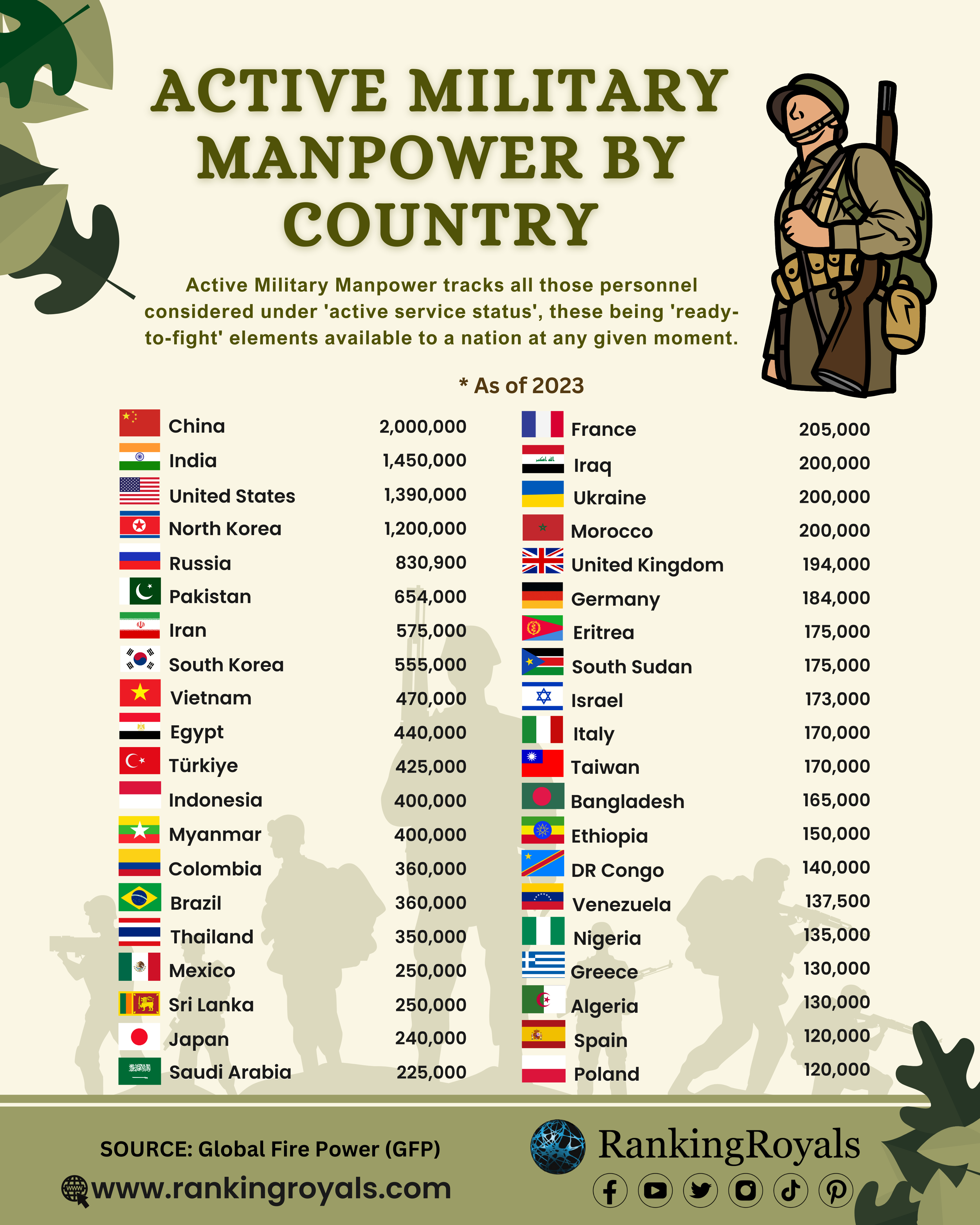
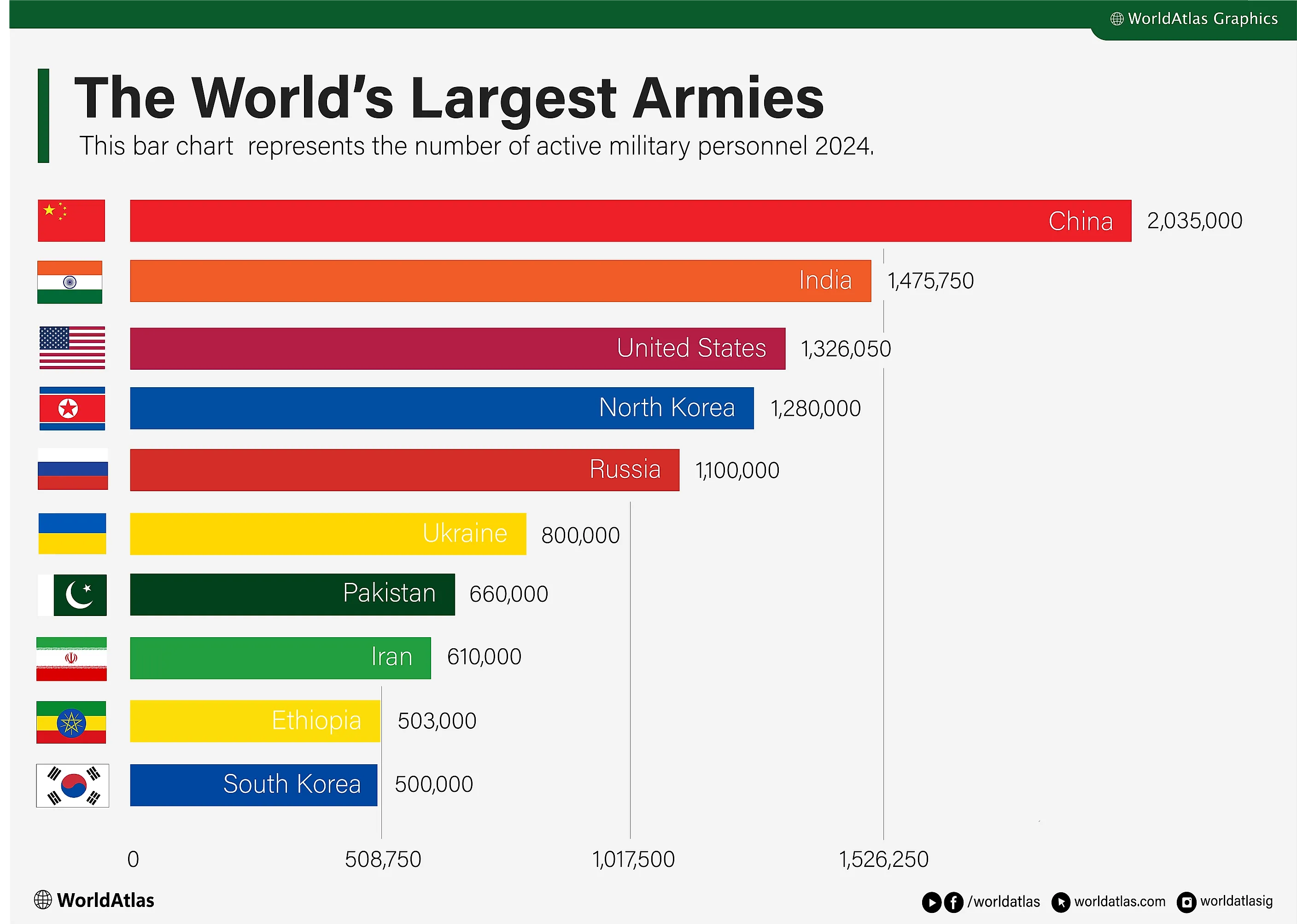
In the twentieth century, the strength of a nation’s military was measured by the sheer volume of its “boots on the ground,” the weight of its steel, and the number of its nuclear warheads. However, as we move deeper into the 21st century, the definition of military supremacy has undergone a radical transformation. Today, the world’s strongest army is no longer defined by traditional manpower alone, but by its technological “stack.” From artificial intelligence (AI) and autonomous drones to cyber warfare and quantum-encrypted communications, the global arms race has shifted from the battlefield to the laboratory.

When asking which country has the strongest army, we must look beyond the census of soldiers and instead evaluate the sophisticated digital ecosystems that power modern defense. This article explores the technological frontrunners in the global military landscape, analyzing how software, hardware, and digital innovation determine the true hierarchy of power.
The Evolution of Military Dominance: From Manpower to Machine Learning
The shift from kinetic warfare to algorithmic warfare marks the most significant turning point in military history since the invention of gunpowder. Today, a nation’s military strength is increasingly tethered to its domestic tech industry and its ability to integrate emerging software into legacy hardware.
The Role of Artificial Intelligence in Modern Warfare
Artificial Intelligence is the “new electricity” of the military world. The country with the strongest army is arguably the one that best utilizes AI for decision support, predictive maintenance, and autonomous operations. The United States and China are currently locked in a “Sputnik moment” regarding AI. The U.S. Department of Defense’s Project Maven, for instance, uses computer vision to identify targets from drone footage, while China’s “intelligentization” strategy seeks to bypass traditional naval and aerial parity by using AI to manage complex, multi-domain battlespaces. AI allows commanders to process vast amounts of data in milliseconds, reducing the “OODA loop” (Observe, Orient, Decide, Act) to a speed that human cognition cannot match.
Autonomous Systems and the Rise of Drone Swarms
Modern strength is also measured by the proliferation of Unmanned Aerial Vehicles (UAVs) and Unmanned Surface Vessels (USVs). Turkey, for example, has emerged as a middle-power tech giant through its Bayraktar drones, proving that cost-effective, high-tech autonomous systems can neutralize traditional armored divisions. However, the “strongest” militaries are now developing “swarming” technology—where hundreds of small, low-cost drones communicate with each other to overwhelm sophisticated missile defense systems. This shift moves the advantage away from expensive, manned platforms toward expendable, intelligent machines.
Cyber Frontiers: Assessing the World’s Leading Digital Battalions
The modern battlefield extends into the fifth domain: Cyberspace. A country can possess thousands of tanks, but if its power grid, communication satellites, and command-and-control servers are compromised by a keyboard-wielding adversary, those tanks become expensive paperweights.
Defensive and Offensive Cyber Capabilities
When evaluating the strongest army, we must consider the “Cyber Power Index.” Countries like Israel and the United States have integrated their intelligence agencies (like the NSA or Unit 8200) directly with their military operations. The ability to conduct “Stuxnet-style” operations—where software physically destroys hardware—is a prerequisite for a top-tier army. Russia has also demonstrated significant strength in this area, utilizing “hybrid warfare” that blends disinformation, hacking, and kinetic force. The strength of an army today is measured by its “cyber resilience”—the ability to operate under a continuous state of digital siege.
Satellite Technology and Space-Based Defense Systems
Technology has made the high ground of space the most critical strategic asset. The strongest armies are those with robust Global Positioning Systems (GPS) or domestic equivalents (like China’s BeiDou or Russia’s GLONASS). Without satellite tech, precision-guided munitions lose their “smart” status. Furthermore, the development of anti-satellite (ASAT) technology and the deployment of “Space Force” branches signify that the country with the strongest army is the one that can maintain its eyes in the sky while blinding the enemy.
Advanced Weaponry and Hardware Innovations
While software is the brain, hardware remains the muscle of the military. However, that muscle is now being enhanced by breakthroughs in materials science and physics that were once the domain of science fiction.
Hypersonic Missiles: The Tech Redefining Deterrence
The current frontier in hardware is hypersonic technology—missiles that travel at more than five times the speed of sound (Mach 5+) while remaining maneuverable. Russia and China have claimed significant leads in this field with systems like the Avangard and the DF-17. These weapons are “technological disruptors” because current missile defense systems, designed to track predictable ballistic trajectories, are largely ineffective against them. For a country to claim the title of the strongest army, it must possess the tech to both launch and intercept these hypersonic threats.
Next-Gen Infantry Gear: Exoskeletons and Smart HUDs
On the individual level, the “soldier of the future” is becoming a modular tech platform. Integration of Augmented Reality (AR) through systems like the U.S. Army’s Integrated Visual Augmentation System (IVAS) allows soldiers to see through smoke, identify friend-from-foe using thermal overlays, and receive real-time data feeds directly onto their visors. Additionally, the development of powered exoskeletons is beginning to move from prototypes to field tests, aiming to increase the load-bearing capacity and endurance of infantry, effectively turning human soldiers into high-tech assets.
Data-Centric Defense: The Software Powering Global Superpowers
If data is the new oil, then the strongest army is the one with the best refinery. The backend infrastructure of a military—its cloud computing capabilities and data analytics—is what enables all the flashy hardware to function in unison.
Big Data Analytics in Battlefield Intelligence
The concept of “Sensor-to-Shooter” connectivity is the pinnacle of modern military tech. This involves taking data from a satellite, a soldier’s camera, and a submerged sonar sensor, and using big data analytics to create a single, unified picture of the battlefield. The U.S. military’s JADC2 (Joint All-Domain Command and Control) initiative is the gold standard for this. It treats the entire military as a single network, where every “thing” is a sensor and every “thing” is a shooter. The country that masters this “Internet of Military Things” (IoMT) possesses a logistical and tactical advantage that no amount of raw manpower can overcome.
Quantum Computing: The Future of Military Encryption
Looking toward the next decade, quantum computing will be the ultimate tie-breaker. Quantum computers have the potential to crack almost all current forms of encryption, rendering the digital communications of most armies transparent. Conversely, quantum key distribution (QKD) offers a way to create unhackable communication lines. China is currently leading in the deployment of quantum communication satellites, a move that could arguably give them the “strongest” defensive posture in the digital age.
The Verdict: Integrating Tech to Determine the World’s Strongest Force
When we analyze which country has the strongest army through the lens of technology, the answer is no longer a simple static ranking. It is a dynamic competition between the United States, China, and to a specialized extent, Russia and Israel.
The United States remains the overall leader due to its unparalleled integration of high-end hardware (like the F-35 Lightning II, which is essentially a flying supercomputer) and its vast ecosystem of private-sector tech partners (Silicon Valley) that continuously feed the defense sector with AI and cloud innovations. However, China is closing the gap at an unprecedented rate by focusing on “leapfrog” technologies like hypersonics, quantum sensing, and mass-produced autonomous systems.
Ultimately, the strongest army is not necessarily the one with the most soldiers, but the one with the most resilient and innovative “Tech Stack.” In a modern conflict, the first shot fired is likely to be a line of code, and the final victory will be secured by the side that maintains its technological edge under the pressure of digital and physical combat. As we look forward, the strength of a nation will be measured in flops, bits, and algorithms as much as in tanks, planes, and ships.
aViewFromTheCave is a participant in the Amazon Services LLC Associates Program, an affiliate advertising program designed to provide a means for sites to earn advertising fees by advertising and linking to Amazon.com. Amazon, the Amazon logo, AmazonSupply, and the AmazonSupply logo are trademarks of Amazon.com, Inc. or its affiliates. As an Amazon Associate we earn affiliate commissions from qualifying purchases.