
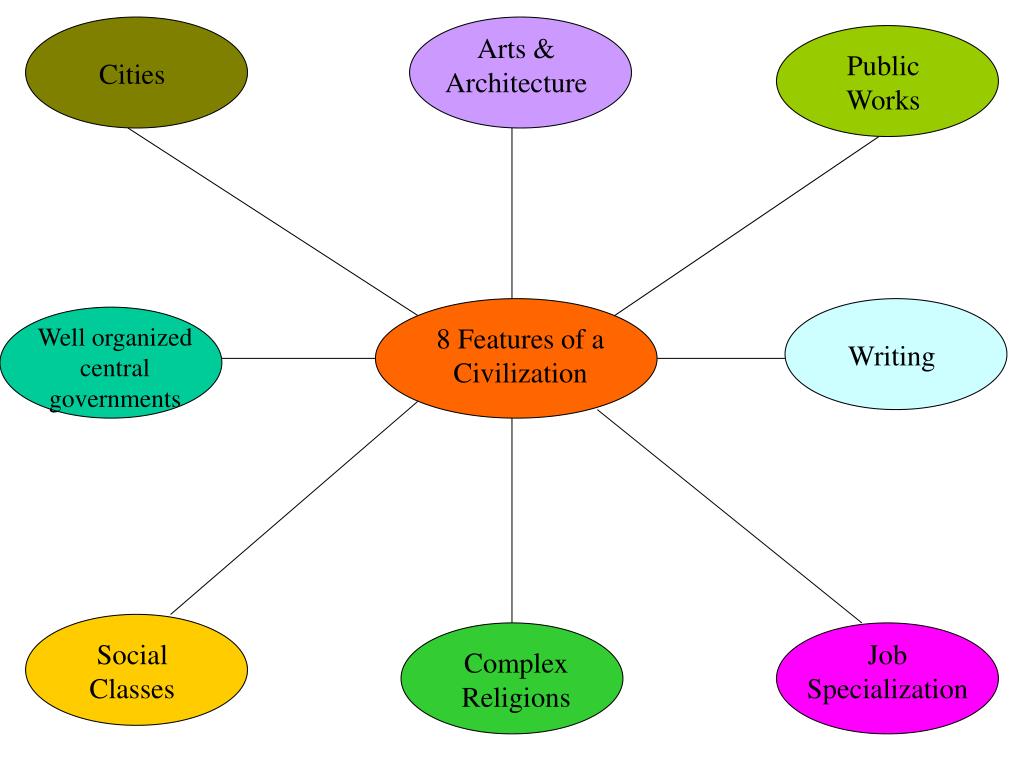
Historically, the definition of a civilization rested upon physical markers: permanent settlements, agricultural surpluses, specialized labor, and social hierarchies. However, as we move deeper into the 21st century, the definition is undergoing a radical transformation. We are no longer defined solely by the geography we inhabit, but by the technological “stack” we utilize. A modern civilization is now characterized by its digital infrastructure, its ability to process information, and the algorithmic frameworks that govern human interaction.
To understand what characteristics make up a civilization today, we must look through the lens of technology. In this paradigm, data is the new currency, code is the new law, and connectivity is the new geography.

The Foundation of Connectivity: Infrastructure in the Silicon Age
Every great civilization in history began with a mastery of its environment through infrastructure. For Rome, it was the roads; for the Industrial Age, it was the railway and the power grid. For a technological civilization, the foundational characteristic is the “Connectivity Stack”—the invisible but essential network that facilitates the flow of data.
From Physical Relays to Hyper-Connectivity
In a tech-centric civilization, a society’s advancement is measured by its latency and bandwidth. The transition from 4G to 5G, and the eventual implementation of 6G, represents more than just faster downloads; it represents the nervous system of the civilization. Without high-speed, low-latency connectivity, modern characteristics like telepresence, remote surgery, and autonomous logistics would collapse. This infrastructure is the bedrock upon which all other technological “cities” are built.
The Cloud as the Modern Great Library
Ancient civilizations were defined by their ability to store and transmit knowledge—think of the Library of Alexandria or the invention of the printing press. Today, the characteristic that defines our civilization is “The Cloud.” This decentralized repository of the world’s collective intelligence serves as the ultimate archive. However, unlike physical libraries, the cloud is active; it doesn’t just store information, it processes it through distributed computing, allowing a civilization to solve problems that were previously beyond human cognitive limits.
The Energy Imperative: Powering the Digital State
A technological civilization is uniquely characterized by its voracious appetite for energy. Data centers, semiconductor manufacturing, and crypto-networks require an unprecedented amount of power. Therefore, a defining characteristic of a modern tech-civilization is its transition toward sustainable, high-density energy sources. The ability to integrate smart grids and fusion or advanced modular reactors into the tech stack is what separates a burgeoning society from a legacy one.
Algorithmic Governance: The Logic of Modern Social Contracts
Traditional civilizations relied on written constitutions and bureaucratic hierarchies. In a technological civilization, these “analog” systems are being replaced by algorithmic governance. This is a shift from subjective human interpretation to objective, code-based execution.
The Rise of the Algorithmic Social Contract
We are increasingly living under a social contract mediated by software. Whether it is the algorithms that determine creditworthiness, the AI that manages traffic flow, or the protocols that moderate digital town squares, the “rules” of our civilization are increasingly written in Python or C++. This characteristic defines how resources are allocated and how social order is maintained without the constant need for physical enforcement.
Decentralization and the Blockchain Framework
One of the most disruptive characteristics of the new digital civilization is the move away from centralized authority. Through blockchain technology and Decentralized Autonomous Organizations (DAOs), we are seeing the emergence of “trustless” systems. In these frameworks, the characteristic of “trust” is moved from institutions (like banks or governments) to mathematics. This allow for a civilization to function globally without the friction of borders or the bias of centralized gatekeepers.
Digital Identity and Virtual Citizenship
In the past, citizenship was a matter of where you were born. Today, a characteristic of our civilization is the “Digital Identity.” This encompasses your biometric data, your cryptographic keys, and your reputation score across various platforms. As we spend more time in digital environments, our virtual identity becomes as significant as our physical one, leading to a new form of “net-state” citizenship where participation is defined by technological access rather than physical proximity.
The Cognitive Engine: Artificial Intelligence as a Civilizational Pillar
If infrastructure is the body of a civilization and algorithms are the laws, then Artificial Intelligence (AI) is the collective mind. A defining characteristic of a modern civilization is its ability to outsource cognitive labor to machines.
The Synthesis of Human and Machine Intelligence
We have reached a point where human progress is inextricably linked to AI. From drug discovery and materials science to climate modeling, the “intellectual” characteristic of our society is no longer purely human. We are a “Cyborg Civilization,” where our tools (Large Language Models, Neural Networks) act as an exoskeleton for our brains. The society that best integrates AI into its daily workflow becomes the dominant cultural and economic force.
The Common Language of Open Source
Ancient civilizations were often unified by a common tongue (Latin, Sanskrit, Mandarin). In the tech niche, the unifying language is Open Source. The characteristic of “collaborative development” allows developers from different nations to build upon the same codebase. This shared technical language accelerates innovation and creates a global intellectual commons that transcends traditional geopolitical rivalries.
Cybersecurity: The New Defensive Walls
Every civilization needs a way to protect its citizens and its assets. In the digital age, the “Great Wall” is replaced by the “Firewall.” Cybersecurity is a primary characteristic of a stable technological society. The ability to defend against state-sponsored hacking, ransomware, and data breaches is the modern equivalent of defending a city-state from a siege. Without robust encryption and defensive AI, a digital civilization remains fragile and prone to total systemic collapse.
The Economic Frontier: Value in a Tokenized World
A civilization is also defined by how it creates and exchanges value. We are currently transitioning from an industrial economy to a “Tokenized” or “Programmable” economy, which introduces entirely new characteristics to the financial landscape.
The Obsolescence of Physical Currency
In a tech-driven civilization, the physical coin is an artifact. The primary characteristic of modern finance is “Digital Liquidity.” The shift toward Central Bank Digital Currencies (CBDCs) and private cryptocurrencies means that money is now data. This allows for programmable money—currency that can only be spent on specific items or that automatically triggers tax payments via smart contracts, streamlining the entire economic machinery of the state.
The Token Economy and Micro-Value
Technology has enabled the “fractionalization” of everything. We can now own a fraction of a piece of art, a minute of a CPU’s time, or a tiny portion of a real estate development through tokens. This characteristic of “Micro-Value” allows for a more granular and inclusive economic system, where value can be captured and traded at a scale that was impossible in the era of paper ledgers.
Automation and the Post-Scarcity Narrative
As robotics and AI take over the means of production, a burgeoning characteristic of our civilization is the debate over the “Post-Scarcity” economy. In a world where the marginal cost of software and digital goods is near zero, the traditional economic models based on scarcity are being challenged. How a tech-civilization handles the surplus generated by automation—whether through Universal Basic Income or new forms of “human-centric” labor—will be its defining social characteristic.
The Ethical Superstructure: Preserving the Human Element
Finally, a civilization is defined by its values and its treatment of its people. As we become more technological, the “Ethical Stack” becomes a critical characteristic of our society.
Privacy as a Civilizational Right
In an age of “Surveillance Capitalism,” the characteristic of privacy has become a luxury. However, a mature technological civilization must treat data privacy as a fundamental human right. The development of Privacy-Enhancing Technologies (PETs), such as zero-knowledge proofs and homomorphic encryption, represents the civilizational effort to protect the individual from the overreach of the collective or the corporation.
Digital Literacy and the New Class System
Just as literacy was the gatekeeper to power in the Middle Ages, “Digital Literacy” is the defining class characteristic today. A civilization’s health can be measured by its “Digital Divide.” If a segment of the population cannot navigate the tech stack, they are effectively exiled from the civilization. Therefore, a core characteristic of a successful tech-society is the democratization of technical education and the user-centric design of complex systems.

The Quest for Ethical AI
As we delegate more decisions to machines, the characteristic of “Algorithmic Ethics” becomes paramount. We are currently in the process of “aligning” AI with human values. This is perhaps the most important characteristic of our current era: the attempt to ensure that our technological creations do not inadvertently dismantle the humanistic values that the civilization was built to protect.
In conclusion, a civilization is no longer just a collection of buildings and people; it is an integrated system of hardware, software, and human intent. The characteristics that make up our modern civilization—connectivity, algorithmic governance, AI integration, and digital economics—are redefining what it means to be a functioning society. As we continue to build this digital state, our success will depend not just on the power of our processors, but on the wisdom with with we deploy them.
aViewFromTheCave is a participant in the Amazon Services LLC Associates Program, an affiliate advertising program designed to provide a means for sites to earn advertising fees by advertising and linking to Amazon.com. Amazon, the Amazon logo, AmazonSupply, and the AmazonSupply logo are trademarks of Amazon.com, Inc. or its affiliates. As an Amazon Associate we earn affiliate commissions from qualifying purchases.