
In the early 1900s, the introduction of the assembly line changed the physical world forever. In the late 1900s, the birth of the internet changed the digital world forever. Today, as we navigate the third decade of the 21st century, we find ourselves asking a paradoxical question: “What century are we living in?” While the calendar insists we are in the 2000s, the sheer velocity of technological breakthroughs—from generative artificial intelligence to quantum computing—suggests we are standing on the precipice of a future that outpaces our chronological reality.
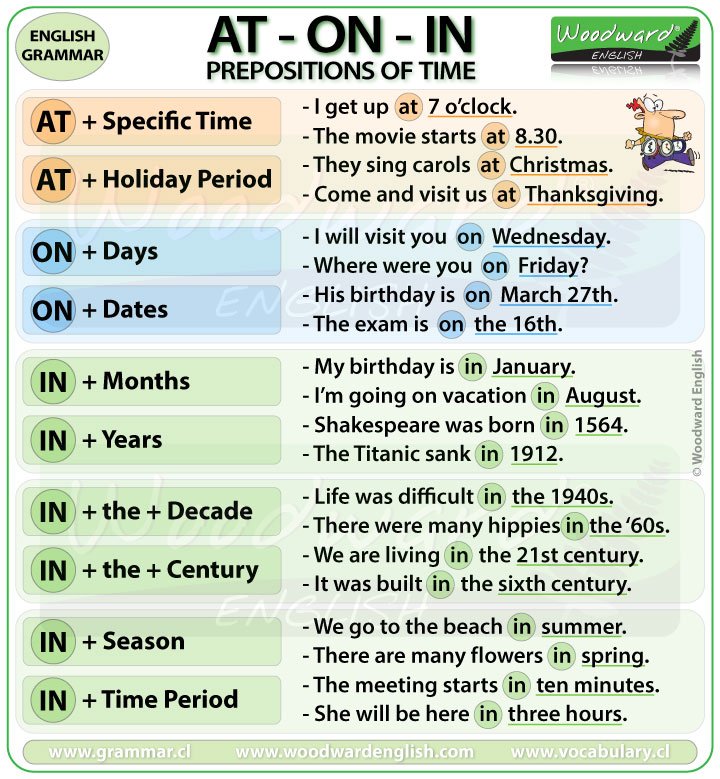
We are no longer living in an era of linear progress. We are living in the “Exponential Age.” In this era, the tools we use, the way we secure our data, and the software that powers our daily lives are evolving at a rate that challenges human adaptation. To understand what century we are truly living in, we must examine the pillars of modern technology that are redefining the human experience.
The AI Renaissance: From Tools to Cognition
For decades, software was a passive tool. You provided an input, and the machine followed a predetermined script to provide an output. However, the current technological landscape has shifted from “deterministic” software to “probabilistic” intelligence. This shift is perhaps the most significant reason why the present feels more like a science fiction novel than the 21st century we expected.
Generative AI and the End of Static Software
The emergence of Large Language Models (LLMs) and diffusion models has fundamentally changed our relationship with computers. We are moving away from the “App Era”—where a specific icon on a screen performed a specific task—toward an “Agentic Era.” In this new paradigm, software doesn’t just store data; it reasons through it.
Modern AI tools are no longer just for data scientists. They have been democratized through intuitive interfaces, allowing creators, engineers, and educators to automate cognitive labor. Whether it is generating code in seconds or drafting complex legal documents, the “century” we live in is defined by the fact that intelligence is becoming a utility, much like electricity or water.
The New User Interface: Natural Language
Since the 1980s, the Graphical User Interface (GUI) has been the gold standard. We clicked icons, dragged sliders, and typed commands. Today, we are witnessing the death of the traditional interface in favor of Natural Language Processing (NLP). We are entering a time where “coding” is done in English and “design” is done through conversation. This transition marks a civilizational shift: the machine is finally learning the language of the human, rather than the human spending years learning the language of the machine.
The Infrastructure of the “Global Village”: Connectivity and Security
When people ask what century we are in, they are often reacting to the hyper-connectivity that has erased geographical boundaries. The technological infrastructure of today is building a world where latency is disappearing, and the “digital divide” is finally being bridged by advanced hardware and software protocols.
6G, Satellites, and the Ubiquitous Web
While many parts of the world are still optimizing 5G, the tech industry is already laying the groundwork for 6G and satellite-based internet solutions like Starlink. We are moving toward a world of “ubiquitous connectivity.” This isn’t just about faster video streaming; it is about the Internet of Things (IoT) reaching its full potential.
In this century, every object—from a refrigerator to a streetlight—is becoming a data point. This massive influx of data requires a new type of infrastructure: Edge Computing. By processing data closer to where it is generated rather than in a distant centralized server, we are enabling real-time responses for autonomous vehicles and remote robotic surgery, making the “future” a tangible, low-latency reality.
Digital Security in an Era of Zero Trust
As our lives migrate entirely into the digital cloud, the “century” we live in is also one of unprecedented risk. The old methods of digital security—firewalls and simple passwords—are relics of the past. We are now in the age of “Zero Trust Architecture.”
In this technological framework, identity is the new perimeter. Software tools now use biometric authentication, hardware security keys, and AI-driven anomaly detection to protect data. Furthermore, as we look toward the horizon, the tech industry is bracing for “Post-Quantum Cryptography.” Engineers are already developing encryption methods that can withstand the processing power of quantum computers, ensuring that our digital legacy remains secure even as the hardware of the future arrives.
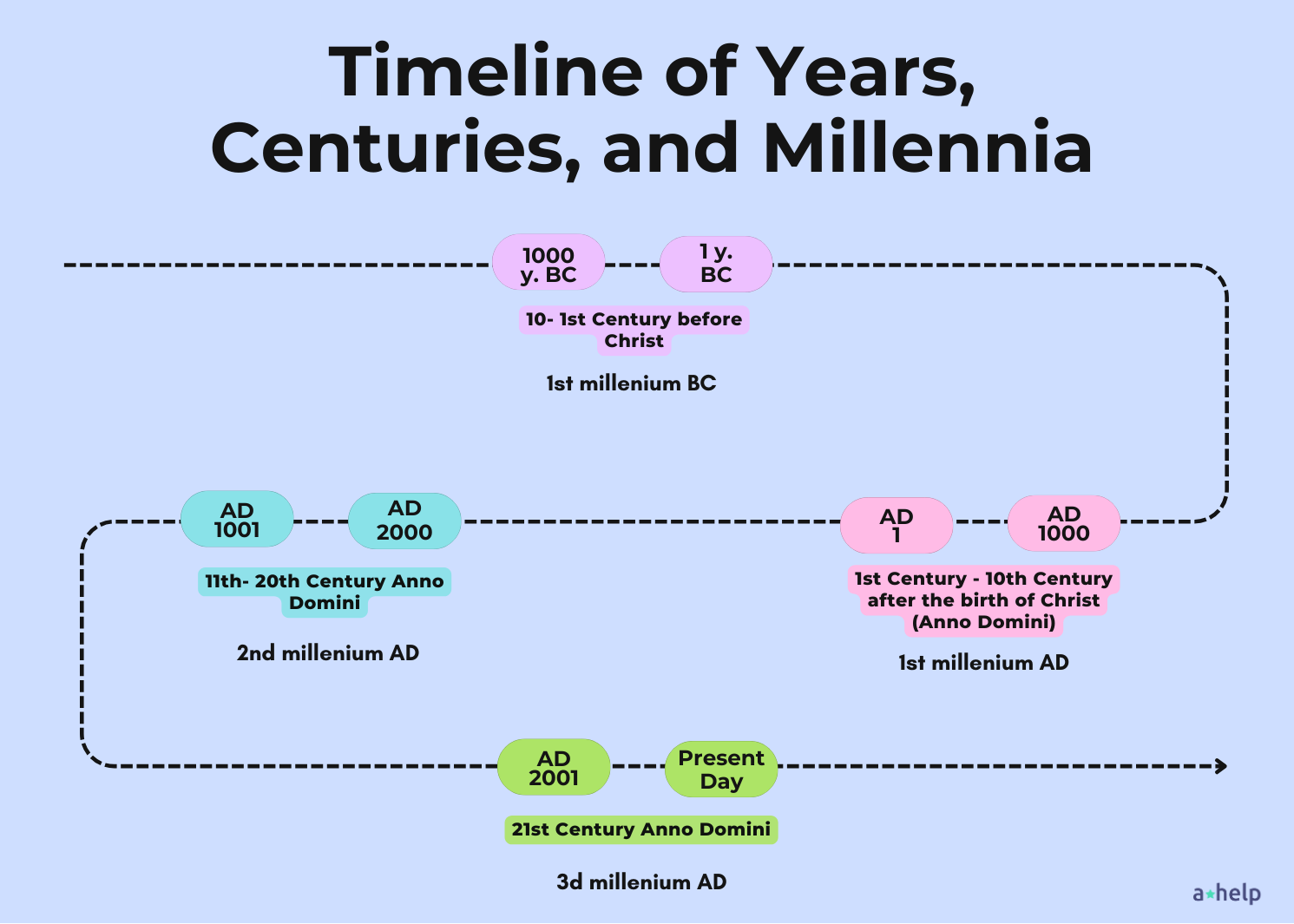
The Quantum Leap: Computing Power and the Biological Frontier
To answer “what century we are in,” one must look at the hardware currently sitting in research labs. We are transitioning from the age of the silicon chip to the age of the quantum bit and the biological circuit.
Quantum Computing and Complex Problem Solving
Traditional computers, no matter how powerful, process information in bits (0s and 1s). Quantum computing uses qubits, which can exist in multiple states simultaneously. We are currently in the “NISQ” (Noisy Intermediate-Scale Quantum) era. While we haven’t reached full quantum supremacy for every task, we are seeing the first software applications in drug discovery, materials science, and financial modeling.
The ability to simulate molecular interactions at a quantum level means we are compressed centuries of laboratory trial-and-error into weeks of computation. This is the hallmark of the 21st-century tech landscape: the use of extreme processing power to solve the “unsolvable” problems of the 20th century.
The Convergence of Tech and Biotech
Technology is no longer limited to the devices in our pockets; it is entering the human body. The “century” we inhabit is defined by the digitalization of biology. CRISPR gene-editing software and mRNA technology are, at their core, information technologies. We are learning to “program” cells the way we program computers.
Wearable gadgets have evolved from simple step-counters to sophisticated health monitors capable of performing EKGs and detecting blood-oxygen levels. The next step—Brain-Computer Interfaces (BCI)—is already in human trials. As we merge silicon with carbon, the distinction between “user” and “device” begins to blur, signaling a new epoch in evolutionary technology.
The Ethical Imperative: Navigating the Digital Transition
Technological advancement without a framework for responsibility is a recipe for chaos. As we determine what century we are living in, we must look at how we are managing the tools we have created. The “Tech” niche is not just about gadgets; it is about the governance of innovation.
AI Ethics and Algorithmic Transparency
As software takes over decision-making processes—from hiring to judicial sentencing—the focus has shifted toward AI ethics. We are currently developing “Explainable AI” (XAI), a branch of technology dedicated to making the “black box” of machine learning transparent. In this century, the most important software feature isn’t speed or power; it’s accountability.
The Future of Work and the Human-Centric Tech Stack
There is a persistent fear that we are living in a century where technology will replace the human worker. However, the most insightful tech trends suggest a “Centaur” model—the pairing of human intuition with machine intelligence.
The tools being developed today, such as collaborative workspaces, virtual reality (VR) meeting rooms, and automated workflow integrations, are designed to augment human creativity rather than suppress it. We are moving toward a “Post-Labor” mindset where the most valuable skill is no longer technical execution, but “Prompt Engineering” and “Systems Thinking.”

Conclusion: A Century of Infinite Possibility
So, what century are we living in? Chronologically, we are in the 21st. Technologically, however, we are living in a composite of many eras. We are using 20th-century infrastructure to run 21st-century software, while preparing for a 22nd-century quantum reality.
We are living in the century of Integration. The silos between the physical, digital, and biological are collapsing. The software we write today is more than just code; it is the fabric of a new reality. As we embrace AI, advanced connectivity, and quantum leaps in hardware, our responsibility is to ensure that these tools serve to elevate the human condition.
The question is no longer about when the future will arrive. Looking at the gadgets in our hands and the algorithms in our clouds, it is clear: the future has already arrived; it is simply waiting for us to master it. In this exponential age, the only limit to what we can achieve is our ability to imagine what comes next.
aViewFromTheCave is a participant in the Amazon Services LLC Associates Program, an affiliate advertising program designed to provide a means for sites to earn advertising fees by advertising and linking to Amazon.com. Amazon, the Amazon logo, AmazonSupply, and the AmazonSupply logo are trademarks of Amazon.com, Inc. or its affiliates. As an Amazon Associate we earn affiliate commissions from qualifying purchases.