
In the rapidly evolving landscape of digital imaging, few terms are as ubiquitous—or as frequently misunderstood—as “megapixels.” For decades, manufacturers have used the megapixel count as a primary marketing tool, leading many consumers to believe that a higher number automatically equates to a superior photograph. However, as camera technology reaches new heights of sophistication, the relationship between resolution, sensor size, and image quality has become increasingly nuanced. To truly understand what megapixels are and how they impact your photography, one must look beneath the surface of the spec sheet and into the core of digital sensor technology.
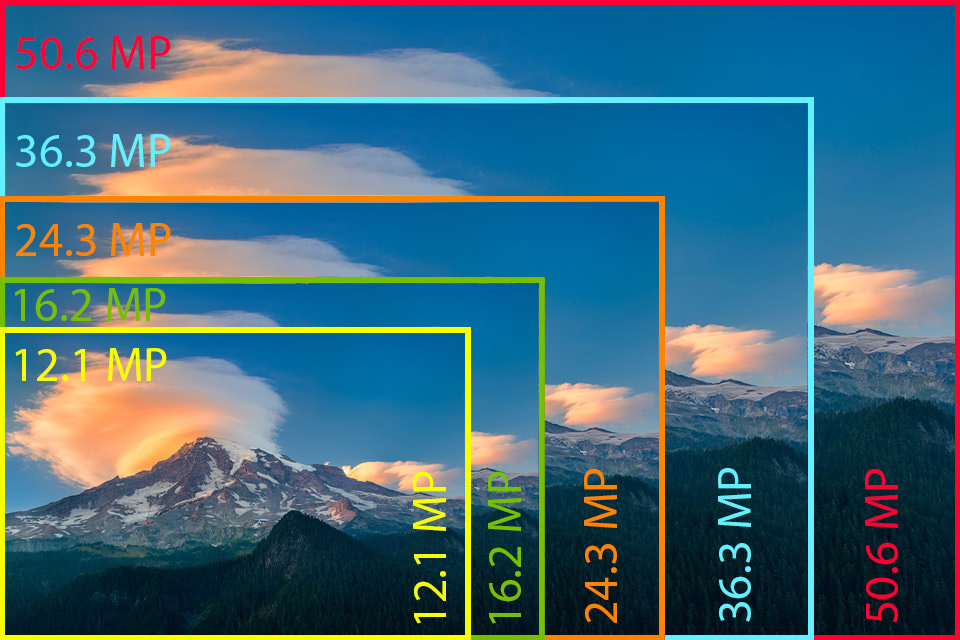
The Anatomy of an Image: Understanding the Fundamentals of Megapixels
At its most basic level, a megapixel is a unit of measurement representing one million pixels. The word “pixel” itself is a portmanteau of “picture” and “element.” Every digital photograph is composed of a massive grid of these tiny, light-sensitive squares. When you press the shutter button, the camera’s sensor captures light and converts it into data, assigning a specific color and brightness value to every individual pixel on that grid.
The Mathematics of Resolution
When a camera is marketed as having 24 megapixels, it means the sensor is capable of capturing roughly 24 million individual points of data. This is typically achieved through a grid—for instance, an image that is 6,000 pixels wide and 4,000 pixels high yields a total of 24,000,000 pixels. While these numbers sound astronomical, they are essential for translating the analog world of light into the digital world of binary code. The higher the megapixel count, the more “samples” the camera takes of the scene, theoretically leading to a more detailed reconstruction of the image.
How Sensors Capture Light
It is important to distinguish between the megapixel count and the physical sensor. The sensor is the silicon chip that sits behind the lens. On this chip are millions of “photosites,” which act like microscopic buckets catching photons of light. While we often use “pixel” and “photosite” interchangeably, the photosite is the physical hardware, and the pixel is the resulting digital data point. The efficiency with which these photosites capture light is the true determining factor of image quality, regardless of how many of them are crammed onto the sensor.
The Role of the Bayer Filter
Digital sensors are naturally color-blind; they only measure the intensity of light (how bright or dark a spot is). To produce a color image, sensors use a “Bayer filter” array—a mosaic of red, green, and blue filters placed over the pixels. Through a process called “demosaicing,” the camera’s internal processor calculates the true color of each pixel by looking at its neighbors. This technological wizardry is what allows a high-megapixel sensor to produce the vibrant, lifelike colors we see on our screens.
The Relationship Between Sensor Size and Resolution
One of the most critical concepts in modern tech is the “Pixel Pitch”—the physical size of an individual pixel. This is where the megapixel myth begins to unravel. A 20-megapixel sensor on a professional Full-Frame DSLR is significantly larger than a 20-megapixel sensor on a smartphone. Because the DSLR sensor has more physical surface area, its 20 million “buckets” are much larger than the tiny “buckets” on the smartphone.
The Impact of Large Pixels
Larger pixels have a greater surface area, allowing them to collect more light in a shorter amount of time. This is why professional cameras with seemingly modest megapixel counts can produce stunning images in near-darkness, while a high-resolution smartphone might produce “noisy” or grainy images in the same conditions. Large pixels provide a better signal-to-noise ratio, ensuring that the data captured is clean, accurate, and free of the digital artifacts that plague smaller sensors.
High Resolution vs. Low Light Performance
There is a fundamental trade-off in sensor design: as you increase the number of megapixels on a sensor of a fixed size, each individual pixel must become smaller. If you pack 50 megapixels onto a small sensor, the pixels become so tiny that they struggle to capture enough light, leading to increased “noise” and reduced dynamic range (the ability to see detail in both very bright and very dark areas). This is why tech reviewers often praise cameras like the Sony A7S series, which features a lower megapixel count but massive individual pixels, making it a king of low-light videography.
The Diffraction Limit
In the world of optics, there is a physical phenomenon known as diffraction. As light passes through a small aperture (like the lens of a camera), it begins to blur. On sensors with extremely high megapixel counts and tiny pixels, this blur becomes visible much sooner. This means that at a certain point, adding more megapixels provides no additional benefit because the lens and the physics of light cannot resolve detail fine enough to fill those tiny pixels. For the average user, this highlights that the lens is often just as important as the megapixel count.
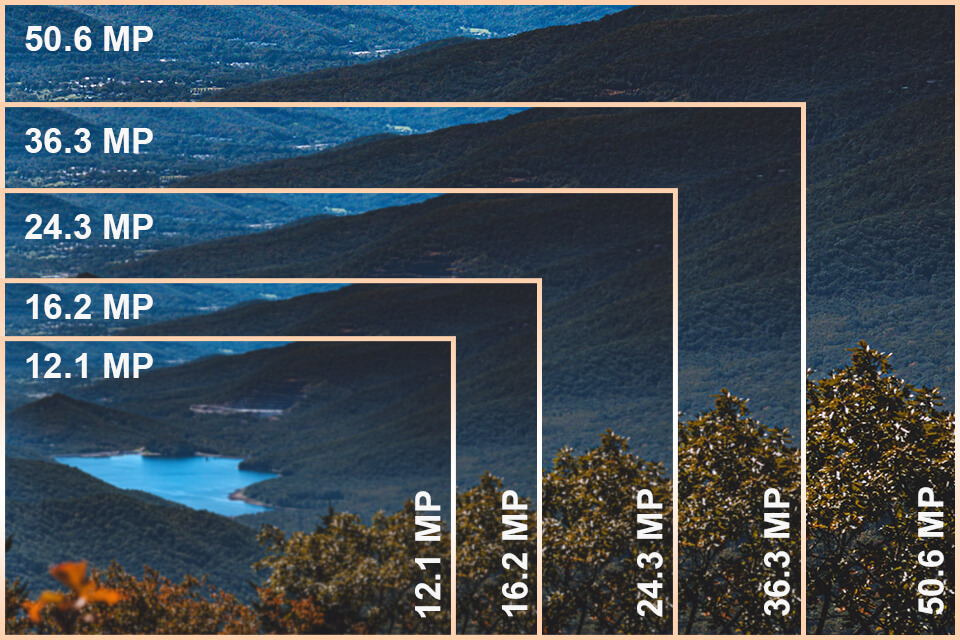
Practical Applications: How Many Megapixels Do You Actually Need?
For the majority of consumers, the “Megapixel War” of the early 2000s is over. Most modern devices, from entry-level smartphones to professional mirrorless cameras, offer enough resolution for standard use. However, the specific number of megapixels you need depends entirely on how you intend to use the final image.
Social Media and Digital Displays
If your primary goal is to share photos on Instagram, Facebook, or view them on a standard 4K monitor, you need far fewer megapixels than you might think. A 4K television or monitor has a resolution of roughly 8.3 megapixels. Anything beyond that is essentially “wasted” for viewing on that screen. Most social media platforms compress images heavily, often downsizing them to around 2 to 3 megapixels. For these use cases, even a ten-year-old smartphone provides more than enough resolution.
The Power of Cropping
The real advantage of high-resolution sensors (45MP, 60MP, or even 100MP) lies in the “crop factor.” If you are a wildlife photographer or a sports shooter and you cannot get physically close to your subject, a high-megapixel count allows you to crop into the center of the image while still maintaining enough detail for a high-quality result. Essentially, high megapixels act as a “digital zoom” that preserves clarity, providing a level of flexibility that lower-resolution cameras lack.
Printing Requirements: DPI and Scale
When it comes to physical prints, the math changes. To achieve a “gallery quality” print, the industry standard is 300 DPI (Dots Per Inch).
- To print a standard 4×6 inch photo at 300 DPI, you only need about 2 megapixels.
- To print an 8×10 inch photo, you need roughly 7.2 megapixels.
- To print a massive 20×30 inch poster, you would ideally want around 54 megapixels.
However, it’s worth noting that larger prints are usually viewed from further away, meaning the human eye cannot perceive the individual pixels as easily, allowing you to get away with lower resolutions for billboards or wall art.
The Modern Era: Computational Photography and Software Optimization
We have entered an era where hardware specs are only half the story. Software and Artificial Intelligence (AI) are now capable of manipulating megapixel data in ways that were previously impossible. This is particularly evident in the smartphone market, where tiny sensors are performing far above their weight class.
Pixel Binning Technology
Many modern smartphones now boast 48MP, 64MP, or even 200MP sensors. However, by default, they often produce 12MP images. They achieve this through a process called “Pixel Binning.” The software takes a group of four or nine adjacent pixels and combines them into one “super-pixel.” This allows the camera to reap the benefits of high resolution in bright light (by using every pixel) and the benefits of better light sensitivity in the dark (by binning them together). It is a clever tech workaround to the physical limitations of small sensors.
AI Upscaling and Neural Processing
The rise of AI tools has changed the “resolution” game. Software like Adobe’s Super Resolution or Topaz Photo AI can take a low-megapixel image and use machine learning to “hallucinate” missing details, effectively doubling or quadrupling the resolution after the photo has been taken. This means that a 12MP photo can be upscaled to 48MP with startling clarity. In the tech world, this shift toward computational photography suggests that the raw megapixel count is becoming less critical than the processing power of the image engine.
Storage and Workflow Considerations
A side effect of the high-megapixel trend that is often overlooked is the demand on hardware and storage. A 60-megapixel RAW file can easily exceed 100MB per photo. For a professional shooting a wedding or a tech enthusiast on vacation, this translates to the need for faster SD cards, larger hard drives, and more powerful computers to edit the files. High resolution comes with a “tech tax”—a requirement for a robust ecosystem of supporting hardware to handle the massive influx of data.

Conclusion: Finding the Resolution Sweet Spot
In the final analysis, megapixels are a vital component of camera technology, but they are not a definitive shortcut to “better” photos. For the casual user, any device offering between 12 and 24 megapixels is more than sufficient for everyday life, digital sharing, and standard printing. For the professional or the enthusiast, higher counts offer the luxury of extreme cropping and large-format commercial printing.
When evaluating your next gadget, remember that image quality is a symphony played by three instruments: the quality of the lens, the physical size of the sensor, and the efficiency of the image processor. Megapixels are simply the grid upon which that symphony is recorded. By understanding the tech behind the numbers, you can look past the marketing jargon and choose the tool that best fits your creative vision, ensuring that every one of those millions of pixels truly counts.
aViewFromTheCave is a participant in the Amazon Services LLC Associates Program, an affiliate advertising program designed to provide a means for sites to earn advertising fees by advertising and linking to Amazon.com. Amazon, the Amazon logo, AmazonSupply, and the AmazonSupply logo are trademarks of Amazon.com, Inc. or its affiliates. As an Amazon Associate we earn affiliate commissions from qualifying purchases.