
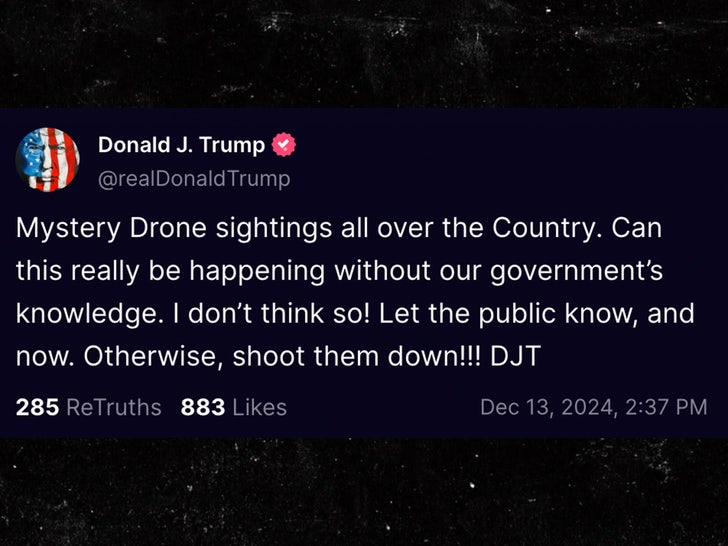
The intersection of federal policy and emerging technology often dictates the pace of innovation for years to come. When discussing the evolution of unmanned aerial vehicles (UAVs), few figures have had as direct an impact on the industry’s trajectory as Donald Trump. During his presidency and in subsequent policy platforms, the rhetoric surrounding drones shifted from mere tactical military tools to central pillars of national security, domestic manufacturing, and technological sovereignty. To understand what was said is to understand the technical roadmap currently being followed by Silicon Valley defense startups and global hardware manufacturers.

By examining the “America First” approach to drone technology, we can discern a broader strategy aimed at decoupling sensitive hardware from foreign supply chains and accelerating the integration of Artificial Intelligence (AI) into autonomous flight systems.
Strengthening Domestic Tech: The Push for American-Made Drone Ecosystems
One of the most significant technological shifts during the Trump administration was the aggressive move to transition the drone market away from a reliance on foreign—specifically Chinese—hardware. The rhetoric centered on the idea that drones are not just gadgets, but “flying computers” capable of harvesting vast amounts of data. This led to a series of executive actions and public statements that prioritized the development of a domestic tech stack.
Reducing Dependency on Foreign Hardware and Firmware
For years, the commercial and “prosumer” drone market was dominated by DJI, a company that perfected the integration of gimbal stabilization and flight control software. However, the Trump administration’s stance highlighted a critical technical vulnerability: the “data leak” potential of foreign-made firmware. By advocating for bans on foreign-made drones within federal agencies, the administration forced a pivot in the tech industry. This created a vacuum that American companies like Skydio and Teal Drones rushed to fill, focusing on “secure-by-design” architecture that ensures data sovereignty from the ground station to the cloud.
Incentivizing Silicon Valley and Defense Startups
The shift in rhetoric also changed the venture capital landscape. Trump’s focus on American dominance in “industries of the future” signaled to tech founders that the Department of Defense (DoD) was becoming a more agile customer. This gave rise to a new breed of defense tech companies—often referred to as “hard tech” startups—that utilize agile software development cycles rather than the decades-long procurement processes of traditional aerospace giants. The technical result has been the rapid iteration of carbon-fiber frames, high-density battery packs, and modular payload systems that allow drones to be repurposed in the field via software updates.
Surveillance and Privacy in the Age of Advanced Robotics
Trump’s commentary on drones often touched upon their dual-use nature: their ability to provide security while simultaneously posing a challenge to traditional concepts of privacy. In the tech world, this sparked a debate over the “democratization of surveillance.” As the administration looked toward drone technology for border security and law enforcement, the technical capabilities of these devices evolved to meet those demands.
The Regulatory Landscape for Commercial UAVs
The push to integrate drones into the National Airspace System (NAS) saw significant movement under the Trump administration. The focus was on “Remote ID”—essentially a digital license plate for drones. From a technical perspective, this required the development of new broadcast protocols (Bluetooth and Wi-Fi-based) that allow drones to announce their position and identity to surrounding receivers. While controversial among hobbyists, this tech was framed as a necessary step for the scale of commercial drone delivery and complex urban operations.
Balancing Security with Civil Liberties
Technologically, the administration’s focus on border security drove advancements in long-endurance UAVs equipped with hyperspectral imaging and AI-driven motion detection. These drones are capable of staying aloft for over 24 hours, using computer vision to distinguish between wildlife and human activity across vast, rugged terrains. The technical challenge here lies in “edge processing”—the ability of the drone’s onboard computer to analyze high-resolution video in real-time without needing to send every gigabyte of data back to a central server, which would be bandwidth-prohibitive.
Artificial Intelligence and the Evolution of Military Drones
Perhaps the most transformative aspect of the discourse surrounding drones during the Trump era was the shift toward full autonomy. The transition from “Remote Piloted Vehicles” to “Autonomous Systems” represents a quantum leap in computing requirements. Trump’s emphasis on maintaining a military edge over global rivals directly fueled the development of AI “pilots” capable of operating in contested environments where GPS might be jammed.
Autonomous Decision-Making in Tactical Environments
Modern drones are moving away from simple waypoint navigation. Under the guidance of modern tech initiatives, the goal has become “algorithmic warfare.” This involves training neural networks to recognize targets, navigate obstacles, and even coordinate with other drones without human intervention. The technical hurdle is “latency.” For a drone to be effective in a high-speed environment, its AI must process visual data and make flight corrections in milliseconds. This has led to the development of specialized AI chips designed specifically for the low-power, high-compute environment of a small UAV.
The Integration of Edge Computing and 5G
To support the vision of a “connected battlefield” or a “smart city” full of drones, the underlying network infrastructure had to evolve. The administration’s push for 5G dominance was inextricably linked to the drone ecosystem. 5G provides the low-latency, high-bandwidth pipe necessary for “cloud-augmented” flight. While the drone handles immediate obstacle avoidance on the “edge” (onboard), complex pathfinding and mission-wide coordination can be handled in the cloud, with data flowing seamlessly between the two.
Counter-Drone Technology: A Growing Frontier for Tech Innovation
When Trump spoke about the threats posed by drones—whether to military bases or critical infrastructure—he inadvertently birthed a multi-billion dollar “Counter-UAS” (Unmanned Aircraft Systems) industry. If the drone is the “sword” of the modern era, counter-drone tech is the “shield,” and the technical sophistication of these systems is staggering.
Electronic Warfare and Signal Jamming
The first line of defense in counter-drone tech is the electromagnetic spectrum. Technical innovation in this space focuses on “RF (Radio Frequency) sensing.” Systems are designed to “sniff” the air for the specific control frequencies used by popular drone models. Once a threat is detected, the system can deploy targeted jamming—flooding the drone’s receiver with noise so it can no longer hear its pilot. The next generation of this tech uses “protocol manipulation,” essentially “hacking” the drone mid-air to command it to land safely or return to its point of origin.
Kinetic Interception Systems
For drones that are hardened against electronic warfare (such as those using autonomous optical navigation), the tech industry has developed kinetic solutions. These include “interceptor drones”—high-speed quadcopters designed to ram or net an intruder—as well as directed-energy weapons (lasers). The technical precision required to track a small, fast-moving drone with a laser beam from miles away involves advanced LIDAR (Light Detection and Ranging) and high-speed servos that can adjust the laser’s aim thousands of times per second.
The Global Impact on Tech Standards and Interoperability
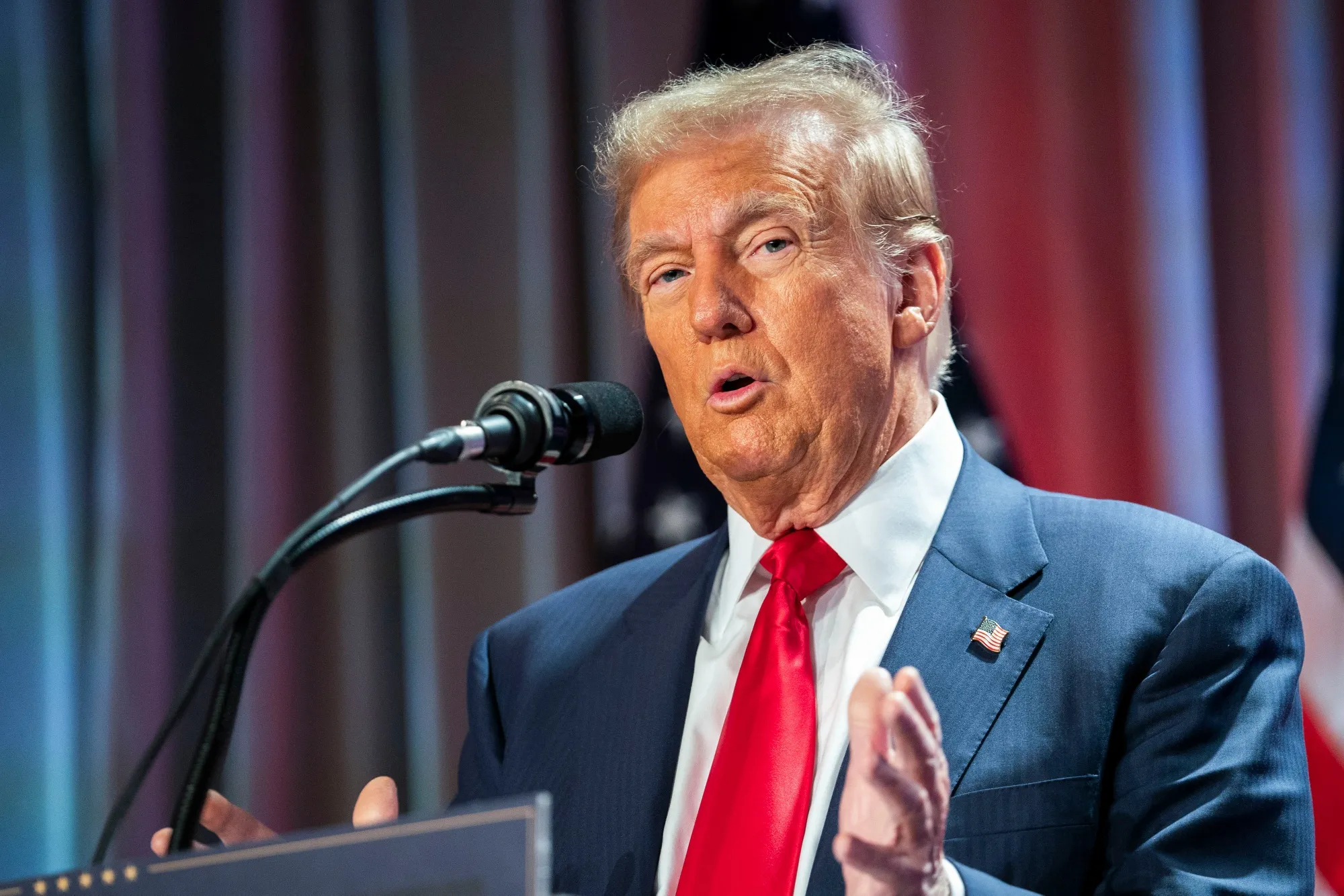
The lasting legacy of the Trump administration’s comments on drones is the fragmentation of global tech standards. By challenging the dominance of a single geographic region in the drone market, the US has paved the way for a more diverse, albeit more complex, technological landscape.
The push for “Blue UAS”—a list of approved, secure drones for government use—has set a new benchmark for what “secure technology” looks like. It’s no longer enough for a drone to fly well; it must have a transparent supply chain, encrypted communications, and open-source flight stacks that can be audited for backdoors. This move toward “Open Architecture” is perhaps the most significant tech trend of the decade. It allows different companies to build specialized sensors, batteries, or software modules that are all interoperable, preventing “vendor lock-in” and fostering a more competitive and innovative marketplace.
In conclusion, while the political rhetoric often captures the headlines, the technical reality is a massive shift toward autonomy, security, and domestic resilience. Whether through the lens of AI integration, 5G connectivity, or counter-UAS systems, the “drone” of today is a far more sophisticated machine than the one that existed a decade ago—driven in no small part by the policy shifts and strategic priorities articulated during the Trump era. The future of flight is no longer just about the hardware in the air, but the sophisticated software and secure data pipelines that keep those systems flying.
aViewFromTheCave is a participant in the Amazon Services LLC Associates Program, an affiliate advertising program designed to provide a means for sites to earn advertising fees by advertising and linking to Amazon.com. Amazon, the Amazon logo, AmazonSupply, and the AmazonSupply logo are trademarks of Amazon.com, Inc. or its affiliates. As an Amazon Associate we earn affiliate commissions from qualifying purchases.