
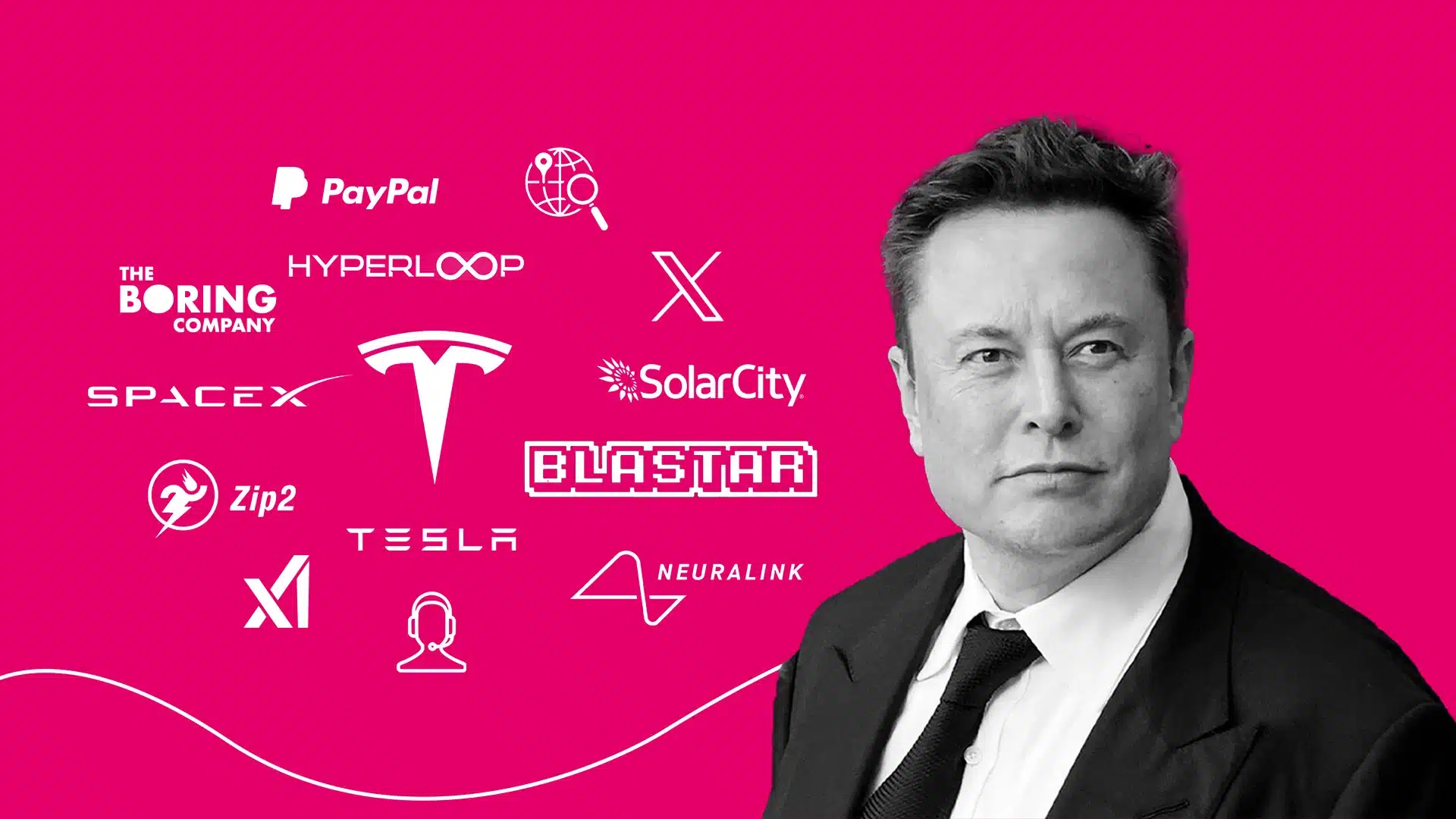
The question of what Elon Musk “invented” is often a point of contention among historians of technology and engineering purists. To understand his contribution to the modern technological landscape, one must look beyond the traditional definition of an inventor—someone who creates a brand-new device in a vacuum—and toward the concept of a “systems architect.” While Musk holds numerous patents, his true invention lies in the radical optimization of complex engineering systems and the vertical integration of hardware and software.
From the propulsion systems of orbital rockets to the neural interfaces of the human brain, Musk’s influence is categorized not just by single products, but by the technological shifts he has forced upon global industries. This article explores the specific technical breakthroughs and systemic inventions credited to Musk and his teams across Tesla, SpaceX, Neuralink, and beyond.
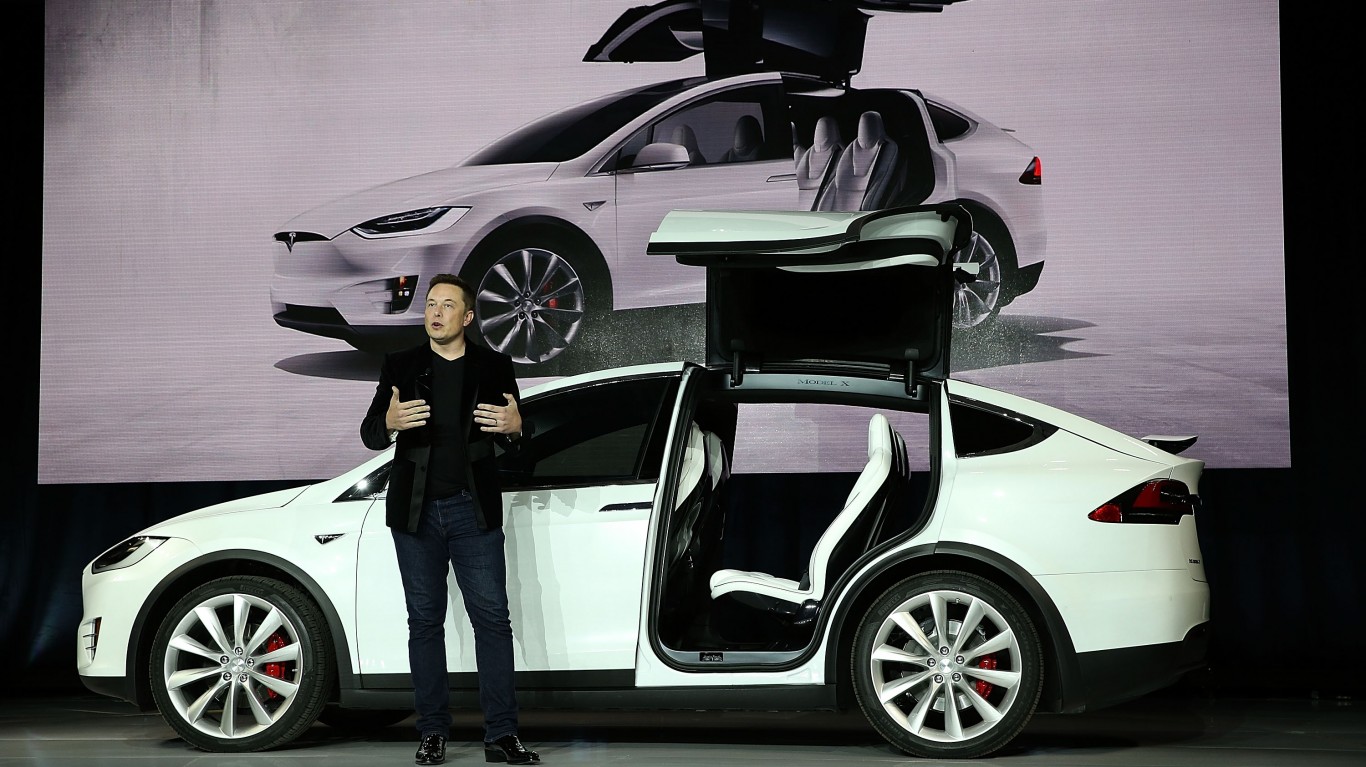
The Revolution of Sustainable Transport: Tesla’s Engineering Breakthroughs
When Tesla was founded, the electric vehicle (EV) was viewed as a niche, high-cost curiosity with limited range and poor performance. Musk’s primary technical contribution was reimagining the car as a “computer on wheels,” a software-defined machine that could improve over time.
Software-Defined Vehicle Architecture and Over-the-Air (OTA) Updates
One of the most significant “inventions” Musk brought to the automotive world was the centralized compute architecture. Traditional automakers used dozens of Electronic Control Units (ECUs) provided by third-party suppliers, which rarely communicated with each other. Musk insisted on a centralized architecture where a primary computer controls nearly every aspect of the vehicle. This allowed for the invention of comprehensive Over-the-Air (OTA) updates. For the first time, a car’s braking distance, acceleration, and battery management could be improved overnight via a software patch, effectively decoupling the vehicle’s value from its physical age.
Advancements in Battery Chemistry and Structural Packs
Musk and his engineering team didn’t just use existing batteries; they reinvented the way energy is stored and integrated. The shift from the 18650 cell to the 2170 and eventually the 4680 large-format cylindrical cell represents a massive leap in energy density and cost reduction. Perhaps the more radical invention is the “structural battery pack.” By making the battery cells a part of the car’s physical structure, Tesla eliminated excess weight and simplified the manufacturing process, a technique inspired by the way aircraft wings serve as fuel tanks.
The Gigapress and Advanced Manufacturing
To solve the “production hell” of mass-market EVs, Musk pioneered the use of the “Gigapress”—massive casting machines that produce the front and rear underbodies of a car as single pieces of aluminum. This replaced hundreds of individual parts and welds, drastically increasing structural rigidity and reducing manufacturing complexity. This invention in the process of making cars is arguably as impactful as the electric drivetrain itself.
Aerospace Redefined: SpaceX and the Quest for Reusability
Before SpaceX, the aerospace industry operated on a “disposable” model. Every multi-million dollar rocket launched into space was destined to burn up in the atmosphere or sink to the bottom of the ocean after a single use. Musk’s most profound invention in this sector is the vertical takeoff and vertical landing (VTVL) orbital rocket.
Autonomous Rocket Landing and Reusability
The invention of the “grid fins” and the complex algorithms required for a 15-story booster to land upright on a drone ship in the middle of the Atlantic Ocean is a feat of modern software and mechanical engineering. By inventing a way to recover and reuse the first stage of the Falcon 9, SpaceX reduced the cost of access to space by an order of magnitude. This wasn’t just a hardware tweak; it required inventing new thermal protection materials and throttle-able Merlin engines capable of precise atmospheric guidance.
The Raptor Engine and Methane-Liquid Oxygen Propulsion
With the development of Starship, Musk pushed for the invention of the Raptor engine—a full-flow staged combustion cycle engine. This is one of the most complex and efficient engine designs ever realized, utilizing sub-cooled liquid methane and liquid oxygen (Methalox). This choice of fuel was a strategic invention for Mars colonization, as methane can be synthesized on the Martian surface using the Sabatier reaction. The Raptor engine represents a pinnacle of metallurgy and fluid dynamics, operating at pressures that would melt traditional rocket engines.
Starlink: Global Satellite Internet Architecture
While satellite internet existed before Musk, the architecture of Starlink is an entirely new invention. By utilizing a “mega-constellation” of thousands of small satellites in Low Earth Orbit (LEO), Starlink provides low-latency high-speed internet to the most remote parts of the globe. The tech involves “optical inter-satellite links” (lasers) that allow satellites to communicate in the vacuum of space, effectively creating a space-based mesh network that bypasses the limitations of traditional fiber-optic cables.
Neurotechnology and Artificial Intelligence: Merging Man and Machine
Musk’s work in Neuralink and AI is perhaps his most futuristic endeavor, aiming to solve the “bandwidth” problem between human thought and digital systems.
The N1 Implant and Robotic Surgeon
Neuralink is not just an invention of a chip; it is the invention of a high-bandwidth interface system. The N1 implant uses thousands of ultra-thin “threads” that are thinner than a human hair to record neural activity. Because these threads are too fine for a human hand to manipulate, Musk’s team had to invent a “sewing machine-like” surgical robot. This robot uses advanced computer vision to insert the electrodes into the brain while avoiding blood vessels, a breakthrough in autonomous medical robotics.
Tesla Bot (Optimus) and General-Purpose Robotics
The Tesla Bot, or Optimus, represents an invention in the field of embodied AI. While companies like Boston Dynamics have focused on hydraulic movement, Musk’s approach uses custom-designed electric actuators and the same “Vision” neural networks used in Tesla’s Full Self-Driving system. The invention here is the “General-Purpose” nature of the robot—creating a humanoid form factor that can learn tasks through video demonstration and neural net training rather than being hard-coded for specific movements.
Large Language Models and xAI
With the founding of xAI and the development of Grok, Musk has entered the race for Artificial General Intelligence (AGI). The technical focus here is on “truth-seeking” AI and mathematical reasoning. By integrating AI with real-time data from the X platform, Musk is attempting to invent a more dynamic, real-world-aware AI model that moves beyond static datasets.
Infrastructure and the Future of Logistics
Beyond cars and rockets, Musk has proposed and developed technologies that challenge how we perceive physical distance and urban congestion.
The Hyperloop Concept
In 2013, Musk released a white paper for the “Hyperloop”—a high-speed transportation system using reduced-pressure tubes and pressurized capsules. While he open-sourced the idea for others to build, the conceptual invention of a “fifth mode of transport” sparked a global movement in vacuum-tube logistics. The tech involves linear induction motors and air bearings (or magnetic levitation) to achieve speeds exceeding 700 mph.
Tunnels and The Boring Company
The Boring Company was founded to solve the “soul-destroying traffic” of modern cities. Musk’s invention here is the “Prufrock” tunneling machine, designed to tunnel continuously rather than stopping to install segments. The goal is to increase tunneling speed by 10x while reducing costs, creating a “3D” network of underground tunnels that can accommodate high-speed autonomous EVs, effectively moving surface traffic to a subterranean level.
The Legacy of Systemic Innovation
In summary, Elon Musk’s “inventions” are rarely isolated components. Instead, they are radical re-engineerings of existing concepts. He did not invent the electric car, but he invented the high-performance, long-range, software-centric EV platform. He did not invent the rocket, but he invented the reusable orbital booster. He did not invent the brain-machine interface, but he invented the high-bandwidth, robotically-implanted neural thread.
His primary contribution to the world of technology is the “First Principles” approach to engineering. This methodology involves stripping a problem down to its fundamental physical truths and building a solution from the ground up, often resulting in technologies that experts previously deemed impossible. As we look toward a future defined by multi-planetary life, sustainable energy, and human-AI symbiosis, the tech inventions of Elon Musk serve as the foundational infrastructure for that evolution. From the silicon in his chips to the stainless steel of his Starships, Musk’s work remains the most aggressive push for technological progress in the 21st century.
aViewFromTheCave is a participant in the Amazon Services LLC Associates Program, an affiliate advertising program designed to provide a means for sites to earn advertising fees by advertising and linking to Amazon.com. Amazon, the Amazon logo, AmazonSupply, and the AmazonSupply logo are trademarks of Amazon.com, Inc. or its affiliates. As an Amazon Associate we earn affiliate commissions from qualifying purchases.