
The blue and white roundel of Bayerische Motoren Werke (BMW) is one of the most recognized symbols of prestige, performance, and engineering excellence in the world today. However, the brand’s journey from its inception to its current status as a global leader in the premium automotive sector is a masterclass in corporate adaptation and strategic rebranding. When asking “what did BMW start making,” one uncovers a narrative not just of mechanical assembly, but of a brand that has successfully navigated geopolitical shifts, economic collapses, and radical technological pivots while maintaining a cohesive identity.

BMW did not begin its life in a garage tinkering with automobiles. Instead, it was born in the high-altitude, high-stakes world of aviation. This origin story is the bedrock of the “BMW Brand,” providing a legacy of precision that continues to influence its marketing and corporate identity more than a century later.
The Genesis of an Icon: Rapp Motorenwerke and the Aircraft Era
The roots of BMW trace back to 1913 and 1916, emerging from the reorganization of Rapp Motorenwerke, an aircraft engine manufacturer. In the early 20th century, aviation was the frontier of technology. By starting with aircraft engines, specifically the BMW IIIa inline-six, the company established a brand DNA centered on “uncompromising performance” and “reliability at the limit.”
The Propeller Myth vs. Brand Reality
For decades, a popular piece of brand lore suggested that the BMW logo represents a spinning white propeller against a blue sky. While this remains a powerful marketing narrative, the reality of the brand identity is more grounded in regional pride. The blue and white quadrants were actually taken from the Bavarian state colors. However, the company’s decision to allow the “propeller myth” to persist for years was a conscious branding choice. It linked their consumer products to the high-performance world of aviation, creating an aura of technical superiority that a standard car manufacturer could not claim.
Necessity as the Mother of Brand Diversification
Following World War I, the Treaty of Versailles banned Germany from producing aircraft engines. This presented a terminal threat to the brand. Rather than dissolving, the company showcased its first major strategic pivot. To survive, BMW began manufacturing railway brakes and built-in engines for various purposes. This era taught the brand the importance of “engineering agility”—the ability to take a core competency (internal combustion) and apply it to different market segments without losing the reputation for quality.
Pivoting to Performance: How Motorcycles Defined the Early Brand
In 1923, BMW made its most significant move toward the consumer market by producing its first motorcycle, the R32. This was not merely a new product; it was a repositioning of the brand from a B2B engine supplier to a B2C lifestyle and mobility provider.
The R32 and the DNA of Engineering Excellence
The R32 featured a “Boxer” engine, a design so efficient and iconic that it remains a signature of BMW Motorrad today. From a brand strategy perspective, the R32 was crucial because it established BMW’s “premium” positioning. While other manufacturers were building motorized bicycles, BMW was building a sophisticated, integrated machine. This established the “Premium Tier” positioning that the brand occupies today—BMW was never meant to be the cheapest; it was meant to be the best engineered.
Establishing the “Premium” Reputation
Through the 1920s, BMW used motorsports to solidify its brand identity. By setting world speed records, the company communicated a clear message: BMW products are for those who value speed and technical perfection. This era saw the transition of the brand from “engine builder” to “performance leader.” The motorcycle division proved that the BMW name could carry enough weight to command a price premium in the consumer market, a lesson that would soon be applied to four wheels.
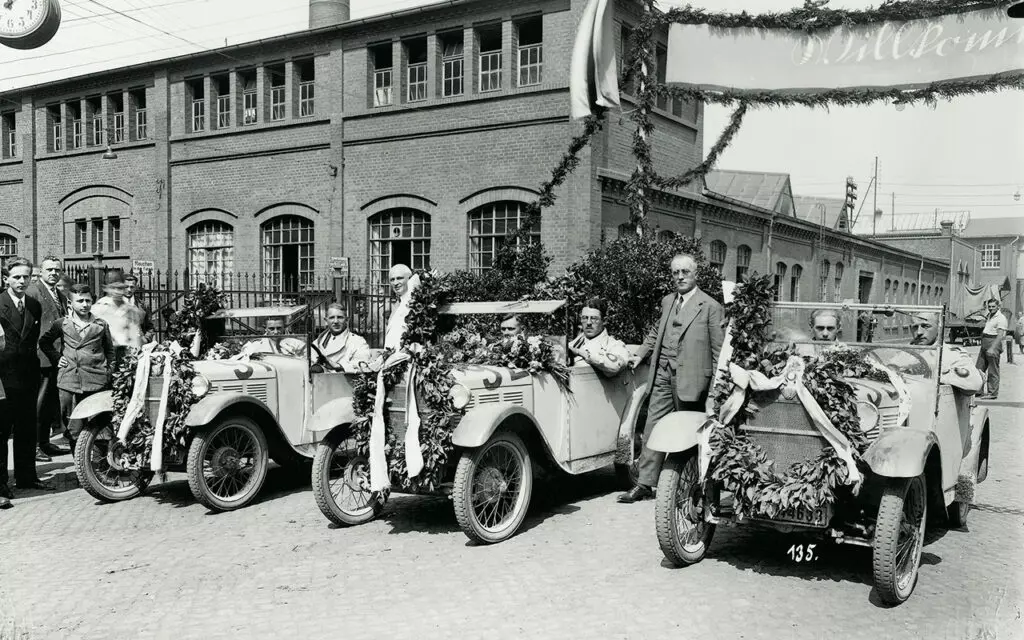
Entering the Automotive Arena: The Dixi and the Quest for Autonomy
BMW’s entry into the world of automobiles in 1928 was not through original invention, but through the strategic acquisition of the Fahrzeugfabrik Eisenach, which produced a small car called the Dixi. This move was a calculated risk to expand the brand’s footprint into the burgeoning middle-class market.
Acquisition as a Growth Strategy
The Dixi was a licensed version of the British Austin 7. Initially, it didn’t fit the “high-performance” BMW mold. However, the brand’s leadership understood that to become a global powerhouse, they needed a volume-seller to fund their more ambitious projects. This period represents the brand’s “learning phase,” where they moved from assembling licensed designs to developing their own unique design language.
Defining the Modern Saloon Identity
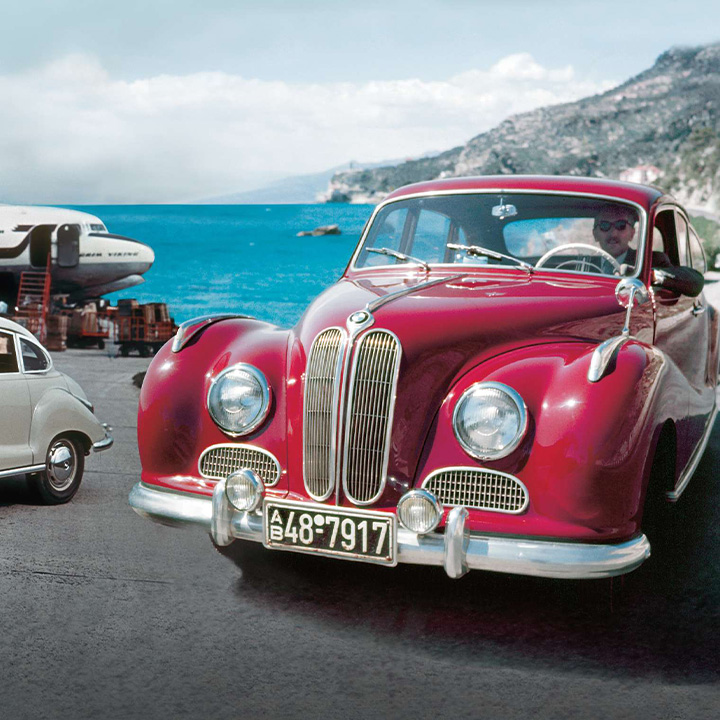
By the early 1930s, BMW began producing cars of its own design, such as the 303. This was the first car to feature the “kidney grille,” a design element that has become one of the most enduring brand signatures in history. In the world of brand strategy, the kidney grille is a “distinctive brand asset.” It allows a consumer to recognize a BMW from a distance without seeing the logo. This consistency in design language—even as the company moved from tiny economy cars to luxury sedans—is why the BMW brand remains so cohesive today.
“The Ultimate Driving Machine”: Crafting a Global Marketing Powerhouse
The modern identity of BMW—the one that consumers interact with today—was largely forged in the post-WWII recovery and the subsequent “New Class” (Neue Klasse) of vehicles in the 1960s. This was when the brand moved away from being a niche luxury manufacturer to becoming a global symbol of status and driver-centric engineering.
The 1970s Rebranding Revolution
In 1973, with the help of the agency Ammirati & Puris, BMW launched the slogan “The Ultimate Driving Machine.” This is widely considered one of the greatest pieces of brand positioning in history. It carved out a unique space: Mercedes-Benz was about “luxury and comfort,” while BMW was about “the driver.” This pivot focused the entire corporate identity on the experience of the product rather than just the product itself. Every design choice, from the driver-oriented dashboard to the rear-wheel-drive dynamics, was aligned with this brand promise.
Maintaining Heritage in the Age of Electrification
As BMW transitions into the era of Electric Vehicles (EVs) with the “i” sub-brand, it faces its greatest branding challenge since the Treaty of Versailles. How do you maintain the identity of “The Ultimate Driving Machine” when the traditional internal combustion engine—the very “werke” in its name—is being phased out?
BMW’s current brand strategy involves “The Power of Choice,” allowing the brand identity to transcend the powertrain. Whether a customer chooses a petrol, hybrid, or electric model, the brand promises that it will still feel like a BMW. By focusing on the emotional connection of driving and the “Joy” (another major marketing pillar) of the experience, BMW is successfully migrating its century-old heritage into a digital, sustainable future.
Conclusion: The Legacy of a Multi-Faceted Identity
What BMW started making—aircraft engines—defined the company’s commitment to high-performance engineering. However, what BMW became is a testament to the power of brand evolution. From the skies of Bavaria to the racetracks of the world and finally to the driveways of the global elite, BMW has successfully protected its core identity while radically changing its product line.
The company’s history shows that a brand is not defined by a single product, but by a consistent set of values. For BMW, those values are precision, performance, and a forward-looking perspective. By understanding its origins in the exacting world of aviation, BMW has been able to maintain a “premium” aura that allows it to compete at the highest levels of the global market. As the brand looks toward an autonomous and electrified future, it does so with the strength of a hundred-year-old identity that has proven its ability to pivot without ever losing its soul.
aViewFromTheCave is a participant in the Amazon Services LLC Associates Program, an affiliate advertising program designed to provide a means for sites to earn advertising fees by advertising and linking to Amazon.com. Amazon, the Amazon logo, AmazonSupply, and the AmazonSupply logo are trademarks of Amazon.com, Inc. or its affiliates. As an Amazon Associate we earn affiliate commissions from qualifying purchases.