
The term “coordination number” might sound like specialized jargon, a relic from a college chemistry textbook. Yet, this seemingly abstract concept is a cornerstone of modern material science, engineering, and technological innovation. From the efficiency of our smartphone batteries to the effectiveness of new pharmaceuticals and the performance of cutting-edge catalysts, understanding the coordination number is critical. It provides a fundamental insight into how atoms and molecules interact, dictating the structure, properties, and ultimate utility of a vast array of materials that power our technological world.
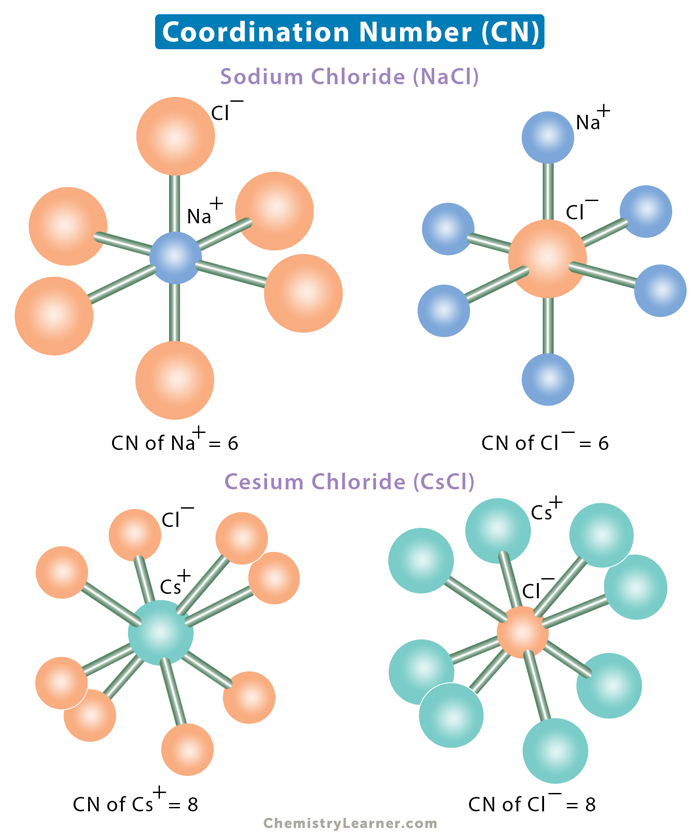
In essence, the coordination number defines the number of nearest neighbors, atoms, ions, or molecules that surround a central atom or ion in a chemical complex or crystal lattice. This seemingly simple count has profound implications. It dictates how tightly packed a structure is, how easily electrons can move through it, how it reacts with other substances, and even its mechanical strength or thermal conductivity. As technology continues its relentless march forward, pushing the boundaries of miniaturization, efficiency, and sustainability, the ability to precisely control and predict coordination numbers becomes an invaluable tool for scientists and engineers. This article will delve into the concept of the coordination number, explore the factors that influence it, and crucially, illuminate its indispensable role across diverse technological landscapes, from advanced materials design to the burgeoning field of computational chemistry and AI.
The Fundamental Concept: Unpacking Coordination Number
Before we explore its technological ramifications, a firm grasp of what a coordination number entails is essential. It’s more than just a count; it’s a descriptor of immediate atomic environment, profoundly influencing a material’s characteristics.
Basic Definition and Significance
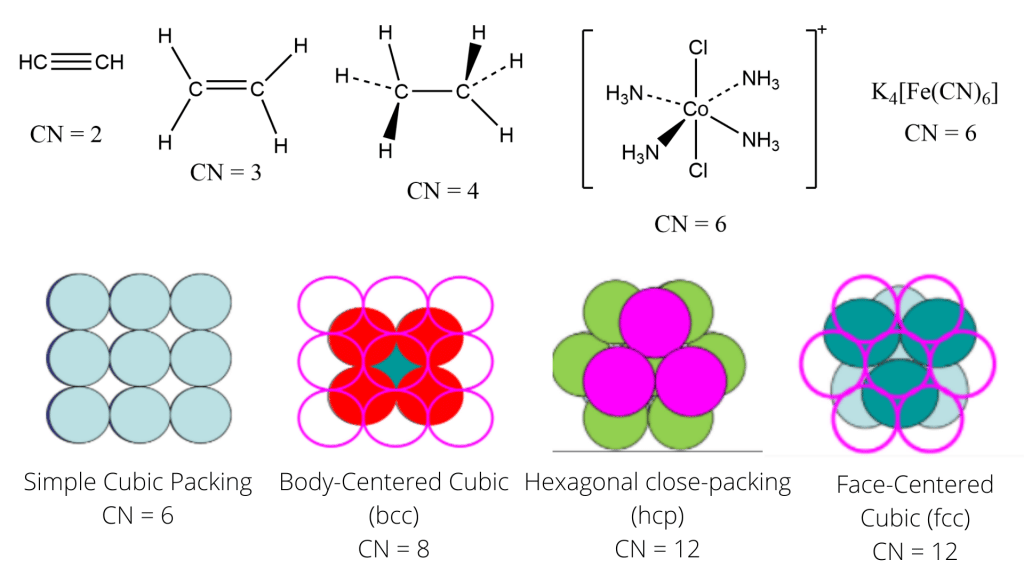
At its core, the coordination number (CN) quantifies the number of atoms, molecules, or ions directly bonded to a central atom or ion in a chemical structure. This central entity and its coordinated ligands (neighboring species) form a “coordination complex” or a repeating unit within a larger crystal lattice. For example, in a simple cubic crystal, each atom has a coordination number of 6, as it is surrounded by six immediate neighbors. In contrast, a body-centered cubic structure sees each atom having a CN of 8. In molecular chemistry, the central metal ion in a complex like [Cu(NH₃)₄]²⁺ has a coordination number of 4, as it’s bonded to four ammonia molecules.
The significance of this number lies in its direct correlation with a material’s intrinsic properties. A higher coordination number often implies a more compact, stable structure, which can translate to increased density, hardness, or higher melting points. Conversely, lower coordination numbers can lead to more open structures, potentially enabling porosity or unique catalytic activity. This fundamental parameter helps us predict and explain macroscopic behaviors from microscopic arrangements.
Factors Influencing Coordination Number
Several critical factors determine the coordination number an atom or ion will exhibit in a given environment. Understanding these influences is key to rationally designing materials with desired properties.
- Relative Sizes of Ions/Atoms (Radius Ratio Rule): Particularly in ionic compounds, the ratio of the radius of the central cation to that of the surrounding anions (r+/r-) plays a significant role. If the central ion is too small relative to its neighbors, it won’t be able to effectively contact a large number of them simultaneously, limiting its coordination. Specific radius ratio ranges correspond to different coordination numbers (e.g., for CN=4, 6, 8, etc.), predicting tetrahedral, octahedral, and cubic arrangements, respectively.
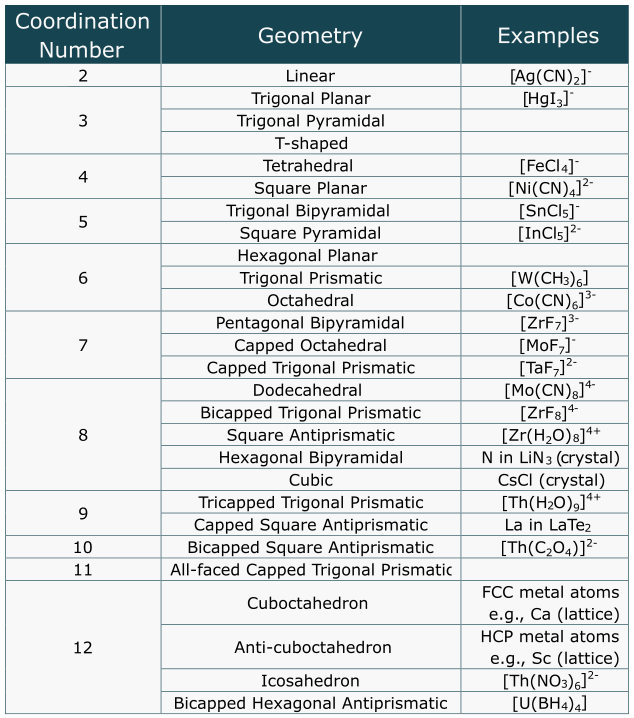
- Electronic Configuration and Bonding Type: The electronic structure of the central atom and its surrounding ligands dictates the number and geometry of bonds that can form. For instance, transition metal ions, with their partially filled d-orbitals, exhibit a wide range of coordination numbers (from 2 to 9 or even higher) and diverse geometries (tetrahedral, square planar, octahedral, etc.) due to their ability to accept electron pairs from ligands. Covalent bonding, with its directional nature, also strongly influences geometry and, by extension, coordination number.
- Steric Hindrance: The physical bulkiness of the surrounding ligands can impose limitations. Even if electronic factors favor a high coordination number, large ligands may physically prevent too many neighbors from crowding around the central atom, reducing the observed coordination number.
- Charge and Oxidation State: Higher charge on a central ion can attract more ligands, potentially leading to higher coordination numbers, provided other factors like steric hindrance and radius ratio allow.
- Environmental Conditions (Temperature, Pressure): Under extreme conditions, materials can undergo phase transitions where their coordination numbers change. High pressure, for instance, often favors more compact structures with higher coordination numbers.
Coordination Number in Material Science and Engineering
The ability to manipulate and predict coordination numbers is not merely an academic exercise; it’s a powerful lever for innovation in material science and engineering. Many of the advanced materials that underpin modern technology owe their unique properties to specific coordination environments.
Designing Advanced Materials
From the semiconductors in our microprocessors to the catalysts that drive industrial processes, tailored coordination environments are paramount.
- Semiconductors and Electronics: In materials like silicon and germanium, a tetrahedral coordination (CN=4) is fundamental to their electronic band structure, which dictates their semiconducting properties. Doping these materials involves substituting atoms, subtly altering the local coordination environment and thus tuning their electrical conductivity. Research into novel semiconductors often explores alternative coordination geometries to achieve desired electronic or optical characteristics.
- Superconductors: High-temperature superconductors often involve complex perovskite structures where the coordination of metal ions (like copper) with oxygen atoms plays a crucial role in enabling superconductivity. Precise control over these coordination environments is essential for optimizing their critical temperature and current carrying capacity.
- Metallic Alloys: The coordination number in intermetallic compounds and alloys influences their crystal structure, which in turn affects properties like strength, ductility, and corrosion resistance. Engineers use this understanding to design alloys for aerospace, automotive, and construction applications.
Catalysis and Energy Technologies
Coordination chemistry, and thus coordination number, is at the heart of catalysis and the quest for sustainable energy solutions.
- Catalysts: Heterogeneous and homogeneous catalysts are designed to facilitate chemical reactions by providing specific active sites. Often, these sites involve metal centers with particular coordination numbers and geometries that enable them to bind reactants, lower activation energies, and release products efficiently. For example, in zeolites, the coordination environment of aluminum and silicon atoms creates pores and acidic sites crucial for petrochemical cracking and selective catalysis.
- Batteries and Fuel Cells: The performance of electrodes in batteries (e.g., lithium-ion batteries) and fuel cells is heavily dependent on the crystal structure and the coordination environment of the active metal ions. The ability of these ions to reversibly intercalate (insert and extract) into the electrode material is often governed by the local coordination around the host atoms, influencing charge mobility and stability. Designing materials with specific coordination numbers can enhance ion transport, prevent structural degradation, and increase energy density.
- Photovoltaics: In solar cells, especially those involving perovskite materials, the coordination of lead or tin ions with organic and inorganic ligands directly impacts the material’s light absorption properties, charge separation efficiency, and overall stability. Fine-tuning these coordination environments is a key strategy for developing more efficient and durable solar cells.
Nanomaterials and Their Unique Properties
As materials shrink to the nanoscale, surface effects and local coordination environments become even more dominant, giving rise to unique properties.
- Quantum Dots: These semiconductor nanocrystals exhibit quantum mechanical properties dependent on their size and surface coordination. The coordination number of atoms on the surface, often different from the bulk, dictates how they interact with light, making them valuable in display technology, bio-imaging, and quantum computing.
- Nanoparticles for Drug Delivery: The surface coordination of metal or metal oxide nanoparticles determines how they interact with biological systems. By controlling the coordination number of surface atoms, scientists can tailor their biocompatibility, targeting efficiency, and drug loading capacity for advanced medical treatments.
- Metal-Organic Frameworks (MOFs): MOFs are porous crystalline materials with vast internal surface areas. Their structure is built from metal nodes (often with specific coordination numbers, e.g., octahedral) linked by organic ligands. The precise coordination geometry at the metal nodes dictates the MOF’s pore size, stability, and ability to adsorb gases (for carbon capture or hydrogen storage) or act as catalysts, opening new avenues for environmental and energy technologies.
Pharmaceutical and Biomedical Applications
The principles of coordination number extend far beyond physical materials, finding critical applications in the development of new medicines and biomedical devices.
Drug Discovery and Delivery Systems
Many therapeutic agents, particularly those involving metal ions, derive their activity from their specific coordination geometries within biological systems.
- Chemotherapeutics: Platinum-based drugs like cisplatin, a potent anticancer agent, operate by binding to DNA. The square planar coordination of platinum is essential for its interaction with guanine bases, forming adducts that interfere with DNA replication and repair in cancer cells. Understanding and optimizing the coordination environment of these metal complexes is crucial for designing more effective drugs with fewer side effects.
- Targeted Therapies: Developing drugs that specifically target disease pathways often involves designing molecules that bind to particular active sites on proteins or enzymes. These active sites typically involve metal ions with precise coordination environments. Drugs are designed to mimic or interfere with these natural coordination patterns, offering high specificity.
- Contrast Agents in MRI: Gadolinium-based contrast agents, widely used in Magnetic Resonance Imaging (MRI), rely on the paramagnetic properties of the gadolinium ion. The gadolinium is chelated (bound) by organic ligands in a specific coordination complex, typically with a high coordination number (e.g., 8 or 9), to prevent toxicity and optimize its relaxivity properties, enhancing image contrast.
Biocompatible Materials and Implants
The interaction of implantable devices with biological tissues is profoundly influenced by the coordination chemistry at their surfaces.
- Prosthetics and Implants: Materials used for orthopedic implants (e.g., titanium alloys) or dental prosthetics must be biocompatible, meaning they don’t elicit adverse reactions from the body. The surface properties, including the coordination environment of atoms at the material-tissue interface, dictate cell adhesion, immune response, and integration with surrounding tissues. Researchers aim to design surfaces with specific coordination numbers to promote desired biological interactions.
- Biosensors: The functionality of biosensors, which detect specific biological molecules, often relies on the selective binding capabilities of recognition elements. These elements might involve metal ions coordinated in a way that allows them to specifically capture target analytes, translating a biochemical event into a detectable signal.
Computational Chemistry and AI in Predicting Coordination
The sheer complexity of predicting coordination numbers, especially in novel or multicomponent systems, has driven the integration of advanced computational tools and artificial intelligence.
Simulating Material Properties
Computational chemistry techniques, such as Density Functional Theory (DFT) and molecular dynamics simulations, are indispensable for understanding and predicting coordination environments.
- Predicting Structures: These methods can model the electronic structure and energetic favorability of various coordination geometries, allowing scientists to predict the most stable coordination number for a given atom or ion in a specific environment. This is particularly valuable for novel materials where experimental synthesis might be challenging or costly.
- Understanding Reaction Mechanisms: In catalysis, simulations can trace the step-by-step changes in coordination numbers around metal centers as reactants bind, transform, and products are released, providing deep insights into reaction mechanisms and informing catalyst design.
- High-Throughput Screening: Computational methods enable the rapid screening of thousands or even millions of hypothetical materials, predicting their coordination numbers and associated properties before any lab synthesis, dramatically accelerating the discovery process for new drugs, catalysts, or energy materials.
Accelerating Discovery with Machine Learning
Artificial intelligence, particularly machine learning (ML), is revolutionizing how we leverage the concept of coordination number.
- Data-Driven Material Design: ML algorithms can be trained on vast databases of known materials and their coordination numbers and properties. By identifying complex correlations, these algorithms can then predict optimal coordination numbers for materials designed to achieve specific performance metrics (e.g., higher conductivity, better catalytic activity, improved stability).
- Predicting New Phases and Properties: ML models can learn the subtle relationships between composition, coordination number, and material phase stability under various conditions (temperature, pressure), guiding the synthesis of new functional materials.
- Autonomous Experimentation: In advanced labs, AI-driven autonomous systems can not only predict optimal coordination environments but also design and execute experiments to synthesize and characterize these materials, representing a paradigm shift in scientific discovery. By integrating AI, the iterative process of material design and optimization, heavily reliant on coordination chemistry, is becoming faster and more efficient.
Conclusion
The coordination number, far from being a mere chemical detail, stands as a central pillar in the edifice of modern technology. Its profound influence on the structure and properties of materials makes it an indispensable concept across virtually every domain of scientific and engineering innovation. From crafting high-performance electronic components and developing next-generation energy storage solutions to pioneering life-saving pharmaceuticals and designing environmentally sustainable catalysts, a precise understanding and control of coordination environments are paramount.
As we continue to push the boundaries of what’s possible, aided by sophisticated computational tools and the transformative power of artificial intelligence, the ability to predict, manipulate, and optimize coordination numbers will remain a critical skill. It enables researchers to move beyond trial-and-error, embracing a more rational, design-driven approach to material discovery. The future of technology will undoubtedly be shaped by our ever-deepening understanding of these fundamental atomic interactions, with the coordination number serving as a powerful guide in the quest for materials that are smarter, more efficient, and more sustainable.
aViewFromTheCave is a participant in the Amazon Services LLC Associates Program, an affiliate advertising program designed to provide a means for sites to earn advertising fees by advertising and linking to Amazon.com. Amazon, the Amazon logo, AmazonSupply, and the AmazonSupply logo are trademarks of Amazon.com, Inc. or its affiliates. As an Amazon Associate we earn affiliate commissions from qualifying purchases.