
The 30-year fixed-rate mortgage is more than just a financial product; it is the cornerstone of the American dream and a fundamental pillar of the domestic housing market. For decades, it has served as the standard vehicle for homeownership, providing a unique blend of predictability and affordability. However, understanding what 30-year mortgage rates are requires looking beyond a single percentage point. It involves a deep dive into macroeconomic policy, investor behavior, and personal financial health.
In the current economic climate, where volatility has become the norm, understanding the mechanics of these rates is essential for anyone looking to navigate the real estate market. Whether you are a first-time homebuyer or a seasoned real estate investor, the following analysis breaks down the complexities of 30-year mortgage rates and their implications for your financial future.

The Mechanics of the 30-Year Fixed-Rate Mortgage
The 30-year fixed-rate mortgage is characterized by an interest rate that remains constant throughout the entire life of the loan. This stability is its primary selling point. Unlike adjustable-rate mortgages (ARMs), which can see payments skyrocket after an initial period, the 30-year fixed loan offers a “set it and forget it” peace of mind.
How the Interest Rate is Determined
Mortgage rates are not set by any single government agency. Instead, they are determined by a complex interplay of market forces. Most 30-year mortgages are bundled into Mortgage-Backed Securities (MBS) and sold on the secondary market to investors. Because investors demand a certain yield to compensate for the risk of lending money over three decades, mortgage rates typically track the movements of long-term bond yields, particularly the 10-year Treasury note. When bond yields rise, mortgage rates generally follow.
The Role of Amortization
A critical component of the 30-year mortgage is the amortization schedule. In the early years of the loan, the majority of your monthly payment goes toward paying off the interest. As time progresses, a larger portion is applied to the principal balance. This structure allows for lower monthly payments compared to shorter-term loans, but it also means that home equity builds slowly during the first decade. For those focused on personal finance, understanding this schedule is vital for calculating the actual cost of the home over time.
Factors Influencing Current Mortgage Rate Fluctuations
If you have been tracking mortgage rates recently, you’ve likely noticed they can change daily—sometimes even hourly. These fluctuations are driven by several high-level economic factors that influence how lenders price their risk.
The Federal Reserve and Monetary Policy
While the Federal Reserve does not directly set mortgage rates, its influence is profound. The Fed controls the federal funds rate—the rate at which banks lend to each other overnight. When the Fed raises rates to combat inflation, it increases the cost of borrowing across the board. Furthermore, the Fed’s actions regarding its balance sheet—specifically whether it is buying or selling mortgage-backed securities—directly impacts the supply and demand for these bonds, which in turn moves the interest rates offered to consumers.
Economic Indicators and the 10-Year Treasury Yield
Mortgage rates are highly sensitive to “inflation expectations.” Because a 30-year loan is a long-term commitment, lenders must ensure that the interest they receive today won’t be eroded by the inflation of tomorrow. When economic data (such as the Consumer Price Index or employment reports) suggests that the economy is heating up, the yield on the 10-year Treasury note usually rises, dragging mortgage rates upward. Conversely, in a cooling economy or a recessionary environment, investors often flock to the safety of bonds, which can drive yields and mortgage rates down.
Evaluating the Pros and Cons of a 30-Year Term
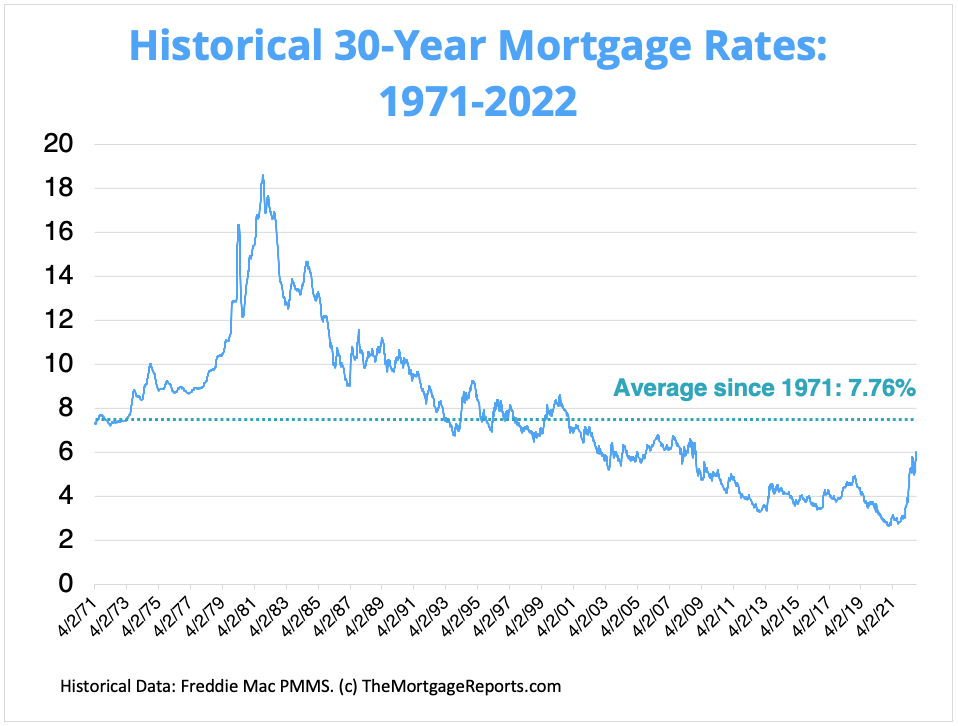
Choosing a 30-year mortgage is a significant financial decision that involves weighing immediate cash flow needs against long-term interest expenses. It is the classic “opportunity cost” dilemma found in personal finance.
Advantages: Stability and Lower Monthly Payments
The most significant benefit of the 30-year term is the lower monthly payment. By spreading the repayment over 360 months, the monthly obligation is significantly lower than that of a 15-year or 20-year mortgage. This increased “purchasing power” allows many families to afford a home that would otherwise be out of reach. Additionally, the fixed nature of the rate acts as a hedge against inflation; while your wages may rise over the next 30 years, your principal and interest payment will remain the same, effectively becoming “cheaper” in real dollars over time.
Disadvantages: Higher Long-Term Interest Costs
The trade-off for lower monthly payments is the total interest paid over the life of the loan. Because the principal is paid down so slowly, the interest continues to accrue on a high balance for a long time. Over 30 years, a borrower might end up paying more in interest than the original cost of the home itself. Furthermore, 30-year rates are almost always higher than 15-year rates because the lender is taking on more “duration risk”—the risk that economic conditions will change significantly over three decades.
Strategies for Securing the Best Possible Rate
While you cannot control the Federal Reserve or the global bond market, you can control several variables that determine the specific “risk premium” a lender charges you. In the world of business finance, this is known as optimizing your credit profile.
Improving Your Credit Profile
Your credit score is the single most influential factor in the rate you are quoted. Lenders use tiers to determine pricing; a borrower with a 760+ score will receive significantly better terms than someone with a 660. Before applying for a mortgage, it is prudent to reduce credit card utilization, avoid opening new lines of credit, and ensure all payments are made on time. Even a 0.5% difference in your interest rate can save you tens of thousands of dollars over the life of a 30-year loan.
The Impact of Down Payments and Loan-to-Value Ratios
The more “skin in the game” you have, the less risk the lender perceives. A 20% down payment is the traditional benchmark, but many programs allow for much less. However, a lower down payment often results in a higher interest rate and the added requirement of Private Mortgage Insurance (PMI). From an investment perspective, you must calculate whether the benefit of keeping your cash liquid (perhaps to invest in the stock market) outweighs the cost of a slightly higher mortgage rate and PMI.
Future Outlook: Navigating Today’s Financial Climate
Predicting the direction of 30-year mortgage rates is notoriously difficult, even for seasoned economists. However, by monitoring the financial landscape, borrowers can make more informed decisions about when to lock in a rate or when to wait.
Market Forecasts and Timing
In a “high-rate” environment, many potential buyers adopt a “wait and see” approach, hoping for rates to drop. However, this carries the risk of home prices continuing to rise in the interim. A common mantra in real estate finance is “Marry the house, date the rate.” This implies that if you find the right property, you should secure it now and plan to refinance into a lower 30-year rate later if the market improves.
The Role of “Points” in a Shifting Market
When rates are high, many lenders offer “discount points.” Essentially, you pay an upfront fee to “buy down” the interest rate. This is an analytical exercise in break-even points: if the cost of the points is $5,000 and it saves you $100 a month, it will take you 50 months (over 4 years) to recoup that investment. If you plan to stay in the home for 30 years, points can be a brilliant financial move. If you plan to move or refinance in two years, they are a wasted expense.
Conclusion
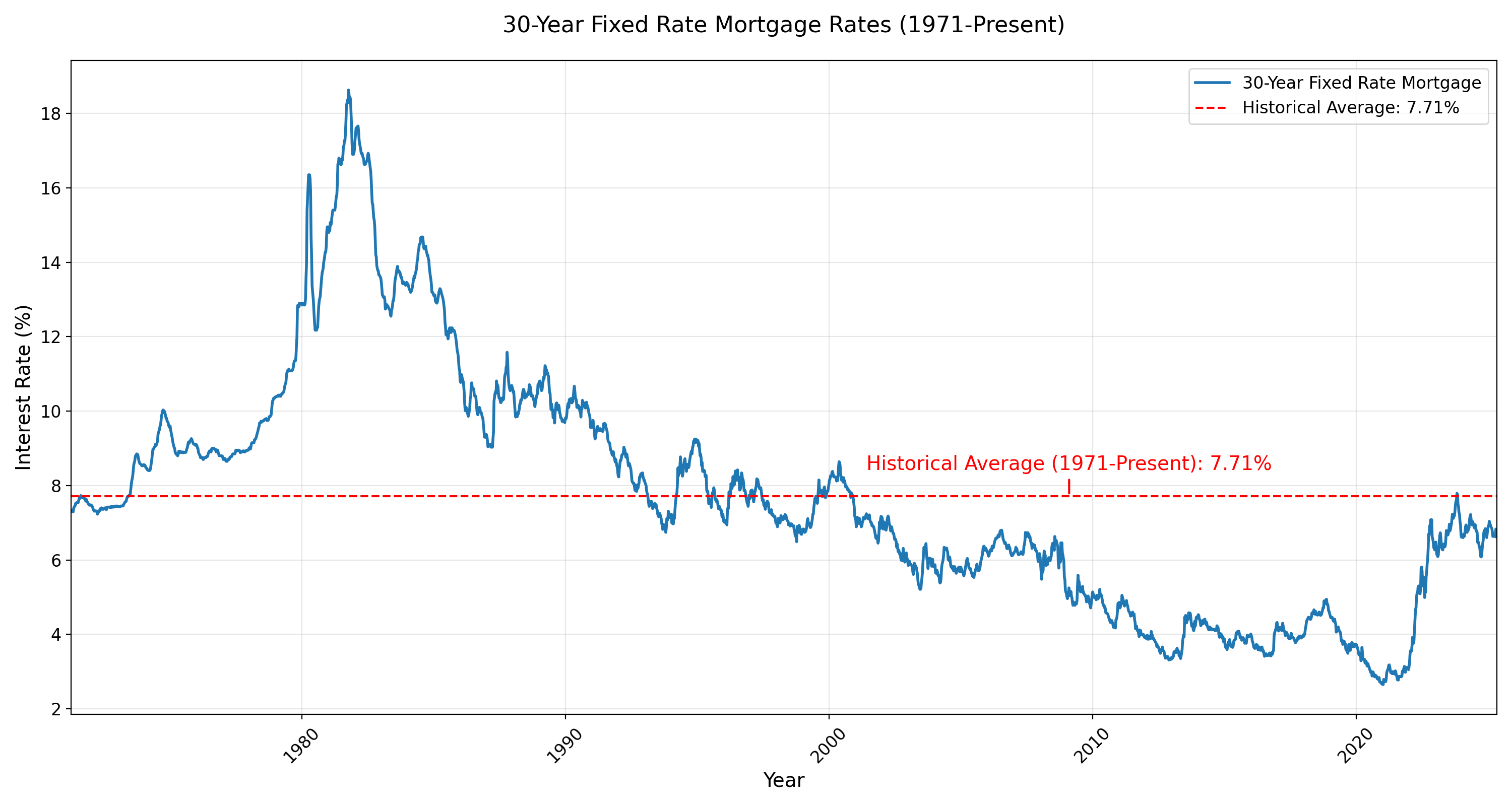
The 30-year mortgage rate is a reflection of the broader economy’s health, inflation expectations, and the specific creditworthiness of the borrower. While the numbers on the screen may seem daunting, they represent a powerful tool for building long-term wealth. By understanding the underlying forces of the money market—from the Fed’s signals to the nuances of amortization—you can transform the 30-year mortgage from a simple debt into a strategic financial asset. In the journey toward financial independence, mastering the math of your mortgage is one of the most impactful steps you can take.
aViewFromTheCave is a participant in the Amazon Services LLC Associates Program, an affiliate advertising program designed to provide a means for sites to earn advertising fees by advertising and linking to Amazon.com. Amazon, the Amazon logo, AmazonSupply, and the AmazonSupply logo are trademarks of Amazon.com, Inc. or its affiliates. As an Amazon Associate we earn affiliate commissions from qualifying purchases.