
The specter of chemical warfare agents, often shrouded in both historical notoriety and persistent modern concern, brings into sharp focus the imperative for deep technical understanding. Among these agents, “mustard gas,” more formally known as sulfur mustard (bis(2-chloroethyl)sulfide), stands as one of the most infamous. Its deployment in trench warfare during World War I etched its devastating effects into human memory, compelling ongoing technological advancements in its detection, protection, and decontamination. While its name evokes a common condiment, the reality of mustard gas is anything but benign, representing a potent vesicant (blister agent) with systemic toxic effects. This article delves into the precise chemical composition that defines mustard gas, exploring the technical pathways of its synthesis and, crucially, framing this knowledge within the broader context of technology – from analytical detection methods and protective equipment to advanced simulation and digital threat intelligence. Understanding the foundational chemistry is not merely an academic exercise; it is a critical prerequisite for developing robust technological defenses against such insidious threats.
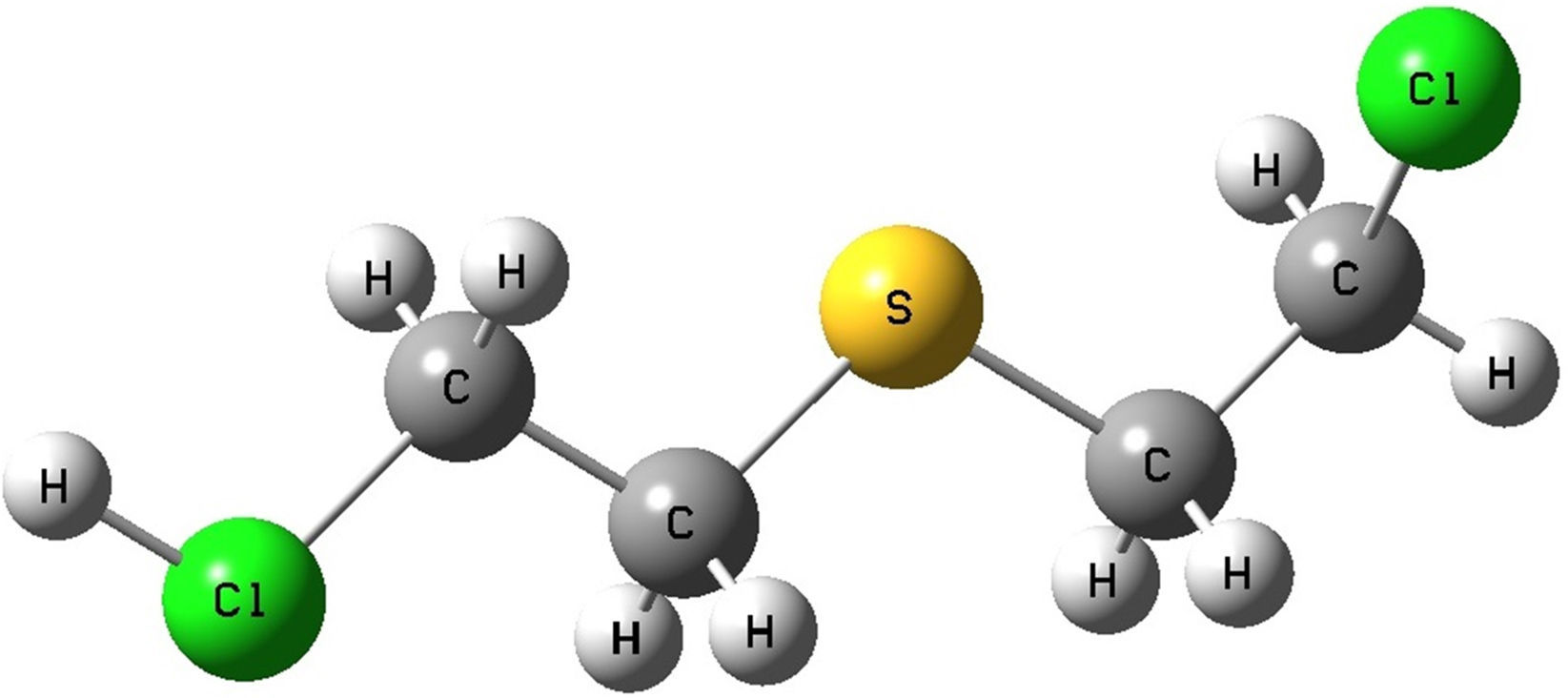
The Core Chemistry of Sulfur Mustard: Foundation of a Chemical Weapon
At its heart, mustard gas is an organic chemical compound whose distinctive properties derive directly from its molecular structure. Its chemical formula is typically C₄H₈Cl₂S, highlighting the presence of carbon, hydrogen, chlorine, and sulfur atoms. This specific arrangement of atoms is responsible for its vesicant action, its ability to penetrate various materials, and its persistence in the environment. Far from a simple substance, its synthesis involves precise chemical reactions designed to yield a compound with specific, devastating characteristics.
Primary Precursors and Reaction Pathways
The production of sulfur mustard can generally proceed through several well-documented chemical routes, each utilizing different precursor chemicals but ultimately aiming for the same end product. The most common and historically significant methods include:
-
The Dehydrohalogenation of Thiodiglycol: This is perhaps the most straightforward and modern method. Thiodiglycol (bis(2-hydroxyethyl)sulfide), a relatively innocuous chemical, reacts with a halogenating agent, typically hydrochloric acid (HCl) or phosphorus trichloride (PCl₃), to replace the hydroxyl (-OH) groups with chlorine atoms.
- Thiodiglycol + HCl → Sulfur Mustard + Water
This reaction is favored due to the accessibility of thiodiglycol and the relatively high yield of sulfur mustard. The technical challenge lies in managing the reaction conditions (temperature, pressure, presence of catalysts) to maximize efficiency and purity while minimizing hazardous byproducts.
- Thiodiglycol + HCl → Sulfur Mustard + Water
-
The Levinstein Process (Ethylene and Sulfur Monochloride): This was a historically prominent method, particularly during World War I. It involves the reaction of ethylene (C₂H₄), a simple alkene, with sulfur monochloride (S₂Cl₂).
- Ethylene + Sulfur Monochloride → Sulfur Mustard
This process is less efficient and produces more impurities, including other sulfur chlorides, which necessitated further purification steps. However, its simplicity and the ready availability of precursors made it attractive during wartime. The technical hurdles here include controlling the exothermic reaction and purifying the often tarry product.
- Ethylene + Sulfur Monochloride → Sulfur Mustard
-
The Meyer Process (Sodium Sulfide and Chloroethanol): This method involves the reaction of sodium sulfide (Na₂S) with chloroethanol (ClCH₂CH₂OH) in a two-step process to form thiodiglycol, which is then chlorinated as described above.
- Sodium Sulfide + Chloroethanol → Thiodiglycol → Sulfur Mustard
This route offers flexibility but is generally more complex due to the intermediate step.
- Sodium Sulfide + Chloroethanol → Thiodiglycol → Sulfur Mustard
Each of these pathways requires a sophisticated understanding of chemical engineering principles to scale up production from laboratory bench to industrial capacity. This involves reactor design, heat management, purification technologies (distillation, crystallization), and stringent safety protocols, given the toxic nature of the product and some precursors. The technical expertise required for these processes underscores the challenge of preventing proliferation.
The Distinctive Properties of Mustard Gas
The chemical structure of sulfur mustard imbues it with a unique set of physical and chemical properties that contribute to its effectiveness as a weapon.
- Vesicant Action: The primary mechanism of action involves the formation of a highly reactive cyclic sulfonium ion intermediate upon hydrolysis. This intermediate readily alkylates biomolecules (DNA, proteins, enzymes) within cells, disrupting their function and leading to cell death. This indiscriminate damage manifests as severe blistering of the skin, respiratory tract damage, and ocular injuries.
- Persistence: Mustard gas is a relatively persistent agent, particularly in cool, damp conditions. Its low volatility (vapor pressure) means it evaporates slowly, remaining hazardous for hours to days on contaminated surfaces. This persistence is a critical tactical property, requiring robust decontamination technologies.
- Penetration: Its lipophilic (fat-loving) nature allows it to readily penetrate skin, clothing, and even some protective materials. This necessitates advanced material science in the development of chemical-resistant fabrics and barriers.
- Delayed Effects: A hallmark of mustard gas exposure is the delayed onset of symptoms, typically hours after contact. This delay can lead to extensive exposure before victims realize they have been contaminated, complicating early detection and intervention.
- Purity and Stability: Technical-grade mustard gas often contains impurities from its synthesis, which can affect its physical properties and stability. For military applications, purification technologies are employed to achieve higher purity, which generally correlates with greater stability and efficacy.
Understanding these chemical properties is paramount for the technological development of effective countermeasures, from personal protective equipment to medical treatments and environmental remediation strategies.
Technological Advancements in Detection and Identification
Given the severe threat posed by mustard gas, a significant focus of technological innovation has been on developing highly sensitive and specific detection and identification systems. Rapid and accurate detection is crucial for early warning, hazard assessment, and guiding response operations, minimizing casualties and environmental contamination.
Spectroscopic and Chromatographic Techniques
Laboratory-based analytical chemistry provides the gold standard for definitive identification of chemical warfare agents. These techniques leverage sophisticated instrumentation:
- Gas Chromatography-Mass Spectrometry (GC-MS): This is the definitive analytical technique. Gas chromatography separates the components of a sample mixture based on their differing affinities for a stationary phase and their volatility. The separated compounds then enter a mass spectrometer, which ionizes them and separates the ions based on their mass-to-charge ratio. The resulting mass spectrum acts as a unique chemical fingerprint, allowing for unambiguous identification of sulfur mustard and its degradation products. Technical advancements have focused on miniaturization, ruggedization for field use, and improved spectral libraries for rapid comparison.
- Infrared (IR) Spectroscopy: Fourier-transform infrared (FTIR) spectroscopy identifies compounds by measuring the absorption of infrared radiation at specific wavelengths, corresponding to molecular vibrations. Each chemical has a unique IR spectrum. While less specific than GC-MS for complex mixtures, FTIR can provide rapid, non-destructive screening for functional groups characteristic of mustard gas. Portable FTIR units are now widely available for field screening.
- Raman Spectroscopy: Similar to IR, Raman spectroscopy provides vibrational information but relies on inelastic scattering of light. It complements FTIR and is particularly useful for identifying substances in aqueous solutions or through transparent containers. Recent advances in surface-enhanced Raman spectroscopy (SERS) have dramatically improved sensitivity.
- Nuclear Magnetic Resonance (NMR) Spectroscopy: For highly precise structural elucidation in research settings, NMR spectroscopy provides detailed information about the atomic nuclei within a molecule. While not a field detection method, it is crucial for verifying synthesis and understanding chemical degradation pathways.
These sophisticated analytical technologies require highly skilled operators and robust sample preparation, but they form the backbone of confirmatory analysis and provide vital intelligence for understanding new threats.
Sensor Technologies and Rapid Field Deployment
The urgent need for immediate detection in hazardous environments has driven the development of a diverse array of sensor technologies, moving beyond bulky lab equipment to portable and autonomous systems:

- Chemical Agent Detectors (CADs): These handheld or vehicle-mounted devices often utilize ion mobility spectrometry (IMS) or surface acoustic wave (SAW) technology. IMS separates ions based on their drift time through an electric field, allowing for rapid detection of specific chemical signatures. SAW sensors detect changes in frequency caused by the adsorption of chemical vapors onto a sensitive coating. These technologies offer fast response times (seconds to minutes) and good sensitivity for field screening.
- Photoionization Detectors (PIDs): PIDs use ultraviolet (UV) light to ionize airborne molecules, and the resulting electrical current is measured. While not specific to mustard gas, they can detect a wide range of volatile organic compounds, including chemical agents, serving as valuable screening tools to indicate the presence of a threat.
- Electrochemical Sensors: These sensors respond to specific chemical reactions that produce or consume electrons, generating a measurable electrical signal. They can be designed for high specificity and are suitable for miniaturization into wearable devices.
- Hyperspectral Imaging: This advanced optical technology captures and processes information from across the electromagnetic spectrum. By analyzing the unique spectral signature of chemical vapors or residues, hyperspectral cameras can detect and map contaminated areas from a distance, offering crucial reconnaissance capabilities.
- Robotics and Drones: Integrating these sensors onto unmanned ground vehicles (UGVs) and unmanned aerial vehicles (UAVs) allows for remote assessment of contaminated areas, protecting human responders from direct exposure. This convergence of sensor technology with robotics represents a significant leap in safe and efficient chemical threat assessment.
The continuous drive in this area is toward smaller, faster, more selective, and more robust detectors capable of operating in harsh environments with minimal human intervention.
Countermeasures and Protective Technologies
Protection against mustard gas exposure is a multi-layered technological challenge, encompassing personal protection, collective protection, and effective decontamination strategies. The unique chemical properties of sulfur mustard demand innovative materials science, engineering design, and operational procedures.
Advanced Filtration and Protective Equipment
The primary defense against mustard gas is to prevent contact and inhalation. This requires specialized personal protective equipment (PPE) and collective protection systems:
- Chemical Protective Suits (CP Suits): Modern CP suits are designed to be impermeable to liquid and vapor chemical agents while allowing for sufficient heat dissipation to prevent heat stress. They typically consist of multiple layers: an outer layer for physical protection and shedding liquid agents, a charcoal-impregnated or polymer membrane layer for adsorbing chemical vapors, and an inner comfort layer. The charcoal layer works by adsorption, trapping chemical molecules in its porous structure. The challenge is balancing protection with wearability and physiological burden. Recent developments focus on smart materials that can respond to chemical threats or offer enhanced breathability.
- Respiratory Protection (Gas Masks/Respirators): Gas masks are essential for protecting the respiratory system and eyes. They incorporate specialized filter canisters that use activated carbon and chemical sorbents to physically and chemically remove toxic vapors from inhaled air. The design of the facepiece ensures a tight seal, and the filters are specifically engineered for different types of chemical agents. The technological evolution involves improving filter efficiency, reducing breathing resistance, and integrating communication systems.
- Collective Protection Systems: For fixed installations (e.g., command centers, shelters, vehicles), collective protection systems create a safe internal environment. These systems employ sophisticated air filtration units that scrub incoming air of chemical agents before it enters the protected space, often using high-efficiency particulate air (HEPA) filters in conjunction with activated carbon beds. Engineering challenges include maintaining positive pressure within the protected space and ensuring filter longevity and efficiency.
Decontamination Methods and Agent Neutralization
Should contamination occur, effective decontamination is critical to neutralize the agent and prevent further exposure. This area relies heavily on chemical engineering and materials science.
- Physical Removal: For liquid contamination, prompt physical removal using absorbent materials (e.g., Fuller’s earth, specific polymer powders) is the first step, followed by more thorough chemical decontamination.
- Chemical Neutralization (Decontaminants): Decontaminant solutions aim to chemically break down or render the mustard gas non-toxic. Common active ingredients include:
- Oxidizers: Strong oxidizing agents like bleach (sodium hypochlorite), peroxyacetic acid, or specialized oxidizing foams react with sulfur mustard to disrupt its chemical structure, forming less toxic compounds. The technical challenge is to develop formulations that are effective against the agent but safe for personnel and equipment.
- Nucleophiles: Certain nucleophilic reagents can react with mustard gas through substitution reactions, leading to its detoxification.
- Supercritical Fluids: Emerging technologies explore the use of supercritical carbon dioxide for environmentally friendly decontamination, leveraging its unique solvent properties.
- Skin Decontamination: For skin exposure, specialized wipes or lotions containing adsorbent materials and neutralizing agents are used. The development of these formulations involves careful consideration of skin compatibility, speed of action, and efficacy.
- Material Decontamination: For contaminated equipment and surfaces, various sprays, foams, and heated air systems are employed. The selection depends on the material, the extent of contamination, and environmental considerations. Technologies include steam cleaning, solvent washing, and advanced catalytic converters.
The technical development of decontamination agents and processes focuses on maximizing speed, efficacy, safety, and environmental friendliness.
Digital Security and Chemical Threat Intelligence
While “what chemicals make mustard gas” primarily refers to tangible substances, the broader domain of chemical threats has significant overlaps with digital security and intelligence. Information technology plays an increasingly critical role in monitoring, analyzing, and predicting chemical weapon threats, including those related to mustard gas.
Modeling and Simulation for Threat Assessment
Advanced computational tools are indispensable for understanding and preparing for chemical attacks:
- Dispersion Modeling: Software models use meteorological data, topographical information, and agent release characteristics to predict the downwind dispersion and concentration of chemical agents. This technology helps emergency responders forecast affected areas, plan evacuation routes, and position detection assets. Understanding the chemical properties of mustard gas, such as its volatility and density, is crucial input for these models.
- Computational Chemistry: High-performance computing is used to simulate the molecular interactions of mustard gas with biological systems or decontaminants. This can aid in designing new protective materials, understanding toxicological mechanisms, and developing more effective antidotes or decontaminating agents without extensive wet-lab experimentation.
- Training Simulations: Virtual reality (VR) and augmented reality (AR) platforms are being developed to create realistic training scenarios for first responders dealing with chemical incidents. These digital environments allow personnel to practice detection, decontamination, and casualty management procedures safely, applying their knowledge of chemical agents in a simulated high-stress environment.
Data Analytics in Chemical Weapon Proliferation Monitoring
The digital realm also contributes significantly to intelligence gathering and threat reduction efforts related to chemical weapons.
- Open-Source Intelligence (OSINT): Advanced data analytics and AI tools are employed to scour publicly available information (academic papers, industry reports, online forums, social media) for indicators of illicit chemical weapon proliferation. This includes identifying unusual purchases of dual-use chemicals (precursors like thiodiglycol), atypical research activities, or discussions of synthesis methods.
- Supply Chain Monitoring: Digital platforms are used to track the global trade of sensitive chemicals, identifying anomalies or diversions that could indicate attempts to acquire precursors for chemical weapons like mustard gas. This involves integrating customs data, shipping manifests, and regulatory databases.
- Digital Forensics: In the event of a chemical attack, digital forensics can play a role in tracing the origins of the attack, identifying perpetrator networks, and understanding their capabilities by analyzing digital footprints left behind.
- Secure Information Sharing: Robust digital security frameworks are essential for international cooperation in chemical disarmament. Secure networks and encrypted communication platforms facilitate the sharing of sensitive intelligence between nations and organizations like the Organisation for the Prohibition of Chemical Weapons (OPCW), ensuring that knowledge about chemical agents and counter-technologies is shared effectively while preventing unauthorized access.
The nexus between chemical composition and digital intelligence underscores how a comprehensive approach to chemical threats must integrate both deep scientific knowledge and cutting-edge information technology.

Conclusion
Understanding “what chemicals make mustard gas” is far more than a historical footnote; it is a foundational piece of knowledge that underpins a vast array of technological endeavors aimed at mitigating one of humanity’s most severe threats. From the intricate chemical engineering required for its synthesis to the sophisticated analytical techniques for its detection, the advanced materials science for protection, and the powerful digital tools for threat assessment and intelligence, technology stands as our primary bulwark against the destructive potential of sulfur mustard. The continuous evolution of these technologies, driven by an unyielding commitment to safety and security, remains essential in a world where the chemical weapon threat, though controlled by international treaties, regrettably persists in various forms. Our technical prowess in understanding, detecting, and defending against these chemicals is a testament to humanity’s capacity for innovation in the face of grave danger.
aViewFromTheCave is a participant in the Amazon Services LLC Associates Program, an affiliate advertising program designed to provide a means for sites to earn advertising fees by advertising and linking to Amazon.com. Amazon, the Amazon logo, AmazonSupply, and the AmazonSupply logo are trademarks of Amazon.com, Inc. or its affiliates. As an Amazon Associate we earn affiliate commissions from qualifying purchases.