
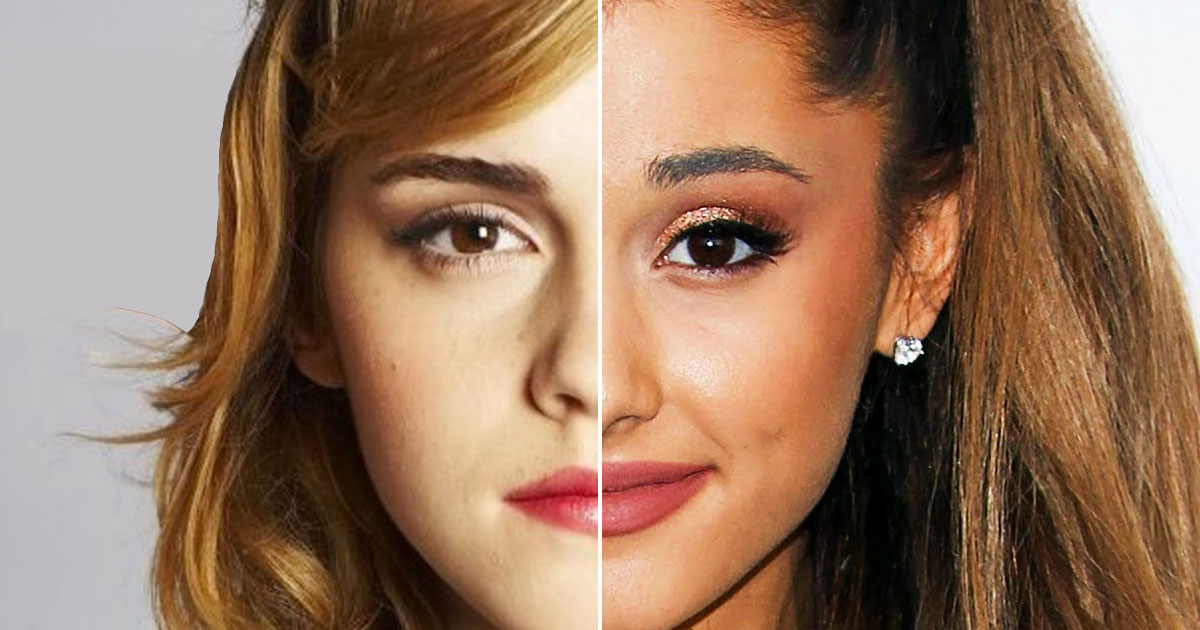
For the average social media user, a “What Celebrity Do I Look Like?” quiz is a momentary diversion—a digital novelty that offers a fun comparison to a Hollywood star. However, beneath the surface of these viral applications lies an intricate web of sophisticated technology, spanning computer vision, machine learning, and biometric data analysis. What started as basic pattern matching has evolved into a robust sector of the tech industry, utilizing the same underlying principles found in high-level security systems, autonomous vehicles, and diagnostic healthcare tools.
This article explores the technical architecture of celebrity match-up software, the progression of neural networks in facial analysis, and the broader implications of this technology in the modern digital landscape.
The Algorithmic Foundation: Facial Recognition and Biometric Mapping
At its core, identifying a celebrity doppelgänger is an exercise in high-dimensional data processing. When a user uploads a photo, the software does not “see” a face in the way a human does; instead, it interprets the image as a complex grid of pixels, which it then converts into mathematical coordinates.
Convolutional Neural Networks (CNNs)
The heavy lifting in modern facial comparison is performed by Convolutional Neural Networks (CNNs). These are a class of deep neural networks most commonly applied to analyzing visual imagery. A CNN works by passing the image through various layers—convolutional layers, pooling layers, and fully connected layers. Each layer extracts progressively more complex features. The initial layers might detect simple edges and shadows, while deeper layers identify specific shapes like the curve of a jawline or the distance between the eyes.
Landmark Detection and Nodal Points
To create an accurate match, the software utilizes “landmark detection.” This process identifies specific “nodal points” on the human face. Most facial recognition algorithms track approximately 68 to 80 specific points, including the corners of the mouth, the bridge of the nose, the depth of the eye sockets, and the contour of the cheekbones. By measuring the spatial relationship between these points, the algorithm creates a “faceprint”—a unique digital signature that can be compared against a database of thousands of celebrity faceprints in milliseconds.
Data Processing and Machine Learning: Training the Model
An algorithm is only as effective as the data used to train it. The transformation of a simple quiz into a high-precision tool requires massive datasets and rigorous machine learning (ML) protocols.
Large-Scale Datasets and Image Labeling
To teach an AI what a “celebrity” looks like, developers feed the system millions of labeled images. These datasets, such as the “Labeled Faces in the Wild” (LFW) or specialized celebrity databases, allow the machine to learn the variations of a single person’s face across different ages, expressions, and lighting conditions. Through a process called “Supervised Learning,” the model is corrected whenever it makes a false match, gradually refining its ability to distinguish between subtle facial nuances.
Overcoming Lighting and Angle Variables
One of the primary technical hurdles in facial matching is “pose estimation” and “illumination normalization.” A user might upload a low-quality selfie taken in a dimly lit room, whereas celebrity database photos are often professional headshots with studio lighting. Advanced tech stacks use “Generative Adversarial Networks” (GANs) or 3D modeling to “warp” the user’s 2D image into a standardized 3D pose. This allows the algorithm to compare the underlying bone structure rather than just the surface-level pixel colors, significantly increasing the accuracy of the match.
From Viral Quizzes to Enterprise Solutions: Real-World Applications
While the “celebrity look-alike” quiz serves as an entry point for public interaction with AI, the technology powering these apps has critical enterprise and industrial applications. The same “feature extraction” used to find your Hollywood twin is currently being repurposed to solve complex global challenges.

Deepfake Prevention and Verification
As generative AI becomes more accessible, the ability to distinguish between a real human face and a synthetically generated one is paramount. The technology used in facial matching is being inverted to detect “digital artifacts” or inconsistencies in pixel gradients that characterize deepfakes. Tech firms are leveraging these refined biometric models to create digital “watermarks” for human identity, ensuring that video calls and identity verification processes remain secure against AI-driven impersonation.
Augmented Reality (AR) in Retail and Beauty
The retail sector has integrated facial mapping tech to revolutionize the customer experience. Virtual “try-on” tools for eyewear, cosmetics, and jewelry rely on the exact same landmark detection used in look-alike quizzes. By accurately pinning a 3D model of a pair of glasses to the nodal points of a user’s face, brands can provide a seamless AR experience. This transition from “novelty quiz” to “utility tool” demonstrates how computer vision is shortening the bridge between digital browsing and physical purchasing.
Privacy, Security, and Ethical Considerations
The rise of facial analysis technology brings significant responsibilities regarding data ethics and digital security. When a user uploads their biometric data to a “free” quiz, they are often interacting with a complex data ecosystem where privacy policies may be opaque.
Data Retention and User Consent
A critical tech concern is whether the uploaded images are stored, sold, or used to further train proprietary models without explicit user consent. In the tech industry, “biometric data” is classified as highly sensitive information. Professional developers must implement end-to-end encryption and “edge processing”—where the facial analysis happens locally on the user’s device rather than on a central server—to mitigate the risk of data breaches. Users and developers alike must remain vigilant about the “Terms of Service” that govern how these faceprints are managed post-analysis.
Bias in Facial Analysis Algorithms
A significant challenge in the tech community is the “algorithmic bias” present in many facial recognition models. If the training dataset lacks diversity, the “celebrity look-alike” results may be inaccurate or skewed for certain demographic groups. Tech leaders are currently pushing for “Algorithmic Transparency” and more inclusive datasets to ensure that machine learning models function equitably across all skin tones, ethnicities, and genders. This involves rigorous testing and the use of “synthetic data” to fill gaps in existing human datasets.
The Future of Face-Based AI Tools
The trajectory of facial recognition technology suggests a move toward even more integrated and “proactive” AI. We are moving beyond simple 2D image matching into a realm of temporal and emotional analysis.
3D Mapping and Generative AI Integration
The next generation of this technology will likely move away from static photos. Real-time 3D mapping will allow users to see their celebrity “counterpart” in motion through a live camera feed. Furthermore, by integrating Large Language Models (LLMs) with facial analysis, future apps might not only tell you who you look like but also simulate a conversation with a digital twin of that celebrity, using synchronized lip-syncing and voice cloning (with proper licensing).
Affective Computing: Sensing Emotion
Beyond physical appearance, the tech is evolving into “Affective Computing”—the ability for a machine to recognize and interpret human emotions based on micro-expressions. By analyzing the subtle movement of facial muscles, future software could match users with celebrities not just based on aesthetics, but on “vibe” or emotional temperament. This represents a massive leap in how we categorize human data, moving from purely physical markers to psychological indicators.
Conclusion
The “What Celebrity Do I Look Like?” quiz is a masterclass in how complex technology can be distilled into a user-friendly interface. What appears to be a simple game is, in reality, a demonstration of the power of Convolutional Neural Networks, biometric mapping, and massive-scale machine learning.
As we continue to advance, the tech industry must balance the innovation of these tools with a commitment to privacy and ethical data practices. The evolution of facial recognition from a fun social media trend into a foundational pillar of modern digital security and retail shows that in the world of technology, even the most lighthearted applications can have a profound impact on the future of human-computer interaction. Whether it is for finding a Hollywood twin or securing a digital bank account, the math remains the same: our faces have become the ultimate digital key.
aViewFromTheCave is a participant in the Amazon Services LLC Associates Program, an affiliate advertising program designed to provide a means for sites to earn advertising fees by advertising and linking to Amazon.com. Amazon, the Amazon logo, AmazonSupply, and the AmazonSupply logo are trademarks of Amazon.com, Inc. or its affiliates. As an Amazon Associate we earn affiliate commissions from qualifying purchases.