
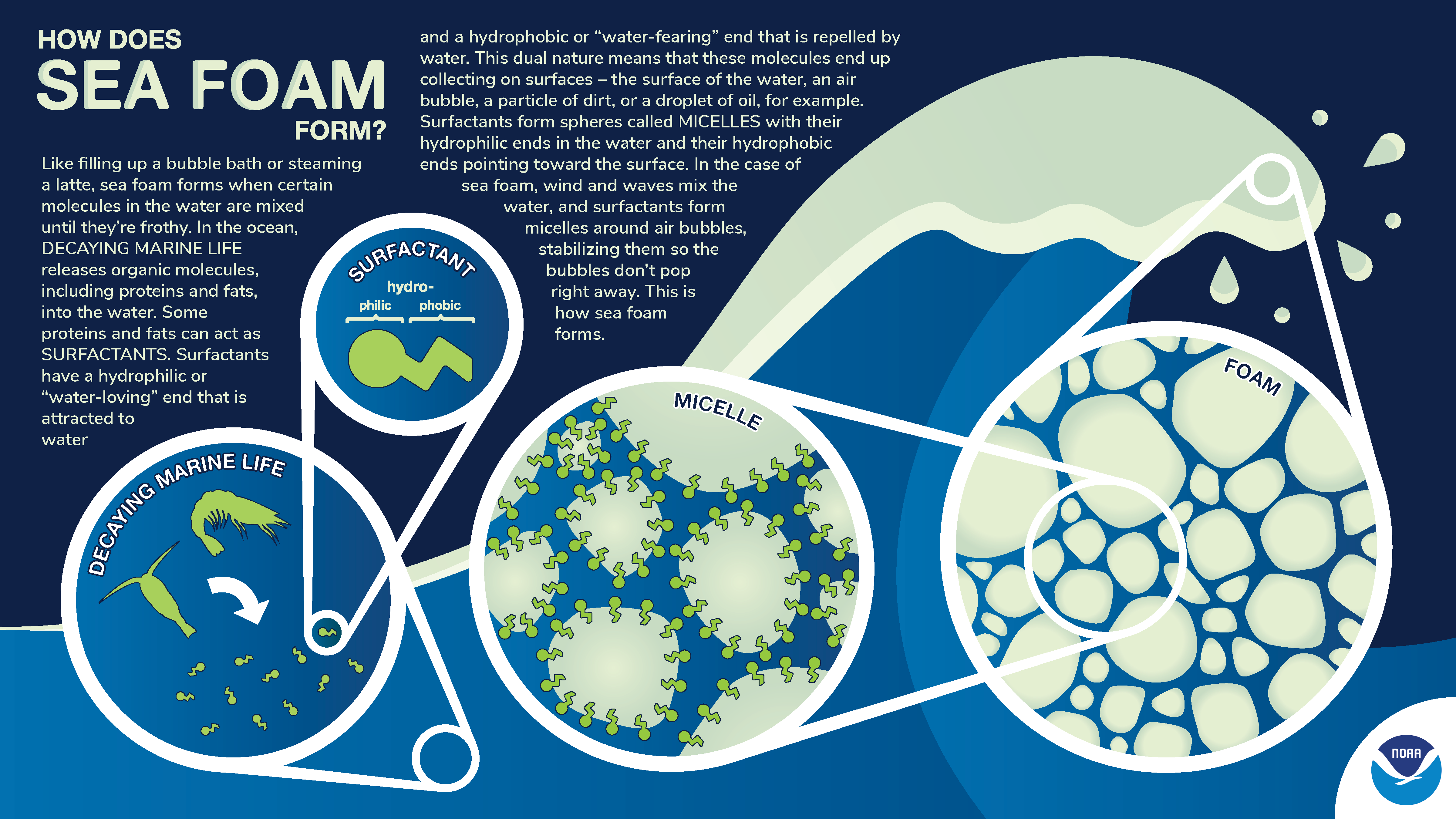
In the natural world, sea foam is a phenomenon created by the agitation of seawater, particularly when it contains high concentrations of dissolved organic matter. While it can look beautiful or even whimsical on the shoreline, it is essentially a collection of air bubbles trapped in a thin film—a structure with significant volume but very little substance. In the world of high-finance and global investing, a strikingly similar phenomenon occurs, often referred to by economists and analysts as “market froth.”
Understanding what causes this financial sea foam is critical for any investor looking to navigate the volatile oceans of the modern economy. Froth occurs when asset prices begin to detach from their underlying intrinsic value, driven by the “agitation” of high trading volumes and excessive liquidity. This article explores the mechanics of market froth, the catalysts that cause it to build up, and how investors can distinguish between a solid wave of growth and a transient layer of foam.

The Anatomy of Market Froth: How Excess Liquidity Creates Financial Foam
Just as physical sea foam requires the movement of water to form, financial froth requires the movement of capital. In a healthy market, capital flows are directed by fundamental analysis, where investors seek value based on earnings, revenue, and growth potential. However, when the “water” of the market becomes over-saturated with liquidity, the dynamics change.
The Role of Central Banks and Monetary Policy
The primary driver of liquidity in the modern era is central bank policy. When interest rates are kept at historic lows and programs like Quantitative Easing (QE) are implemented, the economy is flooded with “cheap” money. This excess capital must go somewhere. As it flows into equities, real estate, and even alternative assets like cryptocurrencies, it creates an upward pressure on prices. When there is more money chasing fewer high-quality assets, the market begins to “agitate,” creating the initial layers of froth where prices rise not because the companies have become more productive, but because the currency used to buy them has become more abundant.
Retail Sentiment and the Velocity of Agitation
In the past, market movements were largely dictated by institutional “whales.” Today, the democratization of trading through zero-commission apps has introduced a new variable: the retail investor. When millions of individual participants enter the market simultaneously, often driven by social media trends or “Fear of Missing Out” (FOMO), the velocity of trading increases. This rapid agitation of the market “water” traps air—or speculative hype—within the price action, leading to the rapid expansion of foam on the surface of the charts.
The Psychological Breakdown of Value
At the heart of market froth is a psychological shift. In a standard market, investors are cautious. In a frothy market, the “organic matter” of greed and speculation begins to change the surface tension of the market. Investors stop asking “What is this worth?” and start asking “How much higher will someone else pay me for this tomorrow?” This “Greater Fool Theory” is the chemical binder that keeps financial foam from dissipating, allowing it to pile up even as the underlying economic fundamentals remain stagnant.
Identifying the Chemical Composition of a Financial Bubble
In oceanography, sea foam persists because of surfactants—substances like salts, proteins, and fats that reduce surface tension. In the financial markets, certain “surfactants” allow speculative bubbles to grow far larger than they otherwise would. Identifying these components is key to knowing when the foam is about to become a crashing wave.
Speculative Fever and the Decoupling from Fundamentals
The most obvious component of market froth is a decoupling from historical valuation metrics. When Price-to-Earnings (P/E) ratios for an entire sector reach levels that assume impossible growth rates, the “foam” is thick. For instance, during the Dot-com bubble of the late 90s or the more recent surges in “EV-tech” and “AI-adjacent” stocks, many companies were valued at billions of dollars despite having no clear path to profitability. This is the financial equivalent of sea foam: it takes up a lot of space in a portfolio but lacks the weight of actual earnings.
The Influence of Social Media and Viral Trends
In the digital age, information moves faster than ever. Social media platforms act as an accelerant for market froth. A single viral post or a coordinated “short squeeze” can send an asset’s price skyrocketing in hours. This “meme-stock” phenomenon represents a pure form of froth, where the price is driven entirely by communal sentiment and digital agitation rather than corporate performance. When the “composition” of a stock’s price is 90% sentiment and 10% substance, it is highly susceptible to sudden evaporation.
Technological Disruption as a Justification for Froth
Almost every major period of market froth is built on a “New Era” narrative. Whether it was the steam engine, the internet, or Artificial Intelligence, investors often convince themselves that “this time it’s different.” While these technologies are indeed transformative, the froth occurs when investors overpay for that transformation. They mistake the long-term potential of a technology for the immediate value of a specific company, leading to a layer of speculative foam that eventually must settle as the technology matures and winners are separated from losers.
The “Surfactants” of Modern Investing: Leverage and Derivatives
If liquidity is the water and sentiment is the agitation, then leverage is the surfactant that makes the foam stick. Leverage allows investors to control large positions with relatively small amounts of capital, effectively magnifying the “bubbles” within the market foam.
Margin Debt as a Catalyst for Expansion
Margin debt—money borrowed from brokers to purchase securities—reaches record highs during periods of intense market froth. As prices rise, investors feel more confident and take on more debt to maximize their gains. This creates a feedback loop: more buying leads to higher prices, which allows for more borrowing. However, this also makes the foam incredibly fragile. Just as a gust of wind can blow away sea foam, a small dip in price can trigger “margin calls,” forcing investors to sell and causing the foam to collapse instantly.
The Proliferation of Complex Financial Products
The modern financial system has developed a variety of complex derivatives, such as options, swaps, and leveraged ETFs, which further agitate the market. These products allow for high-frequency speculation that can distort the underlying price of an asset. When the volume of “paper” trading (derivatives) far exceeds the volume of the actual underlying asset, the resulting price is almost entirely made of froth. This complexity often masks the true level of risk, leading to a situation where the foam appears solid until it is touched by a period of high volatility.
When the Tide Recedes: Managing Risks During a Market Correction
Oceanographers know that sea foam eventually disappears when the tide goes out or the storm calms. Similarly, market froth is a temporary state. Eventually, the “agitation” slows down, liquidity dries up, or the “organic matter” of speculation is exhausted. For the savvy investor, the goal is not just to ride the foam, but to ensure they have solid ground to stand on when the tide recedes.
The Importance of Portfolio Diversification
The best defense against a frothy market is a diversified portfolio. Foam usually accumulates in specific “hot” sectors—tech, crypto, or specific commodities. By maintaining a balance of value stocks, bonds, and defensive assets, an investor ensures that even if the foam in one sector evaporates, their entire net worth doesn’t vanish with it. Diversification is the equivalent of moving your assets away from the shoreline and onto higher, more stable ground.
Tactical Asset Allocation and Cash Reserves
In a highly frothy market, one of the most underrated assets is cash. While “cash is trash” is a popular mantra when the foam is rising, cash becomes “king” when the bubble bursts. Tactical asset allocation involves trimming positions in over-frosted sectors and moving into more liquid, stable holdings. This not only protects capital but provides the “dry powder” necessary to buy high-quality assets at a discount when the market eventually clears of its speculative bubbles.

Emotional Discipline in Volatile Waters
Perhaps the most difficult part of dealing with market froth is the psychological toll. Seeing others make “easy money” in frothy assets creates immense pressure to join in. However, professional investing requires the discipline to recognize foam for what it is: air and water. By sticking to a disciplined investment thesis and focusing on long-term value rather than short-term agitation, investors can avoid the catastrophic losses that occur when the foam finally settles.
The sea foams because of a specific set of environmental conditions; the market foams because of a specific set of economic ones. By understanding that froth is a natural—if temporary—part of the financial cycle, investors can navigate these waters with clarity, ensuring that their financial future is built on the solid rock of value rather than the fleeting bubbles of speculation.
aViewFromTheCave is a participant in the Amazon Services LLC Associates Program, an affiliate advertising program designed to provide a means for sites to earn advertising fees by advertising and linking to Amazon.com. Amazon, the Amazon logo, AmazonSupply, and the AmazonSupply logo are trademarks of Amazon.com, Inc. or its affiliates. As an Amazon Associate we earn affiliate commissions from qualifying purchases.