
In the realm of grammar, a predicate is a fundamental component of a sentence, responsible for telling us something about the subject. It is, quite simply, the action performed by the subject or the state of being of the subject. While this concept has been a cornerstone of language education for centuries, its significance extends far beyond the classroom, becoming an indispensable building block in the complex world of Artificial Intelligence (AI) and Natural Language Processing (NLP). For machines to truly understand, interpret, and generate human language, they must first grasp these foundational linguistic structures, with predicates standing out as critical elements that carry the bulk of a sentence’s meaning.

The ability to accurately identify and interpret predicates allows AI systems to move beyond mere keyword matching to a deeper, semantic understanding of text and speech. From sophisticated search algorithms that respond to nuanced queries to advanced chatbots that engage in natural conversations, and from accurate machine translation to insightful sentiment analysis, the machine’s comprehension of predicates is paramount. This article delves into the concept of predicates, not just as a grammatical rule, but as a vital analytical tool for cutting-edge technology, exploring how AI leverages this linguistic construct to unlock new frontiers in human-computer interaction and data interpretation.
Understanding Predicates: A Linguistic Primer for Machines
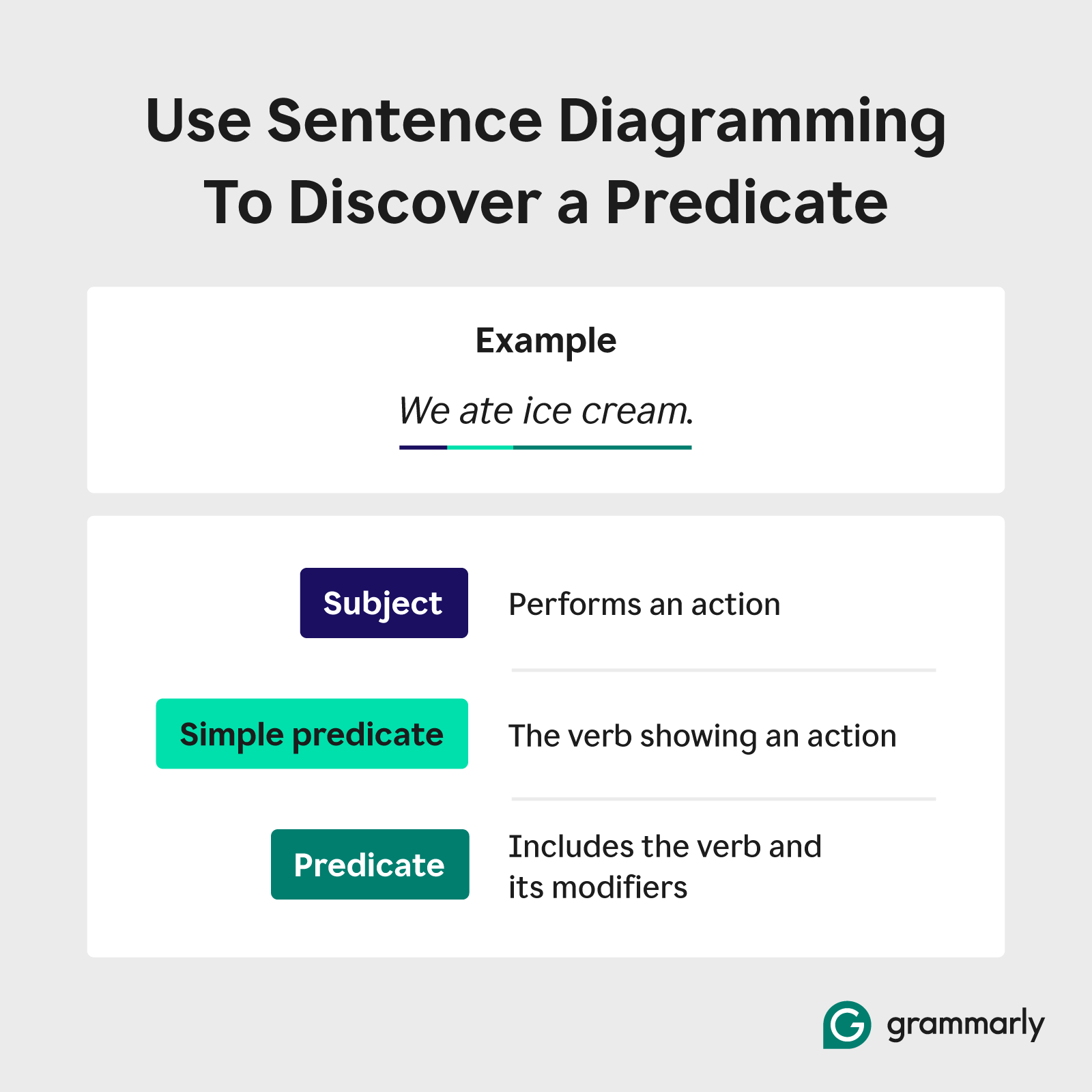
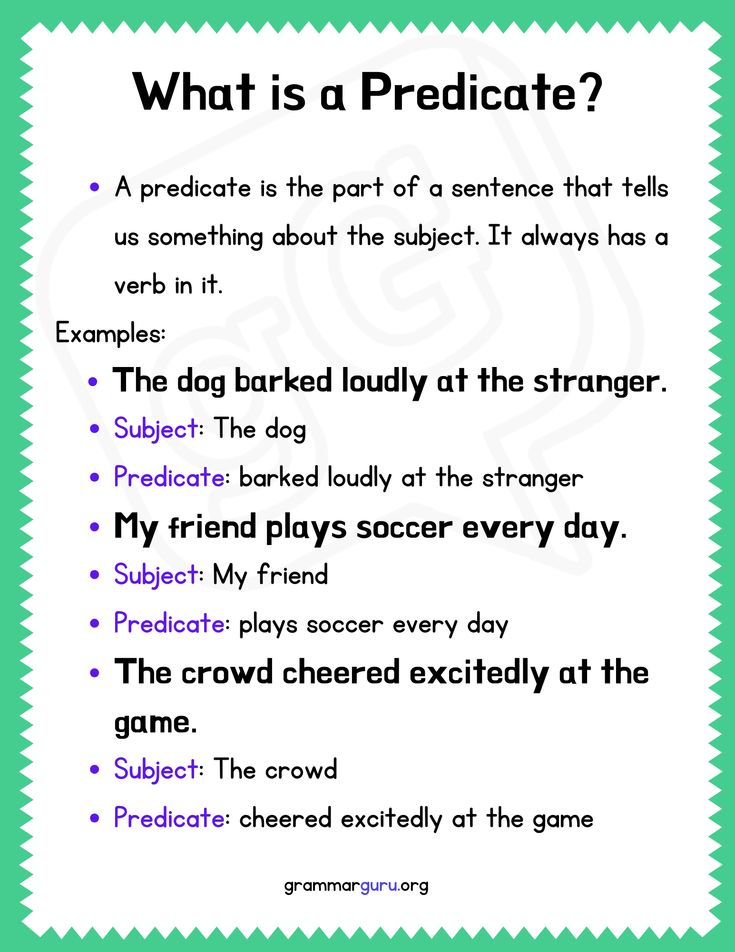
At its core, a predicate is everything in a sentence that is not the subject. It always contains a verb and typically includes all the words that modify that verb or complete its meaning. For humans, identifying the predicate often comes intuitively; we understand that in “The programmer wrote clean code,” “wrote clean code” is the predicate, describing what the programmer did. For an AI, however, this intuition must be painstakingly programmed and learned through vast amounts of data.
The primary function of a predicate is to provide information about the subject—what the subject is doing, what is being done to it, or what state it is in. It forms the backbone of a sentence’s meaning, linking the actor (subject) to the action or state, and often to other entities involved in that action. Without a clear understanding of predicates, an AI system would struggle to differentiate between “The engineer designed the bridge” and “The bridge designed the engineer,” leading to catastrophic misinterpretations.
The Core of Meaning: Verbs and Their Arguments
The heart of every predicate is the verb. Verbs are action words or state-of-being words, and they dictate the entire structure and meaning of the predicate. Consider the sentence: “The new AI model processes data with unprecedented speed.” Here, “processes” is the main verb. The rest of the predicate—”data with unprecedented speed”—provides crucial details about how the data is processed, what is processed, and with what efficiency.
Beyond just the main verb, predicates often include what are known as “arguments” or “complements.” These are the words or phrases that complete the meaning of the verb. For instance:
- Direct Object: “The developer built a new application.” (“application” is the direct object of “built”).
- Indirect Object: “The company gave its employees a bonus.” (“employees” is the indirect object).
- Subject Complement: “The algorithm is efficient.” (“efficient” describes the subject, linked by “is”).
- Object Complement: “They named the project ‘Apollo’.” (“‘Apollo'” complements the object “project”).
- Adverbial Phrases/Clauses: “The system analyzed the dataset thoroughly last night.” (“thoroughly” and “last night” modify “analyzed”).
For AI and NLP, identifying these various components within a predicate is crucial for building a complete semantic representation of a sentence. This process, often called “predicate-argument structure extraction,” allows machines to discern the agents, actions, and patients within a given text, forming a structured, machine-readable understanding of events and relationships.
Identifying Predicates: A Challenge for Algorithms
While simple sentences might seem straightforward, identifying predicates becomes increasingly complex in real-world language. Ambiguity, idiomatic expressions, nuanced phrasal verbs, and complex sentence structures (e.g., compound or complex sentences with multiple clauses) pose significant challenges for algorithms. Consider the sentence: “The team looked up the new documentation.” Here, “looked up” functions as a single phrasal verb, not “looked” and “up” as separate entities. An NLP model must be trained to recognize such constructions as a unified predicate.
Furthermore, context plays an enormous role. In “She runs a marathon,” “runs” refers to an athletic activity. In “The software runs on Linux,” “runs” refers to execution. A sophisticated NLP system needs to understand these contextual differences to accurately interpret the predicate’s meaning, a task that has historically required extensive linguistic rule sets but is now increasingly handled by advanced machine learning models.
Predicates in Action: Powering Natural Language Processing (NLP)
The theoretical understanding of predicates transforms into practical applications across various NLP domains. By dissecting sentences into their subject-predicate components and further analyzing the predicate’s internal structure, AI systems gain the ability to process, understand, and generate human language with remarkable efficacy.
Semantic Parsing and Information Extraction
One of the most critical applications of predicate identification is in semantic parsing and information extraction. Semantic parsing aims to convert natural language into a structured, machine-readable format, such as a logical form or a database query. Accurately identifying the main verb (the predicate’s core) and its arguments allows the system to extract key entities and the relationships between them. For example, from “Google acquired DeepMind in 2014,” an NLP system can extract the predicate “acquired,” the subject “Google” (the acquirer), the direct object “DeepMind” (the acquired entity), and the temporal modifier “in 2014” (the time of acquisition). This structured data can then populate knowledge graphs, answer complex questions, or power business intelligence tools.
This capability is vital for fields like market research (identifying product features and company actions), legal tech (extracting contractual obligations), and scientific discovery (summarizing research findings). Without a robust understanding of predicates, these systems would merely detect keywords rather than inferring the deeper relationships and events described in the text.
Machine Translation and Cross-Lingual Understanding
High-quality machine translation relies heavily on understanding the predicate-argument structure of sentences. Languages have different word orders and grammatical rules, but the underlying semantic roles (who did what to whom, when, where, and how) often remain consistent. By identifying the predicate and its arguments in a source language, an AI translator can reconstruct these semantic roles and then generate a grammatically correct sentence in the target language that preserves the original meaning, even if the surface-level structure changes dramatically.
For instance, translating “The user downloaded the app.” into a language with a Subject-Object-Verb (SOV) structure would require the AI to understand that “downloaded” is the action, “user” is the agent, and “app” is the patient, rearranging these elements correctly. Advanced neural machine translation models implicitly learn these predicate-argument structures through vast parallel corpora, making their translations far more fluent and accurate than rule-based systems of the past.
Sentiment Analysis and Intent Recognition
Understanding predicates also significantly enhances sentiment analysis and intent recognition. The choice of verb and its modifiers within a predicate often carries strong emotional or intentional signals. For example, in “The customer complained bitterly about the service,” the predicate “complained bitterly about the service” clearly conveys negative sentiment and the customer’s intent to express dissatisfaction. A system focusing only on “service” might miss the negative connotation.
By analyzing the predicate’s components—the main verb, its intensifiers, and its direct objects—AI can discern nuanced emotional tones (e.g., “strongly recommends” vs. “grudgingly accepts”) and differentiate between various user intents (e.g., “I want to book a flight” vs. “I need information about flights“). This granular understanding is invaluable for customer service chatbots, social media monitoring, and market feedback analysis.
The Role of AI and Machine Learning in Predicate Recognition
The leap from human grammatical rules to machine understanding of predicates has been facilitated by advancements in AI and machine learning, particularly deep learning. Instead of explicit programming for every grammatical rule, modern AI models learn to identify and interpret predicates through exposure to massive datasets.
Neural Networks and Contextual Embeddings
Modern NLP models, especially those based on transformer architectures like BERT, GPT, and their successors, use sophisticated neural networks to process language. These networks generate “contextual embeddings” for words, meaning that the numerical representation of a word changes depending on its surrounding words. This is crucial for predicate identification because the meaning and grammatical role of a word (especially a verb) are heavily influenced by context.
For example, the word “bank” has different meanings in “river bank” and “money bank.” Similarly, “run” takes on different semantic roles in “run a marathon” versus “run a company.” Neural networks, by capturing these contextual nuances, can more accurately determine whether a verb is acting as the core of a predicate and what its specific arguments are, even in ambiguous situations. They learn to identify patterns of verbs, nouns, and modifiers that typically form predicates, without being explicitly taught grammatical rules.
Training Data and Annotation for Predicate-Argument Structures
The success of these AI models hinges on the quality and quantity of their training data. For predicate recognition, this often involves vast corpora of text that have been meticulously annotated by human linguists. This annotation process involves identifying the main predicate verbs in sentences and labeling their arguments (e.g., agent, patient, instrument, location, time). Datasets like PropBank and FrameNet are classic examples of resources that provide such detailed semantic role labeling, allowing machines to learn the typical arguments associated with various verbs and how they function within a sentence structure.
These annotated datasets serve as the “ground truth” for machine learning algorithms. Models are trained to predict the predicate-argument structure of new sentences, comparing their predictions against the human annotations and adjusting their internal parameters to minimize errors. This iterative learning process enables AI to develop a robust internal representation of how predicates function across a wide range of linguistic expressions.
Beyond Basic Recognition: Advanced Applications and Future Trends
The foundational ability to understand predicates is paving the way for even more sophisticated AI applications that move beyond mere analysis to generation and intelligent interaction.
Generative AI and Coherent Text Generation
Large Language Models (LLMs) like GPT-4 are prime examples of generative AI that produce human-like text. A key factor in their ability to generate coherent, grammatically correct, and semantically meaningful sentences is their implicit understanding of predicate structures. When an LLM generates a sentence, it doesn’t just string words together randomly; it predicts the most probable next word based on the preceding context, often building out predicates and their arguments in a logically consistent manner.
This enables LLMs to write articles, create compelling narratives, summarize complex documents, and even generate code that adheres to structured logical sequences. The fidelity with which these models implicitly manage subjects, predicates, and their various components is what distinguishes truly intelligent text generation from simple word prediction.
Conversational AI and Human-Computer Interaction
For conversational AI agents (chatbots, virtual assistants) to engage in natural and effective dialogue, they must accurately parse user queries and generate relevant responses. Understanding the predicate is central to this. When a user says, “Can you book me a flight to New York for next Tuesday?”, the AI must identify “book” as the primary action, “me” as the recipient, “a flight to New York” as the direct object specifying the booking, and “for next Tuesday” as the temporal constraint.
This deep comprehension of the user’s intent, derived from the predicate, allows the AI to initiate the correct backend process (e.g., accessing a flight booking API) and ask appropriate follow-up questions (e.g., “What time would you prefer?”). The more accurately an AI can parse predicates, the more seamless and human-like its conversational abilities become, leading to more effective human-computer interaction across various domains, from customer support to personal assistance.
Challenges and the Path Forward
Despite significant advancements, AI’s mastery of predicates is not without its challenges. Human language is inherently complex, filled with nuances, ambiguities, and ever-evolving forms of expression.
Ambiguity and Nuance in Human Language
One of the persistent hurdles for AI is handling ambiguity. Many verbs can take on different meanings depending on context, and the scope of a predicate can sometimes be difficult to delimit precisely. Idioms (“kick the bucket”), sarcasm, metaphorical language, and subtle emotional cues encoded within a predicate remain difficult for even the most advanced models to fully grasp. For instance, “He saw the problem coming.” Here, “saw” isn’t literal vision but understanding. Distinguishing such subtle semantic shifts is an ongoing research area.
Furthermore, the variability of human expression means that the same core meaning can be conveyed through countless different predicate structures. An AI needs to generalize across these variations, which requires robust training data and sophisticated learning algorithms that can identify underlying semantic equivalence despite surface-level differences.
The Continuous Evolution of Language Models
The path forward involves continuous innovation in language model architectures, training methodologies, and data curation. Researchers are exploring ways to imbue AI with a more common-sense understanding of the world, which would aid in disambiguating predicates. Integrating external knowledge bases and developing more sophisticated reasoning capabilities can help models infer the most likely meaning of a predicate in context, moving beyond purely statistical patterns.
The development of multimodal AI, which combines language processing with visual and auditory information, also holds promise. By observing actions and states in the real world (or simulations), AI could develop a richer, grounded understanding of what verbs and their predicates truly signify, enhancing their ability to interpret and generate language with even greater accuracy and human-like intelligence.
In conclusion, what are predicates in a sentence? For AI, they are much more than just a grammatical rule; they are the semantic engine of language comprehension. As technology strives to bridge the gap between human communication and machine understanding, the ability to dissect, interpret, and generate predicates remains a cornerstone of progress. This continuous refinement of AI’s linguistic capabilities promises a future where human-computer interactions are not just functional, but genuinely intuitive and insightful.
aViewFromTheCave is a participant in the Amazon Services LLC Associates Program, an affiliate advertising program designed to provide a means for sites to earn advertising fees by advertising and linking to Amazon.com. Amazon, the Amazon logo, AmazonSupply, and the AmazonSupply logo are trademarks of Amazon.com, Inc. or its affiliates. As an Amazon Associate we earn affiliate commissions from qualifying purchases.