
For millions of Americans approaching or enjoying retirement, Medicare is an indispensable safety net, offering crucial healthcare coverage. However, the program’s structure can seem like a labyrinth of alphabet soup, with Parts A, B, C, D, and supplemental plans often causing confusion. For sound financial planning in your golden years, deciphering these components isn’t just an administrative task; it’s a critical exercise in managing future healthcare costs, protecting your savings, and ensuring access to necessary medical care without undue financial strain.
This guide will demystify the various parts of Medicare, breaking down what each covers, its typical costs, and the financial implications you need to consider. By understanding these distinctions, you can make informed decisions that align with your health needs and financial goals, transforming potential headaches into a well-managed aspect of your retirement budget.

The Foundation: Medicare Part A (Hospital Insurance)
Medicare Part A is often considered the bedrock of original Medicare, primarily covering inpatient hospital care. For most individuals, especially those who have worked and paid Medicare taxes for at least 10 years (40 quarters), Part A is premium-free. This “free” aspect can be a significant financial relief, but it’s essential to understand its coverage limits and potential out-of-pocket costs.
What Part A Covers (and Its Costs)
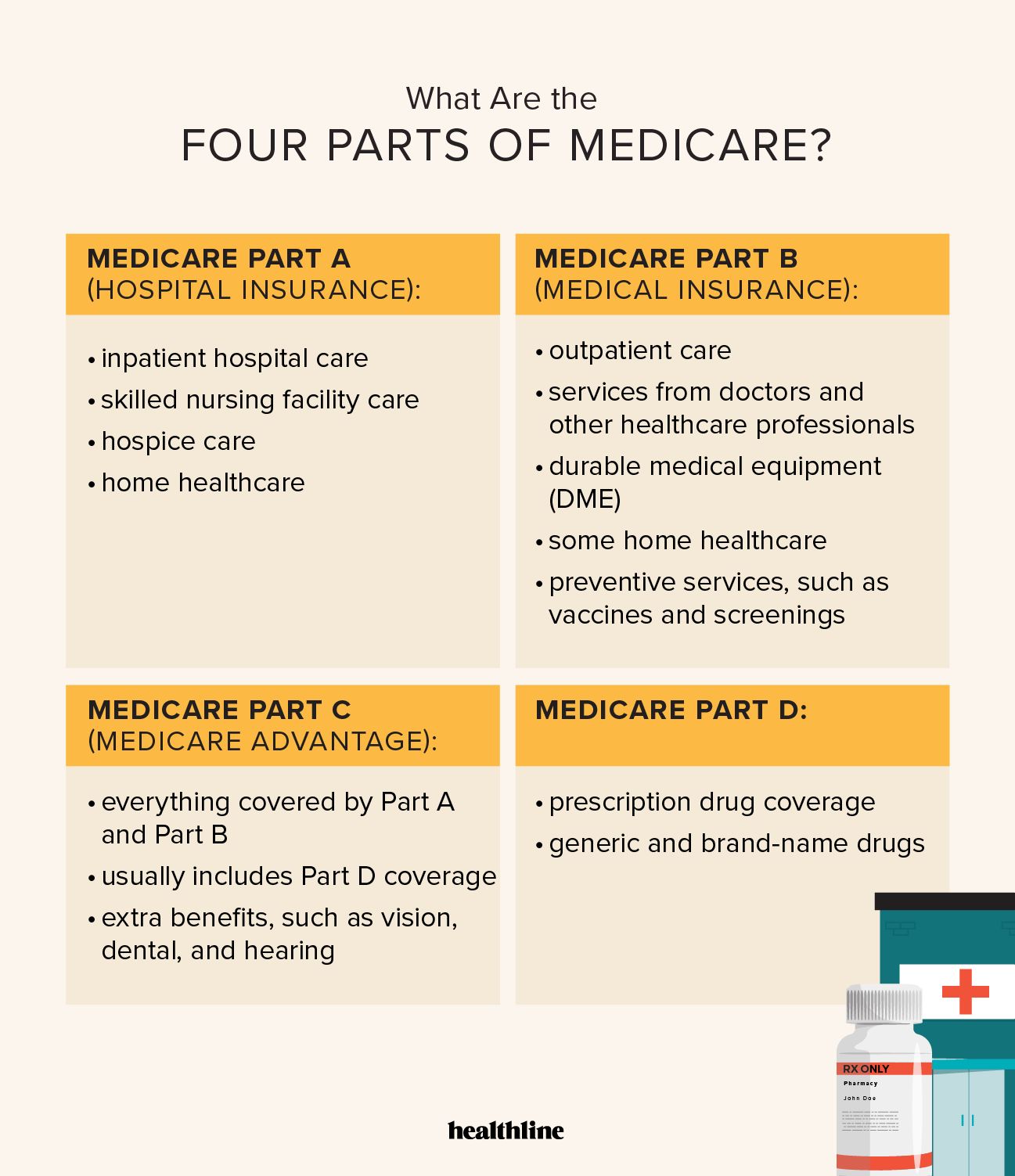
Part A covers services related to inpatient care in hospitals, including semi-private rooms, meals, nursing services, and drugs and supplies received during your stay. It also extends to skilled nursing facility care, hospice care, and some home health services under specific conditions.
While the monthly premium is often $0, Part A is not entirely without cost. The primary financial concern for beneficiaries is the deductible. For each benefit period (which begins the day you’re admitted as an inpatient in a hospital or skilled nursing facility and ends when you haven’t received any hospital or skilled nursing care for 60 days in a row), you are responsible for a deductible. In 2024, this deductible is $1,632. You pay this deductible once per benefit period, not per year. If you have a long hospital stay, you also face daily co-insurance amounts:
- Days 1-60: $0 co-insurance after paying the deductible.
- Days 61-90: $408 co-insurance per day.
- Days 91 and beyond: $816 co-insurance per “lifetime reserve day” (you have 60 lifetime reserve days that can be used once).
- Beyond lifetime reserve days: You pay all costs.
Skilled nursing facility care also has co-insurance: $0 for the first 20 days, then $204 per day for days 21-100, and all costs beyond day 100 in a benefit period.
Financial Implications for Inpatient Stays
The potential for significant co-insurance payments, especially during extended hospital or skilled nursing facility stays, can quickly deplete savings if not anticipated. While the premium-free nature of Part A is a boon, the deductible and daily co-insurance amounts highlight the need for either substantial emergency savings or supplemental insurance (like Medigap, discussed later) to cover these gaps. For retirees on a fixed income, even a few days of co-insurance could represent a substantial unplanned expense, underscoring the importance of understanding these potential liabilities.
Strategic Financial Planning with Part A
When planning your retirement finances, consider the following regarding Part A:
- Budgeting for the Deductible: Even with good health, it’s wise to set aside funds to cover the Part A deductible, as it can occur multiple times in a year if you have separate benefit periods.
- Long-Term Care Considerations: While Part A covers skilled nursing facility care for a limited time, it does not cover long-term custodial care (non-medical help with daily activities). This is a critical distinction that often catches people off guard financially. Long-term care insurance or dedicated savings for these needs are separate financial considerations.
- Coordination with Other Insurance: If you have employer-sponsored retirement health insurance, understand how it coordinates with Part A. Sometimes, your employer plan will pay primary, reducing your Part A out-of-pocket.
Everyday Healthcare: Medicare Part B (Medical Insurance)
Medicare Part B is the counterpart to Part A, covering medically necessary services and preventive services. Unlike Part A, Part B generally comes with a monthly premium, making it a direct line item in most retirees’ monthly budgets.
Services Covered by Part B (and Their Premiums/Deductibles)
Part B covers a vast array of outpatient services, including:
- Doctor visits (both in-office and telemedicine)
- Outpatient hospital services (e.g., emergency room visits, observation stays)
- Preventive services (e.g., flu shots, cancer screenings, annual wellness visits)
- Diagnostic tests (e.g., X-rays, lab tests)
- Medical equipment (e.g., wheelchairs, walkers, oxygen)
- Ambulance services
- Mental health services (outpatient)
The monthly premium for Part B is set annually by the government. In 2024, the standard Part B premium is $174.70. However, some individuals pay more due to the Income-Related Monthly Adjustment Amount (IRMAA). If your modified adjusted gross income (MAGI) from two years prior (e.g., 2022 income for 2024 premiums) exceeds certain thresholds, your Part B premium will be higher, potentially significantly so. This is a crucial financial planning detail that often gets overlooked.
Beyond the premium, Part B also has an annual deductible ($240 in 2024). After you meet this deductible, you typically pay 20% of the Medicare-approved amount for most doctor services, outpatient therapy, and durable medical equipment. There’s no annual out-of-pocket maximum with Original Medicare (Parts A and B).
Managing Out-of-Pocket Expenses with Part B
The 20% co-insurance, combined with the lack of an out-of-pocket maximum, means that serious or chronic health conditions requiring frequent doctor visits, tests, or therapies can result in substantial financial liabilities. For example, if your total Part B-covered medical expenses for the year amount to $20,000 after meeting your deductible, you would be responsible for $4,000 (20%). This ongoing exposure to 20% of costs is a primary reason many beneficiaries opt for supplemental coverage.
How Part B Influences Retirement Budgets
Part B premiums are a non-negotiable monthly expense for most Medicare beneficiaries, directly impacting retirement cash flow. For those subject to IRMAA, the higher premiums can necessitate a significant adjustment to their budget. Proactive tax planning during working years, especially in the years immediately preceding Medicare enrollment, can sometimes help manage income levels to avoid or reduce IRMAA surcharges. Understanding the deductible and co-insurance is vital for creating an accurate healthcare budget, allowing you to set aside funds or explore additional insurance options to mitigate these costs.
Prescription Drug Coverage: Medicare Part D
Medicare Part D provides prescription drug coverage, which is not included in Original Medicare (Parts A and B). Part D plans are offered by private insurance companies approved by Medicare and can be purchased as a stand-alone plan or as part of a Medicare Advantage Plan (Part C). This part of Medicare introduces a complex financial landscape with various plan designs, costs, and coverage phases.
Understanding Formularies and Tiers
Each Part D plan has a “formulary,” which is a list of covered drugs. Drugs are typically categorized into tiers, with lower-tier drugs (generics) having lower co-pays and higher-tier drugs (specialty drugs) having higher co-pays or co-insurance. It’s crucial to review a plan’s formulary to ensure it covers your specific medications and to understand their associated costs. A drug not on the formulary or in a high tier could lead to substantial unexpected out-of-pocket expenses.
Navigating Premiums, Deductibles, and the “Donut Hole”
Part D plans typically involve several cost-sharing elements:
- Monthly Premium: Varies widely by plan and location. Like Part B, some beneficiaries may pay an IRMAA surcharge if their income exceeds certain thresholds.
- Annual Deductible: Many plans have an annual deductible that you must meet before the plan starts paying for your drugs. This deductible can vary by plan but cannot exceed a maximum set by Medicare ($545 in 2024). Some plans have a $0 deductible.
- Co-payments or Co-insurance: After meeting the deductible, you’ll pay a co-pay or co-insurance for each prescription, depending on the drug’s tier.
- The Coverage Gap (“Donut Hole”): This is perhaps the most notorious financial feature of Part D. After your total drug costs (what you and your plan have paid) reach a certain limit ($5,030 in 2024), you enter the coverage gap. In this phase, you pay a higher percentage of the cost of your drugs (currently 25% for both generic and brand-name drugs) until your out-of-pocket spending reaches a catastrophic coverage threshold ($8,000 in 2024).
- Catastrophic Coverage: Once you exit the “Donut Hole” by reaching the out-of-pocket threshold, you pay a small co-payment or co-insurance for covered drugs for the remainder of the year.
Financial Decisions for Medication Management
Choosing a Part D plan requires careful financial analysis. You need to consider not just the monthly premium but also the deductible, co-pays, and how your specific medications are covered across the different phases. For individuals with high prescription drug costs, understanding the “Donut Hole” and how to minimize its impact is paramount. Comparing plans annually during the Open Enrollment Period is critical, as formularies and costs can change, potentially saving you hundreds or thousands of dollars. Failing to enroll in Part D when you’re first eligible (unless you have creditable coverage elsewhere) can also result in late enrollment penalties, permanently increasing your premiums.
The Private Alternative: Medicare Part C (Medicare Advantage Plans)
Medicare Part C, also known as Medicare Advantage, offers an alternative way to receive your Medicare benefits. These plans are offered by private insurance companies approved by Medicare and must provide at least the same benefits as Original Medicare Parts A and B. Many Medicare Advantage Plans also include Part D prescription drug coverage and additional benefits not covered by Original Medicare.
Exploring All-in-One Coverage (and Network Restrictions)
Medicare Advantage Plans often appeal to beneficiaries because they combine Part A, Part B, and usually Part D into a single plan. Many also offer extra benefits like vision, dental, hearing, fitness programs (e.g., SilverSneakers), and even transportation to doctor appointments. This comprehensive approach can simplify healthcare management.
However, a key financial and practical consideration is that most Medicare Advantage Plans operate within specific provider networks (HMOs, PPOs, PFFS). This means you might be restricted to doctors, hospitals, and specialists within the plan’s network, and going out-of-network could result in higher costs or no coverage at all. This can be a significant trade-off if you value flexibility in choosing your providers.
Weighing Costs: Premiums, Co-pays, and Max Out-of-Pocket
While you must continue to pay your Part B premium when you enroll in a Medicare Advantage Plan, many plans offer a $0 additional monthly premium. This can be very attractive financially. However, these plans typically have their own co-payments and co-insurance for various services (e.g., doctor visits, hospital stays, emergency care), which can differ from Original Medicare’s 20% co-insurance.
A significant financial advantage of Medicare Advantage Plans is that they have an annual out-of-pocket maximum. Once you reach this limit, the plan pays 100% of your covered medical expenses for the rest of the year. This provides a crucial financial safeguard that Original Medicare lacks, protecting beneficiaries from unlimited medical expenses in a given year. However, it’s essential to compare the out-of-pocket maximums across different plans, as they can vary significantly.
Is Medicare Advantage the Right Financial Choice for You?
Choosing between Original Medicare and a Medicare Advantage Plan is a fundamental financial decision. Medicare Advantage might be a more cost-effective option for those who:
- Prefer an all-in-one plan for simplicity.
- Are comfortable with network restrictions.
- Value the additional benefits (dental, vision).
- Want an annual out-of-pocket maximum to cap their financial risk.
However, if you value the freedom to see any Medicare-approved doctor, frequently travel, or have chronic conditions requiring specific out-of-network specialists, Original Medicare with supplemental coverage might be a better financial fit. A thorough evaluation of your health needs, preferred doctors, and budget is essential.
Bridging the Gaps: Medicare Supplement Insurance (Medigap)
Medicare Supplement Insurance, commonly known as Medigap, is a type of private health insurance designed to cover the “gaps” in Original Medicare (Parts A and B). It works in conjunction with Original Medicare, not as a replacement for it.
What Medigap Covers (and Its Financial Purpose)
Medigap plans help pay for some of the out-of-pocket costs that Original Medicare doesn’t cover, such as:
- Part A deductible and co-insurance
- Part B deductible and co-insurance (the 20% amount)
- Skilled nursing facility co-insurance
- Emergency healthcare during foreign travel (most plans)
The primary financial purpose of Medigap is to reduce or eliminate the unpredictable costs associated with Original Medicare’s deductibles and co-insurance. By paying a predictable monthly premium for a Medigap plan, beneficiaries can achieve more stable healthcare expenditures and greater peace of mind regarding high medical bills.
Understanding Plan Letters and Premium Structures
Medigap plans are standardized by the government and identified by letters (e.g., Plan G, Plan N). Each standardized plan of the same letter offers the exact same basic benefits, regardless of the insurance company selling it. For example, a Plan G from Company A offers the same benefits as a Plan G from Company B. The main differences between plans of the same letter are their premiums and customer service.
Medigap premiums vary based on the plan letter, the insurance company, your age, location, and the pricing method used by the insurer (e.g., attained-age, issue-age, community-rated). It’s crucial to shop around and compare premiums from different insurers for the same plan letter.
Deciding if Medigap is a Sound Investment
For many, Medigap is a sound financial investment that complements Original Medicare. It provides predictable costs, allows you to see any doctor or hospital that accepts Medicare, and eliminates most out-of-pocket surprises. However, Medigap plans do not include prescription drug coverage (you’ll need a separate Part D plan) and typically don’t cover extra benefits like vision or dental.
The best time to enroll in Medigap is during your 6-month Medigap Open Enrollment Period, which starts the month you turn 65 and are enrolled in Part B. During this period, insurance companies cannot use medical underwriting to deny you a policy or charge you more due to health conditions. Outside of this period, you may not be able to get a Medigap policy or may pay significantly more, making the timing of your enrollment a critical financial consideration.

Conclusion
Navigating the complexities of Medicare’s different parts is an indispensable aspect of responsible retirement financial planning. Whether it’s understanding the deductible and co-insurance of Part A, budgeting for Part B premiums and co-insurance, selecting a Part D plan that minimizes prescription costs, weighing the trade-offs of a Medicare Advantage plan, or investing in Medigap for peace of mind, each decision has direct and lasting financial implications.
The choices you make today will significantly impact your financial well-being and access to healthcare throughout retirement. It is not enough to simply enroll; a deep understanding of each part’s financial mechanics is required. Take the time to research, compare plans annually, and consult with financial advisors and Medicare specialists to ensure your coverage aligns with your health needs and secures your financial future. Proactive engagement with your Medicare options is perhaps one of the most financially astute decisions you can make in your golden years.
aViewFromTheCave is a participant in the Amazon Services LLC Associates Program, an affiliate advertising program designed to provide a means for sites to earn advertising fees by advertising and linking to Amazon.com. Amazon, the Amazon logo, AmazonSupply, and the AmazonSupply logo are trademarks of Amazon.com, Inc. or its affiliates. As an Amazon Associate we earn affiliate commissions from qualifying purchases.