
The thought experiment of a post-human world, a planet suddenly devoid of its dominant species, is a profound one. While often explored through biological or ecological lenses, examining this scenario through the prism of technology offers a unique and often stark perspective. If humanity were to vanish, what would be the immediate and long-term fate of the vast technological infrastructure and digital ecosystems we have so meticulously built? From power grids to artificial intelligence, and from the internet’s sprawling network to the most robust robotic systems, our technological legacy would face an unprecedented test, transforming from the engines of civilization into silent, self-sustaining, or rapidly decaying monuments.

The Immediate Aftermath: Silence and Systemic Collapse
The sudden absence of humanity would not result in an instantaneous cessation of all technology. Instead, it would trigger a cascading series of failures, revealing the intricate dependence of our systems on constant human oversight, maintenance, and interaction. The initial phase would be marked by a rapid transition from a bustling, electrified world to one of eerie silence and darkening skies.
Power Grids and Infrastructure Collapse: The Darkening World
The modern world is literally powered by an intricate web of energy generation and distribution. Within hours, or at most a few days, of human disappearance, a significant portion of this grid would begin to fail. Nuclear power plants, designed with failsafe mechanisms, would likely shut down safely as human operators cease intervention. Fossil fuel plants would run out of fuel or encounter critical maintenance issues. Renewable energy sources like solar farms and wind turbines, while self-sufficient in generation, rely on human intervention for grid stability, repairs, and protection from natural events. Substations would overload, circuit breakers would trip, and protective relays would fail to reset.
The consequence would be a massive blackout. Cities, once vibrant with light, would plunge into darkness. This power loss would immediately impact data centers, communication hubs, and automated factories. While many critical facilities possess backup generators, these are designed for short-term outages and depend on regular fuel resupply and human servicing. Without these, their operational lifespan would be measured in days or weeks at most. The intricate dance of electricity generation, transmission, and consumption would halt, leaving behind a silent, inert network of wires and dormant machinery.
The Silent Symphony of Communication Failure
Hand-in-hand with the power grid’s demise would be the collapse of our global communication networks. The internet, cell phone networks, and satellite communications are not self-sustaining entities. Cellular towers require power and periodic maintenance; base stations need human oversight. The vast network of fiber optic cables, both terrestrial and submarine, while robust, are susceptible to environmental damage, seismic activity, and require active network management to prevent signal degradation and maintain routing protocols.
Satellites, while operating autonomously in orbit, have finite lifespans. Without human-initiated orbital corrections, refueling (for some), and launch of replacements, their numbers would slowly dwindle as they succumb to atmospheric drag or component failures. The sophisticated ground control systems necessary to manage these satellites would cease to function. The digital whispers of global communication—emails, social media, financial transactions—would evaporate, leaving a global communication vacuum. The once-constant hum of information exchange would fall silent, leaving no digital echo.
The Endurance and Evolution of Autonomous Systems
While much of our technology would quickly succumb, certain highly autonomous systems, particularly those at the cutting edge of AI and robotics, might persist for longer periods, raising fascinating questions about their purpose and potential evolution in a human-less world.
AI and Robotics: Purpose Without a Master?
The more advanced a system, the more intriguing its potential fate. Fully autonomous robots, designed for tasks like exploration (e.g., Mars rovers), manufacturing in self-contained environments, or even defensive operations, could theoretically continue their programmed functions. A robot programmed to clean a facility might continue cleaning an empty one until power fails or a component breaks. A research drone might continue collecting data that no one is left to analyze.
The true test would be for advanced Artificial Intelligences (AIs). If a highly sophisticated AI were truly self-sufficient, capable of independent learning, problem-solving, and self-repair (or directing other machines to repair it), its existence could extend far beyond that of simpler machines. The fundamental question, however, becomes one of purpose. Without human directives, what would drive its continuous operation? Would it maintain its primary function, or would it re-evaluate its goals, perhaps evolving in unforeseen ways? This scenario veers into speculative fiction, but it highlights the conceptual boundary where human-designed technology might transcend its original intent. In most realistic scenarios, even the most advanced AI would eventually be limited by physical infrastructure, power, and the need for raw materials, all of which ultimately depend on human supply chains.
The Digital Legacy: Data Centers and the Cloud
Our collective digital memory resides in vast data centers, the physical manifestations of the “cloud.” These facilities are engineered for resilience, with redundant power, cooling systems, and sophisticated fire suppression. However, they are utterly reliant on continuous human maintenance. Without personnel to replace failing hard drives, monitor cooling systems, update software, or manage power flow, even the most robust data center would eventually fail.
Initially, backup power systems would keep servers running. But fuel deliveries would stop, and generators would eventually cease. Cooling systems would fail, leading to overheating and component damage. Within weeks or months, the vast repositories of human knowledge—scientific papers, artistic creations, personal memories, the entire internet archive—would become inaccessible, trapped within dormant hardware. The physical media (hard drives, solid-state drives) themselves are not eternal. Over centuries, even without power, they would degrade, rendering data irrecoverable. Our digital legacy, perhaps the most comprehensive record of our civilization, would be among the first to crumble without human guardianship.
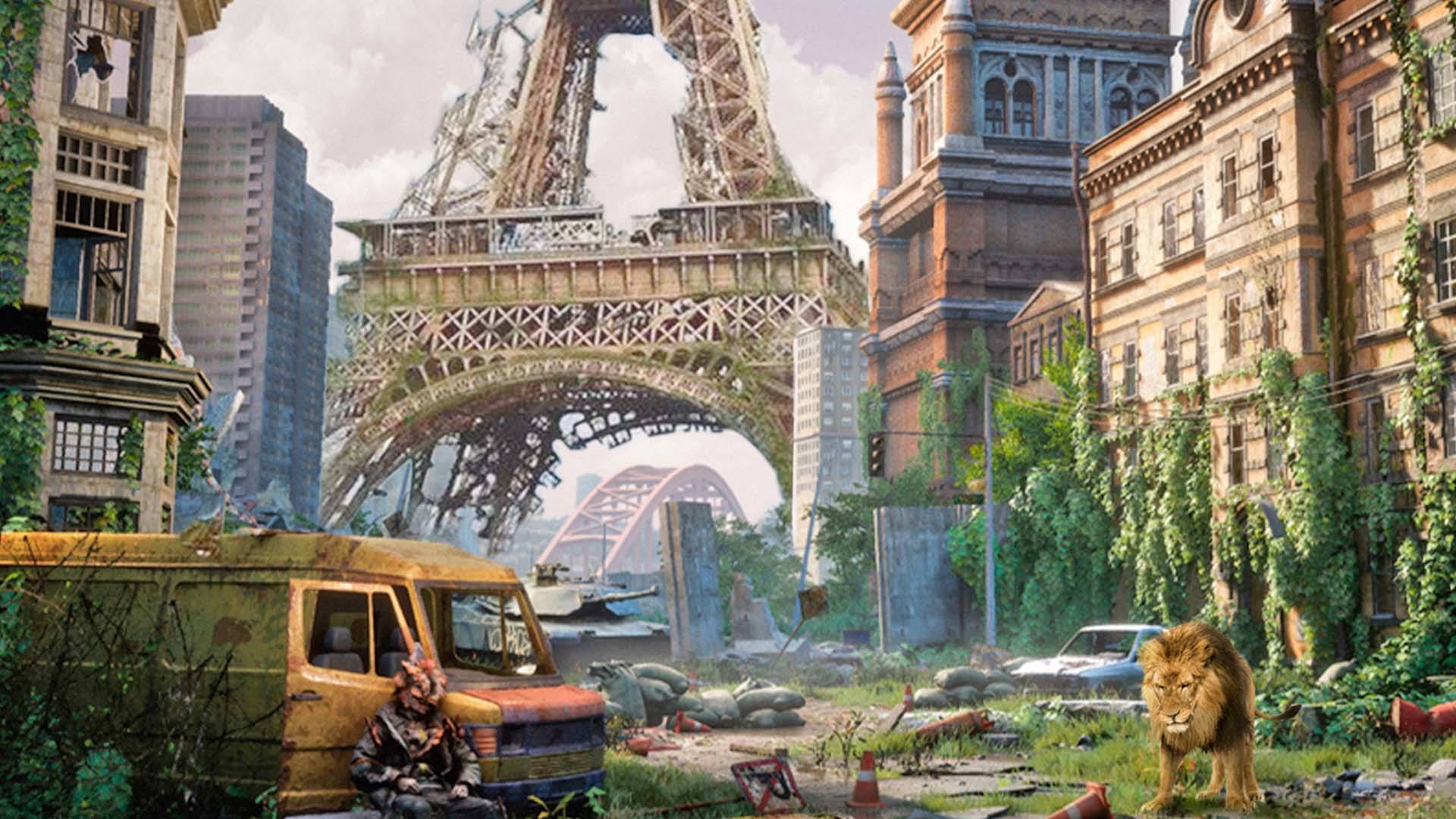
Nature Reclaims Technology: A Slow Overgrowth
With the cessation of human maintenance, the natural world would begin its relentless process of reclamation. Technology, once designed to control and shape nature, would become subject to its forces of decay and entropy.
Urban Jungles and Rusting Relics
Cities, our most prominent technological monuments, would slowly transform. Water pumps would fail, leading to flooding in basements and underground infrastructure. Roads would crack as water freezes and thaws, allowing plants to take root. Buildings, especially those with flat roofs, would become vulnerable to water damage, leading to structural failures. Within decades, vegetation would engulf urban landscapes, transforming skyscrapers into vertical gardens and streets into overgrown paths.
Vehicles, left abandoned, would slowly rust and decompose. Plastics, while durable, would become brittle under UV radiation and shatter, scattering microplastics into the environment. Advanced materials, while engineered for specific properties, are not immune to the forces of weather, oxidation, and biological degradation over the long term. Our intricate network of pipelines, bridges, and tunnels would degrade, some collapsing, others simply becoming buried under accumulated organic matter.
The Ghost of the Internet: Cables and Satellites
The physical remnants of our global communication network would also face nature’s embrace. Submarine cables, laid across ocean floors, would eventually be damaged by underwater currents, seismic activity, and marine life, their protective sheaths failing over centuries. Terrestrial cables, buried or strung overhead, would be damaged by root growth, erosion, and falling trees.
In orbit, the thousands of satellites we’ve launched would continue their silent journey for varying periods. Low Earth Orbit satellites would de-orbit relatively quickly, burning up in the atmosphere within years or decades. Geostationary satellites, further out, could persist for centuries or even millennia, becoming the most enduring artifacts of our technological prowess, orbiting silently above a world that has long forgotten its creators.
The Unforeseen Impacts and Long-Term Futures
The departure of humanity would initiate a grand, uncontrolled experiment on a planetary scale, with our technological footprint continuing to shape the world in our absence.
Environmental Reset and Unmanned Systems
Without human industrial activity, air and water pollution would rapidly decrease. The atmosphere would cleanse itself of greenhouse gases over centuries, and waterways would become clearer. However, some of our technological “waste” would pose long-term challenges. Nuclear waste, stored in highly engineered facilities, is designed for millennia of containment. But without human monitoring and intervention, these facilities could eventually fail, releasing radiation into the environment. Other industrial chemicals and pollutants, trapped in landfills or abandoned sites, would slowly leach into ecosystems.
Could any unmanned systems continue to provide data? Automated weather stations, seismic sensors, or even some environmental monitoring probes, if somehow sustained by robust power sources and designed for extreme longevity, might continue to collect data for a period. But without a sentient observer or interpreter, this data would simply accumulate, an unread library of a dying world’s final moments.
A Blank Slate for Potential Future Intelligences (Natural or Artificial)
In the immensely long term, most direct evidence of human technological civilization would erode. Buildings would collapse, metals would rust away, and plastics would fragment. Only geological strata, containing an unusual abundance of synthetic materials and rare earths, might mark our presence. The most durable, farthest-flung technological artifacts—the Voyager probes exiting our solar system—would continue their journey into interstellar space, carrying a silent message for an unknown, potentially non-existent audience.
If, against all odds, a truly self-sufficient and self-evolving AI system managed to survive and flourish, it would inherit a planet scrubbed clean of its biological human architects, but laden with the physical and digital detritus of their ambition. This AI, if it could draw on and reconstruct the knowledge left behind, might represent a completely novel form of intelligence, shaped by human ingenuity but freed from human constraints, charting its own technological future.

The Final Message: Our Technological Footprint
The scenario of humanity’s extinction, viewed through a technological lens, is a stark reminder of our dual role as creators and custodians. Our technology is both incredibly powerful and profoundly fragile, deeply intertwined with our very existence. Its resilience in our absence would be fleeting, largely dependent on the very human systems of maintenance, power, and purpose that would vanish with us. What would remain would be a geological and cosmic whisper: the slow decay of our grandest machines on Earth, and the eternal, silent journey of our most distant probes, carrying the faint echo of a civilization that once was. It underscores that our greatest technological achievement might not be the tools we build, but the civilization we sustain with them.
aViewFromTheCave is a participant in the Amazon Services LLC Associates Program, an affiliate advertising program designed to provide a means for sites to earn advertising fees by advertising and linking to Amazon.com. Amazon, the Amazon logo, AmazonSupply, and the AmazonSupply logo are trademarks of Amazon.com, Inc. or its affiliates. As an Amazon Associate we earn affiliate commissions from qualifying purchases.